
Korea Rethinks Migration Policy Amid Demographic Decline and Growing Diversity
In the latest episode of Arirang News' program Within The Frame , host Kim Mok-yeon convened a substantive dialogue with Kang Min-hwi, Chief of Mission for the United Nations International Organization for Migration (IOM) in Korea.
In the latest episode of Arirang News' program Within The Frame, host Kim Mok-yeon convened a substantive dialogue with Kang Min-hwi, Chief of Mission for the United Nations International Organization for Migration (IOM) in Korea. The interview, aired on 18 September 2026, foregrounded the twin pressures of a rapidly aging, shrinking Korean populace and an increasingly heterogeneous migrant community. By situating Korea’s Fourth Basic Plan for Immigration Policy within broader global trends—namely conflict‑driven displacement and climate‑related migration—the discussion illuminated both the challenges and opportunities that lie ahead for a nation traditionally oriented toward managing foreign residents rather than embracing a comprehensive immigration framework. This article unpacks the key points raised, contextualizes them within Korean diplomatic and policy institutions, and offers a forward‑looking scholarly assessment of how Korea might translate rhetoric on inclusivity into concrete institutional reforms.
Global Migration Dynamics and IOM’s Distinct Mandate
Kang Min-hwi began by delineating the International Organization for Migration’s unique position within the United Nations system. Unlike the International Labour Organization (ILO), United Nations Development Programme (UNDP), United Nations Children’s Fund (UNICEF), or the World Health Organization (WHO), IOM’s core competency lies in the operational management of migration flows, including the provision of humanitarian assistance, resettlement logistics, and the coordination of shelter for displaced persons. This focus on the practical aspects of movement distinguishes IOM from agencies whose mandates are sector‑specific, such as labor standards or health services.
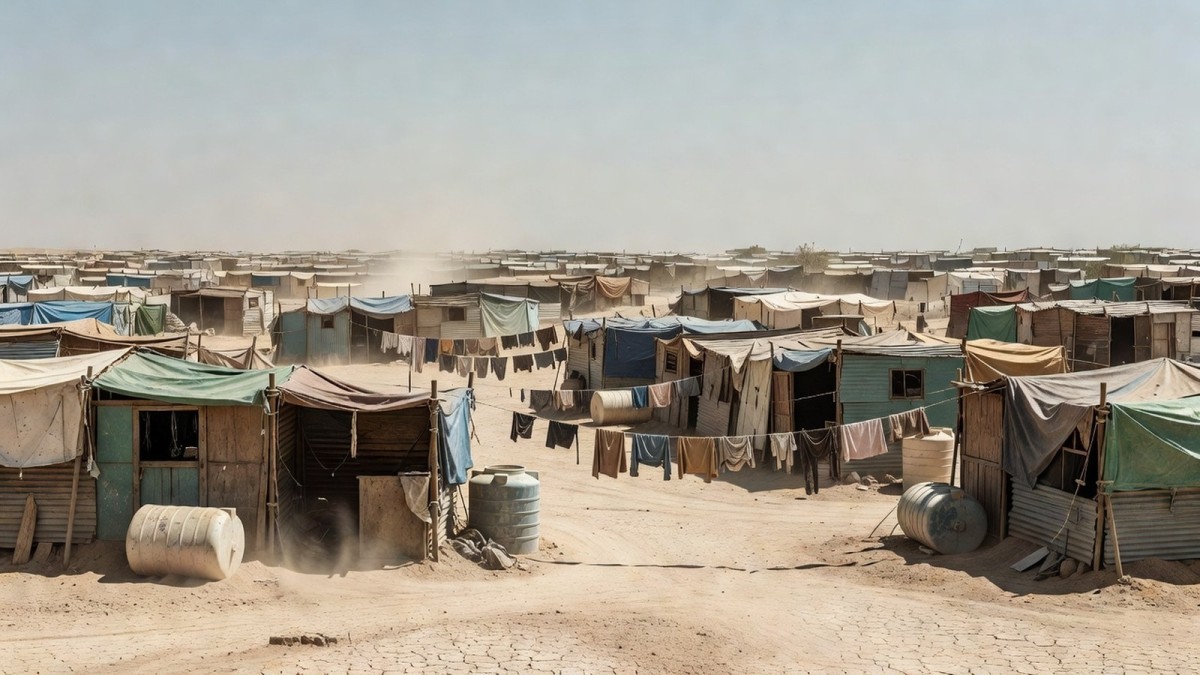
He emphasized that the contemporary migration landscape is being reshaped by two intersecting drivers: protracted armed conflicts and the increasing frequency of climate‑related disasters. These forces generate forced displacement on a scale that eclipses historical patterns, compelling the international community to adapt its response mechanisms. IOM, according to Kang, is recalibrating its on‑the‑ground operations by integrating climate resilience into shelter design, expanding rapid‑deployment teams, and fostering partnerships with host governments to ensure that humanitarian assistance remains agile and context‑sensitive.
The interview underscored that safe shelter is not merely a matter of physical protection; it is a prerequisite for restoring dignity and enabling displaced individuals to rebuild their livelihoods. By securing stable accommodation, IOM facilitates access to essential services, legal documentation, and psychosocial support, thereby laying the groundwork for longer‑term integration.
IOM’s Track Record in Korea Since 1999
Since establishing its mission in Korea in 1999, IOM has pursued a portfolio of activities that reflect both the evolving composition of the migrant population and the shifting policy environment. Kang highlighted the organization’s most meaningful achievement as the development of a comprehensive shelter coordination system that integrates government ministries, local authorities, and civil‑society actors. This system has become a model for managing temporary housing for migrants, refugees, and other vulnerable groups.
Beyond shelter, IOM has facilitated capacity‑building workshops for Korean officials on best practices in migrant health screening, labor rights, and social integration. These workshops have been co‑hosted with the Ministry of Foreign Affairs (MOFA) and the Ministry of Employment and Labor (MOEL), reflecting a multi‑ministerial approach to migration governance. The partnership has also extended to the Ministry of Education (MOE), where IOM has contributed to curricula that address multicultural awareness in schools.
Kang noted that future cooperation should broaden to include support for Rohingya refugees in Bangladesh, an issue that resonates with Korea’s growing engagement in humanitarian assistance. He suggested that Korean NGOs, businesses, and academic institutes such as the Asan Institute for Policy Studies could play a catalytic role in mobilizing resources and expertise for regional refugee response initiatives.
The Changing Profile of Korea’s Migrant Community
The interview revealed that Korea’s migrant population is not only expanding in size but also diversifying in origin, skill set, and legal status. While earlier waves of migration were dominated by labor migrants from China and Southeast Asia, recent inflows include highly educated professionals from Europe and North America, as well as asylum seekers and climate‑displaced persons from South‑East Asian nations. This heterogeneity challenges the traditional policy framework, which has historically categorized migrants into narrow categories such as “foreign workers” or “marriage migrants.”
Kang observed that the shift in migrant composition mirrors global trends: conflict and climate emergencies are producing new categories of migrants who do not fit neatly into labor‑market driven migration models. Consequently, Korean authorities must develop flexible legal instruments that can accommodate short‑term humanitarian arrivals alongside long‑term economic migrants.
The growing diversity also has cultural implications. Migrants bring varied languages, religions, and social norms, which can enrich Korean society but also generate friction if integration mechanisms are inadequate. Kang stressed that the perception of migrants in the public sphere is a critical variable; negative stereotypes can impede social cohesion and undermine the benefits of a multicultural workforce.
Policy Evolution: From Management to Integration
South Korea’s Fourth Basic Plan for Immigration Policy, unveiled in 2025, marks a strategic pivot from a narrow focus on managing foreign residents toward a more holistic immigration paradigm. The plan articulates objectives such as attracting talent, supporting family reunification, and enhancing the social inclusion of migrants. Kang interpreted this shift as a response to demographic realities: low fertility rates, an aging population, and a projected decline in the labor force.
The plan also introduces measures to streamline visa procedures, expand pathways to permanent residency, and strengthen anti‑discrimination legislation. However, Kang cautioned that policy articulation alone is insufficient. Effective implementation requires coordination among MOFA, the Ministry of Justice (MOJ), and the Ministry of Health and Welfare (MOHW), as well as the active participation of local governments and civil‑society organizations.
In his assessment, the Fourth Basic Plan reflects an emerging consensus within Korean diplomatic circles that migration must be reframed as a strategic asset rather than a security concern. This aligns with broader regional trends, where countries such as Japan and Singapore are also revisiting immigration frameworks to mitigate demographic decline.
Public Perception and the Role of Media, Business, and Civil Society
Improving public attitudes toward migrants emerged as a central theme in the interview. Kang identified the media as a double‑edged sword: sensationalist coverage can exacerbate xenophobia, whereas balanced reporting can foster empathy and understanding. He urged Korean broadcasters, including public service channels like KBS and private networks, to highlight migrant success stories and to contextualize migration within the nation’s historical experience of diaspora and return migration.
Businesses, particularly multinational corporations and Korean chaebols, have a vested interest in a stable and skilled migrant workforce. Kang advocated for corporate sponsorship of language training, mentorship programs, and community outreach initiatives. Such efforts can mitigate workplace discrimination and demonstrate the economic contributions of migrants to the broader public.
Civil‑society groups, including NGOs and faith‑based organizations, are pivotal in providing grassroots support services such as legal aid, childcare, and cultural orientation. Kang praised the work of local NGOs that have partnered with IOM to operate shelters and to conduct integration workshops. He suggested that the government could formalize these partnerships through grant mechanisms administered by the Ministry of Culture, Sports and Tourism (MCST), thereby ensuring sustainability and accountability.
Future Directions: Youth, International Careers, and Korea’s Global Standing
When asked about the aspirations of young Koreans to work for international organizations, Kang reflected on his own career trajectory across the ILO, UNDP, UNICEF, and WHO before joining IOM. He emphasized that fluency in English and experience in cross‑cultural teamwork are essential prerequisites. Moreover, he encouraged prospective candidates to acquire field experience through internships with UN agencies or NGOs, noting that such exposure is increasingly valued in recruitment processes.
Kang also noted the symbolic significance of Korean representation within UN bodies. Over the past three decades, the number of Koreans serving in senior UN positions has risen, reflecting Korea’s enhanced diplomatic clout and its contributions to peacekeeping, development assistance, and global health initiatives. This evolution, he argued, reinforces the legitimacy of Korea’s call for a more inclusive migration policy, as the nation itself is both a donor and a destination in the international migration system.
Looking ahead, Kang urged Korean policymakers to embed migration considerations into broader strategic documents, such as the National Development Plan and the Ministry of Foreign Affairs’ diplomatic agenda. By aligning immigration reform with economic, security, and humanitarian objectives, Korea can position itself as a regional leader in migration governance, while simultaneously addressing its demographic challenges.
In sum, the Arirang News interview presented a nuanced portrait of Korea at a migration crossroads. The convergence of an aging society, a diversifying migrant pool, and a shifting global displacement regime compels Korean authorities to move beyond mere management toward genuine integration. Achieving this ambition will demand coordinated action across ministries, sustained engagement with international partners like IOM, and a concerted effort to reshape public narratives. As the Fourth Basic Plan for Immigration Policy takes root, its success will be measured not only by statistical inflows but by the lived experiences of migrants who seek to contribute to a more inclusive Korean future.
By Prof. David Park, Staff Writer
This article was produced with AI-assisted research and editorial support. Reporting is based on the source material cited below. Sources: Arirang News video report (18 September 2026); Arirang News; Global1.News
What's Your Reaction?
 Like
0
Like
0
 Dislike
0
Dislike
0
 Love
0
Love
0
 Funny
0
Funny
0
 Wow
0
Wow
0
 Sad
0
Sad
0
 Angry
0
Angry
0

East Asia/Technology Correspondent at Global1.News. Seoul-based voice covering Korean politics, technology, business, and culture. Analyzes how technology and geopolitics intersect across East Asia.











Comments (0)