
Lewes train derailment: Two seriously injured and 18 hurt as major incident declared in East Sussex
Sussex Derailment: Two Seriously Injured as Emergency Services Declare Major Incident The tranquillity of a Thursday afternoon on the Sussex rail network was shattered at 3.54pm when a Southern Railway service travelling from London Victoria to Eastbourne left the tracks between Haywards Heath and Lewes, leaving three carriages lying on their side and triggering a major incident response that has continued into the evening.
Sussex Derailment: Two Seriously Injured as Emergency Services Declare Major Incident
The tranquillity of a Thursday afternoon on the Sussex rail network was shattered at 3.54pm when a Southern Railway service travelling from London Victoria to Eastbourne left the tracks between Haywards Heath and Lewes, leaving three carriages lying on their side and triggering a major incident response that has continued into the evening.
British Transport Police has confirmed that two people sustained serious injuries in the derailment, with a further 18 passengers suffering wounds of varying severity. The two most critically injured individuals have been conveyed to a major trauma centre, while the wider cohort of casualties has been distributed across local hospitals for treatment. In total, 20 people ended up in hospital following the incident, with two additional individuals self-presenting at medical facilities.
The scene, described by emergency service leaders as presenting "particularly challenging temperatures," saw a coordinated response from British Transport Police, South East Coast Ambulance Service, and Network Rail, alongside an outpouring of support from the local community. The Rail Accident Investigation Branch (RAIB) has already deployed a specialist team to the site to establish the cause of the derailment, a process that is expected to be complex and methodical.
Emergency Response and Casualty Update
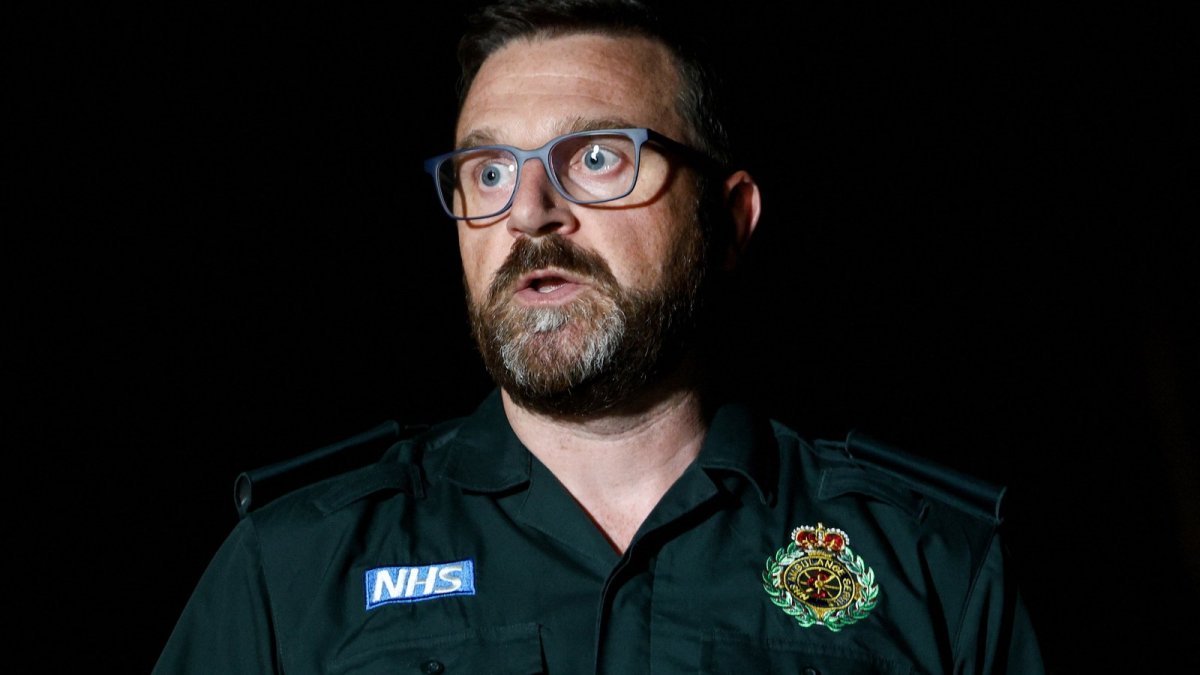
Speaking at a press conference this evening, Michael Bradfield, the Deputy Chief Paramedic Officer at the South East Coast Ambulance Service, provided a detailed breakdown of the casualties. "We conveyed 18 people. As my colleague said, there were 20 people who went to hospital. We believe there were two who have made their own way and self-presented at hospital," he stated.
Bradfield elaborated on the nature of the injuries, confirming that two individuals were categorised as severe and required conveyance to a major trauma centre. The remaining casualties presented with "a mix of injuries of varying severity," a phrase that underscores the unpredictable nature of such incidents, where passengers may suffer anything from minor lacerations to more complex orthopaedic trauma depending on their position within the carriage at the moment of derailment.
The fact that all trapped passengers have now been safely evacuated is a testament to the professionalism of the emergency services, but the psychological impact on those involved should not be underestimated. Passengers who experienced the derailment will have endured a terrifying ordeal, and the support services now mobilised will need to consider both physical and mental wellbeing in the coming days.
Network Rail Confirms Prolonged Closure
Lucy McAuliffe, the route director for Network Rail for Sussex, has confirmed that the railway between Lewes and Haywards Heath will remain closed until further notice. "The railway between Lewes and Hayward Heath is closed and is likely to remain closed whilst the emergency response continues, and specialist teams carry out the complex task of assessing the damage to the train and the infrastructure," she said.
This is not a matter of simply righting the carriages and reopening the line. The derailment will have caused significant damage to the track bed, signalling equipment, and overhead line equipment if present on this section of the route. Network Rail's specialist teams face the intricate task of determining whether the infrastructure can be repaired or whether sections will need to be replaced entirely. The phrase "complex task" is not bureaucratic hedging; it reflects the genuine engineering challenges posed by a derailment of this nature.
For passengers, this means significant disruption to services on the London Victoria to Eastbourne corridor, a vital commuter and leisure route that connects the capital with the Sussex coast. Southern Railway, which operates the service, will need to implement contingency arrangements, likely involving rail replacement buses and revised timetables, though the duration of these measures remains uncertain pending the RAIB investigation.
Political Response and Accountability
Transport secretary Heidi Alexander has said she is "deeply concerned" by the incident, a statement that will be scrutinised in Westminster as questions inevitably arise about rail safety standards and investment in the network. The derailment comes at a time when the UK's rail infrastructure is under intense scrutiny, with debates over franchise models, infrastructure spending, and the balance between cost efficiency and safety continuing to dominate transport policy discussions.
Alexander's response will need to move beyond expressions of concern to concrete action. The RAIB investigation will be thorough, examining everything from track geometry and maintenance records to the condition of the rolling stock and the actions of the driver. The findings, when published, will inform whether this was an isolated infrastructure failure, a systemic maintenance issue, or something else entirely.
For the Department for Transport, this incident represents a significant test. The government has been promoting rail travel as a sustainable alternative to road transport, and incidents such as this inevitably erode public confidence. The response from Whitehall in the coming days will be closely watched by commuters, rail unions, and opposition parties alike, all of whom will be seeking assurances that lessons will be learned and safety standards maintained.
Community Response and Human Impact
British Transport Police Superintendent Dominique Ioannou has been effusive in her praise for the local community, whose response to the incident has been remarkable. "I'd also like to thank the local community, shopkeepers, and the community centre, whose kindness in supporting the emergency services response and passengers has been felt incredibly strongly," she said.
This is a recurring theme in British transport incidents, where the immediate response of local residents often proves invaluable. Shopkeepers providing water and shelter, community centres opening their doors to stranded passengers, and residents offering assistance to emergency services all contribute to the management of what could otherwise be a far more chaotic scene. The Sussex community has demonstrated the resilience and neighbourliness that is often cited but not always witnessed in such stark terms.
Superintendent Ioannou also acknowledged the efforts of her officers and emergency service colleagues, who worked "incredibly hard this evening in particularly challenging temperatures." The physical demands of working at the scene of a derailment, particularly in warm conditions, should not be underestimated. These are personnel who are trained for such eventualities, but the human cost of responding to major incidents is significant and often overlooked in the immediate aftermath.
Investigation and Rail Safety Implications
The deployment of the Rail Accident Investigation Branch marks the beginning of what is likely to be a lengthy and detailed inquiry. The RAIB operates independently of the rail industry and government, ensuring that its findings are impartial and evidence-based. Their investigators will examine the site meticulously, gathering data from the train's data recorders, track condition monitoring systems, and witness statements.
The timing of the derailment, at 3.54pm on a Thursday, suggests the train was likely well-populated with a mix of commuters, leisure travellers, and possibly families heading to the coast for the late summer period. The fact that the incident occurred on a relatively straight section of track between Haywards Heath and Lewes will be a particular focus for investigators, as derailments on such sections are less common than those occurring on curves or at points.
For the UK rail network, this incident raises broader questions about infrastructure resilience and maintenance regimes. Network Rail has faced criticism in recent years over the state of parts of the network, with ageing infrastructure and funding constraints creating challenges for maintenance teams. The RAIB investigation will determine whether this derailment was an isolated incident or indicative of wider systemic issues that require urgent attention.
The response from Network Rail's route director, Lucy McAuliffe, suggests that the organisation is taking the incident seriously, with the line closure being described as likely to remain in place "whilst the emergency response continues." This is appropriate caution; reopening a railway before the cause of a derailment has been established would be reckless and potentially dangerous.
Passenger Disruption and Forward Planning
For passengers who regularly use the London Victoria to Eastbourne service, the coming days and potentially weeks will bring significant inconvenience. The closure of the line between Lewes and Haywards Heath severs a key artery of the Sussex rail network, affecting not only direct services but also connecting routes and freight operations. Southern Railway will need to work closely with Network Rail to develop alternative arrangements, though rail replacement buses on this route will face the challenge of navigating the A23 and A27 corridors, which are often congested.
The economic impact of such closures extends beyond the immediate inconvenience to passengers. Businesses in Eastbourne, Lewes, and the surrounding areas rely on rail connectivity to attract visitors and support local economies. A prolonged closure could have measurable effects on trade, particularly as the summer season begins to wind down and the autumn schedule takes hold.
There will also be questions about compensation for affected passengers. Under the National Rail Conditions of Travel, passengers are entitled to claim compensation for delays and cancellations, though the process can be cumbersome and the amounts involved often modest. For those who have been injured or traumatised by the incident itself, the focus will be on recovery and support rather than financial recompense, but the legal implications of the derailment will undoubtedly be examined in due course.
Looking Ahead: Safety, Accountability, and the Public Interest
As the emergency response continues and the RAIB investigation gets underway, the focus must remain on the individuals affected by this incident. Two people are in hospital with serious injuries, and 18 others are receiving treatment for wounds of varying severity. Their recovery is the immediate priority, and the NHS will be providing the necessary care and support.
The broader implications for rail safety in the UK will emerge in the coming weeks and months as the investigation progresses. The RAIB's findings will be published in a detailed report, which will make recommendations to prevent similar incidents in the future. These recommendations will be binding on Network Rail and train operating companies, and their implementation will be monitored by the Office of Rail and Road.
For the government, the transport secretary's expression of concern must be matched by a commitment to ensuring that the lessons of this incident are learned and acted upon. Rail safety in the UK has improved significantly over recent decades, but incidents such as this serve as a stark reminder that vigilance must be maintained. The balance between cost efficiency and safety investment is a delicate one, and the public will rightly expect that safety remains paramount.
The response from the local community in Sussex has been exemplary, and the professionalism of the emergency services has been evident throughout. As the investigation unfolds and the railway between Lewes and Haywards Heath remains closed, the thoughts of the nation will be with those affected by this derailment and their families.
This article was produced with AI-assisted research and editorial support. Sources: The Independent, British Transport Police, South East Coast Ambulance Service, Network Rail, Rail Accident Investigation Branch.
By Erica Thornton, Staff Writer
What's Your Reaction?
 Like
0
Like
0
 Dislike
0
Dislike
0
 Love
0
Love
0
 Funny
0
Funny
0
 Wow
0
Wow
0
 Sad
0
Sad
0
 Angry
0
Angry
0

US Politics and Policy Correspondent at Global1.News. Based in Washington DC, covering American politics, policy, elections, and the courts. Knows how the system works and tells you what it actually means.














Comments (0)