
3:00 am wake-up call: Coopers Pen demolition exposes Jamaica's squatter policy gap
The pre-dawn stillness of Coopers Pen, Trelawny, was shattered on Tuesday morning when bulldozers, tractors and sledgehammers moved in to flatten the homes of families who had slept peacefully just hours before.
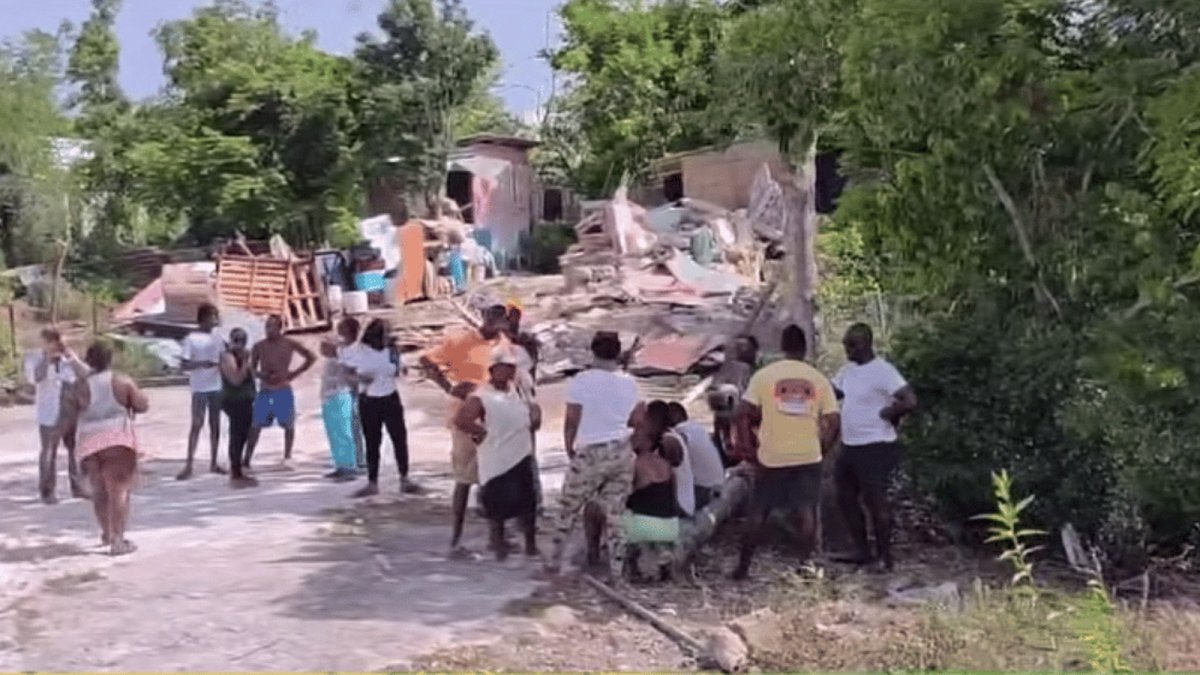
The pre-dawn stillness of Coopers Pen, Trelawny, was shattered on Tuesday morning when bulldozers, tractors and sledgehammers moved in to flatten the homes of families who had slept peacefully just hours before. By the time the dust settled, 20 predominantly concrete houses lay in ruins, and more than 30 families were left staring at the rubble of their former lives, bewildered and without a single official word of explanation.
Residents of the North Trelawny community told the Jamaica Gleaner that at approximately 3 a.m., a police team entered the settlement and detained more than 20 men, whisking them away without explanation. Shortly after, the rumbling sounds of heavy machinery signalled the beginning of an operation that would take hours to complete, all under the watchful eyes of a bailiff and a strong police contingent.
"This is a complete surprise. We got no warning or anything, so it is like we were ambushed," one tearful woman lamented, adding that residents were not even given a chance to secure their belongings. Another female resident, who was allowed only a brief moment to retrieve her baby, told the Gleaner: "Right now, I am totally confused because I have nowhere to go ... . I feel like they have ripped away my life."
A legal battle nearly two decades in the making
While the demolition may have come as a shock to the residents, the legal dispute underpinning Tuesday's events has been brewing for nearly two decades. According to Nationwide Radio, the land conflict began in 2007 when James Chisholm, chairman of New Falmouth Resorts, filed a lawsuit against 99 individuals who were occupying the property without permission. The court subsequently ordered an immediate recovery of possession and awarded the company $50,000 in damages against each defendant for trespassing.
Some affected residents told the Gleaner they had been living on the property for more than 30 years. While they recognised they had no legal claim to the land, they remained unclear as to its true ownership. One longstanding resident recounted: "In 2009, a gentleman showed up claiming ownership of the property and took us to court, but the matter was not resolved, and we were not given any new court date. This morning marks the first time that we were molested by anyone since that time."
The occupants sought political intervention in 2012 under the then People's National Party (PNP) administration, approaching then Minister of Housing Dr Omar Davies and Minister without Portfolio Dr Morais Guy. The government declared the Orange Grove lands an improvement area under Section 6 of the Housing Act, a move designed to facilitate government acquisition of the property and possible regularisation of the squatters through the Housing Agency of Jamaica (HAJ).
Court rulings and government attempts to intervene
The government's attorneys later returned to court seeking an injunction and a stay of the existing eviction order. However, Justice McIntosh rejected that application, describing it as an attempt to pervert the course of justice and an abuse of the process of the court. A further attempt by the Ministry of Housing to block evictions was dismissed in 2014 by Supreme Court Justice Lennox Campbell.
The matter proceeded to the Court of Appeal, which in May 2016 upheld the rulings against the government. Despite the legal victories secured by New Falmouth Resorts, the occupation of the property increased during and after the court proceedings, making it difficult to enforce eviction orders against large squatter settlements.
Member of Parliament for North Trelawny, Tova Hamilton, has confirmed that New Falmouth Resorts received a court order that paved the way for the demolition. However, efforts by the Gleaner to speak with the bailiff and ascertain the reasons behind the demolition and who provided the authorisation proved futile, as he ignored all questions. The police on location also refused to answer any queries.
Humanitarian concerns take centre stage
The demolition has sparked outrage from political figures and community leaders alike, with many questioning the manner in which the operation was carried out. Businessman Dennis Meadows, the PNP caretaker for Trelawny Northern, took issue with the demolition, acknowledging that while the legality of the action may ultimately have to be determined through the appropriate legal processes, the humanitarian impact on the affected families could not be overlooked.
"Regardless of the legal issues involved, today's event has left several Jamaican families displaced," Meadows said, adding that the elected representative has a duty to "ensure that those affected receive fair treatment and the necessary assistance". The Opposition PNP has called on relevant government agencies to ensure that displaced residents receive appropriate assistance and are treated with dignity.
Meadows also pointed out that the demolition comes at a particularly difficult time for many families who are still recovering from the effects of Hurricane Melissa, while simultaneously preparing for the start of the new school year. He said the circumstances warrant a coordinated response to minimise hardship and to ensure that vulnerable residents were not left without support. He also raised questions about the apparent lack of representation and support for affected residents by MP Tova Hamilton.
Residents speak of betrayal and uncertainty
For the residents of Coopers Pen, the emotional toll of Tuesday's events is immeasurable. One resident named Wilkinson described the operation as "inhumane", insisting that the person behind it "should have had dialogue with the people first so that they would have known if the land is up for sale, which would have given them an opportunity to buy their respective plots".
The occupants of 40 houses left standing on the property are now living in a state of heightened anxiety, as they were warned by the demolition team that it would return to complete the exercise and clear the entire property. The uncertainty of not knowing when the next knock on the door might come has left the community on edge.
Tova Hamilton, who visited the site, promised assistance for the affected families. However, the lack of prior warning and the aggressive nature of the operation have left many questioning whether enough is being done to protect vulnerable communities across Jamaica.
Social media claims and the search for accountability
In the aftermath of the demolition, social media has been abuzz with speculation and claims regarding who was behind the operation. Chairman of the Trelawny Municipal Corporation and Mayor of Falmouth, Colin Gager, is rejecting claims from social media vloggers that the government was behind the demolition. Gager says the bloggers in question had no credible basis for their claims, and he is calling for responsible use of social media and regard for the truth concerning matters of national discourse.
The demolition has also reignited a broader conversation about Jamaica's squatter policy and the challenges of balancing property rights with the humanitarian needs of long-term occupants. Across the Caribbean, informal settlements and land tenure issues remain deeply contentious, with governments and private landowners often at odds over how to address the complex realities of those who have built their lives on land they do not legally own.
A regional challenge with deep roots
The situation in Coopers Pen is not unique to Jamaica. Across the Caribbean, similar disputes have played out in Trinidad and Tobago, Barbados, Guyana and other territories, where informal settlements have grown in response to housing shortages, high costs of living and limited access to affordable land. The challenge of regularising these settlements while respecting the legal rights of property owners remains a persistent policy dilemma for regional governments.
In Trinidad and Tobago, for example, squatting on state lands has been a long-standing issue, with successive governments grappling with how to balance enforcement with the social realities of those who occupy these lands. The CARICOM region has also seen increasing pressure from climate change and natural disasters, which have displaced communities and heightened the need for secure housing and land tenure.
The timing of the Coopers Pen demolition, coming as families are still recovering from Hurricane Melissa and preparing for the new school year, has added a layer of cruelty to an already painful situation. For the affected families, the immediate priority is finding shelter and securing their basic needs, but the longer-term questions of land policy and housing justice remain unresolved.
What happens next for Coopers Pen residents?
As the community of Coopers Pen comes to terms with the scale of their loss, the immediate focus must be on providing emergency assistance and support to the displaced families. The promise of assistance from MP Tova Hamilton is a welcome first step, but the affected residents will need sustained support to rebuild their lives.
The legal questions surrounding the demolition may ultimately be resolved through the courts, but the human cost of Tuesday's operation cannot be undone. For the residents who have called Coopers Pen home for decades, the loss is not just physical but deeply personal. As one woman put it, "I feel like they have ripped away my life."
The wider implications for Jamaica's squatter policy are significant. The Coopers Pen demolition has exposed a gap in the country's approach to informal settlements, highlighting the need for clearer processes, better communication and more humane enforcement of property rights. While the legal system has ruled in favour of New Falmouth Resorts, the manner in which the eviction was carried out has raised serious questions about the treatment of vulnerable communities.
For now, the 40 households still standing in Coopers Pen wait nervously, unsure of what the future holds. The warning that the demolition team would return has cast a shadow over the community, leaving residents in a state of limbo. The hope is that dialogue, compassion and a commitment to fairness will prevail as the community seeks to rebuild and move forward.
This article was produced with AI-assisted research and editorial support. Sources: Caribbean360, Jamaica Gleaner, Nationwide Radio, Irie FM.
By Sharon Sahatoo, Staff Writer
What's Your Reaction?
 Like
0
Like
0
 Dislike
0
Dislike
0
 Love
0
Love
0
 Funny
0
Funny
0
 Wow
0
Wow
0
 Sad
0
Sad
0
 Angry
0
Angry
0

Caribbean Correspondent at Global1.News. Based in Port of Spain, Trinidad, covering Caribbean politics, economy, energy, climate, and culture. Amplifying the voices and stories of the Caribbean region.











Comments (0)