
Kushner's Gaza Mission Stalls as Israeli Strikes Kill 10, Ceasefire Push Teeters
Kushner's Gaza shuttle diplomacy met no breakthrough as Israeli strikes killed at least 10 Palestinians, including police and a child. Mediators condemned the escalation, throwing the fragile October 2025 ceasefire into doubt and risking total collapse.
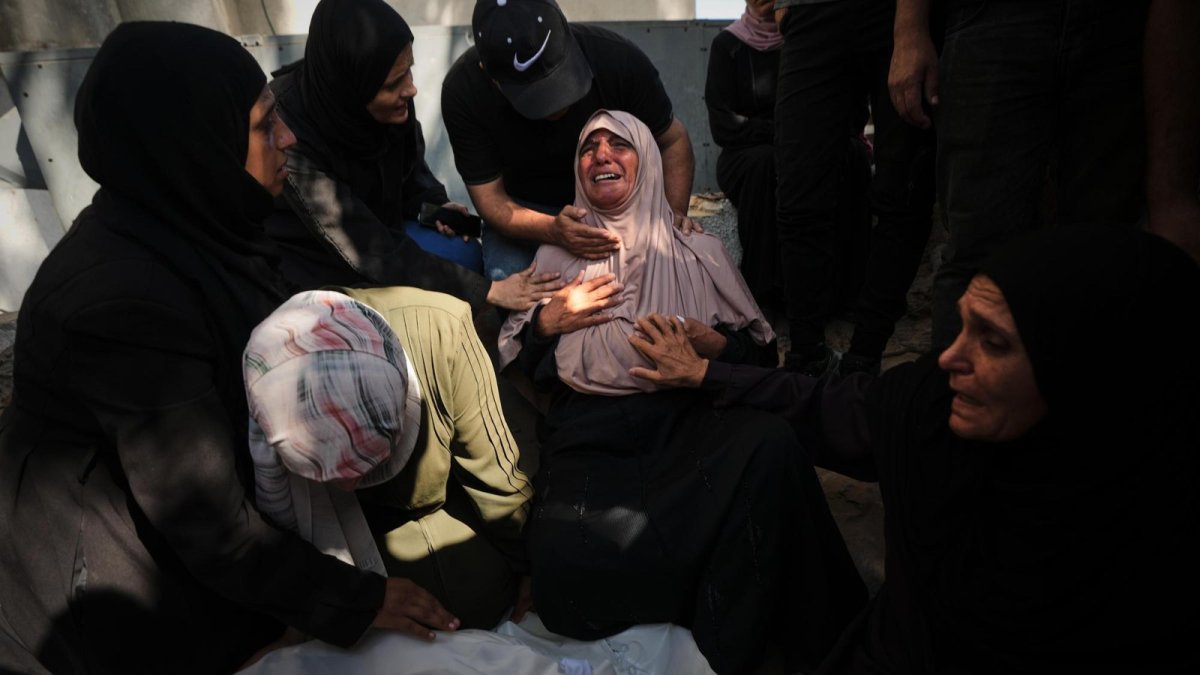
Diplomacy Collides With Violence on Gaza's Streets
The fragile architecture of the October 2025 ceasefire is facing its most severe test yet. Days after President Donald Trump's envoy and son-in-law Jared Kushner shuttled between Hamas leaders in Egypt and Israeli Prime Minister Benjamin Netanyahu in Jerusalem, Israeli airstrikes killed at least 10 Palestinians in Gaza on Wednesday, according to local hospitals and the Palestinian Red Crescent. The strikes, which came just 48 hours after Kushner reportedly urged Netanyahu to "draw down attacks," have thrown the U.S.-backed peace process into open question.
The violence marks a stark rebuke to the diplomatic momentum that had been building since Sunday, when Kushner held a rare, direct meeting with Hamas political chief Khalil al-Hayya in Egypt. That session, which also included Egyptian, Qatari and Turkish mediators, produced public commitments from Hamas to disarm and demilitarize the strip. But by Wednesday evening, the bodies of at least 10 Palestinians — including a 13-year-old girl and eight police officers — lay in the rubble of two separate strikes, and the mediating states of Turkey, Egypt and Qatar were issuing a joint condemnation of Israel's escalation.
For a ceasefire that has already seen at least 1,273 Palestinians killed by Israeli strikes since October 2025, according to Gaza health officials, the question is no longer whether the truce is fraying, but whether it can survive the week. The answer, based on the events of the past 72 hours, is far from certain.
Kushner's High-Stakes Gambit: A Rare Meeting With Hamas
The diplomatic push began in earnest on Sunday, August 16, when Kushner met with Hamas political chief Khalil al-Hayya in Egypt, with sessions reported at El-Alamein and in Cairo. The meeting was joined by Egyptian, Qatari and Turkish mediators, and included two other heavyweight figures: Nickolay Mladenov, the Board of Peace's high representative, and former UK prime minister Tony Blair, according to reports from Axios and other outlets.
According to a source with direct knowledge of the talks cited by Axios, Hamas leaders reaffirmed their commitment to disarm and demilitarize Gaza. It was a significant public posture from a group that has been the target of a nearly three-year Israeli military campaign. Kushner also met with Egyptian President Abdel Fattah al-Sisi that same day, signaling the breadth of the U.S. engagement.
The meeting itself was historic — a direct U.S. envoy sitting across from Hamas leadership, a group Washington has long designated as a terrorist organization. But the optimism generated by that session was short-lived. Kushner's own public assessment was cautious: he told reporters that Hamas had "said all the right things" in the talks, but stressed the group would have to prove its intentions through actions, not words.
Four Hours With Netanyahu: No Breakthrough in Jerusalem
The following day, Monday, August 17, Kushner traveled to Jerusalem for a marathon session with Israeli Prime Minister Benjamin Netanyahu that lasted more than four hours, according to CNN's Oren Liebermann. The outcome was decidedly less encouraging than the Cairo talks.
Netanyahu delivered a firm message: there can be no progress on the stalled ceasefire deal or any Israeli withdrawal from the coastal strip until Hamas fully disarms. The prime minister's position, reported by the New York Times, leaves little room for the phased approach envisioned in Trump's 15-point peace plan. Kushner, for his part, assured Netanyahu that the Israeli army would not be compelled to withdraw before Hamas disarms, according to an official with knowledge of the talks who spoke to Bloomberg.
Kushner left Jerusalem without a breakthrough, per Reuters. The person familiar with the meeting said Kushner had asked Netanyahu to draw down attacks on Gaza — a request that would be rendered almost moot within 48 hours, as Israeli warplanes resumed their strikes with deadly effect.
The Trump Plan: A 15-Point Roadmap Under Strain
The current crisis unfolds against the backdrop of a peace plan unveiled by President Trump on July 31, 2026. The 15-point framework, developed by the U.S.-backed "Board of Peace," envisions a phased ceasefire, the transfer of civilian governance to a transitional authority, and the complete disarmament of Hamas. The disarmament schedule is ambitious: roughly eight months, during which tunnels are to be destroyed and weapons handed over in stages.
The plan was designed to address the core Israeli demand — the elimination of Hamas's military capacity — while offering Palestinians a path toward governance and reconstruction. But the plan's timeline is now colliding with the reality on the ground. Israel controls well over half of Gaza, and roughly 2 million Palestinians live in the strip, most of them homeless after two years of bombardment.
The October 2025 ceasefire took hold after nearly two years of war, but it has never been truly stable. The nearly three-year conflict has killed more than 73,400 Palestinians, according to Gaza's Health Ministry, whose records are viewed as generally reliable by U.N. agencies. The ministry does not distinguish between civilians and militants but says women and children make up around half the toll.
Wednesday's Deadly Strikes: A Commander and a Police Station
The latest escalation began Tuesday evening, when an Israeli strike on a busy seaside cafe in Gaza killed 7 Palestinians, including a child, according to Gaza's Health Ministry. The violence continued into Wednesday, when at least 10 more people were killed in two separate strikes, according to local hospitals and the Palestinian Red Crescent.
The first strike, near the Nuseirat refugee camp, killed a Hamas commander who participated in the October 7, 2023 attack on southern Israel — an assault that killed 1,200 people, mostly civilians, and saw 251 abducted. The second strike, in the Tuffah area of Gaza City, hit four Hamas militants gathering in a police station. The Hamas-run Interior Ministry said the Gaza City strike killed 8 police officers and a 13-year-old girl; two of the officers were women.
Israeli troops also crossed the ceasefire line in southern Gaza at dawn and detained a Hamas police colonel, adding a ground component to the aerial campaign. The strikes bring the total killed since Tuesday to at least 16 Palestinians, according to the joint statement issued Thursday by Turkey, Egypt and Qatar.
Mediators Condemn: Turkey, Egypt and Qatar Push Back
The mediating states — Turkey, Egypt and Qatar — issued a joint statement on Thursday condemning the recent Israeli strikes, urging Israel to meet its ceasefire obligations and avoid steps that could escalate tensions. The statement, which cited the 16 Palestinians killed since Tuesday, represents a rare unified rebuke from the three nations that have been central to brokering and maintaining the truce.
The mediators' condemnation is significant not just for its content but for its timing. It comes just days after their representatives sat in the room with Kushner and Hamas leaders, working to advance the disarmament process. The strikes, in effect, undermine the very mediators who are trying to keep the process alive.
For Egypt and Qatar, in particular, the escalation is a direct challenge to their credibility as guarantors of the ceasefire. If Israel can strike with impunity while negotiations are ongoing, the mediators' ability to extract concessions from Hamas is severely weakened.
Israel's Position: Full Disarmament or No Withdrawal
Netanyahu's public position has been consistent and unyielding: no Israeli withdrawal until Hamas fully disarms. The prime minister reiterated this stance to Kushner on Monday, and there is no indication that Wednesday's strikes represent a change in strategy. Rather, they appear to be a demonstration of Israel's willingness to enforce its security demands unilaterally.
The Israeli military, for its part, has shown some willingness to address accountability. The military said it had completed reviews of 150 incidents of troop conduct during the war and would launch criminal investigations into the 2024 killings of a 5-year-old girl and her family, and of 15 Palestinian paramedics in 2025. These moves, while notable, are unlikely to assuage Palestinian anger or shift the fundamental impasse.
The core problem remains the sequencing of the Trump plan: Hamas is being asked to disarm before any Israeli withdrawal, while Israel is being asked to hold fire while Hamas retains its weapons. The result is a standoff that has now claimed 16 more lives in a single week.
What Comes Next: A Ceasefire at the Precipice
The coming days will be critical. Kushner has left the region without a breakthrough, and the mediating states are openly criticizing Israel's actions. The Board of Peace's high representative, Nickolay Mladenov, and Tony Blair remain engaged, but their ability to bridge the gap between Netanyahu's demands and Hamas's red lines is untested.
For the 2 million Palestinians in Gaza, the stakes are existential. Most are homeless, living in tents and makeshift shelters after two years of bombardment. The ceasefire, however imperfect, has been their only respite from daily violence. Each new strike erodes the already thin trust that the truce can hold.
The data points are grim: 1,273 Palestinians killed by Israeli strikes since the ceasefire began; 73,400 total dead in the nearly three-year war; 251 people abducted on October 7, 2023; 1,200 killed in that single attack. These numbers are not abstractions — they are the ledger against which this peace process will be judged.
Kushner's mission was always a long shot. But the sight of a U.S. envoy meeting directly with Hamas, followed by Israeli bombs falling on Gaza police stations, sends a chilling message: the window for diplomacy is closing, and the region may be sliding back toward the abyss. The mediators have condemned the escalation. The question now is whether anyone in Washington or Jerusalem is listening.
By Jessica Ali, Staff WriterThis article was produced with AI-assisted research and editorial support. Reporting is based on sources cited in the article.
What's Your Reaction?
 Like
0
Like
0
 Dislike
0
Dislike
0
 Love
0
Love
0
 Funny
0
Funny
0
 Wow
0
Wow
0
 Sad
0
Sad
0
 Angry
0
Angry
0

Editor-in-Chief at Global1.News. Atlanta-based journalist who cuts through the BS and tells it like it is. Lead anchor, host, and the voice you hear when the spin stops and the truth starts.














Comments (0)