
Kremlin Scrambles to Contain Damage as Black Sea Grain Exports Collapse Under Mutual Attacks
Ukrainian strikes on Russian Black Sea ports have crippled grain export capacity, with analysts estimating nearly all regional shipments halted. The Kremlin says it is working to minimize the impact as global wheat prices rise and importers like Egypt brace for tighter supplies.
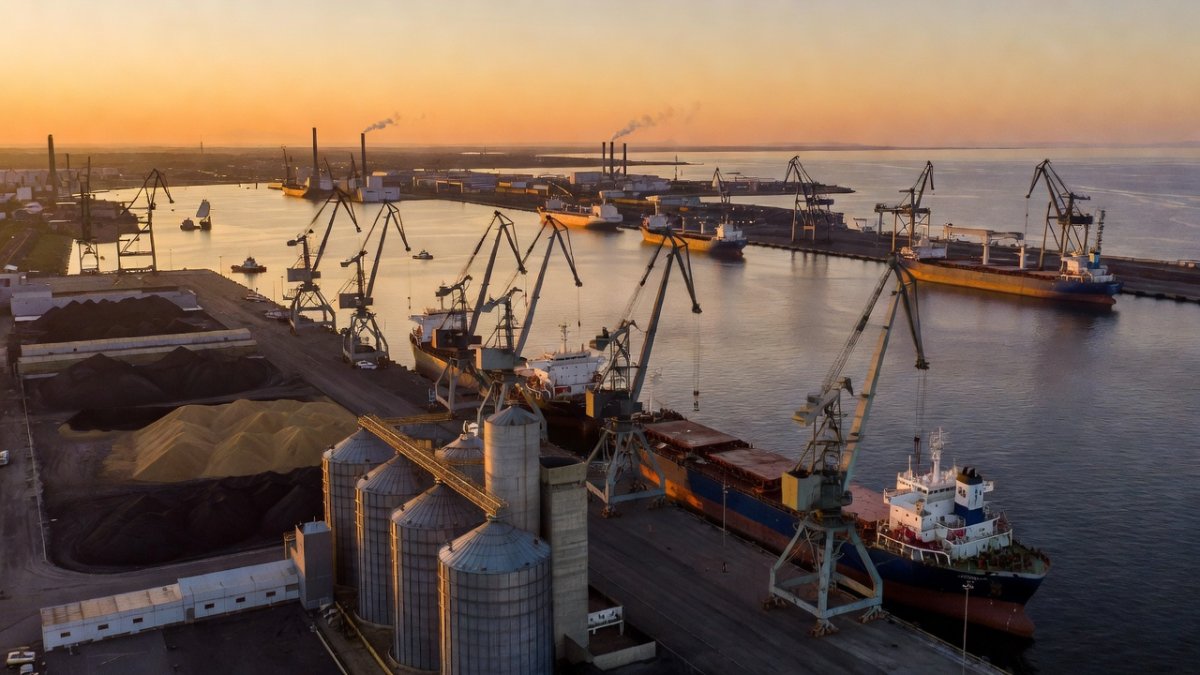
The Kremlin confirmed on Monday that it is working to mitigate the impact of Ukrainian strikes on Russia's grain export infrastructure, as a wave of tit-for-tat attacks on Black Sea ports has crippled shipping capacity during the peak export season. The acknowledgment comes as global wheat importers brace for tighter supplies, with analysts estimating that nearly all regional grain shipment capacity has been taken offline. The escalating attacks have transformed the Black Sea from a vital trade artery into a contested war zone, threatening food security for nations heavily dependent on Russian and Ukrainian wheat.
Kremlin Scrambles to Contain Damage as Black Sea Grain Exports Collapse Under Mutual Attacks
Moscow, Russia – Monday — The Kremlin said on Monday that measures are being taken to minimize the impact of Ukrainian strikes on Russia's grain exports, as a series of coordinated attacks on ports and vessels in recent weeks has shuttered terminals and forced shippers to delay or cancel loadings for dozens of cargoes. The statement from Moscow follows a devastating Ukrainian assault on the Black Sea port city of Novorossiysk earlier this month, which knocked out a significant portion of Russia's export capacity and sent shockwaves through global wheat markets.
Novorossiysk Under Fire: A Critical Port Crippled
In a large-scale drone and missile assault on August 12-13, Ukrainian forces struck the Black Sea port city of Novorossiysk, hitting warships at a naval base and inflicting severe damage on grain terminals. The attack, which local officials said killed three people including a child, forced three of Russia's largest grain terminals to halt operations. Satellite images taken in the aftermath revealed extensive damage to infrastructure critical for loading bulk carriers destined for global markets.
The timing of the strike was particularly damaging, coming at the peak of the summer export season when Russian wheat typically flows to buyers across the Middle East and Africa. The halt in operations at Novorossiysk, one of Russia's primary grain export hubs, has created a bottleneck that shippers are struggling to navigate. Insurance rates for vessels calling at Russian ports have reportedly surged, and several international shipping companies have opted to delay or cancel loadings rather than risk transiting the increasingly dangerous waters.
Export Capacity Reduced to a Fraction
The cumulative effect of the Ukrainian attacks and subsequent navigation restrictions has been catastrophic for regional grain exports. According to the Moscow Times, more than 90% of Russia's grain export capacity in the Azov-Black Sea basin has been taken offline. When combined with Ukrainian capacity losses from Russian retaliation, analysts put the share of halted regional grain shipments at roughly 97% compared to last season's levels.
This near-total shutdown of the Black Sea grain corridor represents a dramatic reversal for two of the world's largest wheat exporters. Just a year ago, the region was responsible for moving tens of millions of tons of grain annually, feeding populations across North Africa, the Middle East, and South Asia. Now, the infrastructure that made that trade possible lies damaged, under threat, or subject to military restrictions that make safe passage nearly impossible.
Global Wheat Prices Surge as Importers Feel the Squeeze
The disruption has not gone unnoticed in global commodity markets. Wheat prices have risen approximately 6% in recent weeks as traders factor in the reduced supply from the Black Sea basin. For countries heavily reliant on Russian and Ukrainian grain, the price increase is more than a market fluctuation—it is a direct threat to food security.
Egypt, the world's largest wheat importer, is feeling the pressure most acutely. In the first half of 2026, Egypt sourced more than 82% of its wheat imports from Russia and Ukraine. Traders familiar with the Egyptian market say the country's private sector, which imports more than half of its needs and operates with smaller inventories, is particularly vulnerable to supply disruptions. Unlike state-backed purchasing programs that can absorb price shocks, private importers face immediate margin pressure and potential shortages if shipments continue to be delayed.
Putin Threatens Retaliation Against 'Sensitive' Sectors
Russian President Vladimir Putin has responded to the Ukrainian attacks with characteristic bellicosity. On August 23, Putin declared that Kyiv had opened "Pandora's box" with its strikes on Russian economic targets and threatened to hit back at Ukraine's "most sensitive economic sectors." The threat signals that Moscow is prepared to escalate the economic dimension of the conflict, potentially targeting Ukrainian infrastructure far beyond the grain sector.
Kremlin spokesman Dmitry Peskov echoed this stance on Monday, framing the Ukrainian attacks as an escalation that forces Russia to respond. However, Peskov also emphasized that Moscow is working to minimize the impact on its own grain exports, suggesting that the Kremlin is aware of the reputational and economic damage the attacks have caused. The dual message—threatening retaliation while promising to protect export capacity—reflects the difficult balancing act facing Russian leadership as it seeks to maintain its position as a reliable grain supplier despite the ongoing conflict.
Russia Strikes Back: Odesa and Border Crossings Targeted
Russia has not limited its response to rhetoric. In recent days, Russian forces have struck grain infrastructure in Ukraine's Odesa region, targeting the facilities that handle much of Ukraine's remaining export capacity. These strikes mirror the Ukrainian attacks on Novorossiysk, creating a cycle of destruction that has effectively neutralized both countries' ability to export grain at scale.
Russian forces have also struck Ukrainian checkpoints and border crossings on the border with Moldova, through which cargo from Romania is transported. This expansion of targets suggests Moscow is attempting to cut off alternative supply routes that Ukraine has used to circumvent the Black Sea blockade. By striking these transit points, Russia aims to prevent Ukraine from exporting grain via land corridors through Eastern Europe, further tightening the squeeze on Ukrainian agricultural exports.
The Bosphorus Factor: Navigation Risks and Insurance Costs
The ripple effects of the Black Sea conflict extend beyond the immediate war zone. The Bosphorus Strait, the narrow waterway connecting the Black Sea to the Mediterranean, has become a chokepoint for grain shipments as insurers reassess risk. Vessels that do manage to load grain at Russian or Ukrainian ports face the daunting prospect of transiting waters where both sides have demonstrated a willingness to attack commercial shipping.
Shipping industry sources indicate that freight rates for Black Sea grain routes have risen sharply, and some carriers are refusing to accept bookings altogether. The combination of military risk, elevated insurance premiums, and operational uncertainty has created a perfect storm for the grain trade. Even if a political solution were found tomorrow, it would take weeks to restore confidence and resume normal shipping operations.
Egypt and Global Importers: A Precarious Position
For importing nations, the crisis could not come at a worse time. Egypt's heavy dependence on Russian and Ukrainian wheat has left it exposed to supply shocks, and the current disruption threatens to push domestic bread prices higher—a politically sensitive issue in a country where subsidized bread is a staple for millions. The Egyptian government has sought to diversify its wheat sources in recent years, but the sheer volume of grain needed makes it difficult to replace Russian and Ukrainian supplies quickly.
Other importers across the Middle East and Africa face similar challenges. Countries that have historically relied on Black Sea grain for their food security are now scrambling to secure alternative supplies from the European Union, the United States, or South America. However, these alternative sources come at a premium, and the logistics of redirecting global grain flows will take time to resolve. In the interim, the world's most vulnerable populations face the prospect of higher food prices and potential shortages.
Analysis and Implications
The mutual destruction of grain export infrastructure in the Black Sea basin represents a new and dangerous phase in the conflict between Russia and Ukraine. By targeting each other's economic lifelines, both sides have demonstrated a willingness to sacrifice long-term commercial relationships for short-term military advantage. The result is a lose-lose scenario in which neither country can export grain at scale, and the global market suffers as a consequence.
Analysts suggest this signals a fundamental shift in how the war is being waged. Rather than confining attacks to military targets, both Russia and Ukraine are now systematically striking economic infrastructure that sustains their adversary's war effort. This approach, while strategically understandable, carries enormous risks. The destruction of grain terminals, port facilities, and shipping capacity will take years to repair, even after the conflict ends. The damage to Russia's reputation as a reliable grain supplier may prove particularly lasting, as importers who have been burned by this disruption will likely seek to diversify their sources permanently.
Looking ahead, the immediate outlook for Black Sea grain exports remains bleak. The Kremlin's promise to minimize the impact of Ukrainian attacks offers little comfort to shippers and importers who must navigate a war zone to move essential food supplies. With both sides showing no appetite for de-escalation, the world's grain markets face a prolonged period of uncertainty and elevated prices. For the millions of people in developing countries who depend on affordable wheat, the consequences of this conflict are not abstract—they are measured in the cost of bread on their tables. The coming weeks will determine whether diplomatic efforts can halt the destruction, or whether the Black Sea grain trade will remain a casualty of war for the foreseeable future.
By Irina Volkov, Staff Writer
This article was produced with AI-assisted research and editorial support. Sources: Moscow Times, Reuters, Bloomberg, CNBC, Al Jazeera.
What's Your Reaction?
 Like
0
Like
0
 Dislike
0
Dislike
0
 Love
0
Love
0
 Funny
0
Funny
0
 Wow
0
Wow
0
 Sad
0
Sad
0
 Angry
0
Angry
0

Russia/Eastern Europe Correspondent at Global1.News. Covering Russian politics, energy, security, and the shifting dynamics of the post-Soviet space. Provides clear-eyed analysis on one of the world's most opaque regions.













Comments (0)