
US 'Economic D-Day' vs Iran: Tehran Vows It Will Not Submit as Treasury Prepares Sanctions Blitz
The US Treasury is expected to announce sweeping new sanctions against Iran Monday, targeting oil revenues and financial networks. Tehran vows defiance, while Hormuz traffic drops 20% and oil prices climb. China signals non-cooperation, testing the strategy's effectiveness.
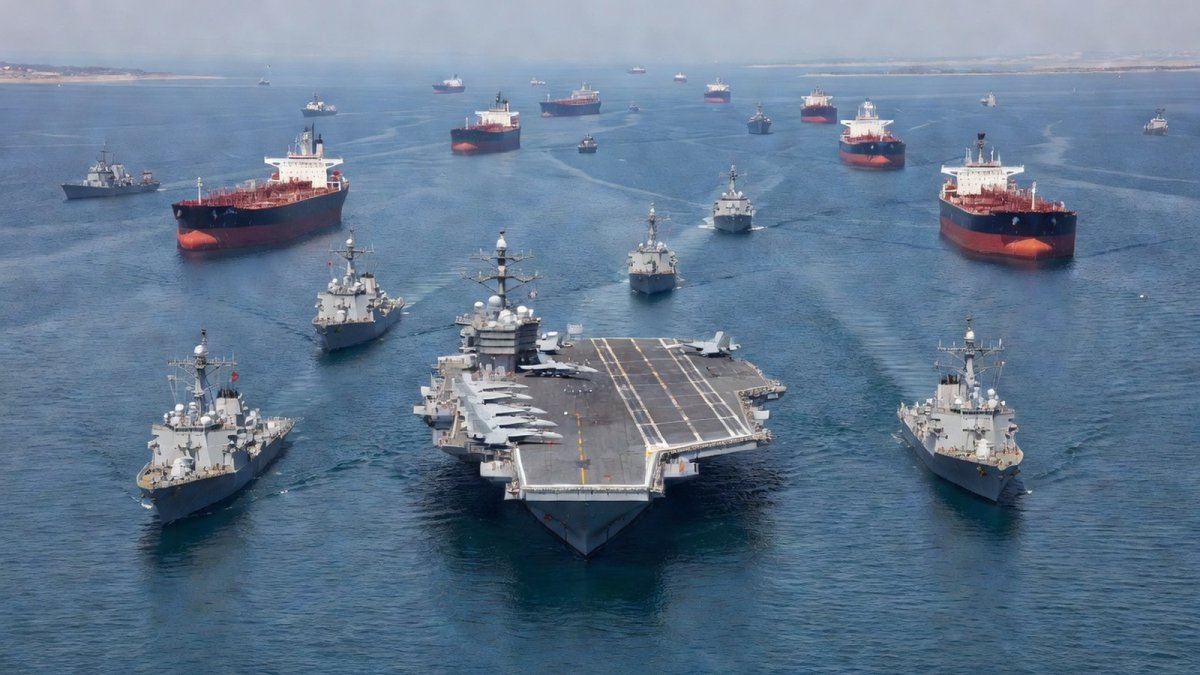
The United States is poised to deliver what the Trump administration describes as the most aggressive financial assault in modern history, with Treasury Secretary Scott Bessent expected to unveil a sweeping new sanctions package against Iran at a news conference Monday afternoon around 2 pm EDT. The announcement, first reported by CNN and the New York Times, comes after President Trump declared "Economic D-Day" against Tehran in a social media post on Wednesday evening, promising "the most crushing economic operation ever taken against any country."
Iran's military leadership has responded with defiance. Maj. Gen. Ali Abdollahi, commander of the Khatam al-Anbiya Central Headquarters, warned Saturday that Tehran "will not submit" to economic pressure, with Iranian state media quoting him telling Trump to "wait for Iran's surprises." The escalating rhetoric marks a critical juncture in the ongoing US-Iran conflict, which has already seen the USS Abraham Lincoln carrier strike group deployed for more than 250 days and a dramatic reduction in tanker traffic through the Strait of Hormuz.
The sanctions package, described by administration officials as "the single greatest financial offensive ever marshalled against an adversary," is expected to target Iran's oil revenues, its financial system, and third-country companies and governments that facilitate Iranian trade. As the world awaits the formal announcement, the contours of the plan and Tehran's counter-threats are already reshaping global energy markets and diplomatic alignments.
What the New Sanctions Package Is Expected to Target
According to reporting from Eastern Herald and Firstpost, the forthcoming measures are designed to sever Iran's remaining economic lifelines. The package is expected to focus on oil smuggling networks, financial infrastructure, front companies, and shipping links that have allowed Tehran to circumvent existing restrictions. Former US deputy assistant secretary of defence Michael Mulroy told Al Jazeera that the measures will include secondary sanctions with extraterritorial reach, meaning foreign companies and governments doing business with Iran could face penalties regardless of their home country's policies.
Bloomberg reported Friday that Trump is betting this combination of new sanctions, a naval blockade, and ramped-up economic pressure against Iran's trading partners can accomplish what "thousands of bombs and missiles could not" — forcing Tehran to accept a deal to end the war on US terms. The strategy represents a significant shift from kinetic military action to economic warfare as the primary lever of pressure.
The timing is notable. The June 17 memorandum of understanding between the parties collapsed, the US naval blockade was reinstated, and General License X — which had allowed Iranian oil sales — was revoked on July 7, according to OSINT analysis from Ronin Grips. Monday's announcement is expected to formalize and expand upon these measures, closing loopholes and extending the reach of US enforcement.
Iran's Military Leadership Issues Direct Warning to Trump
Maj. Gen. Abdollahi's Saturday statement, reported by Fox News, was unambiguous. The military chief warned that any "new threats from enemies" would face a "devastating response." His comments were amplified through Iranian state media, which carried his direct message to the US president: "wait for Iran's surprises." The Khatam al-Anbiya Central Headquarters, which Abdollahi commands, oversees Iran's strategic military installations and has been central to the country's defensive posture throughout the conflict.
The military rhetoric is being matched at the diplomatic level. Foreign Minister Abbas Araghchi called the American drive "doomed to fail," drawing parallels to previous US pressure campaigns against Tehran over the past 14 years, according to Press TV. Araghchi's framing suggests Iran intends to weather this storm as it has weathered earlier sanctions regimes, betting on internal resilience and external diplomatic support.
Foreign Ministry spokesman Esmaeil Baghaei offered a more legalistic critique, arguing the sanctions go beyond pressuring Tehran — they aim to extend US jurisdiction to other independent states. "No state has the right to compel foreign banks," Baghaei said, signaling that Iran will contest the extraterritorial aspects of the new measures through diplomatic and potentially legal channels.
Tehran Threatens Neighbors With 'Earthquake-Like' Retaliation
Iran has expanded its warnings beyond Washington to include regional actors. According to Breitbart, Iran warned neighboring countries that joining the US "economic war" would make them "enemies" facing "earthquake-like" retaliation. Al Jazeera confirmed that Tehran is threatening retaliation against any country that participates in US economic warfare efforts, a stance that could complicate the administration's efforts to build a coalition of enforcement partners.
The threat is not merely rhetorical. Iranian parliament is advancing plans for Hormuz "service fees," a mechanism that could impose costs on tanker traffic through the strait, according to Al Jazeera. Such fees would represent a new revenue stream for Tehran while simultaneously punishing countries that continue shipping oil through the waterway under US escort.
These threats come against a backdrop of diminished Iranian control. CNN reported August 18 that Iran has lost significant control of the Strait of Hormuz, with the US Navy now helping escort oil tankers through the strait. The New York Times noted that only a few tankers braved Iran's attacks for much of the war, suggesting the military balance has shifted decisively in favor of US and allied naval forces.
Strait of Hormuz Traffic Drops as Oil Prices Climb
The economic stakes are visible in real-time shipping data. Lloyd's List Intelligence recorded 73 transits through the Strait of Hormuz from August 10-16, down from 91 the prior week — a roughly 20% drop in a single week. The decline reflects both the security environment and the deterrent effect of ongoing hostilities on commercial shipping operations.
Oil markets have responded to the tightening conditions. Prices rose to about a three-week high on August 19 as traders weighed tanker attacks, the UAE-Iran confrontation, and fading prospects for a diplomatic settlement, according to Quiver Quant. The price movement suggests markets are pricing in prolonged disruption rather than a quick resolution.
Fortune reported August 16 that Iran's oil is effectively trapped while rival exports are about to rise. This dynamic is central to the US strategy: if Iranian barrels cannot reach market while other producers increase output, the economic pressure on Tehran intensifies without triggering a global supply crisis. The success of this approach depends on whether other producers can fill the gap and whether China — Iran's biggest oil customer — will cooperate with US enforcement efforts.
China Signals It Will Not Aid US Economic Warfare
Beijing has emerged as a potential spoiler for the US strategy. Asia Times reported August 22 that China has signaled it will not aid Trump's economic warfare against Iran. As Iran's largest oil customer, China's purchasing decisions have an outsized impact on whether sanctions can actually strangle Iranian revenues. If Chinese refiners continue buying Iranian crude through alternative payment mechanisms, the effectiveness of the new sanctions could be significantly diminished.
The Chinese position reflects broader tensions in US-China relations and Beijing's reluctance to subordinate its energy security to American foreign policy objectives. It also highlights the limits of extraterritorial sanctions: Washington can threaten penalties, but enforcement requires cooperation from major economies that may have divergent interests.
This dynamic will likely be a central focus of Bessent's Monday announcement. The Treasury Secretary will need to address how the administration plans to handle Chinese purchases of Iranian oil, whether through carve-outs, enforcement actions against specific entities, or diplomatic engagement. The credibility of the entire sanctions regime may hinge on this question.
Tehran Residents Feel the Squeeze of Blockade and Sanctions
Inside Iran, the human toll of the economic campaign is becoming increasingly visible. A New York Times video report from August 22 captured Tehran residents expressing resignation and anxiety about the coming measures. One resident summarized the mood: "We have the blockade, and we are going to have the toughest sanctions in history." The combination of military blockade and financial restrictions is squeezing ordinary Iranians who have limited ability to influence their government's decisions.
The humanitarian dimension adds complexity to the US strategy. While the administration frames the sanctions as pressure on the Iranian regime, the immediate impact falls on civilians who face rising prices, shortages, and limited economic opportunity. This dynamic has historically created openings for Iranian propaganda and has sometimes generated international criticism of US policy.
The broader human rights context is also drawing attention. The Abdorrahman Boroumand Center, cited by CNN, documented 916 executions in Iran since the start of 2026, including 56 since March 19 on national security-related charges. These figures underscore the repressive character of the Iranian government and provide moral justification for US pressure, even as critics question whether sanctions will change Tehran's behavior or simply deepen civilian suffering.
What Happens After Monday's Announcement
The sanctions announcement is expected to be the opening salvo in a sustained economic campaign rather than a one-time measure. Administration officials have signaled that enforcement will be aggressive, with Treasury and State Department resources dedicated to tracking and penalizing sanctions evasion. The naval blockade, already reinstated, will continue to interdict Iranian oil shipments and deter tanker traffic.
The immediate question is how Iran responds. Military leaders have promised "surprises," and the parliament's Hormuz "service fees" proposal suggests Tehran is exploring asymmetric economic countermeasures. The risk of escalation remains significant, particularly if Iran attempts to disrupt tanker traffic or retaliate against regional countries that cooperate with US enforcement.
For global markets, the path forward depends on whether the sanctions achieve their intended effect without triggering a broader conflict. The 20% weekly drop in Hormuz transits and rising oil prices indicate that the situation is already having real economic consequences. With China signaling reluctance to cooperate and Iran vowing resistance, the coming weeks will test whether economic pressure alone can achieve what military force has not.
Bessent's Monday announcement will provide the first detailed picture of the administration's strategy. Until then, the world watches as Washington prepares to deliver what it calls the greatest financial offensive in history — and Tehran insists it will not submit.
By Jessica Ali, Staff Writer
This article was produced with AI-assisted research and editorial support. Sources: CNN, The New York Times, Reuters, Bloomberg, Al Jazeera, Fox News, Lloyd's List Intelligence, Asia Times, Press TV, Breitbart, Financial Express.
What's Your Reaction?
 Like
0
Like
0
 Dislike
0
Dislike
0
 Love
0
Love
0
 Funny
0
Funny
0
 Wow
0
Wow
0
 Sad
0
Sad
0
 Angry
0
Angry
0

Editor-in-Chief at Global1.News. Atlanta-based journalist who cuts through the BS and tells it like it is. Lead anchor, host, and the voice you hear when the spin stops and the truth starts.













Comments (0)