
Korean Workers File First Claims Over Georgia Hyundai Raid
More than 300 South Korean workers detained in the September 2025 raid at Hyundai's Georgia Metaplant have begun filing administrative claims against nine federal agencies, the first major legal action over the operation.
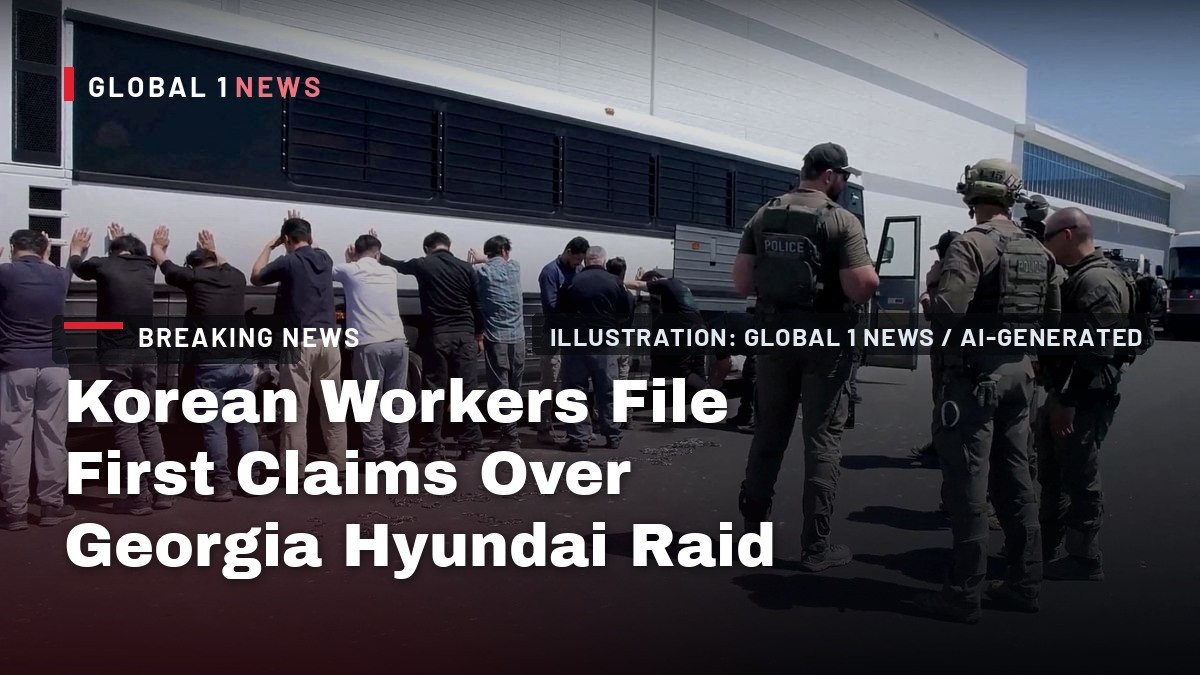
More than 300 South Korean workers detained in the September 2025 raid at the Hyundai Metaplant in Ellabell are now formally challenging the U.S. government. The first administrative claim has now been mailed, with the rest to follow by the end of the year — opening the first major legal action over an operation that swept up 475 people in a single morning. Here is what matters: nothing has been proven, no lawsuit has been filed, and the government has not responded to the substance of the allegations.
Korean Workers File First Claims Over Georgia Hyundai Raid
Atlanta, Georgia - The claims began being filed with federal agencies a little over a year after hundreds of agents descended on a 2,900-acre manufacturing campus in Bryan County. A Korean attorney practicing in Georgia, who asked to be identified only as a Korean lawyer practicing in Georgia, told CNN the first individual claim was mailed with documentation shared with the network. She aims to have all the claims filed by the end of the year. The filings are administrative claims, a mandatory step before any federal lawsuit. They land with nine federal agencies, including the Department of Homeland Security, Immigration and Customs Enforcement, Customs and Border Protection, the FBI, and the Departments of Justice and Labor. No court has ruled on any of it. No agency has adjudicated anything.
What the Claims Actually Allege
The claims assert unlawful detention, false imprisonment, abuse of process, and intentional infliction of emotional distress. They seek damages for confiscated belongings, lost work, and psychological harm. The attorney declined to specify the amount sought for the Korean workers. The first claim, provided to CNN, comes from a worker identified only by the surname Kim, described as one of the lead organizers. It argues he was unlawfully detained and "subjected to demeaning living conditions" during seven days in an ICE facility. It further alleges the raid resulted in "intentional infliction of emotional distress, humiliation… and lasting psychological trauma." The attorney told CNN the aim is to make the U.S. government acknowledge an "enormous, unjust mistake" and "admit it and apologize." That is the ask. Whether the claims succeed is a separate question entirely.
Seven Days in Folkston
Kim's account, as described in the filing, is specific. He says he was held for hours with no Korean interpreters present. He says workers were ordered to sign documents they could not read, which they later learned were consent-to-arrest forms. Several signed believing it would send them home faster, according to the claim. He describes being handcuffed at the wrists and ankles and loaded onto buses. For the first few days at the Folkston ICE Processing Center, he says, they were held in a room crammed with up to 80 men with just a handful of open toilets, in frigid conditions, with only a thin towel to sleep under. Some had nothing to sleep under at all. The food smelled sour and the water tasted off, several workers said. They were later moved to two-person cells. These are allegations in a claim. They have not been tested in any proceeding.
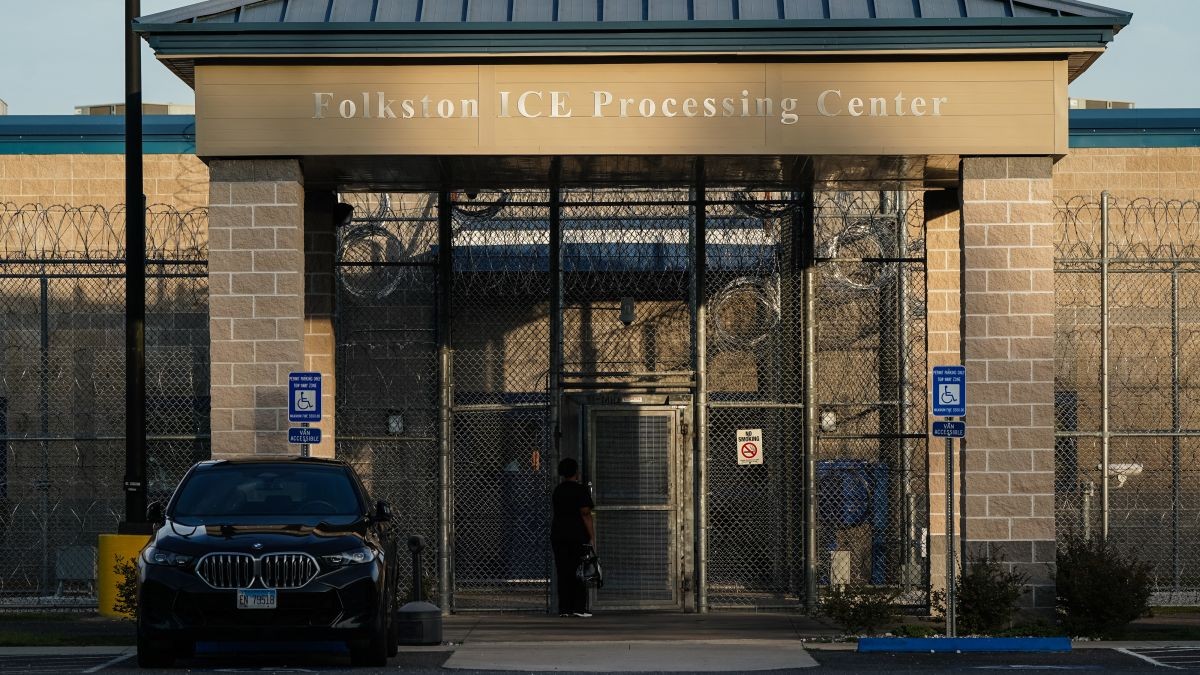
"They Might Torture You"
Kim says that when he demanded to know what he had done wrong, an officer told him that being inside the factory was the violation. The officer warned that contesting it could take months and said, according to the claim, "They might torture you." Kim signed a voluntary-departure agreement. All the Korean detainees signed except one, who was married to a U.S. citizen. ICE did not respond to CNN's request for comment on the alleged threat against Kim. ICE and South Korea's Foreign Ministry did not respond to CNN's questions about the legal basis for the raid, the detention conditions, or the workers' return on the same visas. Four workers told CNN they were working under valid visas and were given no reason for their arrest when taken into custody.
The Warrant Named Four People
A search warrant filed in the Southern District of Georgia identified four people specifically to be searched. None of the four was a Korean worker, according to CNN. The warrant sought records related to "conspiracy to conceal, harbor or shield" people in the United States illegally, including employment and recruitment records, correspondence with federal officials, and identification and immigration documents. Steven Schrank, the HSI special agent in charge, said all 475 taken into custody were suspected of living or working illegally in the US: some had crossed illegally, some had visa waivers that prohibited working, and some had overstayed visas. DHS said at the time that ICE "executed a judicial search warrant as part of an ongoing criminal investigation into allegations of unlawful employment practices and other serious federal crimes." An ICE news release in September 2025 said: "This is not primarily about immigration status — it is about accountability under the law."
The Second Claim: Two Million Dollars
A second claim, separate from the Korean workers' filings, seeks a specific figure. Alfredo Fajardo Melgarejo, a 45-year-old Colombian man, filed an administrative claim with ICE under the Federal Tort Claims Act seeking $2 million on 4 September 2026, exactly one year after the raid. He is represented by Centro de los Derechos del Migrante and Asian Americans Advancing Justice-Atlanta. The claim alleges armed ICE officers kicked down the door to his workspace shouting in English, a language he says he has very little understanding of. It alleges they choked, manhandled and humiliated him at gunpoint although he was not resisting or trying to flee. It alleges an officer made a derogatory comment about Latinos and that an officer pressed on his lower back with enough force that he involuntarily urinated. It alleges excessive force and militaristic tactics to detain him without probable cause. Fajardo showed officers photographs of his employment authorization document, Georgia identification card, driver's license, and an immigration hearing notice. His attorneys say an officer reviewed his immigration information and initially indicated he could go home once his documents were verified. He was shackled instead and bussed to the Folkston ICE Processing Center. The claim says he was held there for more than seven months, then transferred to the Jackson Parish Correctional Center in Louisiana on or around 23 April 2026 and held about another month. He was deported to Colombia around 13 May 2026, approximately eight months after the raid. He says he was denied a phone call for the first 11 days, leading his family to believe he was dead, and that he suffered medical neglect and was given low-quality, rotten or expired food in detention. Julia Solórzano, legal and policy director at Centro de los Derechos del Migrante, said of the arrest: "This was all without ascertaining his immigration status or asking him any questions." Fajardo said in his own statement: "The use of force during the raid was excessive. We are hardworking and humble people who work hard every day. I showed the government that I had my permit, paid my taxes and had everything in order. To me, it was a very clear violation of our rights. Now I am no longer afraid of anything. I would like to see justice served."
What the Government Says Back
WJCL 22 News contacted ICE for a response to Fajardo's claim and its allegations and had not received one as of publication. The search warrant caveat matters here. WJCL notes the warrant authorized officers to search the facility and four specifically identified people, and Fajardo was not one of the four. No one ever showed him a warrant suggesting officers were there specifically to arrest him, his attorney said. WJCL also notes a search warrant is different from an arrest warrant, and that Fajardo's absence from the document does not by itself establish that officers lacked another legal basis to detain him. That distinction is central. Customs and Border Protection told CNN that admissibility decisions are "made on a case-by-case basis" and that "having a non-immigrant visa from a US Embassy or Consulate, or an approved ESTA does not guarantee that you will be admitted into the United States."
Six Months, Then a Federal Courtroom
Here is how the mechanism works. Administrative claims under the FTCA are a mandatory, jurisdictional step before a federal lawsuit. A claim must be presented within two years of the date it accrued. If the agency denies the claim, or fails to make a final disposition within six months, the claimant may then sue in federal district court. Nora Engstrom, a Stanford law professor and tort expert not involved in the case, said the claims not only pave the way for a federal lawsuit but can also force the government to provide financial payment and put on the record why the workers were detained, what evidence justified it, and whether officers followed or broke agency policy. Because the FTCA borrows state law, the workers would have to prove unlawful arrest under Georgia law, Engstrom said. She said the government will "almost certainly" argue the claim is barred by protections for injuries caused by federal employees carrying out "discretionary" duties, though that exception was never meant "to create blanket immunity for federal officers."
Two Professors, One Precedent
James E. Pfander, a Northwestern law professor who studies the federal courts and is also not part of the case, said the FTCA requires each person to exhaust their own remedies. One filing cannot speak for all. Kate Goettel, a former senior legal director for the American Immigration Council who is also not involved, said the FTCA is "the only reliable avenue for money damages." Plaintiffs can also sue individual officers for constitutional violations, but the Supreme Court has increasingly shut that door, especially in immigration cases, she said. Precedent exists: after a 2018 raid at a Tennessee meatpacking plant, detained workers alleging racial profiling, excessive force and unlawful arrest, some under the FTCA, settled with the government for more than $1 million, the workers' attorneys said. The FTCA limits damages to compensatory awards and excludes punitive damages.
The Plant Kept Moving
The battery plant is complete. The joint venture told CNN that commercial production began in April 2026 and the first shipment of battery cells was delivered in May. It said it now has "more than 500 employees on site, the majority hired locally," and that for highly technical projects it may "draw on specialized expertise from outside the country," but that "all workers must fully comply with US laws and regulations." LG Energy Solution told CNN it "prioritize(s) strict compliance" and sends experts only temporarily until plants can run on their own. Construction of the battery plant had halted after the raid. Work resumed in November 2025 with a mix of new and returning workers, the plant's operator told the Associated Press. The Metaplant was projected to employ up to 8,500 people when complete. The stakes around it were never just local. Washington has for years pressed Seoul to invest on American soil, most recently wielding tariff threats to extract some $350 billion in commitments, and the Hyundai-LG battery plant is one of South Korea's big bets. South Korean President Lee Jae Myung warned after the raid that the incident could make Korean companies hesitant to invest in the United States. Foreign Minister Cho Hyun said more than 300 of those arrested were South Korean, and that he was prepared to travel to Washington personally if necessary. Georgia Governor Brian Kemp later traveled to South Korea on a trip planned before the raid that took on added significance afterwards. President Donald Trump initially defended the operation, then in October 2025 said he opposed it: "I was very much opposed. Look, when they come in and they're making very complex machinery, equipment, things, they're going to have to bring some people in at least at the initial phase."
The Card in Their Pocket
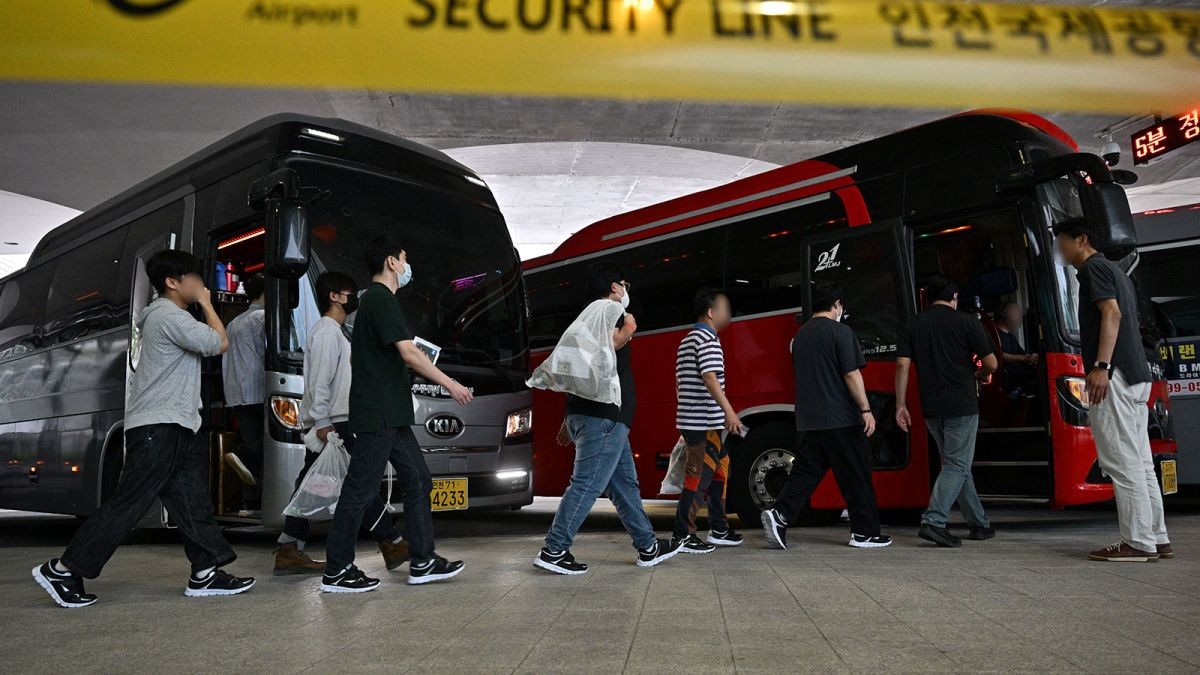
Some workers have since gone back to work at U.S. battery plants doing similar jobs, often on the same visas they held during the raid. Ryu, who was among those held longest, told CNN he returned home nearly 10 pounds lighter. Months later he was back at the same Georgia plant as a project manager. A field engineer named Choi, who has also returned to the same plant, said: "The thing that angers me the most is that there hasn't been any kind of apology. We were all taken, locked up, and left the US as if we were expelled." Jung, a software engineer who flew to Cleveland in June for equipment work and stayed through August, said: "Even though I'm still scared, I have no choice but to go." Kim later installed and repaired lithium-ion battery equipment in Lansing, Michigan, on the same B-1 visa he held the morning of the raid, and has since returned to South Korea. He said workers now carry a company-issued card listing their visa, employer and job "in case immigration enforcement comes again" — a new procedure since the Georgia raid. Kim on how the raid changed his view: "Before, my image of the US was that it's a powerful country, a wealthy country, an ally. So I didn't really feel anxious." That image, he said, "has been greatly shattered." And: "It's not really that fair, or the land of freedom that we generally think of."
By Jessica Ali, Staff Writer
This article was produced with AI-assisted research and editorial support. Sources: CNN, The Atlanta Journal-Constitution, WJCL 22 News, WTOC 11, The Korea Times, Asian Americans Advancing Justice-Atlanta, Centro de los Derechos del Migrante, U.S. Immigration and Customs Enforcement, and the Associated Press.
What's Your Reaction?
 Like
0
Like
0
 Dislike
0
Dislike
0
 Love
0
Love
0
 Funny
0
Funny
0
 Wow
0
Wow
0
 Sad
0
Sad
0
 Angry
0
Angry
0

Editor-in-Chief at Global1.News. Atlanta-based journalist who cuts through the BS and tells it like it is. Lead anchor, host, and the voice you hear when the spin stops and the truth starts.













Comments (0)