
Sudan’s Capital Breathes Again: Khartoum Curfew Lifted After Two Years of War
Khartoum is stirring back to life. The military-led government of Sudan has lifted the curfew and state of emergency that have gripped the capital for more than two years, a significant symbolic step in a city slowly emerging from the shadow of devastating conflict.
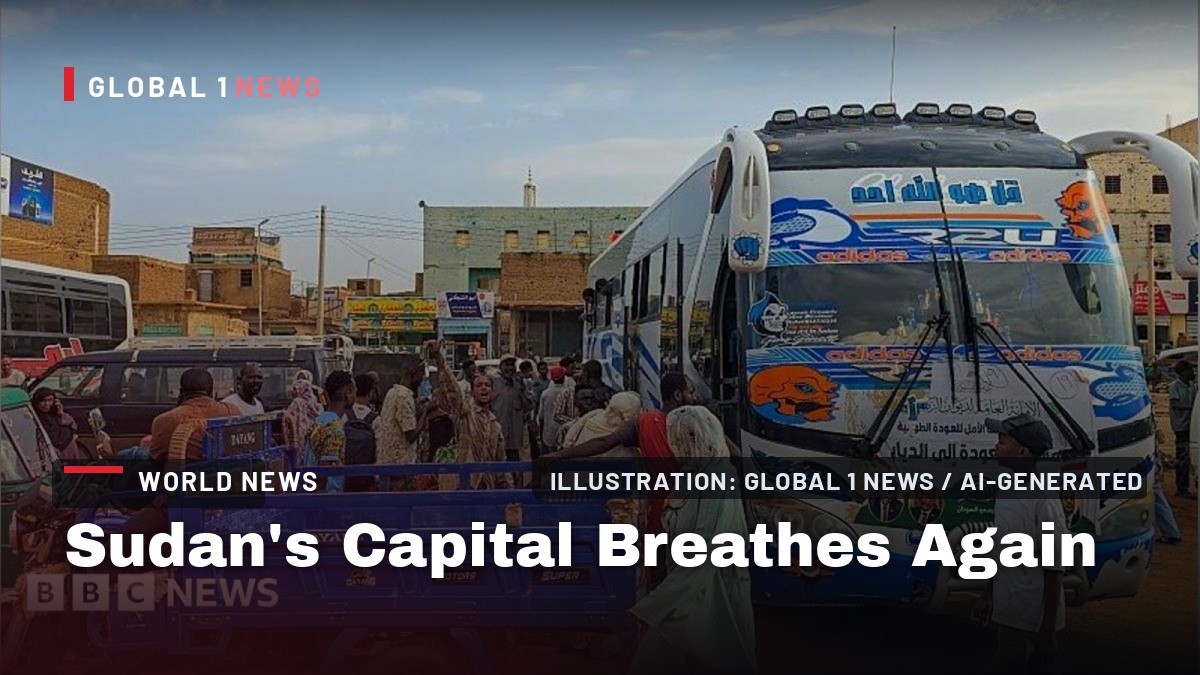
Khartoum is stirring back to life. The military-led government of Sudan has lifted the curfew and state of emergency that have gripped the capital for more than two years, a significant symbolic step in a city slowly emerging from the shadow of devastating conflict. State media announced the decision on Friday, marking a cautious turn toward normalcy for the millions who call Khartoum home, even as the brutal civil war that forced them to flee continues to rage in other parts of the country.
A City Reclaimed, A Wound Still Open
The lifting of the curfew comes 18 months after the Sudanese Armed Forces (SAF) successfully recaptured the capital from the paramilitary Rapid Support Forces (RSF), a bitter enemy in a civil war now entering its fourth year. For the residents of Khartoum, the end of the nightly lockdown is more than a bureaucratic change; it is a release from a constant reminder of the siege mentality that has defined their lives since April 2023, when war erupted between the two rival military factions. The decision is a clear attempt by the authorities to project an image of stability and encourage the return of normal life. The government has already reopened the city’s main airport for some flights and is actively courting businesses and foreign embassies to re-establish their presence. The message from the corridors of power in Khartoum is one of renewal, a bid to convince the world that the capital is once again open for business. Yet, for the people on the ground, the reality is far more complex. The physical and psychological scars of war remain etched into the city’s walls and its people’s memories.The Long Road Home: Returns Amidst Ruins
According to the International Organization for Migration (IOM), the pull of home is strong. More than two million of the roughly five million people who fled Khartoum at the start of the war have already returned to the city since major fighting there ended in March 2025. This mass homecoming is a testament to the enduring human spirit and the deep connection to one’s roots, a sentiment that resonates strongly here in West Africa, where the concept of home and ancestry is sacred. However, the returnees are not coming back to the city they left. They are returning to a landscape of widespread destruction. Many buildings stand looted and hollowed out, their windows like empty eyes staring at the street. The basic infrastructure that sustains urban life is in tatters. Residents are grappling with constant power blackouts, a daily frustration that hampers everything from small businesses to hospitals. The Khartoum state government attributes these outages to a combination of factors, including alleged RSF drone attacks on electricity infrastructure, the looting of copper wires and fuel, and a critical lack of government funds to carry out essential repairs. Altayeb Saadeldin, a spokesperson for the Khartoum state government, told the Reuters news agency that the targeting of the electricity sector was particularly devastating. "The targeting of the electricity sector in particular was very significant," he said, listing the looting of components and drone attacks as key reasons for the grid’s failure. Unsurprisingly, an RSF source dismissed these allegations as "incorrect and army propaganda," a stark reminder that the propaganda war continues even as the front lines have moved.Security and Suspicion in the New Khartoum
The lifting of the state of emergency does not mean the authorities are letting their guard down. The specter of RSF infiltration looms large in the minds of the military leadership. The Sudan News Agency has reported that security patrols will continue to operate across the state, and locals traveling at night will be required to carry identification documents. This is a city still on edge, where trust is a commodity in short supply. Reports compiled by BBC Monitoring indicate that the army is conducting ongoing security sweeps across greater Khartoum, targeting alleged RSF sleeper cells, undocumented foreigners, and criminals involved in illegal activities. This dual approach—projecting an image of peace while maintaining a heavy security footprint—reveals the fragile nature of the current stability. The government is trying to walk a tightrope, encouraging a return to civilian life while simultaneously rooting out any potential threats to its hard-won control. For the people of Khartoum, this means a new normal, one where the freedom of movement is tempered by the ever-present presence of checkpoints and the need to prove who you are.The War Beyond the Capital: A Regional Fire
While Khartoum may be experiencing a fragile peace, the conflict that began there has metastasized, spreading across Sudan’s vast southern and western territories. More alarmingly, there is growing evidence that the war is spilling across Sudan’s borders, threatening to engulf the entire region in a wider conflagration. This is a development that should send chills down the spine of every African nation, for we know all too well that borders are porous and conflicts do not respect lines drawn on a map. The most immediate flashpoint is with Chad. Chad has accused the Sudanese army of carrying out an air strike that hit a military convoy in Ennedi-Est province, approximately 100km (62 miles) inside Chadian territory, on 20 August. In response, Chad has reportedly put its forces along the border on maximum alert. Sudan has categorically rejected the charge, expressing surprise that it was blamed without an independent investigation. In a statement, the Sudanese foreign ministry affirmed that its army "fulfils its constitutional duty to defend Sudan's sovereignty, security and territorial integrity... while remaining committed to respecting the sovereignty of neighbouring states." This diplomatic language masks a deep and dangerous rift. Sudan accuses Chad of permitting the passage of RSF military supplies, allegedly delivered by the United Arab Emirates (UAE), through its airports and border crossings. Both Chad and the UAE deny these allegations, despite similar findings by UN experts and investigative reports by international media. This is a classic proxy conflict scenario, where external actors fuel the fire, and the consequences are borne by the ordinary people of the region. The situation echoes the complex dynamics we see across the Sahel, where foreign interests and local grievances intertwine to create a cycle of violence.International Pressure and the Search for Peace
The international community is watching with growing alarm. The US Senior Adviser for Arab and African Affairs, Massad Boulos, has expressed "deep concern" about the risk of Sudan’s war threatening regional peace and stability. Boulos has been actively urging the parties to immediately accept a humanitarian truce, but he has grown increasingly frustrated with the Sudanese military, which refuses to engage in a peace process unless the RSF disarms and withdraws from the territory it occupies. "The United States condemns the SAF's recent air strikes inside Chad," Boulos wrote on X. "There is no military solution to this conflict - and absolutely no justification for expanding the violence beyond Sudan's borders. External financial and military support to the warring parties must stop." His words are a stark warning, but they also highlight the paralysis of international diplomacy in the face of entrenched positions. This month, the US envoy presented a draft resolution to the UN Security Council that would extend a 2005 weapons embargo on Darfur—the RSF’s stronghold—across the entire country and include a ban on attack drones, which are increasingly used by both sides. The Sudanese government and army have rejected the proposal, arguing that it unfairly equates the recognized national military with a paramilitary force and restricts its ability to defend citizens against an insurgency. It is a familiar argument, one that prioritizes sovereignty over the collective security of the region.A Fragile Dawn in the Land of the Two Niles
As the sun rises over Khartoum, the city is a study in contrasts. There is the bustle of returning families, the tentative reopening of shops, and the hope that comes with the lifting of a curfew. But there is also the dust of ruined buildings, the hum of generators, and the quiet anxiety of a people who have seen the worst of what humanity can do. The lifting of the curfew is a milestone, but it is not the end of the journey. It is a single step on a long and arduous road to recovery. The situation in Sudan is a profound tragedy for the African continent. It is a war that has created a generation of "invisible children" born into conflict with no legal identity, as one BBC report poignantly noted. It is a war that has displaced millions and shattered a nation’s economy. And now, it threatens to destabilize its neighbors. The decision to lift the curfew in Khartoum is a hopeful sign, but the true test will be whether the government can rebuild the city’s infrastructure, restore its economy, and, most importantly, extend the olive branch of peace to the rest of the country. For now, the people of Khartoum are learning to live again, one day at a time, under a sky that is finally free of the nightly curfew, but still heavy with the clouds of an unresolved war. By Amara Diop, Staff Writer This article was produced with AI-assisted research and editorial support. Sources: BBC News.What's Your Reaction?
 Like
0
Like
0
 Dislike
0
Dislike
0
 Love
0
Love
0
 Funny
0
Funny
0
 Wow
0
Wow
0
 Sad
0
Sad
0
 Angry
0
Angry
0

Amara Diop
West Africa/Sahel Correspondent at Global1.News. Dakar-based journalist covering politics, security, climate, and development across Francophone and Anglophone West Africa. Tells the stories of a region undergoing profound transformation.










Comments (0)