
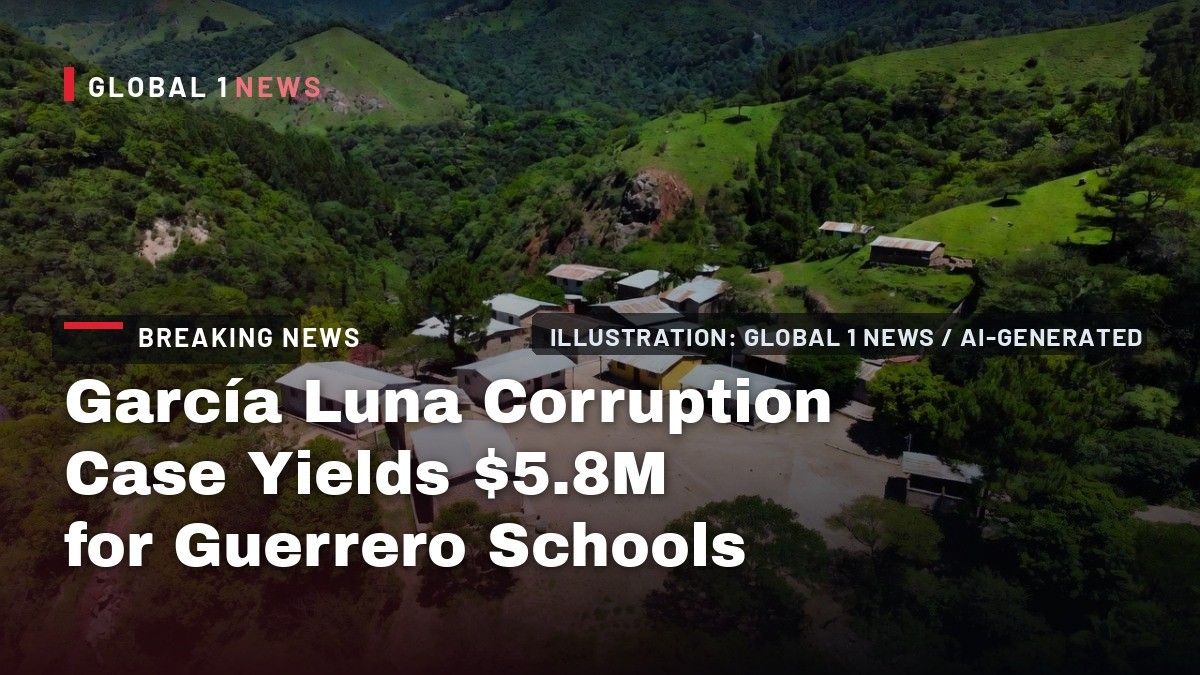
García Luna Corruption Case Yields $5.8M for Guerrero Schools: Friday's Mañanera Recapped
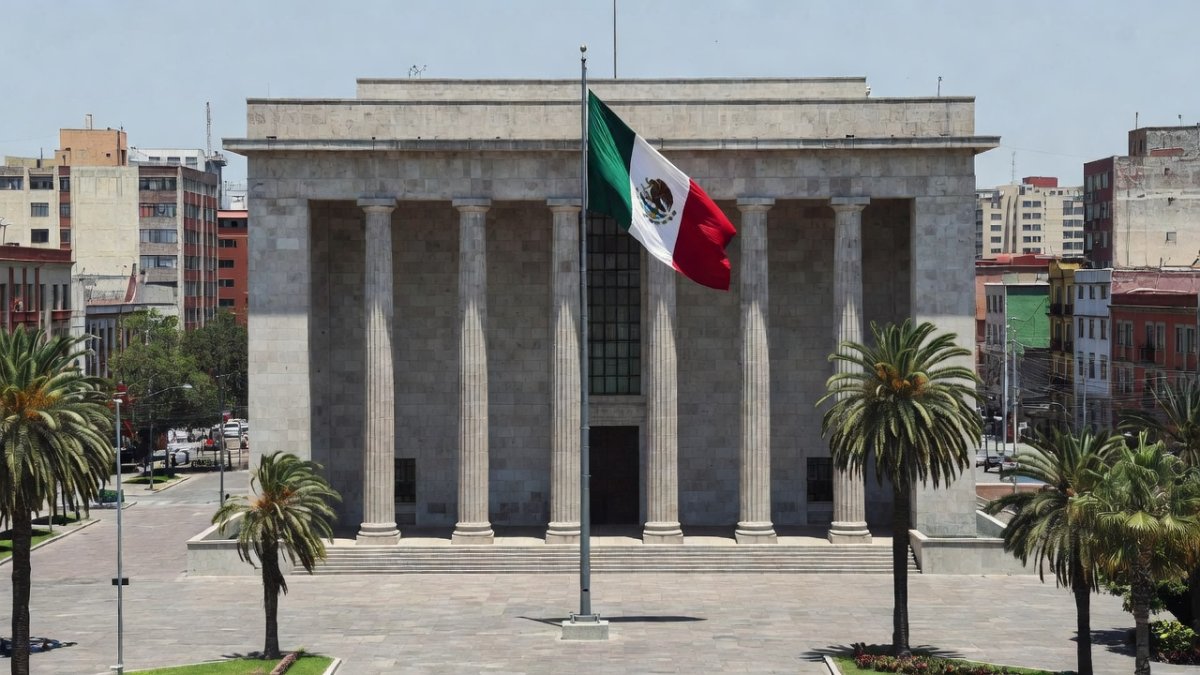
The morning sun had barely risen over the Palacio Nacional when President Claudia Sheinbaum Pardo delivered news that resonated far beyond the capital's historic center.
García Luna Corruption Case Yields $5.8M for Guerrero Schools: Friday's Mañanera Recapped
The morning sun had barely risen over the Palacio Nacional when President Claudia Sheinbaum Pardo delivered news that resonated far beyond the capital's historic center. At Friday's mañanera, the president announced that $5.8 million USD recovered from the sprawling corruption case of Genaro García Luna — the former Secretary of Public Security under Felipe Calderón — will be channeled directly into schools in one of Mexico's most neglected regions: the Montaña de Guerrero.
The announcement, made on August 28, 2026, transforms a sordid chapter of Mexican political history into a tangible investment in communities that have waited decades for basic educational infrastructure. For the families of the Me'phaa, Mixtec, Amuzgo, and Nahua peoples who call this rugged, beautiful, and historically abandoned region home, the news offers a glimmer of hope that justice, long delayed, might finally arrive in the form of classrooms, teachers, and opportunity.
The funds represent more than just money recovered from a convicted drug trafficker's network. They symbolize a reckoning with the past — a past where the man tasked with leading Mexico's war on cartels was simultaneously in league with the Sinaloa Cartel, enriching himself while communities like those in the Montaña de Guerrero struggled to secure even the most basic educational services.
How the Money Was Recovered: UIF Details the Complex Path to Justice
Omar Reyes Colmenares, head of Mexico's Unidad de Inteligencia Financiera (UIF), provided the technical details behind the recovery during the mañanera. The exact figure — $5,805,693.50 USD — was deposited into TESOFE, Mexico's federal treasury, following a final sentence in Florida against the Weinberg family, associates of García Luna who had helped launder his illicit gains.
The recovery came through two primary mechanisms: the liquidation of a bail bond policy (póliza de fianza) and the sale of 12 properties located in Florida. These assets were linked to the Weinberg family, who had served as financial intermediaries for García Luna's criminal enterprise. The UIF's meticulous work, conducted in coordination with U.S. authorities, ensured that these ill-gotten gains would eventually find their way back to the Mexican people.
Reyes Colmenares also revealed the broader scope of the corruption network: a diversion and money-laundering scheme totaling 528 million pesos, operated through shell companies (empresas fachada) and inflated contracts. The network's complexity — spanning multiple jurisdictions, involving layers of corporate entities, and moving money across borders — required years of investigation and international cooperation to unravel.
The UIF's announcement also included a separate but significant action: the blocking of 16 bank accounts belonging to criminal groups operating in Guerrero. This dual approach — recovering stolen assets while simultaneously choking off the financial lifelines of current criminal organizations — demonstrates the government's comprehensive strategy against corruption and organized crime in the region.
Montaña de Guerrero: A Region Long Forgotten, Now Remembered
The Montaña de Guerrero is not merely a geographical designation; it is a testament to Mexico's enduring inequalities. This region, home to large indigenous populations including the Me'phaa (Tlapanec), Mixtec (Nu'saavi), Amuzgo, and Nahua peoples, has historically been among the poorest in the nation. Many communities still lack schools, teachers, health centers, electricity, and phone lines — basic services that most Mexicans take for granted.
The educational crisis in the Montaña has deep roots. Generations of indigenous families have been forced to migrate to agricultural fields across Mexico to survive, often interrupting their children's education or preventing it entirely. Teachers who do serve in the region have long demanded not just infrastructure, but educational projects with a community perspective — programs that respect indigenous languages, cultures, and ways of knowing.
President Sheinbaum specified that the recovered funds will be directed toward upper middle education (Educación Media Superior) and higher education (Educación Superior) in the region. This focus is significant: while primary education has seen some investment over the years, the transition to secondary and university education remains a critical bottleneck for indigenous youth seeking to break cycles of poverty.
For the families of the Montaña, this investment represents more than concrete and classrooms. It signals that the federal government sees them, acknowledges their historical abandonment, and is willing to redirect the spoils of corruption toward repairing the social fabric that corruption helped tear. The symbolism is powerful: money stolen by a man who claimed to be fighting for Mexico's security will now build schools for Mexico's most vulnerable children.
Sheinbaum's Broader Message: "The Country Is Doing Very Well"
Beyond the García Luna announcement, President Sheinbaum used Friday's mañanera to project confidence in Mexico's trajectory. She declared that the country is doing "very well," a statement that encompasses economic indicators, security trends, and the overall mood of the nation as it approaches the Segundo Informe de Gobierno (Second Government Report).
The mañanera, that uniquely Mexican institution born during the AMLO administration and continued under Sheinbaum, serves as the president's direct line to the people. It is here that policy announcements, cultural celebrations, and political messaging converge in a daily ritual that has become essential to understanding Mexican governance. Friday's session exemplified this blend: a corruption recovery announcement, a national status update, and a celebration of athletic achievement.
Sheinbaum also addressed the upcoming Segundo Informe de Gobierno, signaling that the report will provide a comprehensive assessment of her administration's progress. The timing is notable: with the recovery of García Luna funds, the government can point to tangible results in its anti-corruption agenda, a cornerstone of the Morena party's platform since AMLO's 2018 victory.
The president's message of national well-being extends beyond statistics. It speaks to a Mexico that is confronting its past, recovering stolen resources, and investing in its future. For communities like those in the Montaña de Guerrero, this message carries particular weight — they have heard promises before, but rarely have they seen the concrete manifestation of justice in the form of educational investment.
Celebrating Excellence: Gold Medal Rower and the Spirit of Mexican Achievement
The mañanera also provided a moment of national pride as Sheinbaum congratulated a Mexican rower who captured a gold medal in international competition. While the specific details of the competition were not elaborated in the briefing, the president's recognition underscores a broader narrative: Mexico's capacity for excellence on the world stage.
This celebration of athletic achievement carries cultural resonance. From the legendary performance of Ana Guevara on the track to the dominance of Mexican boxers and the passion of our futbolistas, sports have long been a source of national identity and pride. The rower's gold medal joins this proud tradition, reminding Mexicans that our nation's potential extends far beyond what our political challenges might suggest.
The juxtaposition of these mañanera moments — corruption recovery, national assessment, athletic celebration — reflects the multifaceted nature of Mexican life. We are a people who have endured corruption and injustice, yet we also celebrate excellence and maintain hope. The rower's achievement and the Guerrero school investment are two sides of the same coin: both represent the Mexico we aspire to be, a nation where talent is nurtured and justice is served.
For young people in the Montaña de Guerrero, the image of a Mexican gold medalist might seem distant. But the investment in their schools brings that dream closer. Every classroom built, every teacher hired, every educational program funded with García Luna's recovered millions is a step toward a future where a child from the Montaña might one day stand on a podium, representing Mexico to the world.
Political Implications: The Cabeza de Vaca Question and Candidate Screening
Friday's mañanera also touched on political matters, including candidate screening requirements and the question of Francisco Cabeza de Vaca's candidacy. While details remain limited, these discussions reflect the ongoing evolution of Mexico's electoral landscape as the 2027 midterm elections approach.
The candidate screening process, a mechanism designed to ensure that those seeking public office meet ethical and legal standards, represents an important institutional development. For a nation that has suffered from corruption at the highest levels — as the García Luna case so vividly demonstrates — such screening mechanisms are essential safeguards.
The Cabeza de Vaca question, referring to the former Tamaulipas governor who has faced legal scrutiny, highlights the tension between political ambition and accountability. As Mexico continues to grapple with the legacy of corruption, the question of who is fit to hold public office becomes increasingly central to our democratic discourse.
These political discussions, while seemingly separate from the Guerrero school announcement, are intimately connected. The same corruption that deprived the Montaña of educational resources also produced the need for candidate screening. The same impunity that allowed García Luna to operate for years now faces institutional challenges. Mexico is engaged in a long, difficult process of cleaning its public life — and the funds flowing to Guerrero schools are one tangible result of that process.
Looking Forward: The Second Government Report and Mexico's Path
As the Sheinbaum administration prepares for the Segundo Informe de Gobierno, Friday's mañanera offered a preview of the themes that will likely dominate the report: anti-corruption achievements, social investment, and national confidence. The García Luna recovery serves as a flagship example of the government's commitment to recovering stolen resources and redirecting them to communities in need.
The path forward for the Montaña de Guerrero will require sustained commitment. The $5.8 million investment, while significant, represents just one step in addressing decades of neglect. The region will need continued investment in infrastructure, teacher training, culturally appropriate curricula, and economic opportunities that allow families to remain in their communities rather than migrating for survival.
Yet the symbolism of this moment should not be underestimated. When a government takes money stolen by a corrupt official and invests it in the poorest schools in the nation, it sends a powerful message: corruption will not pay, and justice will be served. For the indigenous communities of the Montaña, for the teachers who have struggled without resources, for the families who have sacrificed for their children's education, this is a moment of validation.
Mexico's journey from the dark days of the drug war and corruption to a more just society is neither linear nor complete. But moments like Friday's mañanera — where the spoils of corruption become the seeds of opportunity — remind us that progress is possible. The children of the Montaña de Guerrero will soon have new schools, new opportunities, and new reasons to believe in their country. That is the true measure of justice.
Tags: García Luna, Sheinbaum, mañanera, Guerrero schools, Montaña de Guerrero, UIF, Omar Reyes Colmenares, corruption recovery, TESOFE, Weinberg family, Mexico news, Segundo Informe, indigenous education, anti-corruption, Mexican politics
By Rosa Martinez, Staff Writer
This article was produced with AI-assisted research and editorial support. Sources: Mexico News Daily, El Sol de Chilpancingo, La Razón de México, El Financiero, Infobae, CNN Español, NPR.
What's Your Reaction?
 Like
0
Like
0
 Dislike
0
Dislike
0
 Love
0
Love
0
 Funny
0
Funny
0
 Wow
0
Wow
0
 Sad
0
Sad
0
 Angry
0
Angry
0

Latin America/Andes Correspondent at Global1.News. Based in Bogota, covering politics, environment, energy, and social movements across the Andean region. Passionate about environmental journalism and communities protecting their land.












Comments (0)