
Brazil 2026: The Battle for a Continent — What Lula vs. Flávio Bolsonaro Means for Latin America
In a recent DW News report titled "Brazil 2026: The battle for a continent," the outlet captured a moment of profound political tension: Latin America's map is being redrawn, and Brazil has emerged as the decisive prize. For Mexicans watching from across the continent, this is not a distant spectacle — it is a mirror of our own regional struggles, a test of whether the rightward shift that has swept nations like Argentina will consolidate or be checked in the hemisphere's largest economy.
In a recent DW News report titled "Brazil 2026: The battle for a continent," the outlet captured a moment of profound political tension: Latin America's map is being redrawn, and Brazil has emerged as the decisive prize. For Mexicans watching from across the continent, this is not a distant spectacle — it is a mirror of our own regional struggles, a test of whether the rightward shift that has swept nations like Argentina will consolidate or be checked in the hemisphere's largest economy.
The October 2026 Brazilian presidential election is shaping up to be the most consequential vote in Latin America this decade. With campaigns officially launched on August 16, 2026, the race pits incumbent President Luiz Inácio Lula da Silva of the Workers' Party (PT) against Senator Flávio Bolsonaro of the Liberal Party (PL), the son of the ineligible former president. The outcome will not only decide who governs 203 million Brazilians but will also send shockwaves through trade corridors, migration patterns, and diplomatic alignments that directly touch Mexican families from Tijuana to Mérida.
Brazil's October Showdown: Lula vs. Flávio Bolsonaro and the Fight for Latin America's Soul
Brasília, Brazil — The numbers are tightening, and the tension is palpable. According to the Genial/Quaest national poll released on August 14, 2026, Lula leads the first round with 38% support, followed closely by Flávio Bolsonaro at 31%. Renan Santos and Ronaldo Caiado, the governor of Goiás, trail at 4% each. In a simulated runoff, the race becomes a statistical tie: Lula at 43% versus Flávio at 40%.
Just nine days earlier, on August 5, the same pollster had Lula at 39% and Flávio at 30% in the first round, with a runoff margin of 44% to 39%. The gap is narrowing, and the momentum is unmistakable. For a country that has been the anchor of leftist governance in South America for much of the past two decades, the prospect of a Bolsonaro returning to the Palácio do Planalto — this time with the surname on the ballot — has sent ripples through every chancellery in the region, including the Secretaría de Relaciones Exteriores in Mexico City.
The State of the Race: A Statistical Tie with Two Weeks to Go
The campaign calendar is unforgiving. With the first round scheduled for October 2026, both campaigns are entering the final sprint. Lula, at 80 years old, is seeking a third non-consecutive term, leaning heavily on his legacy of social programs that lifted millions out of poverty during his earlier presidencies. His base remains strong in the industrial heartland of São Paulo and the impoverished northeast, where the memory of Bolsa Família still resonates in every feira and mercado.
Flávio Bolsonaro, a senator from Rio de Janeiro, has inherited not just his father's political machine but also the fervent evangelical and agribusiness coalitions that propelled Jair Bolsonaro to power in 2018. His campaign has focused on security, family values, and deregulation — messages that echo the rhetoric of Javier Milei in Argentina and resonate with a Brazilian electorate weary of inflation and public insecurity. The Genial/Quaest data suggests that Flávio has consolidated the anti-PT vote, absorbing support from centrist voters who are disillusioned with Lula's coalition government.
What makes this race particularly volatile is the presence of Ronaldo Caiado, the governor of Goiás, who launched his own campaign and is polling at 4%. Caiado, a centrist conservative, could play the role of spoiler or kingmaker. If he fails to reach the runoff, his endorsement — or his voters' organic migration — could tip the balance. For now, the race is a knife's edge, and every percentage point matters in a country where regional loyalties run as deep as the Amazon River.
The Bolsonaro Factor: A Dynasty Forged in Ineligibility and Conviction
The shadow of Jair Bolsonaro looms over this election like a tropical storm on the horizon. The former president was declared ineligible to run by Brazil's Superior Electoral Court over abuse of political power, a ruling that stemmed from his baseless attacks on the integrity of the electronic voting system. More damningly, he was later convicted over a plot to overturn his 2022 election defeat to Lula — a scheme that Brazilian authorities have compared to an attempted coup.
With the patriarch barred from the ballot, the family's political banner has passed to Flávio, the eldest son. This is not merely a dynastic handover; it is a calculated strategy to keep the Bolsonaro movement alive without the polarizing figure of Jair himself. Flávio has attempted to moderate his father's rhetoric, focusing on economic pragmatism and distancing himself from the most incendiary conspiracy theories. Yet the opposition has not let voters forget the family's legal troubles, and every debate has been punctuated by questions about the January 8, 2023, attacks on government buildings in Brasília, which many attribute to Bolsonaro supporters.
For Mexican observers, the Bolsonaro saga carries a familiar resonance. The attempts to undermine electoral institutions, the judicial battles over eligibility, and the mobilization of a populist base echo challenges that Mexico has faced in its own recent political history. The difference is that in Brazil, the conflict is playing out in real time, with the world's fourth-largest democracy as the stage.
What a Lula Victory Would Mean: Continuity and Regional Anchoring
A Lula victory would signal that the leftward tide in Latin America, though battered, has not broken. It would reaffirm Brazil's role as a leader of the Global South, a vocal advocate for the Global South within BRICS, and a counterweight to Washington's influence in the hemisphere. Lula has already positioned Brazil as a mediator in the Venezuela crisis and a champion of Amazon rainforest protection, policies that align closely with the environmental agenda of Mexico's current administration under President Claudia Sheinbaum.
For Mexico, a Lula win would mean continuity in the strategic partnership that has defined Brazil-Mexico relations for decades. Trade between the two nations, which surpassed $15 billion annually in recent years, would likely continue on its current trajectory, with Brazilian agribusiness and Mexican manufacturing maintaining their complementary flows. More importantly, Lula's Brazil would remain a reliable partner in multilateral forums, from the United Nations to the Community of Latin American and Caribbean States (CELAC), where both nations have historically pushed for regional integration independent of Washington's dictates.
Lula's foreign policy has also been characterized by a pragmatic balancing act between the United States and China. He has maintained robust trade relations with Beijing while keeping diplomatic channels open with Washington. For Mexico, which is navigating its own complex relationship with both superpowers under the USMCA/T-MEC framework, a Lula victory would provide a like-minded partner in the effort to diversify Latin America's economic dependencies.
What a Flávio Victory Would Mean: A Rightward Shift with Global Consequences
A Flávio Bolsonaro victory would be a seismic event, not just for Brazil but for the entire continent. It would consolidate the rightward trend that has seen Argentina embrace Javier Milei's libertarian shock therapy, and it would give the region's conservative movements a powerful new standard-bearer. Flávio has promised to slash regulations, open the Amazon to agribusiness, and align Brazil more closely with the United States and Israel — a foreign policy orientation that would upend decades of Brazilian diplomacy.
The implications for Mexico are profound. A right-leaning Brazil would likely deprioritize regional integration in favor of bilateral deals with Washington, potentially undermining the collective bargaining power of Latin American nations in trade negotiations. It could also shift the dynamics within BRICS, where Brazil has been a founding member and a bridge between the bloc's more radical members and the West. If Flávio follows through on his campaign rhetoric of distancing Brazil from Beijing, the global balance among emerging powers would be fundamentally altered, with China losing its most important partner in South America.
For Mexican families, the most immediate impact would be felt in migration patterns and remittances. Brazil is not a major source of migrants to Mexico, but it is a destination for Mexican businesses seeking to expand in South America. A Bolsonaro government's economic policies — including potential currency devaluation and market liberalization — could create volatility that ripples through regional supply chains, affecting everything from auto parts manufactured in Monterrey to electronics assembled in Tijuana.
The Regional Map Being Redrawn: From Milei's Argentina to Sheinbaum's Mexico
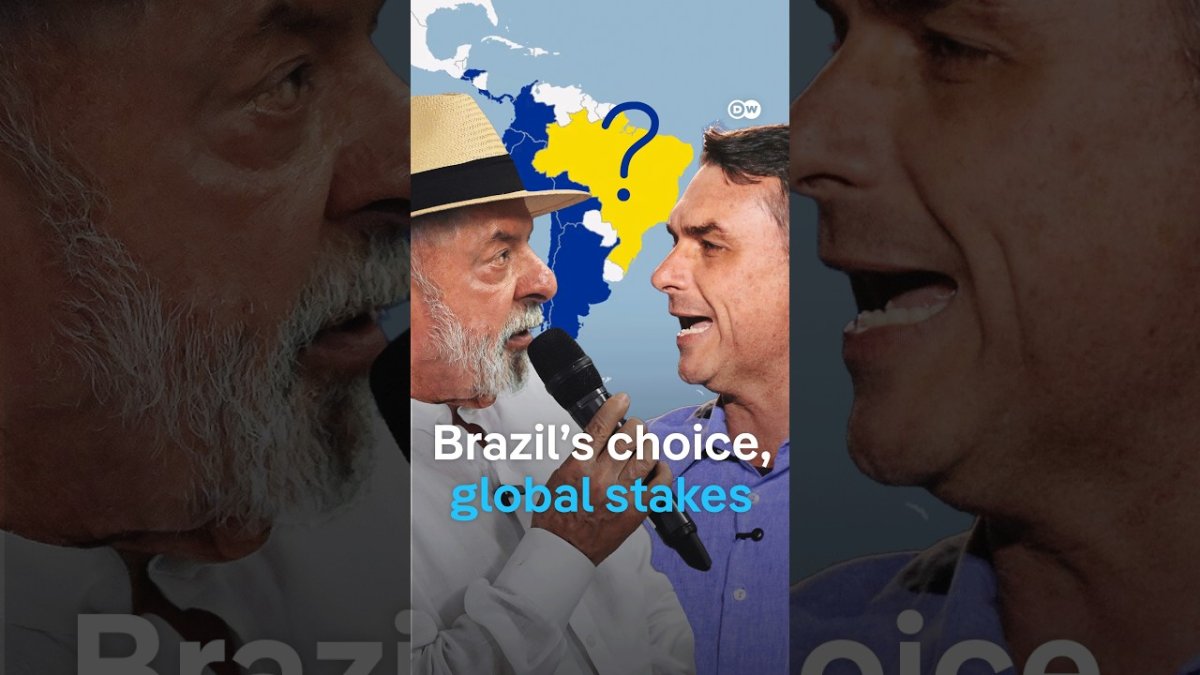
The DW News report correctly identifies that Latin America's political map has been shifting rightward in recent years. Argentina's election of Javier Milei in 2023 was the most dramatic example, with the libertarian economist promising to chainsaw the state and dollarize the economy. Ecuador, under President Daniel Noboa, has tilted center-right, while Peru remains in a state of chronic political instability. The only major counterweights to this trend have been Mexico, under the Morena governments of Andrés Manuel López Obrador and now Claudia Sheinbaum, and Colombia under Gustavo Petro.
Brazil's October vote is the decisive test. If Lula wins, the left can claim that the region's largest economy remains a bulwark against the rightward tide. If Flávio wins, the right will have achieved a trifecta: Argentina, Brazil, and potentially Chile, creating a conservative bloc that stretches from the Andes to the Atlantic. This would have immediate consequences for Mexico's diplomatic positioning, as the Sheinbaum administration would find itself increasingly isolated in its progressive foreign policy stance.
The US-China competition adds another layer of complexity. Washington has watched Brazil's election with barely concealed anxiety, aware that a Lula victory would likely mean continued Brazilian resistance to US pressure to sever ties with Beijing. Conversely, a Flávio victory would be celebrated in Washington as a strategic win, even as it complicates the Biden administration's (or its successor's) human rights agenda. For Mexico, caught in the middle of this superpower rivalry, the identity of Brazil's next president will influence how much leverage Mexico has in its own negotiations with both Washington and Beijing.
What This Means for Mexico and Ordinary Mexican Families
For the average Mexican family in a colonia in Guadalajara or a rural ejido in Oaxaca, the Brazilian election may seem distant. But the connections are real and tangible. Trade between Mexico and Brazil supports thousands of jobs in the automotive, aerospace, and pharmaceutical sectors. Brazilian soybeans and beef compete with Mexican agricultural products in global markets, and a change in Brazilian trade policy could affect prices at the tortillería and the taquería.
Migration is another vector. While the primary migration flows into Mexico come from Central America and the Caribbean, Brazil has become a transit point for migrants from Africa and Asia seeking to reach the United States. A destabilized Brazil, under either a chaotic Lula administration or a divisive Bolsonaro government, could increase these flows, adding pressure to Mexico's already strained migration infrastructure and its negotiations with Washington over border security.
There is also a cultural and political dimension. Mexico's own democratic journey, from the PRI's seven-decade rule to the Morena era, has been watched closely in Brazil, just as Brazilians have studied Mexico's struggles with cartel violence and institutional corruption. The two nations are often compared, and their political trajectories are intertwined in the collective imagination of Latin Americans. A Brazilian election that is free, fair, and peaceful — regardless of the outcome — would be a victory for the region's democratic institutions. A contested or violent result would be a setback for everyone, including Mexico.
What to Watch For
In the coming weeks, several indicators will signal the likely direction of the race. The first is the performance of Ronaldo Caiado. If his polling numbers rise above 5%, he could force a more fragmented first round, potentially denying both Lula and Flávio the momentum they need. The second is the debate schedule, which will test Flávio's ability to handle the scrutiny of a national stage without his father's rhetorical bombast. The third is the economy: if inflation continues to ease and employment remains stable, Lula's message of continuity will resonate; if prices spike, Flávio's promise of disruption will gain traction.
International observers will also be watching the role of the military, which has historically been a kingmaker in Brazilian politics. Jair Bolsonaro cultivated close ties with the armed forces, and Flávio has continued that courtship. Any sign of military unease with the electoral process would be a red flag, echoing the tensions that preceded the 2022 election and the subsequent coup plot.
Finally, the world will be watching the reaction of the United States and China. Both superpowers have invested heavily in Brazilian relationships, and their responses to the election outcome will shape the region's diplomatic landscape for years to come. For Mexico, the most important thing is to maintain its own course, strengthening its democratic institutions and its economic resilience, regardless of who wins in Brasília.
The battle for Brazil is, in many ways, the battle for the soul of Latin America. It is a contest between the promise of social inclusion and the allure of market discipline, between regional solidarity and bilateral pragmatism, between the legacy of the past and the uncertainty of the future. For Mexicans, the outcome will be felt in the price of goods, the flow of migrants, and the tone of regional diplomacy. It is a moment to watch closely, not as spectators, but as participants in a shared continental destiny.
By Rosa Martinez, Staff Writer
This article was produced with AI-assisted research and editorial support. Reporting is based on sources cited in the article.
What's Your Reaction?
 Like
0
Like
0
 Dislike
0
Dislike
0
 Love
0
Love
0
 Funny
0
Funny
0
 Wow
0
Wow
0
 Sad
0
Sad
0
 Angry
0
Angry
0
Latin America/Andes Correspondent at Global1.News. Based in Bogota, covering politics, environment, energy, and social movements across the Andean region. Passionate about environmental journalism and communities protecting their land.















Comments (0)