
JLR Confirms Voluntary Redundancy Programme as £1.7bn Cost-Cutting Drive Begins
Jaguar Land Rover has confirmed it is opening a voluntary redundancy programme for its UK salaried and management staff, a move that comes a year after a crippling cyber attack halted its production lines and as the company battles punishing US tariffs and a slump in global demand.
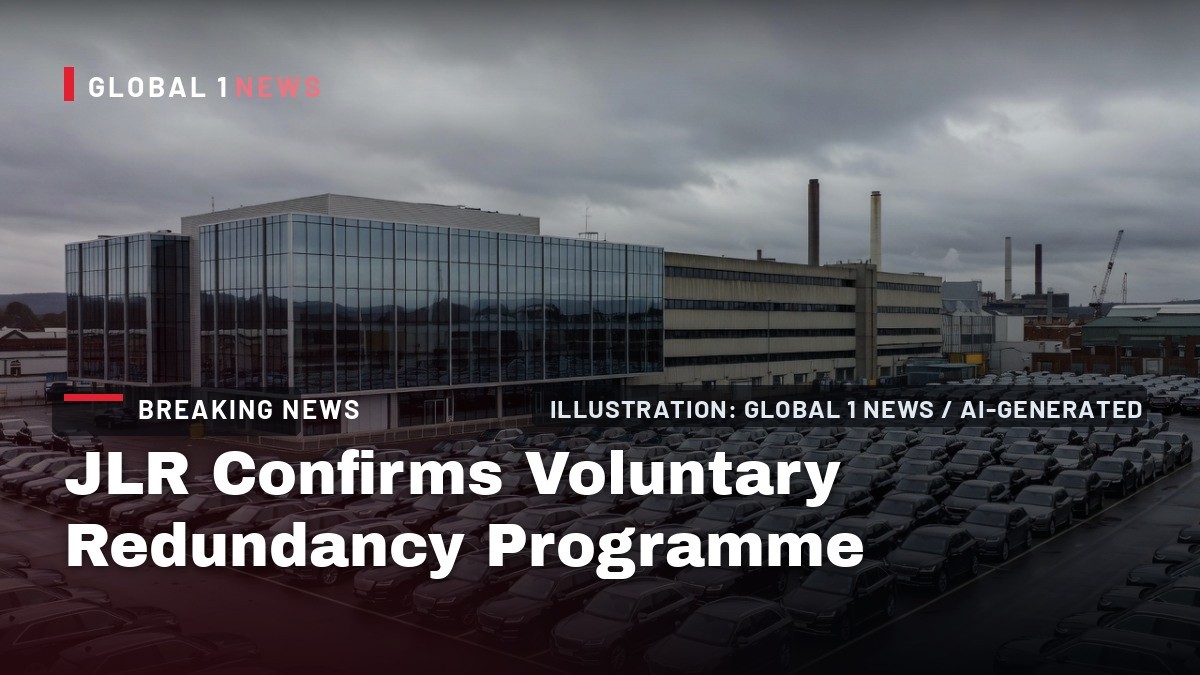
Jaguar Land Rover has confirmed it is opening a voluntary redundancy programme for its UK salaried and management staff, a move that comes a year after a crippling cyber attack halted its production lines and as the company battles punishing US tariffs and a slump in global demand. The luxury carmaker, one of Britain’s largest industrial employers, informed its workforce and union representatives on Friday that it was seeking to shed roles as part of a drive to save approximately £1.7bn over the next two years.
The company stopped short of confirming the scale of the job losses, but The Times reported on Saturday that as many as 4,000 positions could be cut over the next two years. A formal announcement of the redundancy programme is expected on Monday. The firm told the BBC it had not confirmed those figures, insisting the decision was taken to help "simplify" the organisation, "improve efficiency and build greater resilience" in response to what it described as "evolving global market conditions".
The confirmation marks a sobering moment for the West Midlands, where JLR’s presence is woven into the economic fabric of Coventry, Solihull and Wolverhampton, as well as for Halewood on Merseyside. With roughly 30,000 people employed in its UK operations and an estimated 120,000 jobs across the British supply chain dependent on the firm, the ramifications of this restructuring will be felt far beyond the factory gates.
A Perfect Storm Brewing for British Manufacturing
The announcement, while expected, has sent a jolt through the political and industrial establishment. Sharon Graham, general secretary of the Unite union, did not mince her words, describing a "perfect storm" that has long been gathering over the automotive industry. "Death by a thousand cuts has been going on under the nose of successive governments," she said, voicing a frustration that will resonate in the industrial heartlands.
Graham confirmed there had been "intensive" discussions over the weekend aimed at mitigating job losses, and revealed that she and Business Secretary Jonathan Reynolds are scheduled to meet JLR’s chief executive, PB Balaji, next week. Unite’s national officer, Des Quinn, struck a more sombre tone for the workforce directly affected. "This is an incredibly worrying and stressful time for JLR workers," he said. "Unite is working round the clock to deliver the best possible outcome."
The Government, for its part, sought to project a sense of proactive engagement. A spokesperson pointed to "significant action" taken to support the automotive industry, including lowering electricity bills for manufacturers and providing financial support for the production and sale of zero-emission vehicles. Reynolds is also understood to have spoken with West Midlands mayor Richard Parker about how to support the business and its staff during this turbulent period. For a Government that has made growth and the green industrial transition central to its pitch, the optics of thousands of high-quality manufacturing jobs disappearing from the Midlands is politically uncomfortable, to say the least.
The Legacy of the September Cyber Attack
To understand the severity of JLR’s current predicament, one must look back to September 2025. A cyber attack of significant sophistication brought the company’s entire manufacturing operation to a shuddering halt for several weeks. For a period, not a single vehicle rolled off its production lines. The disruption was catastrophic, leading to a 27% drop in overall production and dealing a heavy blow to a company that is a cornerstone of the regional economy.
The financial toll was immense. The overall cost of the cyber attack and the subsequent loss of manufacturing was estimated at a staggering £1.9bn. In June, the firm announced plans to cut costs by about £1.7bn over the coming years to aid its recovery, targeting areas such as materials, warranty and fixed costs. The latest redundancy programme is a direct consequence of that strategic review, as the company attempts to lower its break-even point to 300,000 vehicles annually to weather the storm.
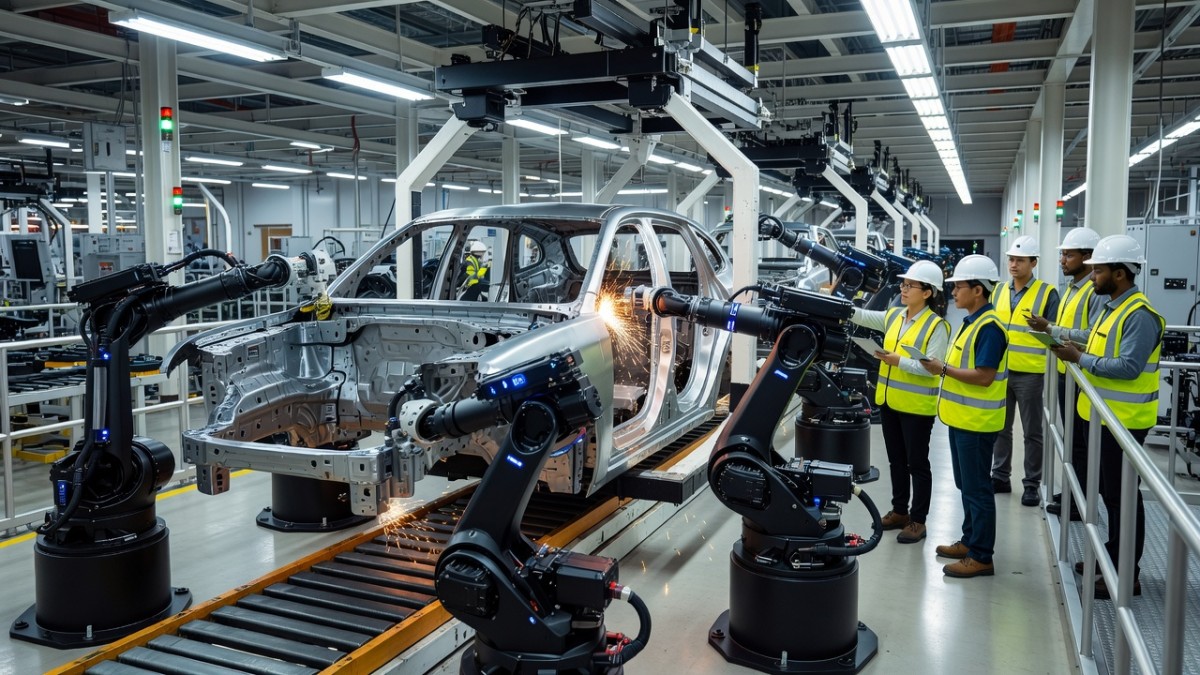
The company’s most recent financial results illustrate the scale of the challenge. In the quarter ended June 2026, revenue declined by nearly 10 per cent, while pre-tax profit plummeted by more than two-thirds to just £109m. These are not the numbers of a company in rude health; they are the numbers of an organisation fighting for its footing in a rapidly shifting global landscape.
Tariffs, Trade Wars and the China Question
External pressures are compounding JLR’s internal woes. The imposition of a 10% tariff on cars imported from the UK by the Trump administration has landed a significant blow. North America is JLR’s biggest market, accounting for 29% of its sales, and the tariff threatens to price its luxury Range Rovers and Defenders out of reach for American consumers or squeeze the company’s margins to unsustainable levels.
Simultaneously, the company is grappling with weaker demand in China, once a seemingly limitless source of growth for premium brands. The rise of aggressive domestic Chinese electric vehicle manufacturers, who are producing technologically advanced and competitively priced models, has intensified competition in the world’s largest auto market. JLR is caught between a trade war in its most profitable region and a technological price war in its most promising one.
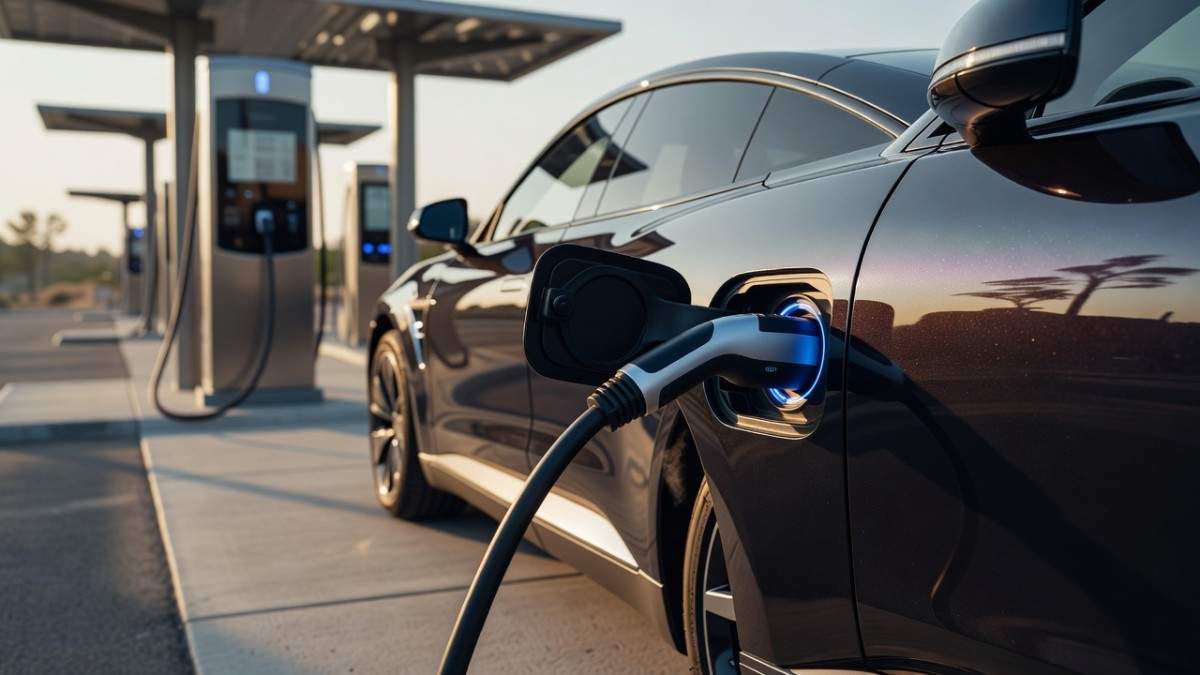
The company’s response has been to accelerate its own electric transition. The first electric Range Rover went on sale earlier this month, priced from £154,070 in the UK, boasting a claimed range of 372 miles and the ability to charge from 10% to 80% in just 22 minutes. It is a statement of intent, but the transition is expensive, and the cost of developing next-generation vehicles comes at a time when the company is trying to slash spending.
An Industry in Crisis Across Europe
JLR is not an isolated case; it is a bellwether for a European automotive industry in profound distress. The pressures of electrification, digitalisation and geopolitical fragmentation are forcing a continent-wide reckoning. The most dramatic example came from Volkswagen, whose supervisory board recently approved a restructuring plan calling for 50,000 additional job cuts—equivalent to about 8% of its global workforce at the end of last year. It is the largest restructuring in the German carmaker’s 90-year history.
The comparison is instructive. If Germany’s industrial powerhouse, with its vaunted engineering and political clout, is being forced to shed tens of thousands of jobs, the situation for UK manufacturing—operating without the same level of state support and with the added friction of post-Brexit trade barriers—is arguably more precarious. The British government’s approach, focused on energy costs and purchase incentives, may not be sufficient to counter the structural headwinds facing the sector.
For the workers at JLR’s plants in Solihull and Wolverhampton, and at Halewood on Merseyside, the news is a brutal reminder of their vulnerability. The company’s statement that it expects fewer than 300 people would leave under cost-saving plans announced in July now looks hopelessly optimistic. The voluntary nature of the programme offers some dignity, but for those in their 50s or early 60s, the choice between taking a package or facing potential compulsory redundancy later is a cruel one.
The Human Cost in the Industrial Heartlands
The social impact of these cuts cannot be overstated. In Coventry, where JLR has its global headquarters at Whitley, and in Solihull, the company is not just an employer; it is an anchor institution. The wages earned on the production line and in the design studios support local shops, schools and services. The loss of thousands of high-skilled, well-paid jobs will ripple through the local economy, exacerbating existing inequalities and putting further strain on public services.
Richard Parker, the West Midlands mayor, will be acutely aware of this. His conversations with the Business Secretary will likely focus on retraining programmes, support for affected communities and how to attract new investment to the region. But such interventions, while necessary, are reactive. They do not address the fundamental question of how Britain intends to secure the future of its advanced manufacturing base in an era of intense global competition and geopolitical uncertainty.
The Government’s pledge to support zero-emission vehicle manufacturing is welcome, but the transition is proving more painful than many anticipated. The infrastructure for electric vehicles, from charging points to grid capacity, remains a work in progress, and consumer demand has not kept pace with the ambitious mandates set by policymakers. JLR’s struggles are a warning that the road to electrification is paved with difficult choices and significant job losses.
A Pivotal Week Ahead for JLR and the Government
As the formal announcement of the redundancy programme looms on Monday, all eyes will turn to the meeting between PB Balaji, Sharon Graham and Jonathan Reynolds next week. The union will be seeking cast-iron guarantees about the voluntary nature of the scheme and the level of severance packages. The Government will be seeking to demonstrate that it is doing everything possible to protect jobs and the industrial base. The company will be seeking to convince both that these cuts are essential for its long-term survival.
JLR maintains that over the past three years it has strengthened its brands and prepared for the production of its next generation of vehicles. The investment in the electric Range Rover suggests a belief in the future. But the immediate horizon is dark. The company is navigating a perfect storm of its own making—the aftermath of a devastating cyber attack—and one imposed by external forces of trade policy and technological disruption.
For the 30,000 employees in the UK and the 120,000 people in the supply chain, the coming weeks will be defined by uncertainty. For the Government, it is a test of its industrial strategy. For the West Midlands and Merseyside, it is a fight to preserve the manufacturing heritage that has defined them for generations. The voluntary redundancy programme may be the least painful option available, but it is still a profound loss for British industry.
By Erica Thornton, Staff Writer
This article was produced with AI-assisted research and editorial support. Sources: BBC News, Reuters, The Times, Economic Times.
What's Your Reaction?
 Like
0
Like
0
 Dislike
0
Dislike
0
 Love
0
Love
0
 Funny
0
Funny
0
 Wow
0
Wow
0
 Sad
0
Sad
0
 Angry
0
Angry
0

US Politics and Policy Correspondent at Global1.News. Based in Washington DC, covering American politics, policy, elections, and the courts. Knows how the system works and tells you what it actually means.














Comments (0)