
Rwanda goes full throttle on F1 as Kagame courts global spotlight
Rwanda’s decision to host Formula One’s first African Grand Prix in more than three decades is being framed by the Kigali administration as a catalyst for international exposure, tourism growth and foreign investment.
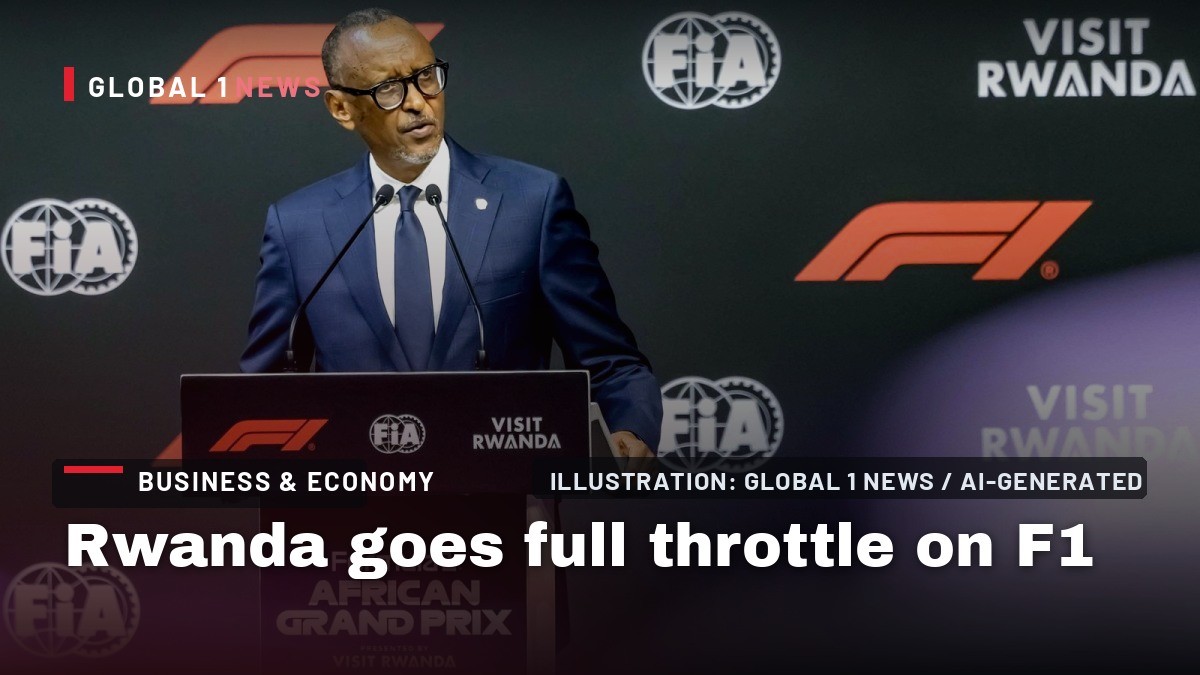
Rwanda’s decision to host Formula One’s first African Grand Prix in more than three decades is being framed by the Kigali administration as a catalyst for international exposure, tourism growth and foreign investment. Yet the venture also raises questions about fiscal transparency, long‑term economic viability and the country’s broader human‑rights record. As the continent watches the deal unfold, the project sits at the intersection of a regional push for prestige through sport, the strategic calculus of a post‑genocide state seeking to rebrand itself, and the perennial debate over “sportswashing” in authoritarian contexts.
Strategic context: sport as a vehicle for national branding
Since the 1994 genocide, President Paul Kagame’s government has pursued a policy of positioning Rwanda as a hub for international business, tourism and high‑profile events. The “Visit Rwanda” campaign, which has leveraged partnerships with football clubs such as Arsenal and Aston Villa, exemplifies this approach. By securing a 10‑year agreement with Formula One announced on 13 October 2026, Kigali aims to extend that branding into a sport that commands a global calendar and a substantial commercial reach.
Hosting a Grand Prix is not merely a paid advertising slot; it is a recurring showcase that can associate Rwanda with technology, luxury tourism, and sporting excellence. The broadcast footprint of Formula One will place the country before millions of viewers worldwide, while the event itself is expected to draw journalists, corporate executives, sponsors and affluent spectators. The government hopes that this exposure will translate into increased tourist arrivals, private investment and broader commercial activity.
Economic promises and the opacity of costs
The financial terms of the Formula One agreement have not been disclosed publicly. Consequently, the total hosting fees, construction outlays and potential public liabilities remain unclear. Reported possible expenses include the construction of the Bugesera circuit, safety installations, spectator facilities, security, medical services, transport infrastructure and long‑term maintenance. Even if private investors finance portions of the project, public authorities could still bear costs related to roads, utilities and supporting infrastructure.
Without greater transparency, it is difficult to assess who carries the financial risk and whether the anticipated returns will justify the commitment. The lack of disclosed figures also hampers analysis of the project’s cost‑benefit balance, especially when compared with other large‑scale sporting investments that have faced similar scrutiny.
Infrastructure ambitions beyond the race weekend
The proposed circuit will be situated in Bugesera, about 40 kilometres south of Kigali, adjacent to a new international airport under construction. This location is intended to become part of a broader development zone that integrates transport, tourism and commercial facilities. The proximity to the airport offers logistical advantages for the influx of international guests and could stimulate ancillary development in the surrounding area.
However, the long‑term value of the circuit will depend on its utilisation beyond the annual Grand Prix. Purpose‑built racing facilities require ongoing maintenance and operating expenditure. If the venue attracts limited activity between races, it could become an expensive asset with restricted commercial value. Potential revenue streams include regional motorsport competitions, corporate events and other entertainment activities, provided there is sufficient demand.
Employment prospects and skill development
The construction phase is expected to generate jobs in building, logistics, safety and related services. During race weekends, employment opportunities will arise in hospitality, broadcasting, event management and ancillary support. Moreover, the involvement of former Formula One driver Alex Wurz in the circuit’s design could foster the development of local expertise in motorsport operations.
Nevertheless, the distinction between temporary construction work and permanent employment is crucial. The lasting impact on the labour market will hinge on whether Rwandan workers acquire transferable skills and whether domestic firms secure contracts rather than foreign contractors or international hotel chains. The project’s capacity to create sustainable, high‑skill jobs remains an open question.
Comparative lessons: the risk of over‑investment
The experience of Vietnam offers a cautionary parallel. A circuit built in Hanoi for a Formula One race scheduled for 2020 was never used after the event was cancelled during the COVID‑19 pandemic, leaving the venue underutilised. Rwanda’s project differs in that the Grand Prix is slated for the early 2030s, providing a longer lead‑time for planning and integration. Yet the comparison underscores the risk inherent in heavy infrastructure investment tied to a single marquee event without a clear post‑event commercial strategy.
Ensuring that the Bugesera circuit can attract a diversified portfolio of events will be essential to avoid the pitfalls observed elsewhere. This includes leveraging the venue for regional motorsport series, corporate hospitality, and potentially non‑sporting entertainment, thereby spreading financial risk across multiple revenue streams.
Human‑rights concerns and the debate over sportswashing
Amnesty International has criticised the Formula One agreement, arguing that it could enable the Rwandan government to improve its international image despite allegations of arbitrary detention, torture and restrictions on freedom of expression. The organization frames the deal within the broader phenomenon of “sportswashing,” where governments facing criticism use high‑profile sporting partnerships to deflect attention from domestic abuses.
Formula One has countered by emphasizing the sport’s potential to inspire people and reach new audiences in Africa. Nonetheless, critics contend that such partnerships provide prestigious platforms without compelling meaningful improvements in human‑rights practices. Supporters maintain that international events can promote tourism, create jobs and encourage investment, suggesting a nuanced cost‑benefit calculus that weighs economic gains against reputational considerations.
Regional implications and the future outlook
Rwanda’s regional role adds another dimension to the Grand Prix project. The country has faced allegations of supporting the M23 rebel group, a factor that intersects with its broader geopolitical posture in the Great Lakes region. By hosting a globally visible event, Kigali may seek to reinforce its image as a stable, investment‑friendly hub, counterbalancing security concerns and political criticisms.
Ultimately, the success of the Formula One venture will be measured not only by the spectacle of the race itself but by the extent to which it catalyses sustained tourism, attracts foreign direct investment, and generates lasting economic benefits for Rwandan businesses and workers. The lack of disclosed financial terms, coupled with persistent human‑rights concerns, means that the project remains a gamble—one that could either solidify Rwanda’s emerging status on the world stage or expose the limits of prestige‑driven development in a region where fiscal transparency and governance standards are increasingly scrutinised.
This article was produced with AI-assisted research and editorial support. Reporting is based on the source material cited below. Sources: Daily Sabah Middle East; dailysabah.com; Global1.News (16 October 2026).
By Malik Hassan, Staff Writer
What's Your Reaction?
 Like
0
Like
0
 Dislike
0
Dislike
0
 Love
0
Love
0
 Funny
0
Funny
0
 Wow
0
Wow
0
 Sad
0
Sad
0
 Angry
0
Angry
0
Middle East Correspondent at Global1.News. Based in Beirut, covering politics, conflict, energy, and society across the Middle East. Brings context and depth to a region often reduced to headlines.













Comments (0)