
Saxony-Anhalt Election: AfD's Siegmund on the Cusp of Historic Breakthrough
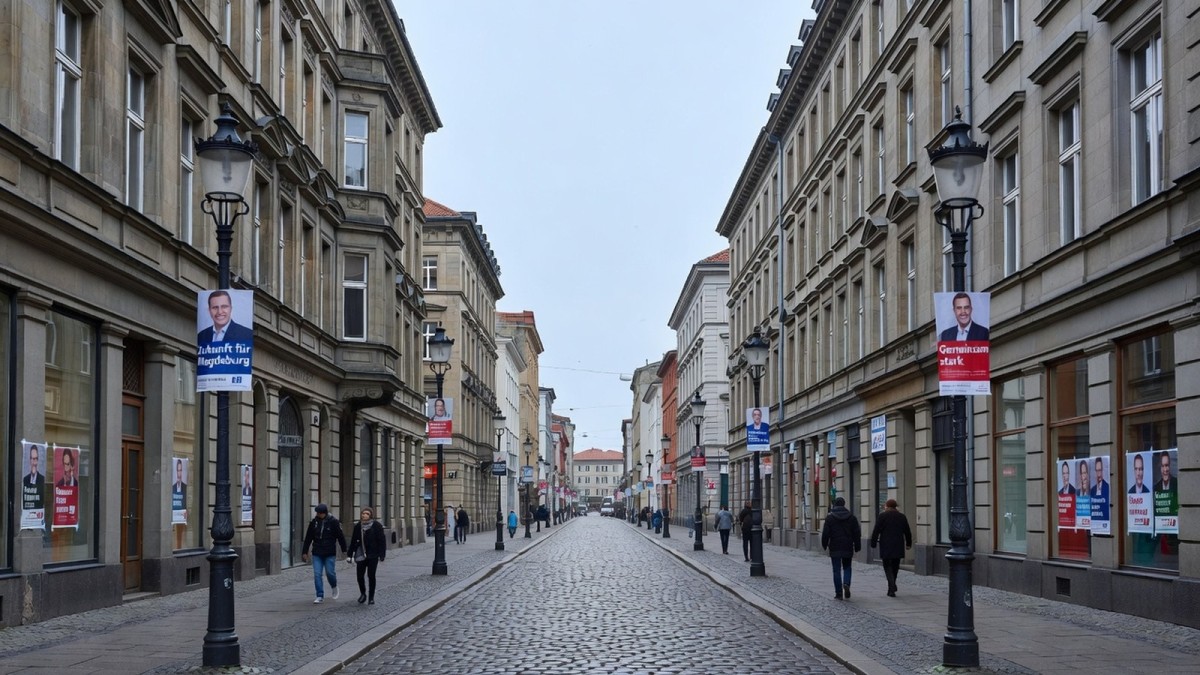
When voters in the eastern German state of Saxony-Anhalt go to the polls on Sunday, they will do so under campaign posters that read, with deliberate ambiguity, "Wir schreiben Geschichte" — "We write history here". The slogan belongs to the Alternative for Germany (AfD), and the history it threatens to write would be unprecedented in the Federal Republic: the first far-right state government since the fall of the Nazis.
When voters in the eastern German state of Saxony-Anhalt go to the polls on Sunday, they will do so under campaign posters that read, with deliberate ambiguity, "Wir schreiben Geschichte" — "We write history here". The slogan belongs to the Alternative for Germany (AfD), and the history it threatens to write would be unprecedented in the Federal Republic: the first far-right state government since the fall of the Nazis.
Saxony-Anhalt Election: AfD’s Siegmund on the Cusp of Historic Breakthrough
London, UK – 5 September 2026 — The arithmetic is tantalisingly close. Every major poll published in the final fortnight of the campaign — Infratest dimap for ARD on 26 August, the ZDF Politbarometer, the Politpro polling average on 27 August — places the AfD at roughly 41 to 42 per cent. The Christian Democratic Union (CDU), which has governed this state since reunification, trails at around 21 to 23 per cent. The Left party polls in the low teens; the Social Democrats (SPD) hover at single digits; the Greens, Free Democrats and Sahra Wagenknecht's BSW all cluster perilously around the 5 per cent threshold required to enter the Landtag.
If those numbers hold, the AfD's lead candidate, the 35-year-old Ulrich Siegmund, could become Minister-President — a role with considerably more executive power than a British MP, controlling the state's police, education system and administrative apparatus. Whether he can form a government depends on a quirk of German electoral law that analysts say could lower the effective majority threshold to as little as 41 per cent of the vote. The more ballots cast for parties that fail to clear the 5 per cent hurdle, the fewer seats required for an outright majority. It is, in the words of one Berlin-based political analyst, "genuinely possible but far from guaranteed".
The 'sunny face' with a radical programme
Ulrich Siegmund cuts an unusual figure for a man whom Der Spiegel's August 2026 cover dubbed "Germany's most dangerous man". A business psychology graduate who joined the AfD in its early anti-euro phase, he presents himself as the party's moderate, telegenic frontman — Reuters has labelled him the "sunny face of the AfD". His campaign events in Magdeburg and Halle draw large, enthusiastic crowds; his speeches are polished, his delivery calm.
But the platform he advocates is anything but moderate. Siegmund has pledged to implement "remigration" — the mass deportation of foreigners, including those legally resident in Germany who have not, in his words, "assimilated". He attended the December 2023 Potsdam meeting at which the Austrian extremist Martin Sellner outlined a "master plan" for remigration. He has criticised Chancellor Friedrich Merz's support for Ukraine as needlessly antagonising Russia and driving up energy costs. He describes Germany's green-energy transition as a policy that "drove up prices" for ordinary households.
The state's domestic intelligence agency, the Office for the Protection of the Constitution, has classified the Saxony-Anhalt AfD chapter as a "confirmed right-wing extremist organisation" since 2023. Intelligence documents cite numerous "Islamophobic, racist and antisemitic statements" by party leaders and describe core positions as "substantially permeated by the racist ideology of ethnopluralism". The party's aim, the documents allege, is to "abolish representative democracy in its current state".
Siegmund dismisses the classification as politically motivated. "It monitors the opposition," he told reporters. "It is being used as a political instrument." Should he take power, he has not ruled out abolishing or restructuring the state's domestic intelligence agency — a move that would remove the very body tasked with monitoring extremist activity.
A firewall under unprecedented strain
Germany's mainstream parties have long maintained what they call the Brandmauer — the "firewall" — against any cooperation with the AfD. The CDU, SPD, Greens and Left have all ruled out coalitions with the far-right party. The outgoing Minister-President, Sven Schulze of the CDU, who has led a "Kenya coalition" of CDU, SPD and Greens since 2021, accuses Siegmund of planning a "political purge" and warns that the AfD "is capable of identifying many problems, without ultimately solving them".
But the firewall has never faced a test quite like this. In Thuringia's 2024 state election, the AfD won the most seats with 32.8 per cent but was excluded from government by the other parties. In Saxony-Anhalt, the AfD's projected 42 per cent is a different order of magnitude. If the party falls just short of an outright majority, the CDU would face an agonising choice: enter into some form of arrangement with a party it has branded extremist, or attempt to govern with a patchwork coalition of weakened centre-left parties.
The CDU has also ruled out coalitions with the Left party, complicating any anti-AfD arithmetic. The BSW, led by Sahra Wagenknecht, has floated the possibility of acting as kingmaker — but polls place the party at just 3 to 5 per cent, perilously close to the threshold. If the BSW, Greens and FDP all fail to clear 5 per cent, the effective majority could fall to roughly 41 per cent of the vote — within striking distance of the AfD's projected share.
From anti-euro protest to ethnopluralism
The AfD's trajectory in Saxony-Anhalt mirrors its national evolution. Founded in 2013 as an anti-euro protest movement, the party has shifted decisively to the far right over the past decade. Nationally, it now leads opinion polls, with Chancellor Merz's CDU trailing in second place. The Saxony-Anhalt chapter has been at the vanguard of that radicalisation.
Der Spiegel has reported that Siegmund's close political associates include former officials of the Heimattreue Deutsche Jugend, a neo-Nazi youth organisation banned in 2009. At his rallies, supporters frequently chant "Sieg! Mund!" — a play on his surname that Siegmund claims not to hear as a resonance of a certain historical slogan. His fellow state MP Hans-Thomas Tillschneider has spoken dismissively of "memorial site stuff" and criticised a "guilt-laden" approach to German history.
Siegmund's campaign has leant heavily into this revisionism. His posters promise to "save the country"; his interviews emphasise national pride. In a Channel 4 interview headlined "We want to be proud of Germany again", he was pressed on remigration and declined to distance himself from the policy. His response to questions about Germany's Nazi past has been to argue that the country must move beyond what he calls "perpetual guilt".
What a far-right state government would mean for Germany
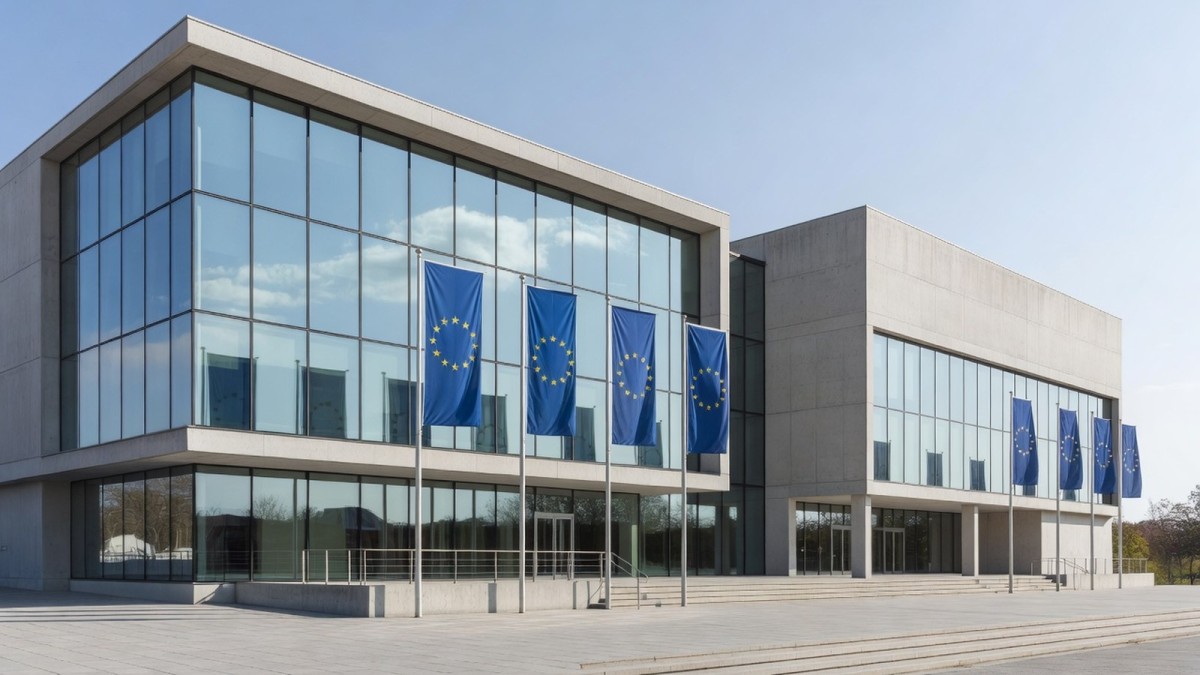
The constitutional order in Germany's federal system gives state governments substantial autonomy. A Minister-President controls the state police, education system, cultural institutions and significant portions of public administration. An AfD government in Saxony-Anhalt would, for the first time, place a party classified as right-wing extremist in charge of a state's security apparatus and its schools.
The implications extend well beyond the state's borders. Germany's federal system means state governments hold seats in the Bundesrat, the upper house of parliament, which must approve federal legislation on matters affecting the states. An AfD presence in the Bundesrat could complicate federal lawmaking on migration, security and education policy.
There is also the question of precedent. If the AfD governs in Saxony-Anhalt, the psychological barrier against far-right participation in German government would be broken. Other eastern states — Thuringia, Saxony, Brandenburg — have seen significant AfD support in recent elections. What happens in Magdeburg on Sunday could reshape the political landscape across the former East Germany.
Why Britain should watch closely
For British readers, the stakes may seem distant — a regional election in a state few could locate on a map. They are not. Germany is one of Britain's most important trading partners and the anchor of the European economy. Political instability in Berlin, or a precedent-setting far-right government in one of its states, reverberates directly in London.
The defence dimension is equally significant. An emboldened AfD opposes German arms support for Ukraine and is sceptical of confrontation with Russia. Germany is Europe's largest economy and a crucial pillar of NATO's eastern flank. A party that questions the transatlantic security consensus, even at state level, complicates the alliance's cohesion at a moment of acute geopolitical tension.
There is also a domestic resonance. The AfD's rise in eastern Germany echoes the surge of Reform UK in Britain and the wider populist wave sweeping European democracies. The debate over Germany's Brandmauer — whether mainstream conservatives should engage with or isolate the populist right — mirrors questions being asked in Westminster about how to handle insurgent parties. And the memory politics at the heart of the AfD's appeal — the desire to "be proud again", the dismissal of "memorial site stuff" — raises uncomfortable questions about how all European democracies teach their histories.
A state shaped by division
Saxony-Anhalt is not a random battleground. A state of roughly 2.2 million people in the former East Germany, it has experienced profound economic and demographic change since reunification. Its industrial base collapsed in the 1990s; its population has aged and shrunk; many young people have left for western cities. The AfD's support is strongest in precisely those regions that feel left behind by globalisation and the green transition.
The state's 2021 election saw the CDU win with about 37 per cent and the AfD take roughly a fifth of the vote. Five years on, the CDU has haemorrhaged support while the AfD has doubled its share. The "Kenya coalition" of CDU, SPD and Greens has governed amid persistent criticism over economic stagnation and migration policy. Siegmund's campaign has tapped into that discontent with a simple message: the establishment has failed, and only the AfD can restore order and pride.
His party's classification as a confirmed right-wing extremist organisation by the state's own intelligence service has done little to dent his support. In a region where trust in institutions is low, the Verfassungsschutz's designation may even have boosted the AfD's credibility among voters who see the intelligence agency as part of the problem.
The long night ahead
When polls close on Sunday evening, Germany — and Europe — will watch the projections with held breath. The scenarios are stark. An outright AfD majority, while not the base case, is within the realm of mathematical possibility. A narrow miss would trigger weeks of coalition negotiations in which the CDU must decide whether to hold the line or break the firewall. A surprise CDU recovery would merely delay the reckoning.
Siegmund has said he will only lead a full AfD government and rules out coalitions. His opponents have said they will not cooperate with him under any circumstances. The stage is set for a confrontation that will test the resilience of Germany's post-war democratic order.
Whatever the outcome, the campaign itself has already shifted the terms of German political debate. The AfD has normalised language — about remigration, about national pride, about the intelligence services — that would have been unthinkable in mainstream discourse a decade ago. The question now is whether the firewall holds, and what happens if it does not.
By Erica Thornton, Staff Writer
This article was produced with AI-assisted research and editorial support. Reporting is based on sources cited in the article.
What's Your Reaction?
 Like
0
Like
0
 Dislike
0
Dislike
0
 Love
0
Love
0
 Funny
0
Funny
0
 Wow
0
Wow
0
 Sad
0
Sad
0
 Angry
0
Angry
0

US Politics and Policy Correspondent at Global1.News. Based in Washington DC, covering American politics, policy, elections, and the courts. Knows how the system works and tells you what it actually means.









Comments (0)