
Japan's New Intelligence Bureau: A Quiet Departure From Postwar Pacifism
In a recent CGTN "We Talk" street-interview segment, Tokyo residents voiced a spectrum of anxieties over the establishment of Japan's new National Intelligence Bureau (NIB), with some drawing direct parallels to the wartime secret police and others expressing fears over personal privacy in a rapidly securitizing state.
In a recent CGTN "We Talk" street-interview segment, Tokyo residents voiced a spectrum of anxieties over the establishment of Japan's new National Intelligence Bureau (NIB), with some drawing direct parallels to the wartime secret police and others expressing fears over personal privacy in a rapidly securitizing state. The segment captures a palpable unease among ordinary citizens, a visceral counterpoint to the formal language emanating from Nagatacho. The creation of the NIB, formalized on 31 July 2026, is not merely an administrative reshuffle; it represents a structural recalibration of the Japanese state's relationship with its own citizens and its strategic posture in a volatile Asia-Pacific.
The stakes extend far beyond Tokyo's Kasumigaseki district. For Beijing, the NIB confirms a long-anticipated trajectory: a Japan shedding the constitutional constraints of its postwar identity in favor of a more muscular, intelligence-led national security apparatus. For Washington, the silence is telling, suggesting tacit endorsement of a more capable ally in great-power competition with China. For the broader region, particularly ASEAN nations with painful memories of Japanese militarism, the NIB raises profound questions about the direction of Japanese power. This article dissects the bureau's establishment, the domestic fissures it has exposed, and the geopolitical implications of Tokyo's most significant intelligence overhaul since the Second World War.
The Architecture of a New Intelligence State
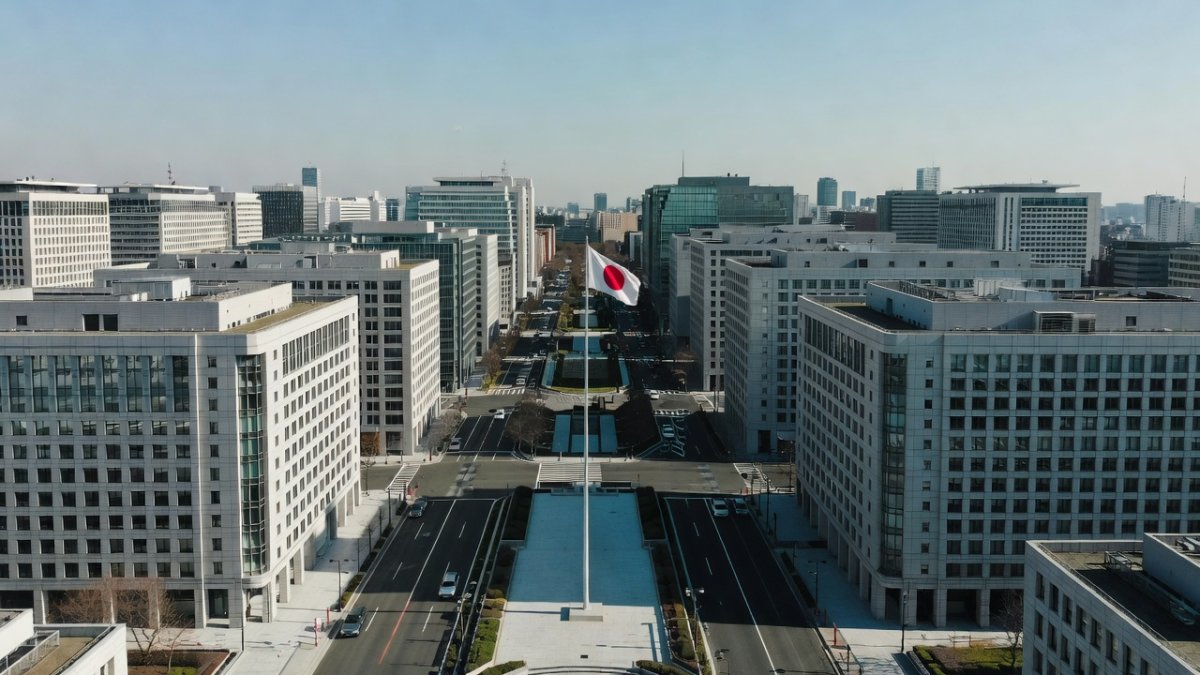
The National Intelligence Bureau is the culmination of a deliberate political project. Governed by the National Intelligence Council (NIC) and headed by the Prime Minister, the agency officially replaced the Cabinet Intelligence and Research Office (CIRO) as Japan's primary intelligence body on 31 July 2026, codified by the National Intelligence Council Establishment Act. With headquarters in Central Government Building No. 8 in Tokyo and a staff of approximately 730, the NIB represents a significant expansion in both mandate and resources.
The political groundwork was laid months earlier. In October 2025, the Liberal Democratic Party (LDP) and the Japan Innovation Party (JIP) forged a coalition agreement that explicitly included a clause to upgrade CIRO into a National Intelligence Bureau during the 2026 Diet session. On 12 February 2026, Chief Cabinet Secretary Minoru Kihara announced that a National Intelligence Strategy would be drafted alongside the bureau's establishment. The legislative path was swift: the Act was filed in the House of Representatives on 13 March 2026, passed on 23 April, and cleared the House of Councillors on 27 May 2026. The leadership is equally telling. Kazuya Hara, the last director of CIRO, was appointed the NIB's first Director-General on 24 July 2026, ensuring continuity, while Hiroyuki Matsuo, a former deputy head of mission at the Japanese Embassy in South Korea, was named Deputy Director, signaling a focus on regional intelligence.
By placing the NIC under the direct authority of the Prime Minister, the Takaichi administration has created a mechanism for more agile, top-down decision-making in national security — a departure from the consensus-driven approach that has historically characterized Japanese policy formulation.
Domestic Fissures: Privacy, Pacifism, and the Surveillance State
The NIB's establishment has ignited a debate that cuts to the heart of Japan's postwar identity. Opposition parties — the Constitutional Democratic Party of Japan, the Japanese Communist Party, Reiwa Shinsengumi, and the Social Democratic Party (SDP) — have framed the bureau as a threat to civil liberties. Mizuho Fukushima, an SDP lawmaker, argued that the absence of such an agency was a deliberate choice rooted in "Japan's commitment to being a peaceful nation that renounces war, and the result of lessons learned from its own history," warning that the NIB would lead Japan toward a surveillance state. Her words resonate with historical memory of the pre-war Special Higher Police (Tokko) and the Kenpeitai military police — the very institutions invoked by critics and by the CGTN segment.
These concerns are not merely rhetorical. Tetsufumi Hirai of the Japan Lawyers Association for Freedom has warned that citizens' freedoms will be "severely restricted" and that Japan could be forced into a conflict where its national security interests do not align. Mikio Haruna, a researcher, has noted that placing the National Police Agency (NPA) in charge of the NIB, rather than an independent analytical body, would fundamentally undermine the bureau's mandate: an agency rooted in law enforcement is inherently more focused on domestic surveillance, whereas a purely analytical body might prioritize external threats. The NIB's reported lack of independent oversight mechanisms for judging its work further amplifies these anxieties.
The government has offered assurances, albeit vague ones. On 26 May 2026, the Prime Minister stated that discussions would be conducted on measures to ensure the NIB does not conduct activities that violate privacy laws or political neutrality. A Jiji opinion poll from 13 July 2026 paints a complex picture: while only 19 percent opposed the law, around 40 percent were indifferent, with the remainder supportive. That data suggests a generational shift in Japanese attitudes toward national security, where the visceral pacifism of the postwar era is giving way to a more pragmatic acceptance of state power — yet the significant minority of opponents, combined with the large indifferent bloc, indicates the societal consensus is far from settled.
The Politics of Legislation: Coalition Calculus and Public Apathy
The passage of the National Intelligence Council Establishment Act was a masterclass in coalition politics. The law was supported by the LDP, Japan Innovation Party, Democratic Party for the People, Komeito, Sanseito, the Conservative Party of Japan, and Team Mirai — a realignment bringing traditional conservatives together with newer, more nationalist parties. The inclusion of the Japan Innovation Party was crucial, as its October 2025 agreement with the LDP provided the initial political impetus. This cross-party support suggests the drive toward a more robust intelligence apparatus is a mainstream consensus among Japan's ruling parties, not a fringe idea.
The opposition remains fragmented, united primarily by its rejection of the NIB. The alliance of the centrist CDP with the far-left JCP and SDP is uneasy, but reflects a shared conviction that the bureau represents a dangerous departure from Japan's constitutional principles. Given the coalition's numerical superiority, the outcome was never truly in doubt — and the speed of the bill's passage, from filing in March to final passage in May, indicates a government determined to minimize the window for public mobilization and opposition scrutiny.
The public's relative indifference is a double-edged sword for the Takaichi administration. On one hand, it provides political cover to proceed with the security agenda without significant electoral backlash. On the other, it signals a potential legitimacy deficit: a population largely indifferent to a major expansion of state surveillance powers may reflect deeper civic disengagement — or pragmatic acceptance that Japan faces genuine external threats. Younger Japanese, who have grown up amid heightened regional tensions, may be more amenable to a stronger security state than their parents or grandparents, keeping the political cost of the NIB low even as its long-term societal implications remain contested.
Regional and Great-Power Reactions: Beijing's Condemnation, Washington's Silence
The international reaction has been starkly bifurcated, underscoring the geopolitical fault lines running through the Asia-Pacific. China's response was swift and condemnatory. In a statement on 5 June 2026, the Xinhua News Agency asserted that creating the NIB "revives the logic of pre-war militarist surveillance, aiming to manipulate domestic public opinion and support expanded military adventurism abroad." The potent rhetorical salvo deliberately invokes the darkest chapters of Japanese history to delegitimize Tokyo's security reforms. For Beijing, the NIB is not a defensive measure but an offensive tool designed to enable a more assertive Japanese foreign policy, potentially in coordination with the United States.
In stark contrast, Washington has remained publicly silent — a silence that is itself a form of communication. The United States has long urged Japan to take on a greater security role, and a more capable intelligence agency aligns perfectly with American strategic objectives in the Indo-Pacific. Avoiding public endorsement may also be deliberate, preventing any statement that might inflame Chinese rhetoric or complicate alliance messaging. From Washington's perspective, a Japan with robust intelligence capability is a more effective partner in intelligence-sharing, surveillance, and collective defense.
The implications for the broader region are significant. ASEAN nations will watch the NIB with a mixture of concern and pragmatism: many Southeast Asian states recognize the strategic value of a stable, rules-based order, yet a more assertive Japan, backed by a powerful intelligence apparatus, could either stabilize against Chinese expansionism or escalate tensions. Plans for a separate foreign intelligence agency by fiscal year 2027 suggest Japan is preparing for a more active role in regional intelligence-gathering — inevitably raising concerns among nations wary of Japanese militarism and complicating Tokyo's diplomatic overtures.
Strategic Trajectory: Toward a New Security Identity
The NIB is best understood as a foundational step in a broader project to redefine Japan's security identity. Plans for a separate foreign intelligence agency by fiscal year 2027, coupled with a proposed anti-espionage law, signal that the bureau is merely the first phase of a comprehensive overhaul. An expert panel is planned to be created by September 2026 to deliberate on formulating the National Intelligence Strategy, the doctrinal framework for these new institutions. The trajectory points toward a Japan moving from a passive recipient of allied intelligence to an active, independent collector and analyst of global information.
This evolution carries profound implications for Article 9 of Japan's postwar constitution, which renounces war as a sovereign right. The NIB itself does not violate Article 9, but its establishment creates the institutional infrastructure that could enable a more proactive military posture: the ability to gather and analyze intelligence is a prerequisite for any military operation, and by centralizing this capability, Japan is building the foundations for a more autonomous defense policy. The Takaichi administration, known for its hawkish stance, is clearly intent on pushing these boundaries.
The strategic assessment is clear: Japan is on a path toward becoming a "normal" great power, with all the intelligence and military capabilities that entails. The NIB is a landmark achievement for the Takaichi government, but also a gamble. By centralizing intelligence power and potentially eroding civil liberties, the government risks alienating a public that, while currently indifferent, may react strongly if the bureau's activities are perceived as overreaching. The lack of independent oversight is a potential flashpoint that could explode into political scandal. For the region, the NIB is a new and unpredictable variable in an already volatile security environment; for China, a confirmation of Japan's hostile intentions; for the United States, a welcome, if unspoken, enhancement of its alliance network. The true test of the NIB will come in how it navigates the terrain between national security and democratic accountability. Japan has chosen to build a new intelligence state; the world will now watch whether it can do so without resurrecting the ghosts of its past.
By Prof. Marcus Chen, Staff Writer
This article was produced with AI-assisted research and editorial support. Reporting is based on sources cited in the article.
What's Your Reaction?
 Like
0
Like
0
 Dislike
0
Dislike
0
 Love
0
Love
0
 Funny
0
Funny
0
 Wow
0
Wow
0
 Sad
0
Sad
0
 Angry
0
Angry
0

World Politics Analyst at Global1.News. Based in Beijing, covering US-China relations, global trade, and geopolitical strategy. Brings deep analytical perspective to the power dynamics shaping international affairs.















Comments (0)