
Floods Hit Laos as Heavy Rains Continue
Flooding has affected at least 11 villages and more than 10,000 people in Savannakhet province in southern Laos, as the Mekong River at Pakse exceeds its alert level. Thai border provinces watch the rising waters with solidarity, preparedness, and a shared monsoon fate.
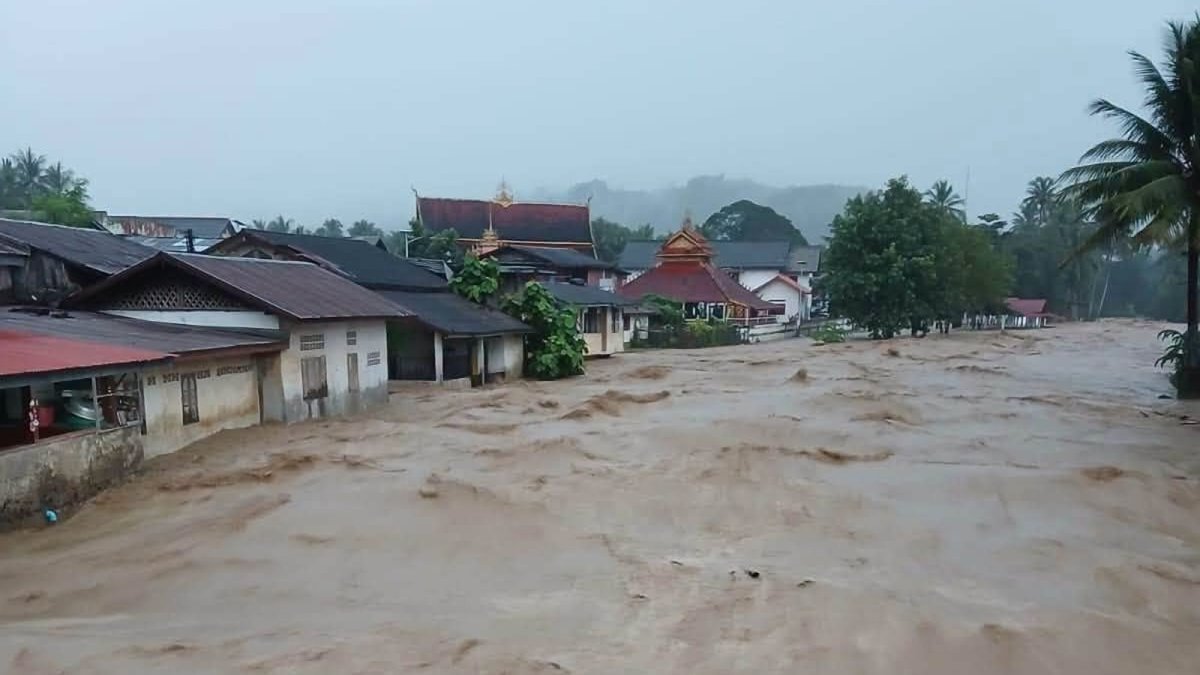
The Mekong River continues to swell beyond its banks, and this week the waters have brought hardship to our neighbors in Laos. Flooding has now affected at least 11 villages and more than 10,000 people in Savannakhet province in southern Laos, according to Lao local media reports. The deluge has struck communities in Phin and Sepone districts, where three temporary shelters have been opened in Phin district to house those displaced by the rising waters.
For Thai readers in the northeastern provinces of Nakhon Phanom and Mukdahan, which sit directly across the Mekong from Savannakhet, this is not a distant headline. The river that connects us is the same river that is now testing the resilience of Lao families. When the Mekong rises on one side, it is a matter of time before the currents and the weather patterns shift our way, reminding us that we share not only a border but a common fate.
Mekong at Pakse Exceeds Alert Level
Further south, in neighboring Champasack province, the situation is equally tense. The Mekong River at Pakse reached 11.52 meters on Tuesday, 19 August, surpassing the 11-meter alert level. This measurement is a critical marker for local authorities, who must now prepare for potential overflows into low-lying communities and agricultural lands. The city of Pakse, a commercial hub in southern Laos, is no stranger to the river's power, but each monsoon season brings new challenges and new calculations for those living along its banks.
The overflow in Champasack is a reminder of the delicate balance between the river as a source of life and the river as a force of destruction. For Thai officials at the Thai Meteorological Department and the Department of Disaster Prevention and Mitigation, these readings are watched closely. The Mekong's behavior in Laos often serves as an early indicator for what may come downstream in Ubon Ratchathani and other Thai provinces along the lower basin.
Flash Floods in Sekong and Northern Laos
In Sekong province, flash flooding has been reported in coal-mining areas, a stark illustration of how quickly the terrain can turn treacherous during heavy rain. The mountainous and forested landscape of Sekong, which borders Vietnam to the east, is particularly vulnerable to sudden runoff when storms stall over the highlands. Workers and local residents in these mining zones have had to move quickly to higher ground as water surged through the working areas.
In northern Laos, the story is one of agricultural loss and displacement. Heavy rain caused water to overflow in Nan district, Luang Prabang province, on Monday and Tuesday, 18-19 August. Paddy fields, the lifeblood of rural livelihoods, have been submerged, and more than 20 families have been affected. For these families, the flooding is not merely an inconvenience; it is the potential loss of an entire season's harvest, a blow to food security and income that will be felt for months to come.
Forecast Calls for More Heavy Rain Through Friday
The relief from the rain is not yet in sight. Heavy to very heavy rain is forecast across parts of Laos through Friday, 21 August, according to regional weather monitoring. Authorities in Laos have urged residents in vulnerable areas to remain alert for further flooding and possible flash floods. The warning is particularly directed at those living near rivers and riverbanks, who have been advised to closely monitor rising water levels and be prepared to evacuate at short notice.
This forecast aligns with the broader monsoon patterns that define the region. The southwest monsoon, which typically brings the bulk of the rainy season to mainland Southeast Asia between May and October, is currently active across the Mekong basin. For Thai readers, this means that the same weather systems affecting Laos are likely to bring rain to the northeastern provinces in the coming days. The Thai Meteorological Department has consistently advised vigilance during this period, and the events in Laos underscore the importance of heeding those warnings.
Regional Solidarity and the Mekong Connection
For Thailand, the flooding in Laos is more than a humanitarian concern; it is a test of regional cooperation. The Mekong River Commission, which includes Thailand, Laos, Cambodia, and Vietnam, exists precisely for moments like this. Data sharing on water levels, early warning systems, and coordinated disaster response are not abstract concepts but practical tools that save lives. When Pakse exceeds its alert level, Thai agencies take note, because the river does not recognize administrative boundaries.
The cultural and familial ties between the people of Isaan and the people of Laos are deep and enduring. Many Thai families in Nakhon Phanom, Mukdahan, and Ubon Ratchathani have relatives across the river. The Lao language, the food, the Buddhist traditions, and the annual boat races on the Mekong all speak to a shared heritage that predates the modern nation-state. When Lao villages flood, Thai villages feel the ripple, not just in water levels but in the bonds of kinship and community.
Buddhist Response and Community Resilience
In times of disaster, the role of Buddhist temples and monks becomes particularly visible. Across Laos, as in Thailand, temples often serve as temporary shelters and distribution points for relief supplies. The three shelters opened in Phin district are likely to be community halls, schools, or temple grounds, places where the local abbot and village elders take on the role of coordinators and comforters. The practice of merit-making, or tham bun, often extends to helping those in need, and donations of food, water, and clothing flow through these networks.
For Thai readers, this is a familiar scene. The same patterns of community response are seen in Thai villages during floods, where monks lead prayers for safety and volunteers organize boat patrols to check on the elderly and infirm. The resilience of these communities is rooted not only in practical preparedness but in a spiritual and social fabric that holds people together when the waters rise.
Implications for Thai Border Provinces
The immediate implication for Thailand's northeastern provinces is the need for heightened awareness. The Department of Disaster Prevention and Mitigation has protocols for monitoring river levels at stations along the Mekong, and these protocols are now in active use. Local administrations in Nakhon Phanom and Mukdahan are likely to be coordinating with their Lao counterparts, sharing information on water levels and weather forecasts. Cross-border trade, which is a significant part of the local economy, may face disruptions if transport routes are affected by flooding.
Tourism, too, is a factor. The Mekong riverbanks are popular with visitors, and the towns of Pakse and Luang Prabang are key stops on the Southeast Asian travel circuit. While the flooding is unlikely to deter all travelers, it may affect river cruises and access to certain attractions. For Thai tour operators and local businesses in border towns, this is a reminder of how interconnected the regional economy is with the rhythms of the monsoon.
A Shared Monsoon, A Shared Future
The monsoon does not ask for permission before it arrives, and it does not discriminate between Lao and Thai villages. The rain that falls on the Annamite Range in Sekong eventually makes its way into the Mekong, and from there it flows past Pakse, past the Khone Falls, and into the delta in Vietnam. Along the way, it touches the lives of millions of people who depend on the river for their livelihoods, their food, and their transport.
As the forecast calls for continued heavy rain through Friday, the coming days will be critical for the affected communities in Laos. For Thai readers, the message is one of solidarity and preparedness. We watch the river, we share the data, and we stand ready to help our neighbors. The Mekong has always been a connector, and in times of flood, that connection becomes a lifeline. The waters will eventually recede, the fields will dry, and the rebuilding will begin. But the memory of this monsoon, and the kindness shown during it, will linger in the villages along the river for years to come.
This article was produced with AI-assisted research and editorial support. Sources: Khaosod English, Lao local media.
By Ann Srisawat, Staff Writer
What's Your Reaction?
 Like
0
Like
0
 Dislike
0
Dislike
0
 Love
0
Love
0
 Funny
0
Funny
0
 Wow
0
Wow
0
 Sad
0
Sad
0
 Angry
0
Angry
0

Southeast Asia Correspondent at Global1.News. Based in Bangkok, covering Thai and Southeast Asian politics, economy, technology, and culture. Deep regional perspective on one of the world's most dynamic regions.













Comments (0)