
Israeli Strike Kills Three Palestinian Farmers in Khan Younis
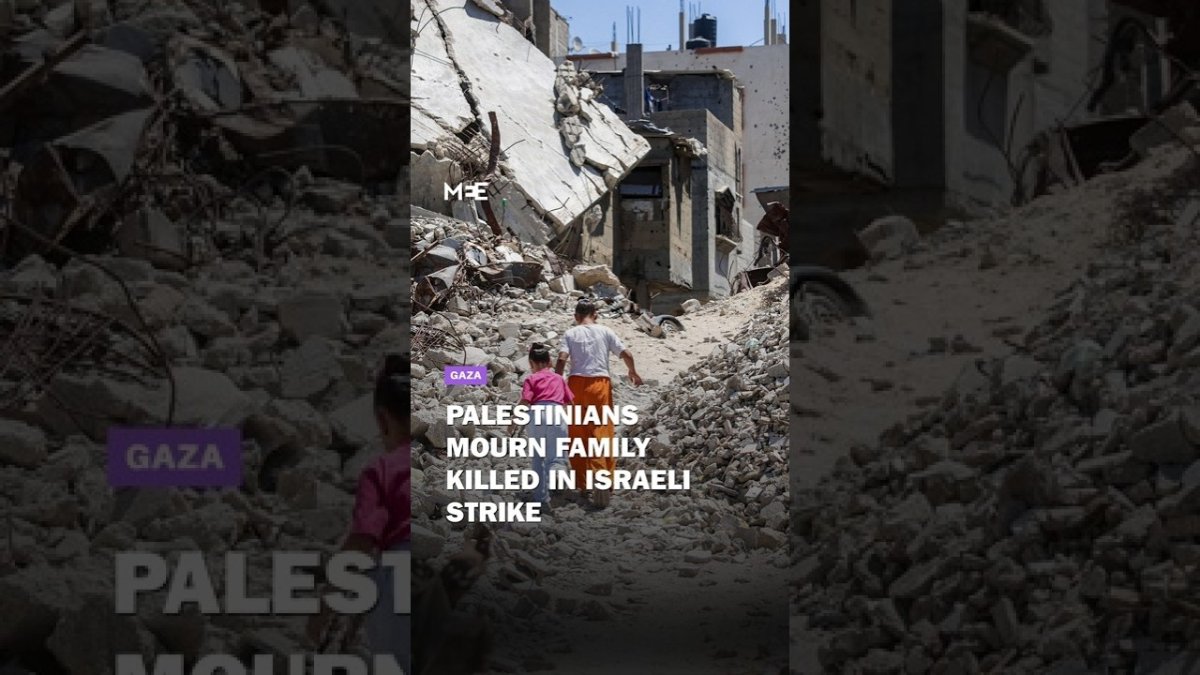
In a recent Middle East Eye video report, the family of three Palestinian farmers publicly mourned their loved ones after an Israeli drone strike killed them in Khan Younis on Friday, 28 August 2026. The family, speaking through their grief, expressed despair at what they described as the continued violation of the ceasefire agreement, insisting the men were farmers with no connections to any armed group.
In a recent Middle East Eye video report, the family of three Palestinian farmers publicly mourned their loved ones after an Israeli drone strike killed them in Khan Younis on Friday, 28 August 2026. The family, speaking through their grief, expressed despair at what they described as the continued violation of the ceasefire agreement, insisting the men were farmers with no connections to any armed group. The strike, which targeted a group of farmers in the agricultural town of al-Qarara, northeast of Khan Younis, has once again brought the fragility of the truce into sharp focus.
The deaths come as the Gaza Strip marks nearly a year since the ceasefire between Israel and Hamas took effect in October 2025, a period that was supposed to bring respite to a battered population but has instead been punctuated by near-daily incidents of violence. For the families in the southern Gaza Strip, the distinction between war and ceasefire has become increasingly blurred, as the land they depend on for survival has turned into a deadly frontier.
Israeli Strike Kills Three Palestinian Farmers in Khan Younis
Khan Younis, Gaza – 28 August 2026 — The three men, identified by the Palestinian news agency WAFA as members of the Abdeen family, were working their land in al-Qarara when an Israeli drone targeted them on Friday morning. The strike, which occurred northeast of Khan Younis in the southern Gaza Strip, killed all three instantly, according to local medical sources cited by WAFA. The area, known for its agricultural output, has become a recurring flashpoint, with farmers repeatedly exposed to Israeli fire as they attempt to cultivate land near the eastern margins of the Strip.
The Gaza Herald reported that Friday's strike marked the 323rd consecutive day of ceasefire violations, a figure that underscores the persistent volatility of the situation despite the formal truce. The Abdeen family, like many in the region, had returned to their fields in the hope that the ceasefire would hold, allowing them to rebuild their livelihoods after more than a year of devastating conflict. Instead, they have been met with the same lethal reality that has defined life in Gaza for generations.
The Strike and Its Immediate Aftermath
According to reports from Al Jazeera and Anadolu Agency, at least three people from the same family were killed in the drone strike north of Khan Younis. The attack came approximately one month after the ceasefire was renewed, amid continued Israeli military actions across the Gaza Strip. Witnesses at the scene described a sudden explosion followed by chaos, as other farmers in the vicinity rushed to aid their fallen neighbours, only to find them beyond help.
Medical teams from the nearby European Hospital in Khan Younis received the bodies, which were later transferred to the Abdeen family home for burial. The funeral, captured in the Middle East Eye video report, showed relatives weeping over the shrouded bodies, with women wailing and men struggling to maintain composure. One family member, speaking through tears, told reporters that the men had left home that morning with nothing but their tools and a thermos of tea, expecting a day of honest work.
The Israeli military has not issued an official statement regarding the strike, a silence that has become customary in such incidents. However, the pattern of targeting farmers near the eastern border of Gaza has been well-documented, with human rights organisations repeatedly calling for investigations into what they describe as unlawful killings of civilians engaged in agricultural activities.
The Family and the Human Cost
The Abdeen family, a prominent agricultural clan in al-Qarara, has deep roots in the area, with their land having been passed down through generations. The three men killed on Friday were described by neighbours as quiet, hardworking individuals who had no political affiliations and no involvement with armed factions. Their only crime, as the family sees it, was attempting to feed their children in a place where even the soil has become a battleground.
The family's grief was compounded by a sense of betrayal, as they had trusted the ceasefire to protect them. "They were farmers, not fighters," one relative told the Middle East Eye reporter, his voice breaking. "They went to work, and they were killed. What kind of ceasefire is this?" The sentiment reflects a broader disillusionment among Gaza's civilian population, who have watched the truce erode month by month while the international community remains largely silent.
Since the ceasefire between Israel and Hamas in October 2025, 1,296 Palestinians have been killed and 4,296 others injured, according to figures cited by WAFA in the Middle East Eye report. These numbers, staggering in their magnitude, represent not just statistics but individual lives cut short, families shattered, and communities left to mourn in a landscape already scarred by loss. For the Abdeen family, the strike has added three more names to a growing list of martyrs, their deaths a grim reminder that the ceasefire has not brought the safety they were promised.
The Ceasefire Under Strain
The ceasefire, brokered in October 2025 after months of intense diplomatic pressure, was hailed as a turning point in the conflict. It brought an end to the most intense phase of Israel's war on Gaza, which had killed tens of thousands and reduced entire neighbourhoods to rubble. However, the truce was never a comprehensive peace agreement, and its terms left many issues unresolved, including the status of the eastern border areas where farmers have become frequent targets.
Israeli military officials have justified strikes near the border as necessary to prevent infiltration and attacks on Israeli communities. Yet, human rights groups and local observers argue that the targeting of farmers, who are often far from any military infrastructure, constitutes a violation of international humanitarian law. The Gaza Herald's count of 323 consecutive days of ceasefire violations suggests that such incidents are not anomalies but rather a systematic pattern of attrition against Gaza's civilian population.
The strain on the ceasefire is also evident in the broader political context. Efforts to extend the truce into a permanent arrangement have stalled, with both sides accusing the other of bad faith. For Palestinians in Gaza, the ceasefire has meant little more than a reduction in the intensity of bombing, not an end to the daily threat of death. The strike on the Abdeen family is a stark illustration of this reality, as farmers who sought to reclaim a semblance of normalcy were instead met with lethal force.
The Wider Toll of the War
The total death toll from Israel's war on Gaza has reached 73,431 Palestinians killed, with thousands of bodies still buried under the rubble, according to figures cited by Middle East Eye and WAFA. WAFA separately reports more than 73,000 killed since October 2023, a figure that includes men, women, and children, as well as medical personnel, journalists, and aid workers. The scale of the loss is almost incomprehensible, representing nearly three percent of Gaza's pre-war population of roughly 2.3 million.
Beyond the dead, the war has left an entire generation traumatised and displaced. Hundreds of thousands of Palestinians remain in makeshift shelters, their homes destroyed or uninhabitable. The agricultural sector, once a cornerstone of Gaza's economy, has been decimated, with farmland, greenhouses, and irrigation systems destroyed by military operations. For families like the Abdeens, the land is not just a source of income but a symbol of resilience and continuity, and its loss is felt as deeply as the loss of life.
The international community's response to the ongoing violations has been muted, with diplomatic efforts focused on maintaining the ceasefire rather than addressing its shortcomings. Humanitarian organisations have repeatedly warned of a looming famine in Gaza, as access to food, water, and medical care remains severely restricted. The killing of farmers, who are essential to any hope of food security, only deepens the crisis, creating a vicious cycle of deprivation and violence.
Analysis and Implications
The strike on the Abdeen family is not an isolated incident but part of a broader pattern that has defined the post-ceasefire period. The continued targeting of civilians, particularly those engaged in essential activities like farming, raises serious questions about the viability of the truce and the intentions of the parties involved. For Israel, the strikes may be seen as a means of maintaining pressure on Hamas and deterring any potential attacks. For Palestinians, they are a reminder that the ceasefire is a fragile document, easily broken and rarely enforced.
The implications for the region are profound. The erosion of the ceasefire threatens to reignite a full-scale conflict, with catastrophic consequences for a population already on the brink. The failure of the international community to hold violators accountable has created a climate of impunity, where the lives of Palestinian civilians are treated as expendable. The Abdeen family's loss is a microcosm of a larger tragedy, one that continues to unfold with each passing day.
Local analysts have noted that the strikes near the eastern border are often met with little international outcry, as they occur in areas that are less visible to the global media. This selective attention has allowed the violence to continue unabated, with farmers and other civilians bearing the brunt of a conflict they did not choose. The situation in al-Qarara, once a thriving agricultural hub, now serves as a grim testament to the cost of a war that shows no signs of ending.
Looking Ahead
As the Abdeen family buries its dead, the people of Khan Younis and the wider Gaza Strip are left to grapple with a painful question: what does the future hold? The ceasefire, already strained to its breaking point, offers little comfort to those who have lost everything. For farmers like the three men killed on Friday, the simple act of tending to their land has become an act of defiance, one that carries the ultimate price.
The international community, which has largely looked away, must confront the reality that the ceasefire is failing. Without meaningful pressure on Israel to halt its attacks and a genuine commitment to accountability, the cycle of violence will continue, claiming more lives and deepening the despair of a population that has already endured so much. The strike on the Abdeen family is a warning, one that should not be ignored.
For now, the fields of al-Qarara lie silent, their caretakers gone. The family's grief is raw and unrelenting, a testament to a loss that no words can adequately capture. As the sun sets over Khan Younis, the people of Gaza are left to wonder whether the ceasefire will hold, or whether the land they love will once again become a graveyard for their hopes and their dreams.
By Fatima Al-Rashid, Staff Writer
This article was produced with AI-assisted research and editorial support. Reporting is based on sources cited in the article.
What's Your Reaction?
 Like
0
Like
0
 Dislike
0
Dislike
0
 Love
0
Love
0
 Funny
0
Funny
0
 Wow
0
Wow
0
 Sad
0
Sad
0
 Angry
0
Angry
0

Gulf/MENA Correspondent at Global1.News. Based in Doha, covering Gulf politics, energy markets, diplomacy, and development across the Middle East and North Africa. Tracks the economic transformation of the Gulf states.















Comments (0)