
Nepal Flood Disaster: Death Toll Climbs Past 579 as Rescuers Race Against Time and New Landslide Lakes
Nepal's catastrophic flash floods have killed at least 579 people with 1,900 missing, as rescuers battle new landslide lakes and blocked roads. Atlanta's Nepali community rallies with benefit concerts and vigils to support relief efforts.
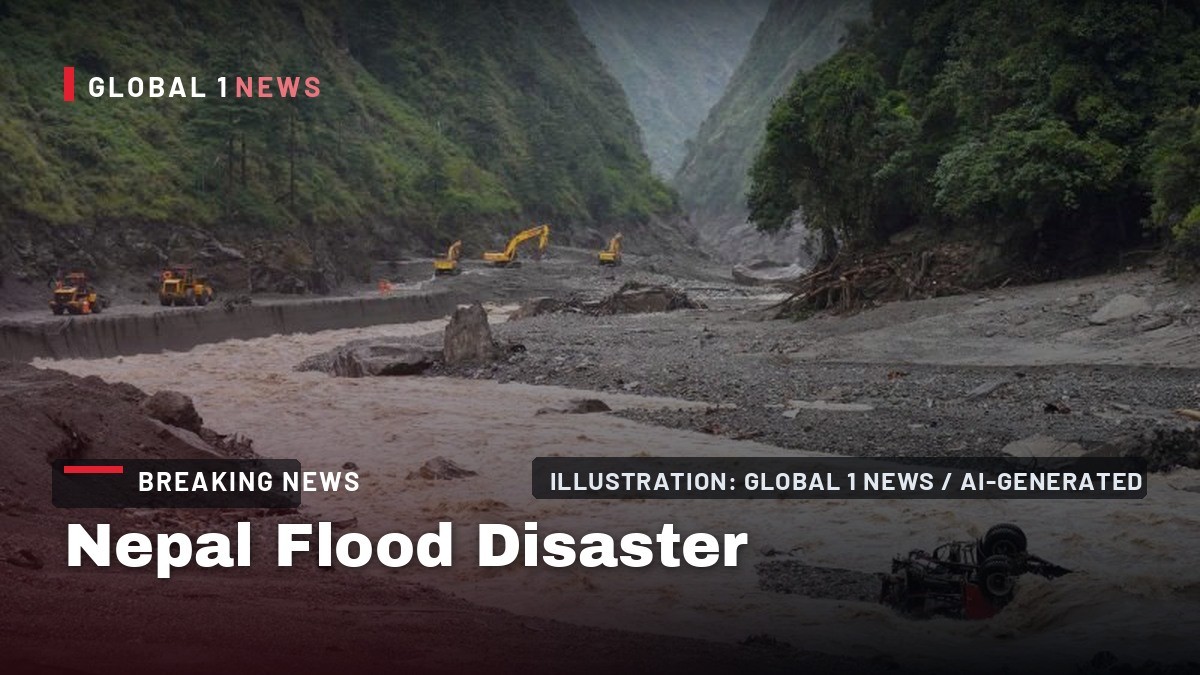
The catastrophic flash floods that tore through Nepal's Himalayan border region on Wednesday have now claimed at least 579 lives in Nepal, with more than 1,900 people still missing, according to the National Disaster Risk Reduction and Management Authority (NDRRMA). The disaster, triggered by a glacier collapse and ice-rock avalanche in Tibet, sent a wall of water surging down the Bhotekoshi and Trishuli river valleys, devastating entire communities and leaving a trail of destruction that officials say will take years to fully assess.
Survivors who spoke with CNN described the water hitting "like a tsunami," with two of the only known US survivors saying they narrowly escaped to higher ground as the flood engulfed their trekking route. The scale of the catastrophe has overwhelmed local response capabilities, with rescue teams still unable to reach parts of the remote region as roads between districts remain blocked and new threats emerge from unstable landslide dams.
As of Friday, day three of the disaster, the situation remains highly fluid. Nepal Police have reported recovering 178 bodies in Chitwan district, 110 in Nawalparasi East, 44 in Gorkha, 37 in Nuwakot, and 33 in Dhading. China has confirmed at least 5 dead in Tibet's Gyirong County, with more than 500 missing on the Chinese side per CNN's latest reporting. The combined missing count across both nations stands at approximately 2,500 people, including dozens of Americans.
How the Disaster Unfolded Along the Bhotekoshi and Trishuli Corridor
The sequence of events began Wednesday morning when a massive glacier collapse near the Nepal-China border in Tibet triggered an ice-rock avalanche that displaced an enormous volume of water. The resulting flood wave barreled down the Bhotekoshi River into Nepal's Rasuwa District, a popular trekking corridor, before continuing into the Trishuli River system. Initial official comments pointed to a possible tremor shaking ice loose, with the USGS first publishing a magnitude 4.4 event north of Kathmandu near the border before revising that finding after reviewing seismic stations and satellite imagery.
Nepal's Foreign Minister Shisir Khanal told parliament that initial reports suggested an earthquake-triggered landslide, though the exact mechanism remains under investigation. What is clear is the devastating impact: floodwaters devastated communities in Nuwakot district, including Devighat village and the Trishuli market, before continuing downstream through Dhading, Gorkha, Chitwan, and Nawalparasi East. The affected corridor is a major trekking route, which explains the high number of foreign tourists caught in the disaster.
The flood also created a barrier lake where a landslide dammed a river, and that dam later breached, spilling more water and forcing rescue teams to pause operations. By Friday, a second newly formed lake was spotted in aerial footage of Nepal's flood zone, prompting officials to warn people to stay away from the banks of the Trishuli, Bhotekoshi, and Narayani rivers. Monsoon-fueled storms are forecast through the weekend, raising concerns about further destabilization of already fragile terrain.
International Casualties and the Search for Missing Foreign Nationals
The Nepal Tourism Board reports that hundreds of foreign nationals from roughly 28 to 31 countries remain missing, including 65 Americans, 53 Ukrainians, 51 Malaysians, 33 Britons, and at least 38 Australians. The US State Department says about 90 US citizens are unaccounted for across Nepal and China, with no US deaths confirmed and at least 3 Americans rescued so far. India reports about 290 Indian nationals uncontactable, though Indian rescue teams have already extracted 84 people, including 63 workers from the Trishuli-I run-of-river hydroelectric project and 21 people from Tamil Nadu.
The high number of foreign casualties reflects the region's popularity as a trekking destination. At least 555 stranded tourists have been evacuated from Tibet, according to France 24, while the Nepal Tourism Board confirms 31 foreign nationals have been rescued from affected areas, including South Koreans, Russians, Italians, a Bulgarian, and a Swiss national. The gap between the missing and the rescued highlights the immense challenge facing search-and-rescue operations in terrain where roads have been washed out and entire villages buried under debris.
For families waiting for news, the uncertainty is agonizing. The UK has deployed a rapid response team arriving in Kathmandu Saturday, alongside £5 million ($6.77 million) in humanitarian assistance. Foreign Secretary Ed Miliband stated, "We will do absolutely everything we can to support British nationals and their families."
Rescue Operations Hampered by Terrain and New Landslide Lakes
Nepal's army helicopters are ferrying survivors out of Nuwakot, with Nepali police and NDRRMA leading the response. However, rescue teams still cannot reach parts of the remote region. World Vision's Dhruba Gurmachha told reporters, "The accessibility issue at the moment is very challenging," noting that roads between districts remain blocked. The newly formed barrier lakes add another layer of danger, as any breach could send additional floodwaters downstream, potentially endangering both rescue workers and survivors.
China has deployed more than 570 emergency personnel and equipment to Gyirong County, with Premier Li Qiang visiting the disaster region. Rescue efforts in the Gyirong Port area were suspended Friday morning over the barrier-lake risk, then resumed Friday evening after state media said the risk was under control. Nepal's Prime Minister Balendra Shah has received offers of help from India's Prime Minister Narendra Modi, who pledged full humanitarian assistance, and the EU has also sent assistance.
The immediate priority remains locating the missing and providing shelter, food, and medical care to the displaced. For families waiting to hear from loved ones, every hour counts — and the monsoon forecast through the weekend adds fresh urgency to the search.
Humanitarian Needs Mount as Nearly 160,000 Women and Girls Affected
UN Women reports that nearly 160,000 women and girls in Rasuwa and Nuwakot districts have been directly or indirectly affected by the disaster. Representative Patricia Fernandez-Pacheco warned that existing risks for women and girls "skyrocket when disasters hit," citing exploitation, abuse, hunger, and evidence that women are more likely to die in disasters. The organization is calling for gender-sensitive relief efforts that prioritize the safety and dignity of vulnerable populations.
The humanitarian needs are staggering. Thousands of people have lost their homes, livelihoods, and access to clean water and sanitation. The IFRC's emergency funding of 1 million Swiss francs ($1.2 million) will help support shelter, health, and livelihood recovery, but the scale of the destruction requires a coordinated international response.
Local organizations are also mobilizing, but they face immense logistical challenges. The destruction of roads and bridges has isolated many communities, making it difficult to deliver supplies. Aid agencies are urging donors to contribute to established relief funds so resources reach those most in need.
Atlanta's Nepali Community Rallies for Relief Efforts
Here in Atlanta, the Nepali community is mobilizing to support relief efforts from thousands of miles away. CNN's Sugam Pokharel reported from Atlanta that more than 5,000 people who immigrated to the US from Nepal live in Atlanta and surrounding areas, according to Raju Thapa, president of the Nepali Cultural Center (NCC). The community has organized a series of events to raise funds and awareness for the flood victims.
A flood-relief concert is scheduled for October 3 featuring legendary Nepali rock band Mukti & Revival, with net proceeds going to Government of Nepal flood relief funds, per organizer Amit Kathiwada of Shangri-La Events & Entertainment. Another concert featuring popular band Kandara is happening in Atlanta today (Friday, August 28) with profits donated to relief efforts. A candlelight vigil is planned for Sunday to honor the victims and show solidarity with those affected.
Thapa's message to the world is urgent and heartfelt: "I would like to request the world to help provide Nepal food, tents and financial aid. Help Nepal. Save humanity." The Atlanta community's response reflects the deep connections between Nepali Americans and their homeland, and their determination to make a difference even from afar.
A Climate Warning: Glacial Lakes and the GLOF Threat
The disaster is being called the deadliest Himalayan flood disaster in years and a textbook glacial lake outburst flood (GLOF) scenario — the kind scientists have long warned will become more frequent as high-mountain glaciers retreat under a warming climate. The Himalayan region is warming faster than the global average, and glacial lakes are expanding, increasing the risk of GLOF events.
Scientists have long called for improved monitoring and early warning systems, but implementation has been slow, particularly across international borders. Cross-border coordination has emerged as a critical issue, with Nepali authorities historically complaining that there was no early warning from China when glacial lakes in Tibet damaged Nepal in past years. Experts argue that better data sharing and monitoring could save lives in future events.
The Global Response and What Comes Next
The international community has responded with pledges of support, but the road to recovery will be long and difficult. The UK's rapid response team arriving Saturday will join efforts to locate British nationals and assess humanitarian needs. The EU's assistance and the IFRC's emergency funding are critical first steps, but reconstruction will require sustained commitment from donor nations and international organizations.
As rescue operations continue and the full scale of the disaster becomes clearer, the focus will shift to recovery and rebuilding. For anyone looking to help, established channels include the IFRC, World Vision, and the Government of Nepal's official flood relief funds — and Atlanta's Nepali community events offer a direct way to show up. The people of Nepal are counting on the world's attention to translate into meaningful action.
By Jessica Ali, Staff Writer
This article was produced with AI-assisted research and editorial support. Sources: CNN, The Guardian, Al Jazeera, Kathmandu Post, Reuters, Associated Press, The New York Times.
What's Your Reaction?
 Like
0
Like
0
 Dislike
0
Dislike
0
 Love
0
Love
0
 Funny
0
Funny
0
 Wow
0
Wow
0
 Sad
0
Sad
0
 Angry
0
Angry
0

Editor-in-Chief at Global1.News. Atlanta-based journalist who cuts through the BS and tells it like it is. Lead anchor, host, and the voice you hear when the spin stops and the truth starts.














Comments (0)