
Israeli Drone Strike on Crowded Gaza Cafe Kills Six, Including a Child
An Israeli drone strike on a crowded beachfront cafe in Gaza City killed six Palestinians, including a child, and wounded more than a dozen, according to Anadolu Agency. It is the latest breach of the ceasefire in place since October 2025.
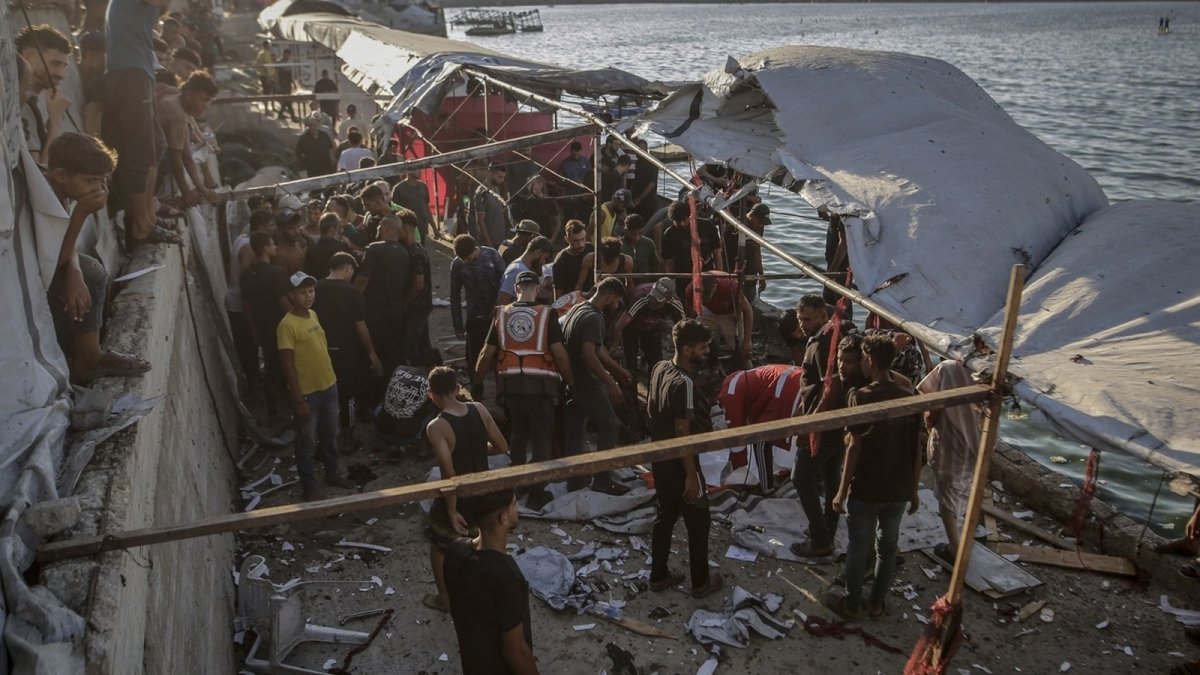
GAZA CITY — The sea breeze that once carried the scent of coffee and hookah smoke through the Al-Shati waterfront now carries something else entirely: the acrid tang of explosives and the cries of rescue workers. On Tuesday evening, an Israeli drone strike tore through a crowded beachfront cafe in the port of Gaza City, killing six Palestinians, including a child, and wounding more than a dozen others, according to medical sources and eyewitnesses who spoke with Anadolu Agency.
The attack, which involved the firing of at least two missiles, turned a place of ordinary evening respite into a scene of carnage. Bodies of the dead and severely injured were rushed to nearby hospitals in the immediate aftermath, a medical source told Anadolu. The strike is the latest in a long and bloody series of violations of a ceasefire agreement that ostensibly went into effect in October 2025 — an agreement that, on the ground, has done little to shield Palestinian civilians from the daily threat of Israeli fire.
A Gathering Turned to Ashes
Witnesses described the moment the first missile struck, followed by a second, as patrons — many of them young men and families enjoying the relative calm of the evening — had no time to flee. The cafe, situated along the port in the Al-Shati area west of Gaza City, was a popular spot, known for its view of the Mediterranean and its role as a rare social gathering place in a territory under siege for nearly three years.
The dead and wounded were transported to local hospitals, where medical staff, already overwhelmed by the scale of casualties from months of sustained conflict, worked to treat the influx of patients. Figures on the exact number of children among the wounded were not immediately available, but the confirmed death of at least one child underscores the grim reality that no space in Gaza — not even a seaside cafe — is safe from the reach of Israeli weaponry.
The Israeli army, in a statement, claimed the attack had targeted Hamas commanders operating in the Al-Shati area, alleging the group had been planning attacks on its forces. Israeli Army Radio, citing an unnamed security source, further claimed the strike had killed four Hamas commanders who had gathered at the cafe, including a "company commander" and three "faction commanders." Hamas, for its part, has yet to issue a statement on the Israeli claims, and no independent verification of the military's assertions was possible.
The Ceasefire That Wasn't
Tuesday's strike is not an anomaly; it is a pattern. The ceasefire agreement, which ostensibly went into effect in October 2025, was meant to halt the fighting and open the way for humanitarian relief. Instead, it has become a framework for continued violence, with Israeli forces carrying out near-daily strikes across the Gaza Strip while Palestinians attempt to rebuild their shattered lives.
According to Gaza's Health Ministry, repeated Israeli breaches of the truce agreement have killed 1,266 Palestinians and left another 4,200 injured since the ceasefire was declared. These figures, compiled by medical officials on the ground, represent a steady drumbeat of death that has continued unabated even as diplomats in distant capitals speak of peace processes and reconstruction plans.
The discrepancy between the official narrative of a ceasefire and the lived reality of Palestinians is stark. For the residents of Al-Shati, the ceasefire has meant little more than a change in the frequency of attacks — from the relentless bombing of full-scale war to the targeted assassinations and drone strikes that have become the new normal. The beachfront cafe, like so many civilian spaces across Gaza, became a target not because of what it was, but because of who might be there.
The Broader Toll of War
The strike on the cafe comes against the backdrop of a war that has exacted an unimaginable price from the Palestinian people. Since Israel began its war on the Gaza Strip in October of 2023 — a campaign that Palestinians and human rights groups have described as genocidal — more than 73,000 Palestinians have been killed and over 174,000 others injured, according to Gaza's Health Ministry. These are not abstract numbers; they are fathers, mothers, children, and grandparents — people with names, faces, and dreams that have been extinguished by bombs and bullets.
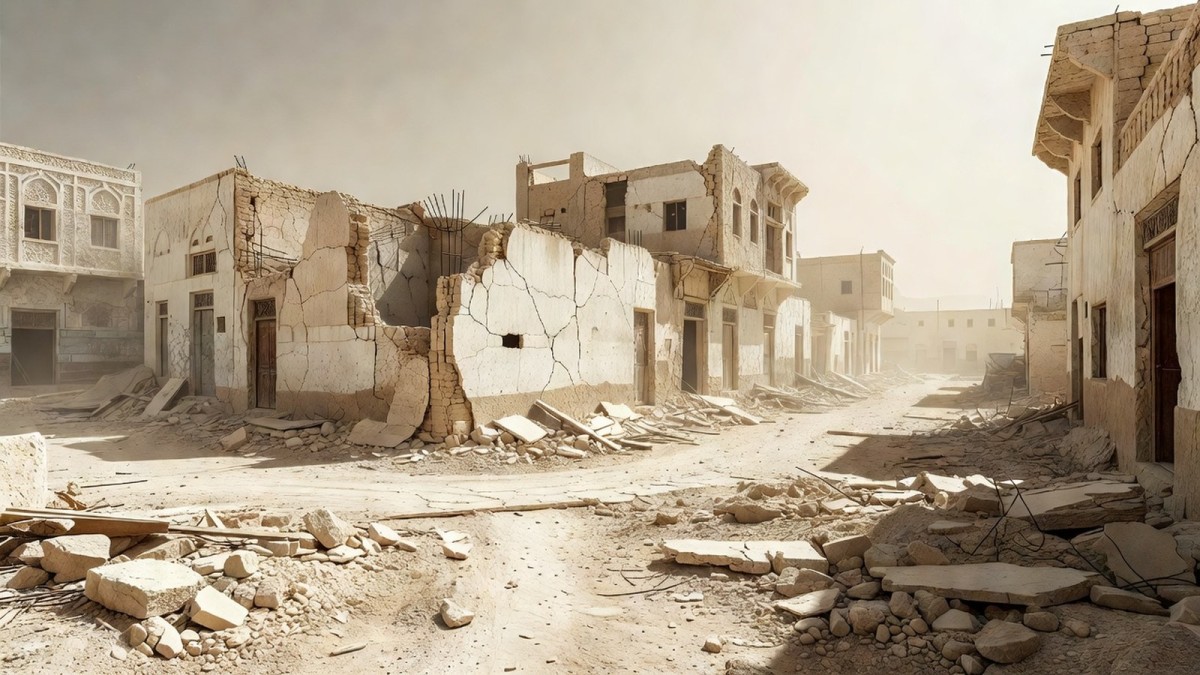
The scale of the destruction is difficult to comprehend. Entire neighborhoods have been reduced to rubble. Hospitals, schools, and mosques have been damaged or destroyed. International agencies have repeatedly warned of famine and the collapse of the healthcare system. And yet, the international community's response has been marked by a troubling passivity, with the United States and other powers continuing to supply Israel with the weapons used in these attacks while issuing tepid calls for restraint.
In this context, the killing of six people at a cafe might seem like a small footnote in a larger tragedy. But for the families of those killed, it is everything. It is the loss of a father who went out for coffee and never came home. It is the death of a child who should have been in school, not in a hospital morgue. It is the destruction of the few remaining spaces where Palestinians can gather, breathe, and pretend, for a moment, that life is normal.
Local Context: Life Under Siege
The Al-Shati area, also known as the Beach Camp, is one of the most densely populated areas in the Gaza Strip. Originally established in 1948 to house Palestinian refugees expelled from their homes during the Nakba, it has grown into a sprawling urban center that is home to more than 90,000 people. The port of Gaza City, where Tuesday's strike occurred, has long been a hub of economic activity — a place where fishermen launch their boats, merchants sell their wares, and families come to escape the claustrophobic confines of the camp.
But the war has transformed the port into a ghost of its former self. The fishing industry, already crippled by Israeli naval blockades, has been further devastated by the conflict. The cafes and restaurants that once lined the waterfront have been damaged or destroyed. And now, even the simple act of sitting by the sea and drinking coffee has become a death sentence.
For the people of Gaza, the strike on the cafe is a reminder that there is no safe haven. They have been told to evacuate certain areas, only to be bombed in the places they are directed to go. They have been told that the ceasefire would bring relief, only to watch their loved ones killed in violation of that agreement. They have been told that Hamas commanders are the targets, only to see civilians bear the brunt of the violence.
The Question of Accountability
The Israeli army's claim that the strike targeted Hamas commanders raises difficult questions about the rules of engagement in this conflict. Even if the military's assertions are accurate — and they remain unverified — the killing of a child and the wounding of over a dozen civilians in the process raises serious concerns under international humanitarian law. The principle of proportionality, a cornerstone of the laws of armed conflict, requires that the expected civilian harm from an attack not be excessive in relation to the anticipated military advantage.
Yet, time and again, Israeli strikes in Gaza have resulted in significant civilian casualties, and time and again, the international community has failed to hold Israel accountable. The International Criminal Court has opened investigations into the situation in Palestine, but progress has been slow and accountability remains elusive. Meanwhile, the United States has repeatedly blocked United Nations Security Council resolutions calling for a ceasefire, effectively shielding Israel from diplomatic consequences.
For Palestinians, this lack of accountability is not just a legal issue; it is a matter of life and death. When there are no consequences for killing civilians, the killing continues. When the international community looks away, the drones keep flying. And when the world accepts the narrative that every strike is justified by the presence of a "commander," the space for civilian life shrinks ever further.
Voices From the Ground
In the immediate aftermath of Tuesday's strike, the bodies of those killed and severely injured were taken to nearby hospitals, a medical source and eyewitnesses told Anadolu Agency. At the hospitals, families gathered to identify the dead and pray for the wounded. Witnesses stated that the drone attack involved the firing of at least two missiles, and a medical source described the scramble to treat the influx of casualties with limited resources.
These are the accounts that are too often absent from official statements and diplomatic communiques — the voices of ordinary people who just want to live in peace. The strike on the cafe is also a reminder of the psychological toll of this war. For nearly three years, the people of Gaza have lived under constant threat of death. They have lost homes, loved ones, and livelihoods. They have been displaced multiple times. And they have watched the world debate their fate as if they were not human beings with hopes and dreams of their own. The trauma of this experience will last for generations, even if the bombs eventually stop falling.
The Path Forward
As the sun sets over the Mediterranean, the beachfront cafe in Gaza City lies in ruins. The chairs are overturned, the tables are splintered, and the sand is stained with blood. The fishermen will not go out tonight. The families will not come to walk along the shore. The laughter that once filled the air has been replaced by silence — the heavy, oppressive silence of grief.
The ceasefire, if it can be called that, is hanging by a thread. Each new strike brings the region closer to a full-scale resumption of hostilities, and each new violation erodes whatever trust remains in the possibility of a negotiated peace. The international community, which has so far failed to stop the bloodshed, must decide whether it will continue to stand by as the death toll climbs, or whether it will finally take meaningful action to protect Palestinian civilians.
For now, the people of Gaza are left to mourn their dead and bury their children. They are left to wonder when the world will see them as more than collateral damage. And they are left to hope — against all evidence — that the next day will bring something other than more missiles, more funerals, and more broken hearts.
By Fatima Al-Rashid, Staff Writer
This article was produced with AI-assisted research and editorial support. Sources: Middle East Monitor, Anadolu Agency.
What's Your Reaction?
 Like
0
Like
0
 Dislike
0
Dislike
0
 Love
0
Love
0
 Funny
0
Funny
0
 Wow
0
Wow
0
 Sad
0
Sad
0
 Angry
0
Angry
0

Gulf/MENA Correspondent at Global1.News. Based in Doha, covering Gulf politics, energy markets, diplomacy, and development across the Middle East and North Africa. Tracks the economic transformation of the Gulf states.













Comments (0)