
Gaza's Last Boat Builders: Defying War to Keep the Sea Alive
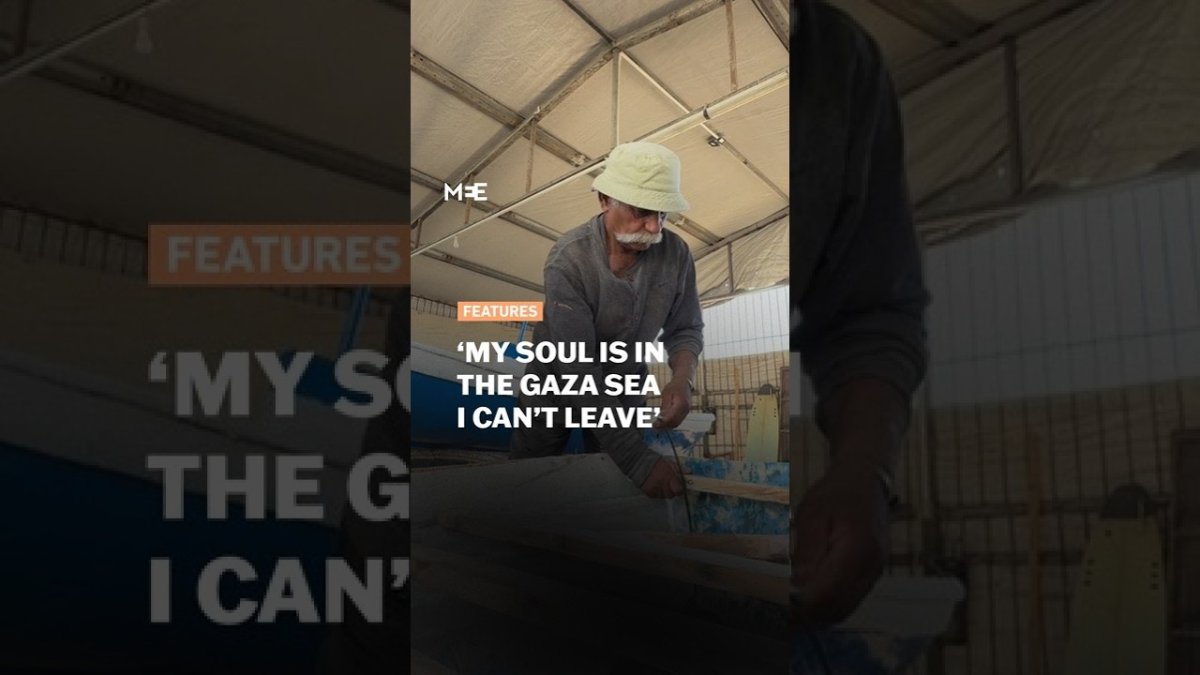
In a recent Middle East Eye video report, veteran boat builder Mustafa Miqdad is shown hunched over the hull of a fishing vessel, his weathered hands working wood that has already survived one war and is being prepared to face another.
In a recent Middle East Eye video report, veteran boat builder Mustafa Miqdad is shown hunched over the hull of a fishing vessel, his weathered hands working wood that has already survived one war and is being prepared to face another. Around him, his sons and grandsons move with the practiced rhythm of a family trade that has defined their identity for generations — repairing what the sea and the bombs have broken, refusing to let Gaza's maritime heritage sink into oblivion.
The report captures a quiet act of defiance: the restoration of fishing boats in a territory where the sea has become both a lifeline and a cage. It is a story of craftsmanship under siege, of men who salvage dignity from the rubble of their homes, and of a community that insists, against all odds, on returning to the water.
Gaza's Last Boat Builders: Defying War to Keep the Sea Alive
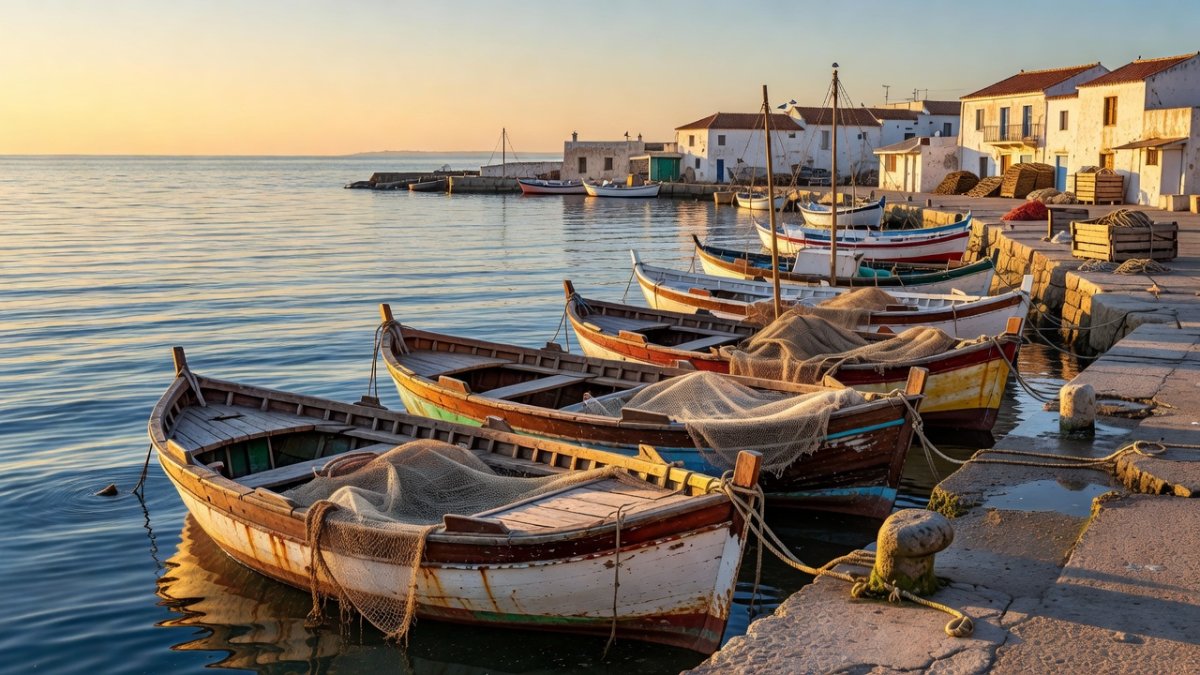
GAZA CITY, Palestine — In the small workshops scattered along Gaza's battered seaport, the sound of hammer on wood has returned. It is not the bustling industry of years past, but it is a sound of persistence — a signal that even after nearly three years of devastating war, the people of this coastal enclave have not surrendered their oldest profession.
A Trade Passed Down Through Generations
Mustafa Miqdad, 60, does not remember a time when he did not know how to shape wood into a vessel. The boatbuilding trade was inherited from his father, who learned it from his own father before him, and now Mustafa is passing it on to his sons and grandsons who work alongside him in the workshop. For the Miqdad family, boatbuilding is not merely a job — it is a lineage, a living connection to Gaza's maritime past and a hope for its future.
In the Middle East Eye report, Mustafa speaks of a craft that defines his family's identity — a trade tested by decades of blockade and now by outright war. For him, the work is not simply a job but a continuation of who they are.
The workshop is a modest space, cluttered with tools, wood shavings, and the half-finished hulls of boats awaiting repair. With Gaza's chronic electricity shortages and little modern equipment, much of the work is done by hand, as it has been for generations. Mustafa's sons measure and cut, his grandsons hold planks steady while he nails them into place. It is a family operation in the truest sense — a collective effort to keep the boats afloat and the tradition alive.
The boats they repair belong to local fishermen, men who depend on the sea for their families' survival. Each restored vessel represents not just a livelihood but a statement: that Gaza's fishermen will not be driven from the water, no matter how many times their boats are damaged or destroyed.
Repairing Boats From the Rubble of War
The challenges facing Mustafa and his fellow craftsmen are immense. The war caused widespread destruction across Gaza's fishing sector, with most of the territory's boats — whether made of wood or fiberglass — sustaining severe damage. But the destruction of the vessels themselves is only part of the problem. The materials needed to repair them have become nearly impossible to obtain.
With border crossings closed and raw materials in short supply, craftsmen have been forced to improvise. They now rely on wood salvaged from the rubble of destroyed homes and buildings — door frames, window frames, and structural beams pulled from the wreckage of buildings that once housed families. It is a grim irony: the materials that once sheltered Gaza's people are now being repurposed to send its fishermen back to sea.
The price of such salvaged wood has risen sharply, reflecting its scarcity and desperate demand. A single piece can cost around 150 shekels — a significant sum in an economy devastated by war and blockade. "If these materials run out, we will have no alternative," Mustafa said, his words a stark warning about the fragility of the repair effort. "We hope that timber and the raw materials needed for boat maintenance will be allowed into Gaza so fishermen can return to their work."
Fisherman Hassan Miqdad, who shares the family name but works the water rather than the wood, is helping repair his own damaged boat. He stresses that the war's impact extends far beyond the physical destruction of the vessels themselves. The ability to rehabilitate the fishing fleet — to source materials, to find spare parts, to access the tools of the trade — has been severely compromised. Fishermen have been forced to search through the rubble of destroyed homes for usable pieces of wood after most raw materials disappeared from local markets.
The fishing sector faces mounting challenges that threaten the livelihoods of thousands of families. For Hassan and his fellow fishermen, the goal is simple: to return to the sea, to provide food, and to support their families. But every step of that journey is now obstructed by the realities of war and blockade.
Gaza's Fishing Sector Under Siege
The collapse of Gaza's fishing industry did not begin with the current war, though the war has brought it to the brink of extinction. As Al Jazeera's Ahmed Al-Najjar reported in March 2026, Gaza's fishing industry has been collapsing under the weight of the Israeli blockade for years, leaving fishermen risking their lives for minimal catches.
Even before October 2023, Gaza's fishermen operated under heavy restrictions. The fishing zones to which they were confined were repeatedly reduced, and the maritime boundaries outlined in agreements since the 1993 Oslo Accords were rarely implemented on the water. Israel has controlled Gaza's land, air, and sea since 2007, and that control has been exercised with increasing severity over the years.
Within days of the start of the current war, Gaza's seaport was destroyed by Israeli air strikes. Israel bombed fishing installations from north to south, and boats were burned or sunk in their moorings. The sector collapsed almost instantly — a vital source of food, income, and cultural identity wiped out in a matter of days.
The destruction was not incidental but systematic. Fishing infrastructure was targeted alongside other civilian assets, crippling an industry that had already been struggling under the weight of a blockade approaching two decades. For the fishermen of Gaza, the sea was always a contested space — a source of sustenance that came with constant risk. Now, even the boats that might have carried them to that contested space lie broken at the water's edge.
Living Memory at the Water's Edge
At Khan Younis port, the harbour has transformed into something unrecognizable. What was once a working waterfront is now a crowded displacement site, its broken and burned boats no longer serving as vessels but as tent supports, tied with ropes to hold fragile shelters in place. The image is haunting: the skeletal remains of fishing boats, once symbols of livelihood and freedom, now propping up the makeshift homes of families who have lost everything else.
Dawood Sehwail, 72, a fisherman displaced from Rafah in May 2024, has witnessed the full arc of Gaza's maritime tragedy. "We were always shackled [by Israel]," he told Al Jazeera. "But one period was less harsh than another." His words capture the grim reality of life under blockade — a constant state of restriction that has only grown more suffocating with each passing year.
Sehwail's displacement is part of a larger pattern. Families who once lived along the coast have been forced inland, their homes destroyed, their boats burned or sunk. The sea that should have been their refuge has become another site of loss. For the elderly fisherman, the water holds memories of a different time — when the catch was plentiful, when the horizon was not a boundary but a promise.
The transformation of Khan Younis port into a displacement site is a powerful symbol of the war's impact on Gaza's coastal communities. The boats that once carried fishermen to their livelihoods now carry the weight of displaced families. The harbour, once a place of activity and commerce, is now a place of waiting and uncertainty.
The Sea as Identity
For Mustafa Miqdad, the decision to stay in Gaza was never really a decision at all. Despite the dangers, despite the shortages, despite the constant threat of renewed attacks, he refuses to leave. The sea is part of who he is, and the trade he practices is inseparable from his identity as a Gazan.
For Mustafa, repairing boats is more than a livelihood — it is an essential part of Gaza's life and identity, a conviction he conveys plainly in the Middle East Eye report.
This sentiment is echoed by the fishermen who continue to venture out, however briefly, however dangerously. They know the risks — the patrol boats, the gunfire, the ever-present possibility that they might not return. But they also know that to abandon the sea entirely would be to surrender something fundamental about themselves and their community.
Gaza is a coastal territory where the sea should have been a source of wealth, stability, and fresh food. Instead, it has become another mechanism of control under the blockade. The fishermen who continue to push out into the water are not just seeking a catch; they are asserting their right to exist, to work, to live with dignity in a place that has been systematically stripped of all three.
Mustafa's refusal to leave is a testament to the deep connection between the people of Gaza and their land, their sea, and their way of life. He could have fled, as so many others have been forced to do. Instead, he stays, hammer in hand, repairing what the war has broken, teaching his grandsons the trade that has sustained his family for generations.
Analysis and Implications
The destruction of Gaza's fishing sector raises serious questions under international law. The systematic targeting of civilian infrastructure, including fishing boats and ports, may constitute a violation of the laws of armed conflict, which require distinguishing between military objectives and civilian objects. Fishing vessels, used for food production and livelihood, are civilian in nature and should be protected from attack.
The blockade itself, which prevents the entry of timber and other materials needed for boat repair, has been widely criticized by human rights organizations as collective punishment of Gaza's civilian population. The restrictions on fishing zones, which have been in place since before the current war, have been condemned as a violation of the economic rights of Palestinians under international human rights law.
The implications extend beyond the legal realm. The collapse of the fishing sector has profound consequences for food security in Gaza, where malnutrition rates were already high before the war. Fish was a primary source of protein for many families, and its absence from the market has driven up prices and reduced access to nutritious food.
The economic impact is equally severe. Thousands of families depended on fishing for their livelihoods — not just the fishermen themselves, but the boat builders, net makers, fishmongers, and transporters who formed a complete economic ecosystem around the industry. The destruction of that ecosystem has pushed more families into poverty and dependency on humanitarian aid.
What would a return to the sea mean for Gaza? It would mean food on the table for thousands of families. It would mean jobs and income for a population that has been stripped of economic opportunity. It would mean a restoration of dignity and self-sufficiency. And it would mean the preservation of a cultural heritage that has defined Gaza's coastal communities for centuries.
The fight to keep Gaza's fishing tradition alive is not merely about boats and nets. It is about the right of a people to live in their homeland, to work, to feed their families, and to maintain the practices that define who they are. Mustafa Miqdad and his family are not just repairing boats; they are repairing the fabric of Gaza's society, one plank at a time.
As the war continues and the blockade persists, the future of Gaza's fishing sector remains uncertain. But the determination of men like Mustafa Miqdad offers a glimmer of hope. They will keep working, keep repairing, keep teaching the next generation — because to stop would be to accept defeat, and that is something they are not willing to do.
The sea is still there, vast and indifferent to the politics of men. And as long as there are boats to repair and fishermen willing to risk everything for a catch, Gaza's maritime heritage will endure. The fight is not over. For Mustafa and his family, for the fishermen of Khan Younis and Rafah, for the thousands of families who depend on the sea, the struggle continues — a quiet, stubborn refusal to let the water become just another thing that was taken from them.
By Fatima Al-Rashid, Staff Writer
This article was produced with AI-assisted research and editorial support. Reporting is based on sources cited in the article.
What's Your Reaction?
 Like
0
Like
0
 Dislike
0
Dislike
0
 Love
0
Love
0
 Funny
0
Funny
0
 Wow
0
Wow
0
 Sad
0
Sad
0
 Angry
0
Angry
0

Gulf/MENA Correspondent at Global1.News. Based in Doha, covering Gulf politics, energy markets, diplomacy, and development across the Middle East and North Africa. Tracks the economic transformation of the Gulf states.










Comments (0)