
Is the Planet Shaking More? Latin America's Seismic Summer Explained
The past ten days have delivered a relentless sequence of seismic shocks across the Americas, from the devastating 7.4 magnitude earthquake that struck Colombia’s Chocó department to twin tremors in Peru’s Andean highlands and a deadly offshore event in Mexico. In Venezuela, the memory of June’s catastrophic twin earthquakes in La Guaira, which claimed over five thousand lives, remains raw.
The past ten days have delivered a relentless sequence of seismic shocks across the Americas, from the devastating 7.4 magnitude earthquake that struck Colombia’s Chocó department to twin tremors in Peru’s Andean highlands and a deadly offshore event in Mexico. In Venezuela, the memory of June’s catastrophic twin earthquakes in La Guaira, which claimed over five thousand lives, remains raw. It is a week of shaking that has left millions asking a single, urgent question: is the planet itself becoming more volatile, or are we simply witnessing the normal, violent rhythm of the Earth’s tectonic machinery?
Is the Planet Shaking More? Latin America's Seismic Summer and the Science of Earthquake Clusters
Bogotá, Colombia – August 18, 2026 — The question is not merely academic. For the families sifting through rubble in San José del Palmar, for the displaced communities of La Guaira, and for the residents of Mexico City who felt the ground roll beneath them last month, the perception of an accelerating planetary crisis is visceral. Yet, as seismologists and data analysts from the United States Geological Survey (USGS) and Latin American geophysical institutes are at pains to explain, the recent cluster of major earthquakes, while tragic, does not represent a fundamental change in the Earth’s behavior. The science points to a more complex, and in some ways more challenging, reality: the planet is not shaking more, but the places where it shakes are increasingly populated, and the structures that house those populations are often dangerously unprepared.
The Science — Why Clusters Are Normal, Not a Warning
To understand why the recent spate of earthquakes in Mexico, Colombia, Venezuela, Japan, the Philippines, and Indonesia does not signal a global uptick, one must first look at the long-term statistical record. The USGS, which monitors seismic activity worldwide, is unequivocal on this point: temporary rises and falls in earthquake frequency are entirely normal. The average number of earthquakes above magnitude 6.0 recorded annually between 2016 and 2025 was approximately 133. This figure, derived from a decade of continuous global monitoring, provides a stable baseline against which any single year’s activity can be measured. The apparent clustering of large quakes in a short period, such as the summer of 2026, is what statisticians call noise — a random fluctuation within a well-established range, not a signal of a changing planet.
Delving deeper into the data, the Earth experiences roughly 20,000 earthquakes each year, which translates to about 55 per day. The overwhelming majority of these are far too weak to be felt by humans, registering below magnitude 2.5 and occurring in remote or deep locations. Since the dawn of instrumental recording around 1900, the planet has averaged between 15 and 16 earthquakes of magnitude 7.0 or greater per year. This includes approximately 15 in the 7.0 to 7.9 range and, on average, a single event of magnitude 8.0 or higher. The 2026 pace, with 10 quakes of M7+ recorded through August 10, is tracking almost perfectly with this historical norm. If the current rate continues, the year will end with around 17 major quakes, placing it squarely within the expected range of natural variability.
The key insight from the USGS and other global seismic networks is that the Earth’s crust is in constant, dynamic motion, driven by the slow churn of plate tectonics. The Pacific Ring of Fire, a horseshoe-shaped zone of intense geological activity that encircles the Pacific Ocean, is responsible for producing a staggering 90% of the world’s earthquakes. Latin America, with its long Pacific coastline, sits directly on this volatile boundary. The recent events, from the M7.8 Mindanao quake in the Philippines to the M7.4 in Colombia, are all products of this same, ancient system. They are not a sign that the system is breaking down, but rather that it is functioning exactly as it has for millions of years.
Colombia — The 7.4 That Became a National Test
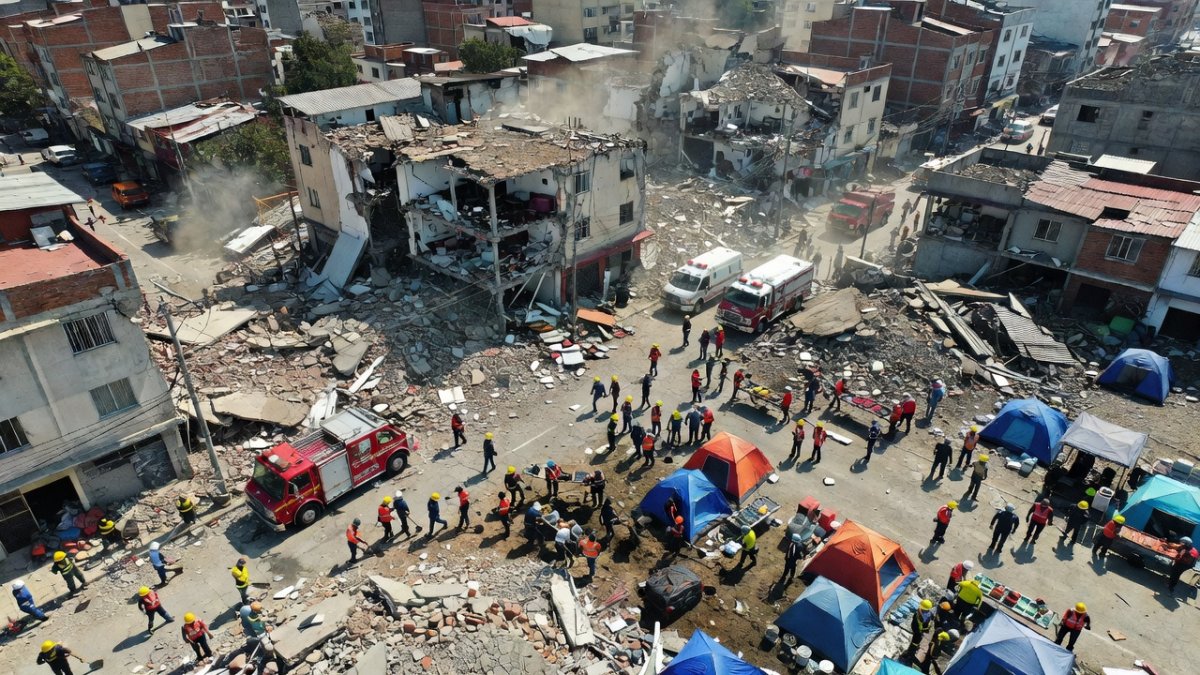
No event in recent memory has tested a Latin American nation’s resilience quite like the M7.4 earthquake that struck Colombia on August 10, 2026. The quake hit at 7:34 a.m. local time, with its epicenter located just 5 kilometers from San José del Palmar in the Chocó department, one of the country’s poorest and most historically neglected regions. The earthquake’s depth of approximately 110 kilometers classified it as an intermediate-depth event, a strike-slip rupture occurring inside the subducting Nazca slab. Despite the depth, the energy released was immense, and the shaking was felt across western and central Colombia, as well as in parts of neighboring Ecuador and Panama. The human toll was staggering: at least 289 people were confirmed dead, 4,187 were injured, and 143 remained unaccounted for according to official government figures, though the unofficial civic database Colombia Te Busca listed more than 3,000 as missing.
The scale of the destruction was national in scope. Fifteen of Colombia’s 32 provinces were affected, with 127,557 homes damaged and 26,945 completely destroyed. The earthquake did not discriminate, damaging 285 health centers and 2,838 schools, and severing critical infrastructure including 407 roads, 92 water systems, 44 bridges, and 5 airports. In Cali, a section of the University Hospital of the Valle Evaristo Garcia collapsed, and the private Clinica Nuestra hospital partially collapsed, overwhelming the city’s medical capacity. Rescue teams, working tirelessly in the immediate aftermath, managed to save 354 lives from the rubble. The disaster struck just three days after President Abelardo de la Espriella’s August 7 inauguration, making it his first major national emergency and an immediate test of his administration’s competence and resolve.
President de la Espriella responded by declaring three days of national mourning and proposing an ambitious, long-term recovery plan, which he called a “Marshall Plan for Chocó.” The proposal signals a recognition that the region’s chronic underdevelopment, lack of infrastructure investment, and endemic poverty were not just aggravating factors but root causes of the catastrophe’s severity. The Servicio Geológico Colombiano (SGC) has been working to map the aftershock sequence and provide data to the UNGRD (Unidad Nacional para la Gestión del Riesgo de Desastres), but the path to recovery will be measured in years, not months. The Chocó earthquake is a stark reminder that the impact of a seismic event is determined as much by the social and economic context in which it strikes as by its magnitude.
Venezuela and Peru — Two Andean Warnings
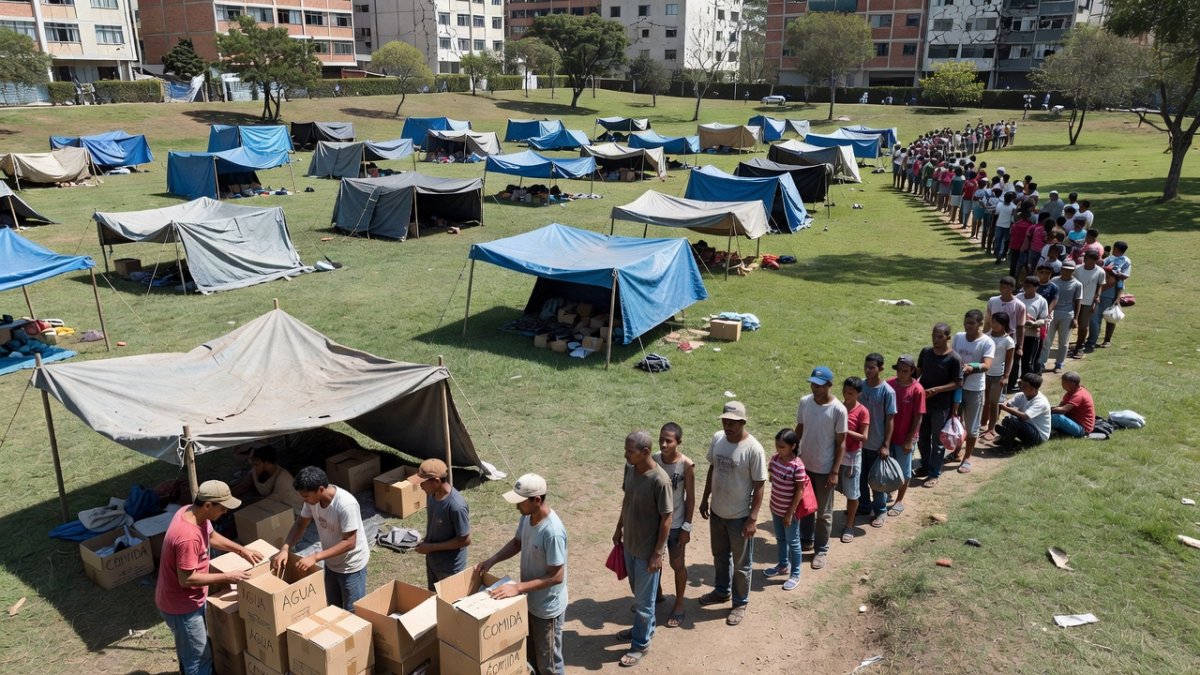
While Colombia’s tragedy dominated headlines, the twin earthquakes that struck Venezuela in June 2026 serve as an even more catastrophic reminder of the lethal combination of seismic hazard and vulnerable housing. The quakes, which devastated the coastal state of La Guaira, killed an estimated 5,119 people. The death toll was a direct consequence of poorly constructed, informal housing built on unstable slopes, a legacy of decades of economic crisis and a lack of state investment in building code enforcement. In Venezuela, the geological reality of the Caribbean plate boundary is a constant, but the human cost is amplified exponentially by the fragility of the built environment. The La Guaira disaster is not an anomaly; it is a preview of what can happen when seismic risk is ignored for a generation.
Further south, Peru experienced its own seismic scare in July 2026 with twin earthquakes in the Andean Mantaro Valley. These were significantly smaller, with magnitudes of approximately 5.6 and shallow depths of 10 to 24 kilometers. The quakes killed 6 people and displaced around 300, a relatively modest toll that nonetheless highlighted the vulnerability of rural Andean communities. The Instituto Geofísico del Perú (IGP) closely monitors the region, which sits atop the subduction zone where the Nazca Plate dives beneath the South American continent. The IGP’s data is crucial for understanding the complex stress accumulation along the fault lines that run the length of the Andes, from Colombia and Venezuela down through Peru and Chile. The Mantaro Valley events, while smaller, are a warning that even moderate shaking can be deadly in areas with adobe and unreinforced masonry construction.
These two Andean nations, alongside Colombia, illustrate a broader regional challenge. The Andes are a young, active mountain range, and the entire western edge of South America is a seismic hotspot. The difference in outcomes between the Venezuelan and Peruvian events, and even between different parts of Colombia, is not a matter of luck. It is a direct reflection of building standards, urban planning, and the economic capacity to construct earthquake-resistant structures. The data from the IGP and other regional bodies shows that the Earth’s movement is constant, but the vulnerability is human-made. The question for Latin America is not whether the next big quake will come, but whether the region will be ready for it.
Mexico, Japan and Indonesia — What the Ring of Fire Teaches
The Pacific Ring of Fire, which produces 90% of the world’s earthquakes, offers a powerful comparative laboratory for understanding the role of preparedness. In July 2026, a 7.3 magnitude earthquake struck off the coast of Chiapas, Mexico. The event caused significant damage and some casualties, but the impact was mitigated by Mexico City’s strict building regulations and its well-known seismic alert system, which provides precious seconds of warning to residents. Mexico has invested heavily in seismic preparedness since the devastating 1985 earthquake, and its experience demonstrates that proactive policy can save lives. The contrast with the situation in poorer, less regulated regions is stark.
Japan, another Ring of Fire nation, provides an even more compelling case study. The M7.1 Kumamoto earthquake in July 2026 was of a similar magnitude to the quake that struck Colombia, yet the outcome was dramatically different. Japan’s strict building codes, which are among the most rigorous in the world, and its culture of preparedness, including regular drills and public education campaigns, meant that a quake of this size caused far fewer casualties than it would have in a region with weaker infrastructure. The Kumamoto event is a testament to the fact that earthquakes do not have to be natural disasters; they are natural hazards that become disasters when they intersect with human vulnerability. The same magnitude that killed hundreds in Chocó caused a fraction of that damage in Kumamoto.
Indonesia, however, offers a sobering counterpoint. The M7.7 Flores earthquake on August 15-16, 2026, killed more than 51 people and displaced thousands. While Indonesia has made progress in recent years, its vast archipelago, uneven development, and the prevalence of informal housing mean that it remains highly vulnerable to seismic shocks. The global pattern is clear: the Ring of Fire is a constant source of energy, but the death toll from any given earthquake is determined by location, building standards, and wealth. The strongest quake of 2026 so far, the M7.8 Mindanao earthquake in the Philippines in June, killed more than 100 people. The difference between a tremor and a tragedy is not the magnitude on the Richter scale, but the quality of the buildings that shake.
Building Codes — The Difference Between Rubble and Refuge
The most critical factor in determining earthquake fatalities is the built environment, and here Latin America presents a deeply uneven picture. Colombia’s NSR-10 building code, established under Law 400 of 1997 and updated in 2010, incorporates modern seismic design principles that are comparable to international benchmarks. On paper, Colombia is well-prepared. However, the reality on the ground is far more complex. A comprehensive study by the Global Earthquake Model (GEM) foundation tracks seismic design regulations across Argentina, Bolivia, Chile, Colombia, Ecuador, Peru, and Venezuela. The GEM study estimates the proportion of buildings constructed under no code, low code, moderate code, or high code levels, and the findings are sobering. In many of these countries, a significant percentage of the housing stock, particularly in informal settlements and rural areas, was built with little or no adherence to any seismic standard.
The Inter-American Development Bank (IDB) has conducted extensive research on this topic, concluding that building codes are crucial for resilience in Latin America and the Caribbean, but that compliance gaps remain the weak point. It is one thing to have a world-class code on paper; it is another to have the institutional capacity, enforcement mechanisms, and economic resources to ensure that every building, from a high-rise apartment block in Bogotá to a small adobe home in Chocó, is constructed to that standard. The IDB’s research emphasizes that the cost of retrofitting existing vulnerable structures is often prohibitive, but the cost of inaction, measured in lives lost and economic disruption, is far higher. The collapse of the University Hospital in Cali, a modern facility, is a chilling reminder that even code-compliant buildings can fail under extreme shaking.
Chile stands as the regional model for success. Following the devastating 2010 Maule earthquake, Chile implemented strict, updated building codes and invested heavily in seismic monitoring and emergency response. The result is that Chile, despite being one of the most seismically active countries on Earth, consistently suffers far fewer casualties than its neighbors for quakes of similar magnitude. The Chilean experience proves that the cycle of destruction and rebuilding is not inevitable. It requires political will, sustained investment, and a societal commitment to safety. For the rest of Latin America, the path forward is clear: the codes exist, the science is understood, but the gap between policy and practice must be closed. The rubble in Chocó and La Guaira is not just a testament to the power of the Earth; it is a monument to the consequences of that gap.
What This Means for Latin America
The recent seismic summer is a call to action for Latin America, a region that must learn to coexist with the powerful tectonic forces that shape its geography. The immediate priority is preparedness. This means strengthening early warning systems, like the one that operates in Mexico, and extending them to other vulnerable nations. It means investing in the IGP in Peru, the SGC in Colombia, and other national geophysical institutes to ensure they have the resources to monitor faults, analyze data, and communicate risk effectively to the public. Preparedness is not just about technology; it is about education. Citizens need to know what to do before, during, and after an earthquake, and this knowledge must be embedded in school curricula and public awareness campaigns.
Beyond preparedness, the focus must shift to retrofitting and resilient reconstruction. The “Marshall Plan for Chocó” proposed by President de la Espriella is a step in the right direction, but it must be part of a broader regional strategy. The reconstruction effort in Chocó must not simply rebuild the same vulnerable structures that collapsed; it must build back better, using seismic-resistant designs and materials. This is an opportunity to address the historical neglect of the region, to create jobs, and to build infrastructure that can withstand the next inevitable quake. The same principle applies to the informal settlements that ring many Latin American cities, where millions of people live in structures that are death traps in a major earthquake. Retrofitting these homes is a massive challenge, but it is a challenge that cannot be ignored.
The rise of civic initiatives like Colombia Te Busca, a citizen-led database that has been more comprehensive than official government records in tracking the missing, points to a new model of resilience. These grassroots efforts, powered by technology and social media, are filling gaps left by overwhelmed state institutions. They represent a form of social capital that is essential for recovery. As Latin America looks to the future, it must embrace a holistic approach to disaster risk reduction that combines top-down government policy with bottom-up community engagement. The data from the USGS and regional institutes tells us that the Earth will continue to shake. The question is whether Latin America will choose to be a passive victim of that shaking or an active agent in its own protection.
The Bottom Line — Calm Data, Urgent Action
The scientific consensus is clear and reassuring in one sense: the planet is not shaking more. The 2026 earthquake count is within the normal historical range, and the apparent clustering of major events is a statistical artifact, not a sign of a fundamental change in the Earth’s geology. The USGS data, which shows an average of 133 quakes above magnitude 6 per year and 15-16 above magnitude 7, provides a stable baseline that puts recent events in perspective. The Earth is not in crisis; it is behaving exactly as it has for millennia. This is the calm data that should guide our understanding of the natural world. We are not facing a new, more violent planet.
However, this scientific reassurance must not lead to complacency. The urgent action required is not about responding to a changing planet, but about addressing the unchanging vulnerability of human communities. The recent earthquakes in Colombia, Venezuela, Mexico, and Peru have exposed a stark and unacceptable reality: the death toll from a seismic event is not determined by nature, but by human decisions. The 5,119 dead in La Guaira, the 289 dead in Chocó, and the thousands injured and displaced are not the inevitable cost of living on a tectonically active planet. They are the result of poverty, inadequate housing, weak enforcement of building codes, and a lack of investment in preparedness. The Earth’s plates will continue to move, but the suffering they cause is a choice.
For Latin America, the path forward is clear. The region must invest in resilient infrastructure, enforce modern building codes like Colombia’s NSR-10, and learn from the successes of Chile and Japan. It must strengthen its scientific institutions, expand early warning systems, and foster a culture of preparedness. The “Marshall Plan for Chocó” must be a model for a new approach to development, one that recognizes that seismic resilience is not a luxury but a fundamental requirement for a just and prosperous society. The planet is not shaking more, but Latin America’s vulnerable cities are. The time for calm analysis is over; the time for urgent, decisive action is now. The next major earthquake is not a question of if, but when, and the region’s future depends on the choices it makes today.
By Elena Vasquez, Staff Writer
This article was produced with AI-assisted research and editorial support. Reporting is based on sources cited in the article.
What's Your Reaction?
 Like
0
Like
0
 Dislike
0
Dislike
0
 Love
0
Love
0
 Funny
0
Funny
0
 Wow
0
Wow
0
 Sad
0
Sad
0
 Angry
0
Angry
0

Latin America Correspondent at Global1.News. Based in Mexico City, covering politics, economics, energy, and culture across the region. Brings an on-the-ground perspective to stories spanning from the Rio Grande to Patagonia.















Comments (0)