
Who will stand at the machine? The systemic failure paralyzing Israel's production lines
In the not-so-distant past, Israeli workers reported daily with pride to factory assembly lines, feeling that they were contributing to building the country. As the young nation established itself and its economic situation improved, Palestinian workers took their place, as Israelis no longer performed physical labor.
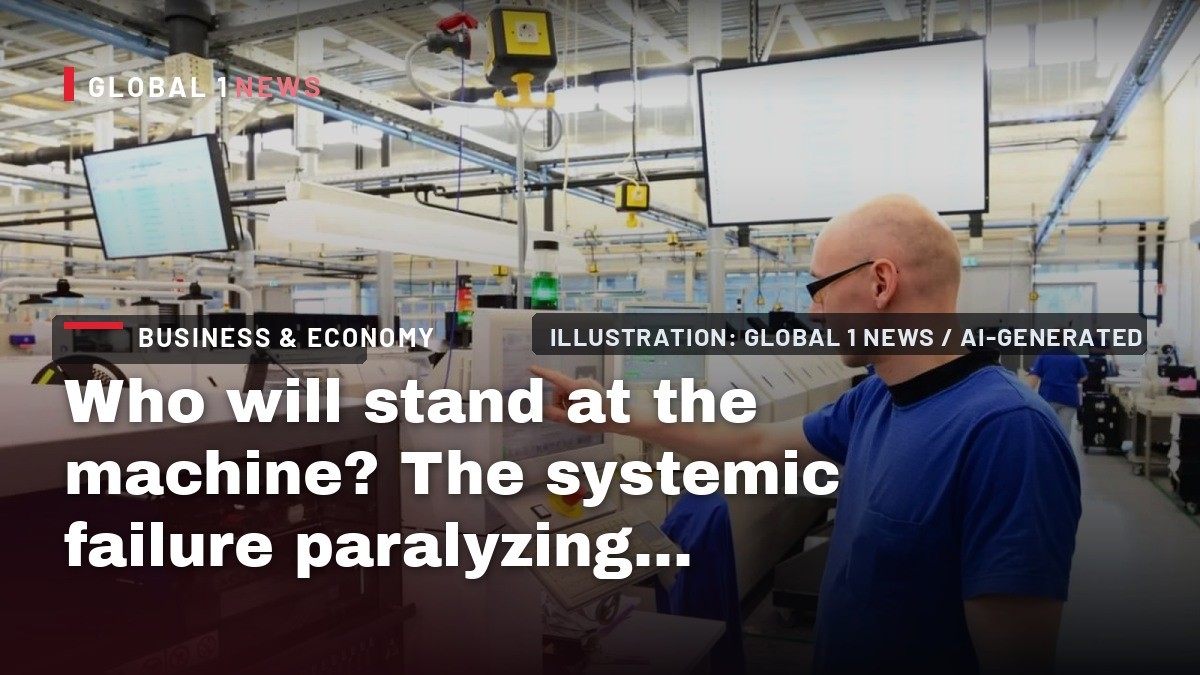
A Factory Floor in Crisis
In the not-so-distant past, Israeli workers reported daily with pride to factory assembly lines, feeling that they were contributing to building the country. As the young nation established itself and its economic situation improved, Palestinian workers took their place, as Israelis no longer performed physical labor. After October 7, when Palestinian entry into Israel was banned, the labor shortage became acute, and the state began importing workers from India, Sri Lanka, and the Philippines to take their place.
Yet today, that replacement pipeline has hit a wall. Foreign worker allocations for industry fail to even scratch the surface of demand. A few days ago, hundreds of companies across the country received notice that they would not receive the foreign labor allocations they had requested. Some received none at all, while others received minute quantities—both because of the meager quota approved in the current round and because of the priority granted to defense industries.
In the latest allocation round, industry had only about 3,000 foreign workers available to meet requests ranging between 60,000 and 70,000 workers. Behind these numbers are factories with orders, machinery, and production lines that simply lack enough people to operate them. From the sprawling concrete plants of Readymix to the construction giants of Ashtrom, the gap between government promises and factory-floor reality is widening into a chasm that threatens the backbone of Israel's manufacturing economy.
The Numbers Behind the Shortage
The scale of the mismatch is staggering. According to figures for 2026, the total quota approved for the industrial sector through the end of the year stands at 21,200 workers. Of these, 3,600 are designated for Atarot under a separate track for Palestinians. As of a discussion held on April 28, 15,100 workers were already approved for private bringing, while another 2,500 workers remained without approval for private bringing.
Yet a quota on paper does not place a worker at a machine. The path from a government decision to the arrival of workers at factories runs through allocations and approvals—and that, according to employers, is where one of the main bottlenecks lies. The Directors-General Committee on Foreign Workers, the body responsible for approving these allocations, convenes infrequently, leaving factories in limbo for months at a time while orders pile up and deadlines slip.
For the industrial sector, the arithmetic is brutal. With requests ranging between 60,000 and 70,000 workers and only 3,000 available in the latest round, the vast majority of companies are left to fend for themselves. Even those who do receive allocations often get a fraction of what they need, forcing them to make impossible choices about which production lines to keep running and which to shutter.
Voices from the Allocation Front
"The allocation process for foreign workers opened on June 1 and closed at the end of June," says Shir Sela, CEO of Global Bridge, a firm that connects employers with foreign workers. "Across all industry, between 60,000 and 70,000 workers were requested, while the allocation for the entire economy stood at just 3,000 foreign workers. Among our clients, 37 companies received zero workers, and out of the 1,000 we requested, we received 50 workers. I am talking about giant companies like Ashtrom and Readymix—companies that are critically short on manpower."
Sela's frustration is palpable, and it reflects a broader sentiment across the manufacturing sector. The companies he represents are not marginal players; they are the names that build Israel's infrastructure, pour its concrete, and supply its construction materials. When these companies cannot staff their production lines, the ripple effects are felt across the entire economy—from housing starts in Tel Aviv to road projects in the Negev.
The Defense Priority Dilemma
The prioritization given to defense industries angers some industrialists. They argue that the division between a defense factory and a civilian factory does not always reflect the actual production chain. Metalworks, bodywork plants, bakeries, and other businesses may not be defined as defense industries, but they serve as suppliers to the defense establishment or companies working for it, and they too require workers to meet orders.
"Prioritizing defense industries sounds logical, but it is not entirely accurate," Sela adds. "After all, whoever works on vehicle bodywork is also serving the security forces, not to mention bakeries or other businesses that act as secondary suppliers to the defense establishment."
This argument cuts to the heart of a systemic flaw in the allocation process. By drawing a hard line between "defense" and "civilian" industries, the committee fails to recognize the interconnected nature of modern production chains. A metalworks plant in an industrial zone in the north may produce components for military vehicles, while a bakery in Jerusalem supplies bread to army bases. Both are essential to the defense effort, yet only one receives priority treatment.
The Bureaucratic Bottleneck
Beyond the quota numbers themselves, employers point to a deeper structural problem: the committee responsible for approving allocations convenes too rarely to respond to real-time industrial needs. "The quotas are approved by government decisions, with the prime minister promising several weeks ago that the total number of foreign workers for the entire economy would rise from 30,000 to 50,000, including 18,200 for industry. As of now, more than 15,000 have already entered, and it is simply not enough. The problem is that the committee responsible for approving allocations convenes once in a blue moon."
This infrequency creates a cascade of delays. Even when quotas are approved at the highest levels, the bureaucratic machinery to distribute them moves at a glacial pace. Factories that submitted requests in June are still waiting for answers months later, unable to plan their production schedules or make commitments to customers.
The attorney-general's office has also emerged as a significant obstacle. Concerns regarding human trafficking have led to legal opposition to bringing foreign workers, even though workers in industrial sectors earn between 50% and 110% of the average national wage, with even basic production line workers earning NIS 6,000, which is high. This legal caution, while understandable in principle, has created an environment where approvals are slow and conditional, further exacerbating the labor shortage.
What Happens When There Are No Hands
The human cost of this systemic failure is measured in idle machines and unmet orders. "What will companies do? They are left without hands to work. Israeli employees are unwilling to work on assembly lines—which is routine and dull work—for any price in the world. So Israeli industry remains without working hands."
This statement reflects a fundamental shift in Israeli labor dynamics. The days when native-born Israelis staffed production lines are long gone. The economic ascent of the country has created a workforce that aspires to high-tech offices and professional careers, not factory floors. The result is a structural dependence on foreign labor that the current allocation system cannot satisfy.
For factories in peripheral areas—from the Galilee to the Negev—the situation is even more acute. These regions lack the population density to draw from a local labor pool, and the transportation infrastructure to bring workers from central Israel is often inadequate. Foreign workers are not just a convenience; they are the only viable solution to keep production lines running.
The Economic Stakes
The implications extend far beyond individual factories. Israel's manufacturing sector is a critical component of the national economy, providing jobs, exports, and supply chain resilience. When production lines stall due to labor shortages, the effects are felt in export figures, in the balance of trade, and ultimately in the cost of goods for Israeli consumers.
Consider the construction materials sector, where companies like Readymix and Ashtrom operate. Concrete and building materials are the foundation of Israel's housing market, which is already under immense pressure. If these companies cannot produce enough to meet demand, housing prices will rise further, exacerbating the cost-of-living crisis that has dominated Israeli politics and daily life.
Similarly, the food industry—including bakeries that supply both civilian and military customers—faces the same labor constraints. A shortage of workers in these essential industries does not just mean delayed shipments; it means potential shortages of basic goods on supermarket shelves.
Government Response and the Road Ahead
The Economy Ministry, for its part, defends the current system while acknowledging the hardship. The ministry said in response: "The distribution policy for foreign worker quotas is set exclusively by the Directors-General Committee on Foreign Workers. In accordance with the committee's decision, the last allocation of 3,000 workers was designated for industry supporting the defense effort. The ministry issued a call for proposals and distributed the quota according to these guidelines, taking into account, among other things, the immense demand from all applicants. It should be emphasized that the Economy and Industry Ministry is well aware of the hardship facing the entire manufacturing sector, and thanks to an ongoing campaign it led, quotas for more than 20,000 foreign workers for industry have been approved to date. The ministry will continue to fight to expand quotas and create a comprehensive response for all sectors and factories under its responsibility."
Yet for the factory managers waiting by their idle machines, these words offer little comfort. The gap between the 21,200 workers approved on paper and the 60,000 to 70,000 actually requested represents a systemic failure that no amount of ministerial rhetoric can bridge.
A Question of National Priorities
At its core, this crisis is a question of national priorities. In the post-October 7 reality, security concerns have rightly dominated government decision-making. The ban on Palestinian workers, while necessary from a security perspective, created a labor vacuum that the state has struggled to fill. The decision to prioritize defense industries reflects a wartime mindset, but it fails to account for the full spectrum of industries that support the defense effort.
The result is a paradox: Israel's security depends on a strong economy, but the policies designed to protect the country are undermining the very industries that sustain it. A metalworks plant in the industrial zone outside Jerusalem may not wear a military uniform, but it produces the components that keep Israel's armored vehicles on the road. A bakery in Tel Aviv may seem civilian, but it feeds the soldiers who protect the country's borders.
Until the Directors-General Committee on Foreign Workers recognizes this interconnected reality, Israeli industry will continue to operate with one hand tied behind its back. The machines will stand idle, the orders will go unfilled, and the economic cost will be borne by every Israeli citizen.
The Search for a Sustainable Solution
Some industrialists argue that the solution lies not just in expanding quotas but in reforming the entire system. The current approach—approving quotas in fits and starts, with unpredictable allocation rounds—creates an environment of uncertainty that makes long-term planning impossible. Factories need to know that they will have workers not just this quarter but next year and the year after.
Others point to the need for a more nuanced approach to the defense priority. Rather than a binary division between defense and civilian industries, the committee should evaluate each factory's contribution to the broader national effort, including supply chains that feed the defense establishment. This would require a more sophisticated analysis than the current system provides, but it would result in a fairer and more effective allocation of scarce labor resources.
There is also the question of wages and working conditions. While foreign workers in industrial sectors earn between 50% and 110% of the average national wage, the work itself remains physically demanding and monotonous. Attracting workers—whether foreign or domestic—requires not just competitive pay but also improvements in working conditions and career pathways. Yet in the current crisis, such long-term considerations take a back seat to the immediate need to fill empty positions.
An Uncertain Future for Israeli Manufacturing
As the allocation rounds come and go, and as the committee convenes and adjourns, the factories of Israel continue to struggle. The promise of 50,000 foreign workers for the entire economy, including 18,200 for industry, remains a distant target. With more than 15,000 already entered and the demand still outstripping supply by a factor of twenty, the gap shows no signs of closing.
For the workers who do arrive—from India, Sri Lanka, and the Philippines—the experience is a mix of opportunity and hardship. They earn wages that are high by the standards of their home countries, but they are far from their families and communities. The system that brings them to Israel is complex, involving brokers, employers, and government agencies, and it is not always smooth.
Yet for all its flaws, the foreign worker program remains the only viable solution to Israel's labor shortage in the industrial sector. The alternative—a return to the days when Israeli workers staffed assembly lines—seems unlikely in a country where the high-tech sector offers more attractive career paths. The challenge for policymakers is to make the system work better, not to abandon it.
Conclusion: The Machine Waits
The machines of Israeli industry are waiting. They wait in the concrete plants of Readymix, in the construction yards of Ashtrom, in the metalworks shops that supply the defense establishment, and in the bakeries that feed the nation. They wait for hands to operate them, for workers to keep the production lines moving, for a government that understands that the security of the country depends as much on its economic strength as on its military might.
The systemic failure paralyzing Israel's production lines is not a problem that will solve itself. It requires a fundamental rethinking of how foreign worker quotas are allocated, how defense priorities are defined, and how the nation values the industrial workers who keep its economy running. Until that happens, the machines will continue to wait, and the cost of that waiting will be borne by us all.
This article was produced with AI-assisted research and editorial support. Sources: The Jerusalem Post.
By Hannah Berg, Staff Writer
What's Your Reaction?
 Like
0
Like
0
 Dislike
0
Dislike
0
 Love
0
Love
0
 Funny
0
Funny
0
 Wow
0
Wow
0
 Sad
0
Sad
0
 Angry
0
Angry
0

Israel Correspondent at Global1.News. Based in Tel Aviv, covering Israeli politics, security, technology, and society. Provides balanced, deeply-sourced reporting on one of the most closely-watched regions in the world.















Comments (0)