
Israel Admits Killing Assad's Nuclear Point Man in 2008 Commando Raid
For nearly two decades, the killing of a senior Syrian general on a Mediterranean beach was a mystery that Damascus blamed on Israel but Jerusalem never acknowledged.
For nearly two decades, the killing of a senior Syrian general on a Mediterranean beach was a mystery that Damascus blamed on Israel but Jerusalem never acknowledged. Now, in a new memoir, former Israeli Prime Minister Ehud Olmert has broken that silence, confirming for the first time that Israel's elite naval commandos assassinated Brig. Gen. Muhammad Suleiman, the man who served as Syrian President Bashar al-Assad's closest military adviser and the architect of a covert nuclear program, in August 2008. The admission, published in excerpts by Israel's Ynet news site on Wednesday, Sept. 2, 2026, and covered by The Times of Israel, Middle East Eye, and AFP, lifts the veil on one of the Israeli military's most closely guarded operations, revealing a mission that was as much about preventing a nuclear threat as it was about severing Assad's most vital link to his weapons programs and his regional proxies.
The Admission and the Book
Olmert, who served as prime minister from 2006 to 2009, details the operation in his new Hebrew-language memoir, the title of which echoes an internal IDF codename for Israel's 2007 bombing of Syria's nuclear reactor in Deir Ezzor, roughly translatable as "Arizona, all of us," according to The Times of Israel. The former prime minister's account provides the first official Israeli confirmation that the state was responsible for the death of Suleiman, who was shot at his beachfront villa in the coastal city of Tartus on Aug. 1, 2008. For years, Israel had maintained a strict policy of ambiguity regarding the assassination, even as evidence mounted from leaked intelligence documents and diplomatic cables pointing to Israeli involvement. Olmert's decision to go public in his memoir marks a significant shift, offering a detailed, firsthand account of the decision-making and execution of a mission that had remained in the shadows for 18 years.
The timing of the admission is notable, coming just days after the International Atomic Energy Agency (IAEA) reported it had resolved outstanding questions about Syria's covert nuclear program, a program Suleiman helped build and conceal. Olmert's narrative not only confirms the assassination but also explicitly links it to the broader Israeli campaign to dismantle Syria's nuclear ambitions, a campaign that began with the destruction of the al-Kibar reactor in 2007 and, according to the former prime minister, continued with the elimination of the man who knew its deepest secrets.
Who Was Muhammad Suleiman?
Brig. Gen. Muhammad Suleiman was not a typical military officer. Born in 1959 in the coastal city of Tartus, he rose to become a special presidential adviser for strategic weapons and arms procurement, serving as Assad's chief military and intelligence aide. Olmert described him as Assad's "closest confidant and close friend," a fellow member of the Alawite minority who held an office in the presidential palace near Assad's own. "Unlike the others, he knew everything," Olmert wrote, underscoring the unique position Suleiman occupied in the Syrian power structure.
According to Ynet, Suleiman was the driving force behind the covert Syrian nuclear facility at Deir Ezzor, also known as al-Kibar. He was responsible for the sensitive deal with North Korea that supplied the reactor's design and components, and he oversaw the elaborate concealment effort designed to keep the project hidden from international inspectors and even from Syria's own senior military leadership. "He controlled the entry of materials and personally made sure their purpose and nature were not exposed. He had a hand in everything," the Ynet report noted. So tight was the secrecy that even Syria's defense minister and military chief were reportedly unaware the reactor existed. This combination of proximity to Assad and deep involvement in the most sensitive military programs made Suleiman a uniquely high-value target for Israeli intelligence.
The Night of Aug. 1, 2008
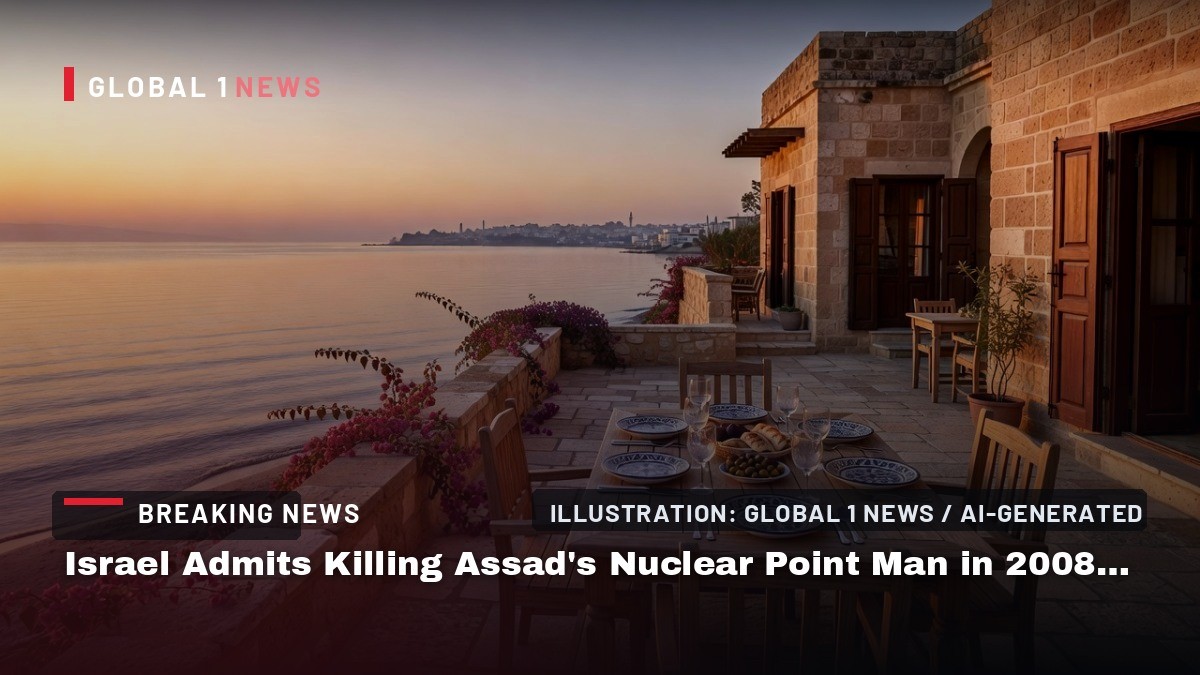
Olmert's account of the assassination reads like a scene from a spy thriller, but it is grounded in the meticulous detail of a military operation. On the night of Aug. 1, 2008, Suleiman was attending an outdoor dinner party at his beachfront villa in Tartus. According to Olmert, Israeli naval commandos from the elite Shayetet 13 unit came ashore from the sea under the cover of darkness. The commandos took positions approximately 150 meters (about 490 feet) away on either side of the terrace where Suleiman was dining, confirmed his identity, and, on order, fired three rounds that struck him in the back of the head and neck. He died shortly afterward.
"Although there were quite a few people on the beach, no one noticed them," Olmert wrote, describing the commandos' stealth and precision. After the shots were fired, the unit withdrew to the sea, where a waiting boat spirited them away, undetected. The operation was a stunning display of Israeli naval capability and intelligence penetration, executed in a Syrian port city that was also home to a Russian naval base. The Syrian government suppressed news of the killing for about four days before signaling that Israel was responsible, according to The Times of Israel. The precision of the strike—three rounds to the head and neck—suggested a deliberate, targeted killing rather than a random act of violence, but without Israeli confirmation, speculation ran rife.
The Secret Reactor and the 2007 Strike
The assassination of Suleiman cannot be understood in isolation from the destruction of the al-Kibar reactor in September 2007. Israel bombed the unfinished nuclear facility in Deir Ezzor province in an operation dubbed "Operation Outside the Box," a strike that Israel did not publicly acknowledge until 2018. The reactor, built with North Korean assistance and designed to produce plutonium, was a direct threat to Israel's security, and its destruction was a major strategic victory. However, the man who had overseen its construction remained at large, and Olmert's memoir makes clear that Israel viewed Suleiman as an ongoing threat.
Olmert wrote that Suleiman received a new Mercedes from Assad about a month before the 2007 strike as a token of appreciation for his contribution to building the reactor. The gift underscored the high regard in which Assad held Suleiman and the importance of the nuclear project to the Syrian regime. But it also highlighted Suleiman's central role in a program that Israel was determined to eliminate. With the reactor destroyed, Suleiman's knowledge and expertise remained valuable to Assad, and Israeli intelligence likely feared he would be tasked with rebuilding the program or applying his skills to other covert projects. The decision to kill him, rather than simply monitor him, suggests that Israel viewed him as an irreplaceable asset to the Syrian regime's weapons ambitions.
Years of Silence and Prior Evidence
For years after the assassination, Israel maintained its policy of silence, even as evidence emerged pointing to its involvement. In 2015, U.S. National Security Agency documents leaked by Edward Snowden and published by The Intercept indicated that the operation was carried out by Shayetet 13. At the time, this was described as the first official confirmation that it was an Israeli operation, undercutting speculation that Suleiman had been killed in an internal Syrian power struggle. The leaked documents provided a detailed account of the operation that matched the broad outlines of what Olmert has now confirmed.
Earlier, in 2010, The Guardian reported, based on a U.S. diplomatic cable later published by WikiLeaks, that Syrian authorities suspected Israel from the outset. The cable described how Syrian security cordoned off and searched the beach neighborhood in Tartus following the killing, and how Israel emerged as an immediate and obvious suspect because the Mediterranean port city offered easier access for a seaborne raid than inland Damascus. Despite this mounting evidence, Israeli officials refused to comment, and the official line remained one of ambiguity. Olmert's memoir now puts an end to that ambiguity, providing the definitive account of a mission that had been an open secret in intelligence circles for nearly two decades.
Regional Reaction and Suleiman's Role
Suleiman's killing sent shockwaves through the region, but the response was muted, largely because of the secrecy surrounding the operation. Hezbollah's then-leader Hassan Nasrallah was among the few senior regional figures to address the killing openly. Months after the assassination, Nasrallah said that Israel was responsible and linked the killing to Suleiman's role in the 2006 Second Lebanon War. Nasrallah, who was himself killed in an Israeli strike in September 2024, understood that Suleiman was not just a Syrian general but a key link in the axis of resistance that connected Damascus, Tehran, and Beirut.
Olmert's memoir confirms that Suleiman was a liaison between Assad and Hezbollah, responsible for arming the group. Israeli reports also identified him as a channel between Damascus and Hezbollah and Iran. This role made him a target not only for his nuclear work but also for his involvement in the transfer of advanced weaponry to Israel's enemies. By eliminating Suleiman, Israel sought to disrupt the flow of arms to Hezbollah and to send a message to Assad that his closest advisers were not beyond reach. The assassination was a clear signal that Israel would not tolerate the arming of its adversaries, even if it meant conducting a risky commando operation deep in Syrian territory.
Same-Week IAEA Findings on Syria's Nuclear Program
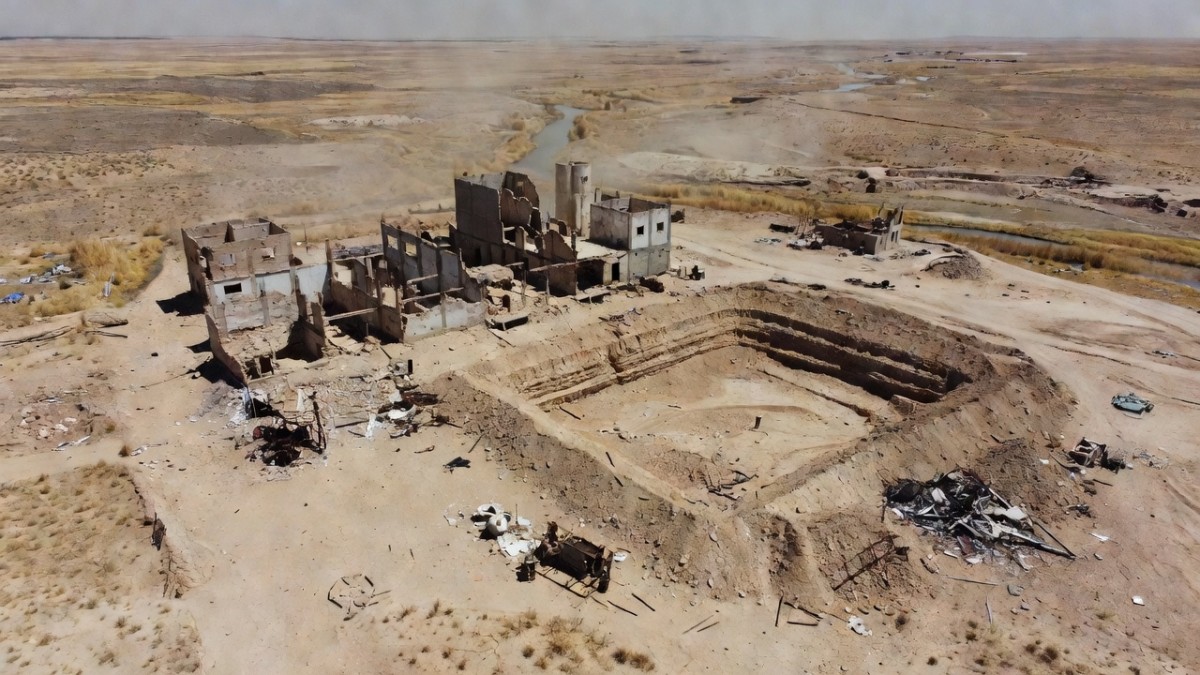
Olmert's admission comes in the same week that the IAEA reported significant progress in resolving the long-standing questions about Syria's covert nuclear program. Confidential IAEA reports seen by Reuters and the Associated Press ahead of the agency's Board of Governors quarterly meeting said that the agency had resolved its outstanding questions about the program that operated under the Assad family. Inspectors visited sites in Syria in August, including the Deir Ezzor/al-Kibar site on Aug. 29, and found cooling infrastructure "consistent with that of a nuclear reactor." The agency established that the former Syrian authorities had failed to report nuclear material, facilities, and activities as required under the NPT Safeguards Agreement.
The IAEA also reported that it had accounted for approximately 73 metric tons (about 80.5 US tons) of natural uranium metal—roughly 55 tons in clad fuel rods plus scrap and waste—at a newly declared site that Damascus notified to the agency on July 17, 2026. The material is now under IAEA containment and surveillance. IAEA Director General Rafael Grossi visited Damascus on Aug. 17-18 and praised Syria's new authorities for their "transparency and cooperation." The Aug. 18 joint statement aimed at the "full resolution of the outstanding issues." Syria's post-Assad government, led by President Ahmed al-Sharaa, has said that any material will remain in Syrian custody under international safeguards, a marked departure from the secrecy of the Assad era.
Implications for Syria's New Government
The IAEA's findings and Olmert's admission together paint a fuller picture of the nuclear threat that Syria posed under Assad and the lengths Israel went to in order to neutralize it. For Syria's new government, which came to power after Assad fled to Russia in December 2024, the IAEA's progress on the nuclear file is a crucial step toward international legitimacy. The new authorities have cooperated fully with the IAEA, a stark contrast to the Assad regime's years of denial and obstruction, which led the IAEA Board of Governors to find Syria in noncompliance with its NPT safeguards obligations in 2011.
The confirmation of Suleiman's assassination also serves as a reminder of the brutal history that the new Syria is trying to move beyond. The conflict that began in 2011 killed an estimated 500,000 people and ended with the collapse of the Assad family's five-decade rule. For the new government, the challenge is to rebuild a country shattered by war while navigating the complex legacy of the Assad era, including its covert weapons programs and its alliances with Iran and Hezbollah. The IAEA's resolution of the nuclear file is a positive sign, but the shadow of the past, including the killing of men like Suleiman, will linger for years to come.
Olmert's memoir is more than just a confession; it is a historical document that explains the rationale behind one of Israel's most daring operations. It reveals the extent to which Israel was willing to go to prevent a nuclear-armed Syria and to disrupt the flow of weapons to its proxies. The assassination of Suleiman was a message to Assad, to Hezbollah, and to Iran that Israel would not tolerate threats to its security, even if it meant operating covertly in the heart of an enemy state. As the IAEA now works to secure Syria's remaining nuclear materials, the story of Suleiman's death serves as a stark reminder of the dangers that once lurked in the shadows of the Syrian regime.
This article was produced with AI-assisted research and editorial support. Sources: The Times of Israel; Ynet News; Middle East Eye; Reuters; The Associated Press; BBC News; Arms Control Association.
By Jessica Ali, Staff Writer
What's Your Reaction?
 Like
0
Like
0
 Dislike
0
Dislike
0
 Love
0
Love
0
 Funny
0
Funny
0
 Wow
0
Wow
0
 Sad
0
Sad
0
 Angry
0
Angry
0

Editor-in-Chief at Global1.News. Atlanta-based journalist who cuts through the BS and tells it like it is. Lead anchor, host, and the voice you hear when the spin stops and the truth starts.














Comments (0)