
Ecuador Jails Ex-Minister Serrano After US Deportation in Villavicencio Case
In a recent DW News report, the focus turned to a dramatic turn in one of Latin America's most consequential assassination cases. U.S. Immigration and Customs Enforcement (ICE) deported Jose Ricardo Serrano Salgado, 54, a former Ecuadorean interior minister, to Ecuador on Friday, Aug. 28, 2026.
In a recent DW News report, the focus turned to a dramatic turn in one of Latin America's most consequential assassination cases. U.S. Immigration and Customs Enforcement (ICE) deported Jose Ricardo Serrano Salgado, 54, a former Ecuadorean interior minister, to Ecuador on Friday, Aug. 28, 2026. Within hours of his arrival, Serrano was taken into police custody, and President Daniel Noboa announced he would be held at the El Encuentro mega-prison in Guayaquil, mocking him on social media as the newest "guest" of the facility built to cage the nation's most dangerous gang leaders.
The deportation marks a stunning fall for a man who once commanded Ecuador's national police force. Serrano served as interior minister from 2012 to 2016 under leftist former President Rafael Correa, a period when the state's security apparatus was tightly controlled by the executive. Now, he stands accused by Ecuador's Attorney General's Office of playing an indirect role in the August 2023 assassination of presidential candidate Fernando Villavicencio, a crime that shook the country's democratic foundations and exposed the deep entanglement of organized crime with political power.
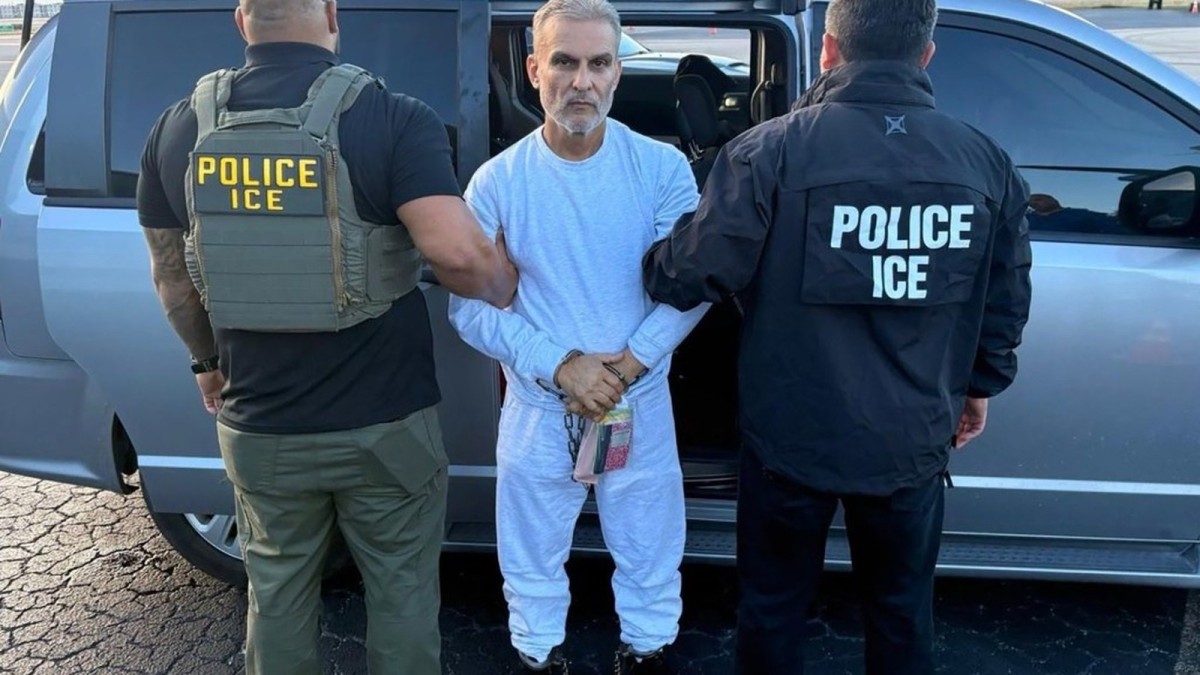 The case against Serrano did not begin in an Ecuadorean courtroom but in a Miami immigration proceeding. ICE had arrested Serrano at his Miami home in August 2025 for overstaying his visa. His asylum request was rejected, setting the stage for a legal battle that would test the limits of U.S. immigration enforcement. U.S. media reported that a federal judge had blocked his removal over concerns he could face torture in Ecuador, yet ICE carried out the deportation anyway, overriding the judicial stay and sending the former minister back to a country where prosecutors had already built a case against him.
For Ecuadorean families who have lived under the shadow of cartel violence, Serrano's return is not merely a legal footnote. It is a moment of reckoning. Villavicencio, 59, was a journalist-turned-lawmaker and anti-corruption presidential candidate who had made it his life's mission to expose the links between government officials and criminal organizations. He was shot dead at a campaign rally in Quito on Aug. 9, 2023, just days before Ecuador's special presidential election on Aug. 20, 2023. The alleged gunman was killed at the scene, and six other suspects were later found murdered in prison while awaiting trial, a grim pattern that has fueled public suspicion of a cover-up reaching into the highest levels of power.
The case against Serrano did not begin in an Ecuadorean courtroom but in a Miami immigration proceeding. ICE had arrested Serrano at his Miami home in August 2025 for overstaying his visa. His asylum request was rejected, setting the stage for a legal battle that would test the limits of U.S. immigration enforcement. U.S. media reported that a federal judge had blocked his removal over concerns he could face torture in Ecuador, yet ICE carried out the deportation anyway, overriding the judicial stay and sending the former minister back to a country where prosecutors had already built a case against him.
For Ecuadorean families who have lived under the shadow of cartel violence, Serrano's return is not merely a legal footnote. It is a moment of reckoning. Villavicencio, 59, was a journalist-turned-lawmaker and anti-corruption presidential candidate who had made it his life's mission to expose the links between government officials and criminal organizations. He was shot dead at a campaign rally in Quito on Aug. 9, 2023, just days before Ecuador's special presidential election on Aug. 20, 2023. The alleged gunman was killed at the scene, and six other suspects were later found murdered in prison while awaiting trial, a grim pattern that has fueled public suspicion of a cover-up reaching into the highest levels of power.
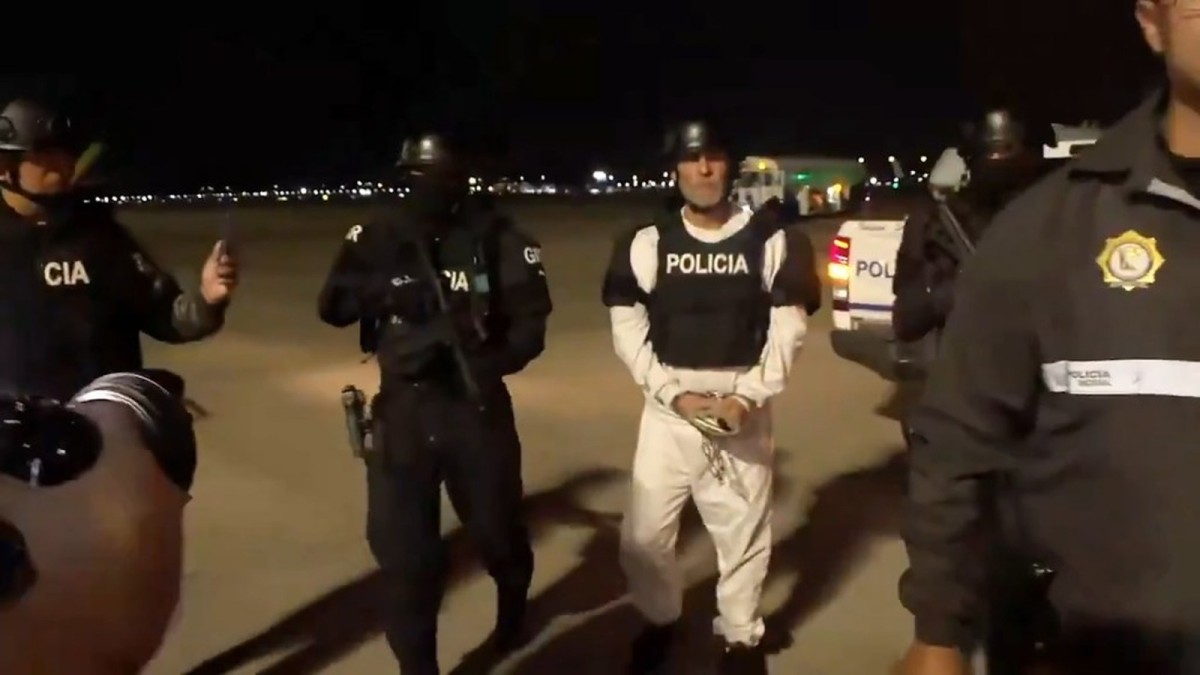 President Noboa, who won the 2023 presidential election and was re-elected in 2025, has staked his political legacy on confronting this crisis head-on. His hardline military-backed approach to combat gangs has included states of emergency that suspended civil liberties in violence-plagued regions and the construction of the El Encuentro mega-prison, a maximum-security facility designed to hold gang leaders in isolation. The maximum-security prison, built to hold gang leaders in isolation, is now Serrano's new home, a symbolic placement that Noboa has used to signal that no one, regardless of their former rank, is above the law.
The case against Serrano did not begin in an Ecuadorean courtroom but in a Miami immigration proceeding. ICE had arrested Serrano at his Miami home in August 2025 for overstaying his visa. His asylum request was rejected, setting the stage for a legal battle that would test the limits of U.S. immigration enforcement. U.S. media reported that a federal judge had blocked his removal over concerns he could face torture in Ecuador, yet ICE carried out the deportation anyway, overriding the judicial stay and sending the former minister back to a country where prosecutors had already built a case against him.
For Ecuadorean families who have lived under the shadow of cartel violence, Serrano's return is not merely a legal footnote. It is a moment of reckoning. Villavicencio, 59, was a journalist-turned-lawmaker and anti-corruption presidential candidate who had made it his life's mission to expose the links between government officials and criminal organizations. He was shot dead at a campaign rally in Quito on Aug. 9, 2023, just days before Ecuador's special presidential election on Aug. 20, 2023. The alleged gunman was killed at the scene, and six other suspects were later found murdered in prison while awaiting trial, a grim pattern that has fueled public suspicion of a cover-up reaching into the highest levels of power.
A Case Built on Indirect Roles and Cartel Connections
The Attorney General's Office formally accused Serrano and six other people on Aug. 6, 2026, of playing an indirect role in Villavicencio's murder. The charges paint a picture of a conspiracy that stretched across borders and involved some of the most feared figures in Latin American organized crime. Among those accused is Wilmer "Pipo" Chavarria, leader of the Los Lobos cartel, who is currently in Spain with an extradition request pending. Chavarria had previously faked his own death, a tactic that allowed him to evade capture while continuing to direct operations from abroad. The list of the accused reads like a who's who of the region's criminal underworld. Xavier Jordan, another key figure, is located in the United States. Former assemblyman Ronny Aleaga, who once held elected office, is now in Venezuela. Luis Arboleda, a senior Los Lobos member, remains at large. Five of the seven accused are considered fugitives, and the Attorney General's Office has requested Interpol red notices for their capture and extradition. One suspect, Angel Esteban Aguilar, alias "Lobo Menor," a Los Lobos member, was arrested in Mexico City in March and returned to Ecuador under an earlier red notice, demonstrating that international cooperation can yield results when political will exists. The case against Serrano is notable for its emphasis on indirect participation. Prosecutors are not alleging that the former minister pulled the trigger or plotted the ambush in detail. Instead, the Aug. 6 accusation places him among seven people charged with playing an indirect role in the killing, allegedly helping create the conditions for the crime. Villavicencio had been one of the few candidates who alleged links between organized crime and government officials, and he had received death threats long before the fatal rally. He campaigned with a security detail, yet the protection was not enough to save him from the bullets that ended his life and his campaign.Ecuador's Geography of Violence
To understand the gravity of these accusations, one must look at the map. Ecuador sits between Colombia and Peru, the world's largest cocaine producers, and has become a key transit country for the drug trade. The strategic location has transformed the nation into a battleground for cartels fighting for control of shipping routes to the United States and Europe. Los Lobos, or "The Wolves," is one of the nation's most powerful criminal gangs, and analysts say it has deep connections to Mexico's Jalisco New Generation Cartel (CJNG), one of the most violent and sophisticated criminal organizations in the Western Hemisphere. The violence has touched every corner of Ecuadorean society. In Quito's barrios, mothers fear for their children's safety as gang recruitment spreads. In coastal cities like Guayaquil, port workers have been caught in the crossfire of turf wars. The assassination of a presidential candidate was not an isolated incident but a symptom of a broader crisis of governance, where criminal groups have infiltrated state institutions and corrupted public officials. For ordinary Ecuadoreans, the question is no longer whether the cartels have influence but how deep that influence reaches.
President Noboa, who won the 2023 presidential election and was re-elected in 2025, has staked his political legacy on confronting this crisis head-on. His hardline military-backed approach to combat gangs has included states of emergency that suspended civil liberties in violence-plagued regions and the construction of the El Encuentro mega-prison, a maximum-security facility designed to hold gang leaders in isolation. The maximum-security prison, built to hold gang leaders in isolation, is now Serrano's new home, a symbolic placement that Noboa has used to signal that no one, regardless of their former rank, is above the law.
A Legal Battle With International Implications
The deportation itself has raised serious legal questions that extend far beyond Ecuador's borders. The fact that a U.S. federal judge had blocked Serrano's removal over concerns he could face torture in Ecuador creates a troubling precedent for immigration law. Human rights advocates have long warned that deportation to countries with questionable detention practices can expose individuals to treatment that violates international standards. ICE's decision to proceed despite the judicial stay suggests a willingness to prioritize diplomatic and security considerations over individual rights, a stance that has drawn criticism from legal scholars and advocacy groups. For Serrano, the legal road ahead is uncertain. Pre-trial hearings are under way in the case, and a judge will decide whether prosecutors' case can proceed to a full trial. The case has deepened Ecuador's political fault lines: Serrano served under former President Rafael Correa from 2012 to 2016, while Villavicencio had been one of the few candidates willing to allege links between organized crime and government officials. For many Ecuadoreans, the question is whether the courts can finally deliver what the streets have demanded for three years.The Search for Justice in Villavicencio's Name
The Villavicencio case has become a touchstone for those seeking accountability in Latin America, where political violence has often gone unpunished. The journalist-turned-candidate's family has waited three years for answers, watching as suspects were murdered in prison and others fled the country. The arrest of Serrano, however indirect his alleged role, represents a breakthrough in a case that many had written off as unsolvable. It also sends a message to fugitives hiding in the United States, Spain, and Venezuela that distance does not guarantee safety. Villavicencio's legacy lives on in the journalists who continue to investigate organized crime despite the risks and in the citizens who took to the streets after his death to demand an end to impunity. His assassination was intended to silence a voice that threatened the status quo, but it has instead galvanized a movement for transparency and justice. The pre-trial hearings now under way are a testament to that movement's persistence, even as the full truth remains elusive.A Region Watching Closely
The case has resonance across Latin America, where the intersection of drug trafficking, political corruption, and violence is a shared challenge. From Mexico, where the CJNG operates with near-impunity, to the Northern Triangle of Central America, where gangs control entire neighborhoods, the pattern is familiar. The extradition of Chavarria from Spain and the potential return of other fugitives will be closely watched as tests of international cooperation in the fight against organized crime. For Ecuadorean migrants in the United States, many of whom fled the violence that Serrano's government was supposed to contain, the deportation carries a bitter irony. They left their homeland seeking safety, only to watch a former minister who oversaw security during a period of alleged collusion with criminals find refuge in the same country that offered them asylum. The justice system, slow and imperfect as it is, has now brought Serrano back to face the consequences of his actions, whatever those may be.What Comes Next
As the case moves forward, the focus will shift to the courtroom in Ecuador, where prosecutors will present evidence of Serrano's alleged indirect role in the assassination. The judge's decision on whether to proceed to a full trial will be a critical juncture, determining whether the former minister will have his day in court or whether the charges will be dismissed. The outcome will resonate far beyond Serrano's personal fate, shaping public confidence in Ecuador's ability to hold powerful figures accountable. The families of Villavicencio and the other victims of political violence in Ecuador are watching with cautious hope. They have seen too many cases derailed by corruption, intimidation, and bureaucratic inertia to expect a swift resolution. But the deportation of Serrano, against the advice of a U.S. federal judge, signals that the political will to pursue this case exists at the highest levels. Whether that will translates into a conviction remains to be seen, but for now, the wheels of justice are turning.By Rosa Martinez, Staff Writer
Ecuador Jails Ex-Minister Serrano After US Deportation in Villavicencio Case
Quito, Ecuador — The deportation marks
This article was produced with AI-assisted research and editorial support. Sources: DW News; The Associated Press; Reuters; Al Jazeera.
What's Your Reaction?
 Like
0
Like
0
 Dislike
0
Dislike
0
 Love
0
Love
0
 Funny
0
Funny
0
 Wow
0
Wow
0
 Sad
0
Sad
0
 Angry
0
Angry
0
Rosa Martinez
Latin America/Andes Correspondent at Global1.News. Based in Bogota, covering politics, environment, energy, and social movements across the Andean region. Passionate about environmental journalism and communities protecting their land.











Comments (0)