
Türkiye and Iraq Extend Kirkuk-Ceyhan Pipeline Deal as Baghdad Diversifies Away from Hormuz
Türkiye and Iraq have extended the Kirkuk-Ceyhan pipeline agreement by one year with a minimum export capacity of 750,000 barrels per day, as Baghdad moves to diversify its oil export routes away from the Strait of Hormuz amid the ongoing US-Iran war. The deal, signed in Ankara on Saturday, follows Prime Minister Ali al-Zaidi's visit and includes a TPAO stake in Kirkuk fields, a water-for-oil framework, and broader efforts to reduce Iraq's dependence on any single export corridor.
When the United States and Israel opened their campaign against Iran in February, they did more than ignite a regional war — they exposed the fragility of the waterway that carries the Middle East's oil to the world. Six months later, Iraq is moving decisively to build an exit strategy. The one-year extension of the Kirkuk-Ceyhan pipeline agreement, signed in Ankara on Saturday, is the clearest signal yet that Baghdad intends to reduce its dependence on the Strait of Hormuz, no matter how the conflict ends.
Türkiye, Iraq Extend Kirkuk-Ceyhan Pipeline Agreement by One Year
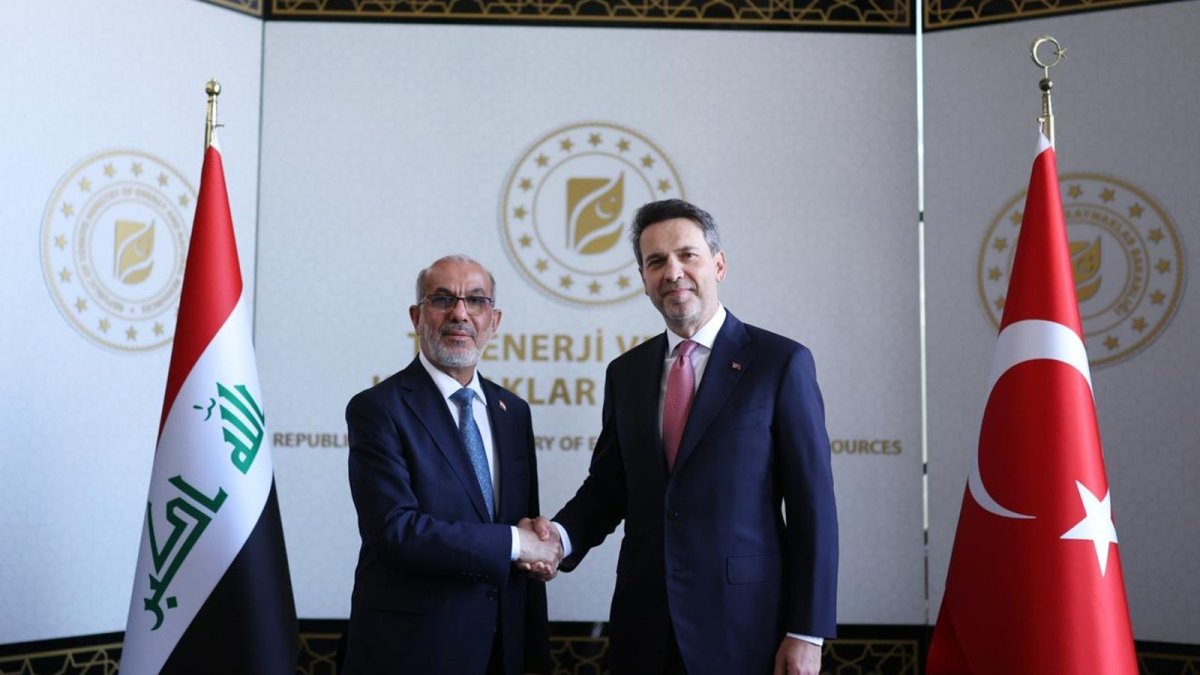
Ankara, Türkiye – August 2, 2026 — Türkiye and Iraq signed an agreement on Saturday to extend the Kirkuk-Ceyhan pipeline transit deal by one year, setting a minimum export capacity of 750,000 barrels per day. Energy and Natural Resources Minister Alparslan Bayraktar described the meeting in Ankara with Iraqi Oil Minister Bassem Mohammed Khudair as productive, while Iraqi Prime Minister Ali al-Zaidi called the step "an important strategic milestone."
The One-Year Extension
The arrangement covers the decades-old pipeline that carries Iraqi crude from Kirkuk to Türkiye's Mediterranean export terminal at Ceyhan, a key outlet for regional oil shipments. The previous agreement had expired on Monday, and the extension bridges the gap while the two governments negotiate a comprehensive long-term framework covering oil, electricity and water resources. Bayraktar said the transit arrangement — covering a daily capacity of 750,000 barrels — was implemented while efforts continue toward a new long-term agreement for the pipeline.
Al-Zaidi said Iraqi and Turkish companies would begin implementing the agreement immediately, underscoring that the interim step is designed for operational continuity rather than symbolic diplomacy. The pragmatic sequencing allows commercial activity to proceed without awaiting full ratification of broader terms.
Why the Deal Matters Now
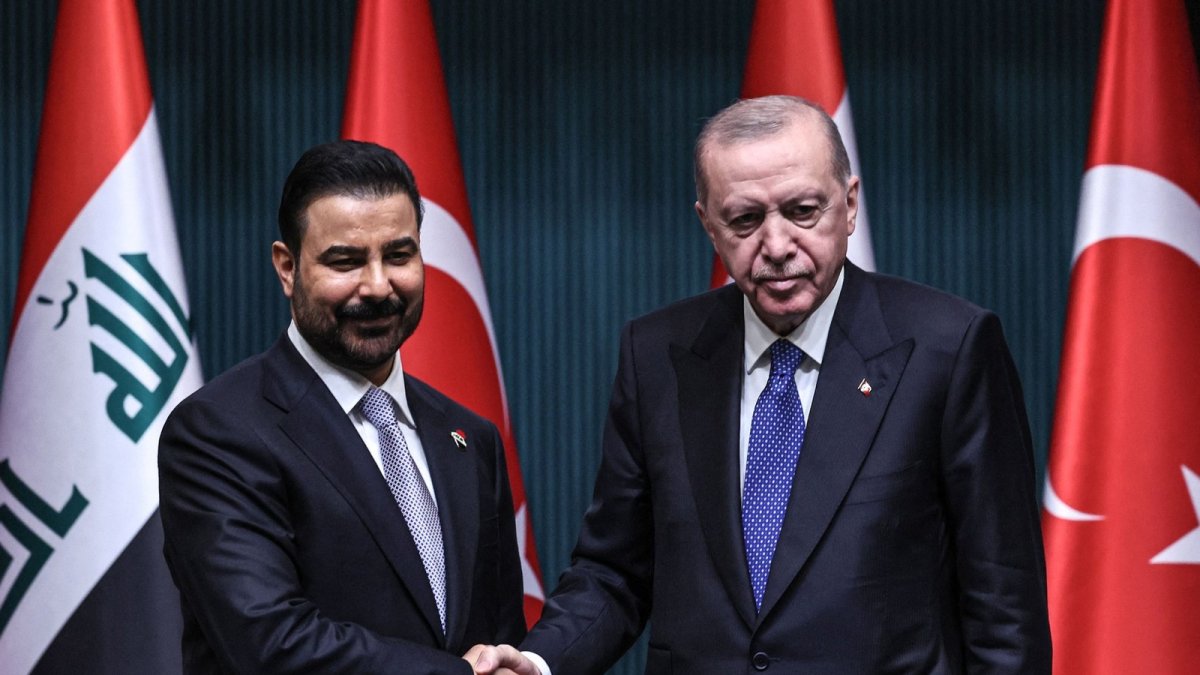
The signing comes days after al-Zaidi's high-level visit to Ankara, where he met President Recep Tayyip Erdoğan and senior ministers, and follows the expiration of the previous agreement on Monday. Iraq is seeking to strengthen the resilience of its oil export infrastructure after shipping disruptions through the Strait of Hormuz began with the US-Iran war in February. The northern route offers an alternative to southern terminals that handled most of Iraq's prewar exports of around 3.5 million barrels per day.
Before the conflict, Iraq relied overwhelmingly on its southern Basra terminals and the Hormuz corridor for the vast majority of its exports. The war has transformed that geography into a vulnerability: Iran has effectively controlled navigation through the strait since February, requiring vessels to obtain permission and pay transit fees. Maritime trade tracking firm Kpler said traffic through Hormuz has dropped sharply, and global oil prices have risen as the resumption of hostilities tightened supply. The northern pipeline through Türkiye now functions as a risk-distribution mechanism — not a full-volume substitute, but a strategic hedge against the fiscal shocks that sustained southern blockage would otherwise produce.
Turkey's Expanding Role Beyond Transit
Turkish Petroleum (TPAO) has acquired a 15 percent stake in the operating company for the Kirkuk fields, moving the relationship from simple pipeline operation into production and investment. This deepens Turkish involvement across the entire energy value chain — production, transportation and access to foreign markets — rather than confining Ankara to transit fees. Bayraktar noted that both countries remain committed to fully utilizing existing Türkiye-Iraq energy infrastructure while the longer-term agreement is negotiated.
Bayraktar traveled to Baghdad for talks on oil and gas cooperation in early July, and the pattern of engagement suggests a relationship expanding in scope and depth. For Baghdad, partners that can bundle multiple value-chain elements within a single relationship are increasingly attractive, as they reduce the number of external actors that must be managed.
Iraq's Multi-Partner Foreign Policy
Al-Zaidi's recent visits to Washington, Tehran and Ankara show Baghdad distributing risks across multiple partners rather than assigning single policy areas to individual countries. The Ankara talks produced five documents: memoranda of understanding on police training and academic cooperation, youth and sports, and industrial property, an agreement on rail and road transportation via the Ovaköy-Fishkhabour border crossing, and a framework agreement envisioning the development of water management infrastructure in Iraq in exchange for oil.
The approach marks a departure from the compartmentalized framework that once assigned security to one patron, energy to another and trade to a third. Instead, Baghdad is engaging several partners in the same policy areas simultaneously, aiming to prevent any single external actor from controlling an entire policy domain. The lesson was drawn directly from the Hormuz crisis, which exposed the consequences of excessive dependence on a single export corridor and a single regional environment.
Historical Pipeline Context
The Kirkuk-Ceyhan pipeline, commissioned under a 1973 Iraq-Turkey agreement, has a nameplate capacity of about 1.6 million barrels per day. Its operational history has been turbulent: exports were largely halted in 2023 after legal and commercial disputes involving Iraq's semi-autonomous Kurdistan Regional Government, and limited flows resumed only in March 2026 following an agreement between Baghdad and the KRG. Current volumes stand near 200,000 barrels per day — well below the new 750,000-barrel target, which itself is less than half the pipeline's maximum capacity.
The gap between latent capacity and actual flows highlights both the asset's historical scale and the work still required to restore it. Legal, commercial and security hurdles have all contributed to the pipeline's underuse, and the extension alone will not resolve them. But the renewed political commitment from both governments — and the revenue incentives created by the Hormuz crisis — provide the strongest impetus in years to close that gap.
Water-for-Oil Framework and Development Road
The framework agreement envisions Iraq using oil revenues to fund water infrastructure such as irrigation systems, dams, canals and loss-reduction projects, connecting the country's energy income with urgent domestic needs. Water scarcity has long been a source of tension between Baghdad and Ankara, which controls the headwaters of the Tigris and Euphrates, and the oil-for-water model offers a mechanism to convert a potential point of friction into a channel of cooperation.
The Kirkuk-Ceyhan line handles crude exports, while the separate Development Road project — a planned rail and road freight corridor connecting Iraq's southern Gulf ports to Türkiye and onward to Europe — targets trade rather than hydrocarbons. The two projects are distinct but complementary: together they diversify both Iraq's revenue use and its physical connectivity, reducing the country's dependence on any single corridor or market. However, geographical proximity alone does not produce results; the financing of the Development Road, its legal framework and its administrative coordination remain open questions.
Regional Implications for Markets and Stability
The additional northern capacity will not restore prewar export levels, but it increases Iraq's options during Hormuz disruptions and provides incremental supply stability to fragile global energy markets. Iraq's budget depends overwhelmingly on oil revenues, which account for the vast majority of government income, so any sustained blockage in the south quickly affects salaries, public investment and import financing. A functioning northern corridor insulates the Iraqi economy — at least partially — from the politics of the strait.
For Türkiye, the arrangement strengthens its position as a key energy and transport hub connecting Iraq and the wider region to European markets. Ankara's ambitions extend beyond the Kirkuk line: one project under consideration would connect southern Iraq's Basra to western Iraq's Haditha and from there to Ceyhan and Syria's port of Baniyas, a plan that would give Iraq multiple export routes while deepening Turkish influence over regional energy architecture. For Baghdad, successful execution of the multi-route strategy could embed a durable architecture that limits the transmission of corridor-specific shocks into the wider economy — a hedge that has become not merely prudent, but essential, in a region where the strait's closure is no longer hypothetical.
By Malik Hassan, Staff Writer
This article was produced with AI-assisted research and editorial support. Reporting is based on sources cited in the article.
What's Your Reaction?
 Like
0
Like
0
 Dislike
0
Dislike
0
 Love
0
Love
0
 Funny
0
Funny
0
 Wow
0
Wow
0
 Sad
0
Sad
0
 Angry
0
Angry
0

Middle East Correspondent at Global1.News. Based in Beirut, covering politics, conflict, energy, and society across the Middle East. Brings context and depth to a region often reduced to headlines.













Comments (0)