
Hadeeds Walk Free After Privy Council Turns Down State's Rushed Appeal
Privy Council Decision Clears Path for Release The Judicial Committee of the Privy Council has declined the Trinidad and Tobago government's request for an expedited hearing in the case involving Dominic and Genevieve Hadeed. The ruling, reported on 2 August 2026, means the couple's release after nearly a month in detention will stand while the broader legal challenge continues.
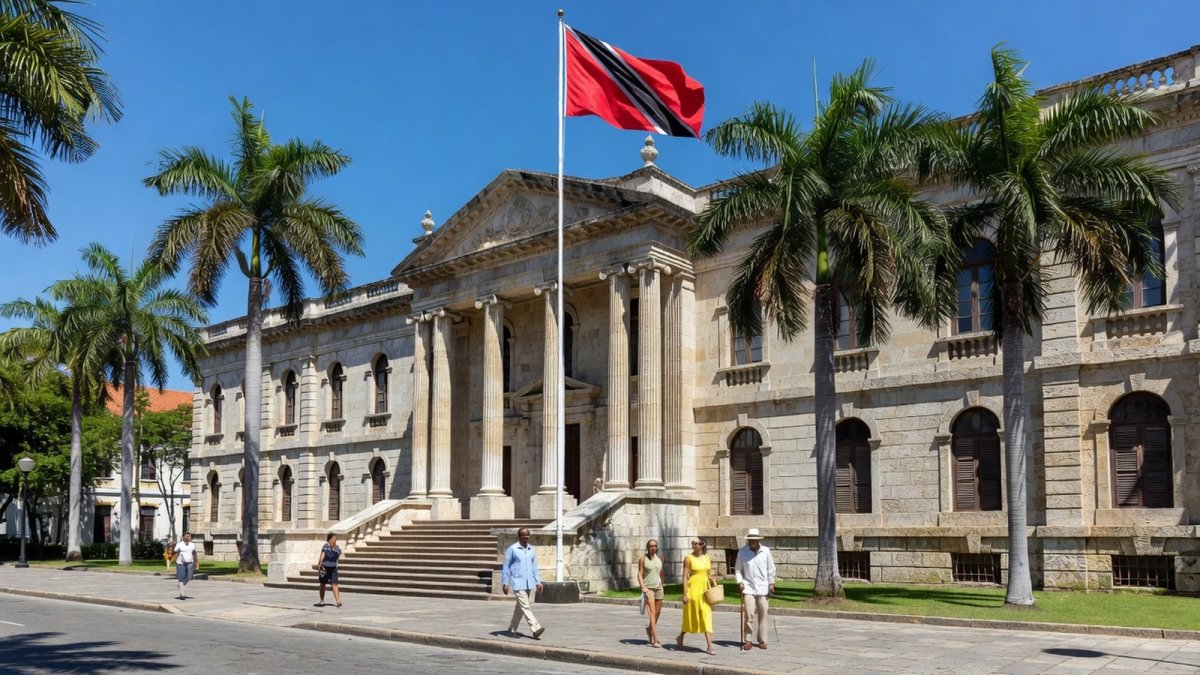
Privy Council Decision Clears Path for Release
The Judicial Committee of the Privy Council has declined the Trinidad and Tobago government's request for an expedited hearing in the case involving Dominic and Genevieve Hadeed. The ruling, reported on 2 August 2026, means the couple's release after nearly a month in detention will stand while the broader legal challenge continues. Caribbean360 noted that the Hadeeds are now free following the revocation of their Preventive Detention Orders.
The couple stepped out of Golden Grove Prison into the humid afternoon air on 23 July, their Preventive Detention Orders having been revoked just hours earlier. For families across the East-West Corridor, the sight of a prominent businessman and his wife reclaiming their freedom after nearly a month underlined how swiftly the highest court can alter the course of events when an expedited hearing is refused. The Privy Council’s refusal to fast-track the State’s appeal has given the Hadeeds breathing space to reorganise their lives while the substantive challenge remains pending.
Four days later Dominic Hadeed walked into his Tacarigua office to find staff waiting with quiet relief and open emotion. Colleagues described the atmosphere as one of cautious celebration, with tears of joy mixed with the practical task of catching up on business matters left unattended during the detention. For the immediate future the family can now plan schooling, medical appointments and daily routines without the shadow of further emergency detention, even as the broader legal questions continue their slow journey through the London court.
Arrest and Detention Under the State of Emergency
Dominic Hadeed, 52, founder of Blue Waters Products Limited, and his wife Genevieve, 42, were arrested by the Trinidad and Tobago Police Service on 24 June 2026. The detention formed part of an investigation into an alleged plot to assassinate Prime Minister Kamla Persad-Bissessar, the Attorney General and other senior officials. The couple was held at Golden Grove Prison in Arouca under Preventive Detention Orders issued during the six-month State of Emergency declared in March 2026 to address organised crime. Neither has been charged with any offence.
The six-month State of Emergency declared in March 2026 was presented as a necessary tool to confront organised crime networks that have long troubled communities from Port of Spain to San Fernando. Within that framework the authorities cited an alleged plot targeting the Prime Minister, the Attorney General and other senior officials, leading to the swift arrest of the Hadeeds on 24 June. Such measures, while familiar in Trinidad and Tobago’s recent history of crime-fighting initiatives, place heavy emphasis on preventive action rather than immediate prosecution.
No charges have been laid against either Dominic or Genevieve Hadeed. During the arrest, lawfully held firearms and ammunition were taken at Gulf City Mall; the couple later produced receipts confirming payment of the 2026 licensing fees. The absence of any criminal filing has prompted quiet discussion in legal and community circles about the threshold required before individuals are deprived of liberty under emergency powers, particularly when documentation supporting lawful ownership is readily available.
Court of Appeal Order and Immediate State Response
On 16 July 2026 the Court of Appeal directed the couple's release after 22 days of detention, imposing house-arrest conditions. The State responded at once with an emergency application for a stay, preventing their departure from prison. Attorney General Faris Al-Rawi was reported to have been involved in presenting the State's position at that stage.
Appeal Proceedings at the Privy Council
The State's appeal was listed on 21 July 2026 as case JCPC/2026/0066 before the Judicial Committee of the Privy Council in London. The appellants were listed as the Commissioner of Police, the Minister of Homeland Security, the Attorney General and PC Eldon Calliste No 16601, with Dominic and Genevieve Hadeed as respondents. The matter originated in Trinidad and Tobago and proceeded as an appeal as of right. On 23 July the Hadeeds were released after the Preventive Detention Orders were revoked.
Implications for Rule of Law and Business Confidence
The month-long detention of a well-known local businessman without charge has raised questions about the balance between public safety measures and individual rights during the State of Emergency. Dominic Hadeed has indicated that his public criticism of the emergency measures may have played a role in his detention. The seizure of lawfully held firearms and ammunition during the arrest, later shown to be properly licensed, has added to community discussion about the handling of such cases. Business circles in Tacarigua and beyond have watched the return of Hadeed to his office with quiet relief, though many remain cautious about the wider effect on investor sentiment.
Preventive detention without charge during a State of Emergency tests the long-standing balance between public safety and individual rights that Trinidad and Tobago’s legal tradition has sought to maintain. The Privy Council’s role as final arbiter provides an important layer of oversight, ensuring that rushed executive actions can be examined even when national security is invoked. In this instance the refusal of an expedited hearing has reinforced the principle that judicial scrutiny must not be compressed simply because the State seeks speed.
Hadeed’s public criticism of the emergency measures has fuelled community speculation that the detention carried a political dimension. For the wider business community the episode has prompted renewed caution about investor sentiment, particularly among those who value predictable application of the law. Beyond Tacarigua, company directors and chambers of commerce are weighing how such cases might affect decisions on expansion, staffing and long-term capital commitments in an environment where emergency powers remain active.
For ordinary citizens the episode brings into sharp focus the reassurance that comes from knowing any detention can be tested before an independent judge rather than left solely to executive discretion. The ability to seek such review, rooted in the long-standing habeas corpus safeguard that forms part of the Commonwealth legal inheritance, helps maintain everyday trust that the justice system will not simply bend to the pressures of the moment. With the Privy Council in London continuing to serve as Trinidad and Tobago’s final court of appeal, people across the country can see that even urgent national-security claims remain subject to careful external scrutiny, a safeguard that quietly strengthens faith in the fairness of the entire process.
Regional Context and the Road Ahead
Neighbouring CARICOM countries have followed the developments closely, given the shared concerns over organised crime and the use of emergency powers across the region. The Privy Council's decision leaves the underlying legal questions open for further consideration. For families and communities in Trinidad and Tobago, the outcome underscores the importance of judicial oversight even in times of heightened security measures. The case continues to serve as a reminder of the delicate line between protecting citizens and preserving long-standing legal protections.
CARICOM neighbours have observed the proceedings with close interest, recognising that many member states face similar pressures from organised crime while striving to uphold civil liberties. The diaspora in London, New York and Toronto has followed the Privy Council listings online, viewing the case as a test of how Caribbean jurisdictions manage emergency powers without eroding public trust. Shared regional concerns about crime have not diminished the parallel debate over the proper limits of detention without trial.
With the underlying appeal still before the Judicial Committee, the next steps will determine whether the Court of Appeal’s release order stands in full or whether further conditions may be imposed. For communities in Trinidad and Tobago the outcome will continue to shape conversations about the safeguards that remain essential even when governments invoke extraordinary measures to protect citizens.
By Sharon Sahatoo, Staff Writer
This article was produced with AI-assisted research and editorial support. Reporting is based on sources cited in the article.
What's Your Reaction?
 Like
0
Like
0
 Dislike
0
Dislike
0
 Love
0
Love
0
 Funny
0
Funny
0
 Wow
0
Wow
0
 Sad
0
Sad
0
 Angry
0
Angry
0

Caribbean Correspondent at Global1.News. Based in Port of Spain, Trinidad, covering Caribbean politics, economy, energy, climate, and culture. Amplifying the voices and stories of the Caribbean region.















Comments (0)