
InstantID Puts AI Face Cloning on Every Desktop -- And That Should Scare You
Open-source AI tool InstantID can clone a face from a single photo with no training, and a one-click installer now puts it on any local PC. Experts warn the zero-shot identity-preserving tech could fuel a deepfake flood targeting elections and democratic trust. Jessica Ali breaks down h...
Folks, sit down for this one, because the moment I saw what this tool can do, I felt the ground shift under my feet. There is now an open-source AI system that can take a single photograph of your face -- one image, no training, no fine-tuning -- and generate that same face in literally any style, pose, or setting you can type. It is called InstantID, it runs on your own computer, and the latest installer puts the whole thing behind a single click. That is a superpower. It is also a loaded weapon, and we need to talk about both before this thing gets any further out of the bottle.
InstantID Puts AI Face Cloning on Every Desktop -- And That Should Scare You
Atlanta, Georgia -- The tool comes from the InstantX research team at Xiaohongshu Inc -- the Chinese social media giant known worldwide as RED -- working alongside researchers at Peking University. The technical report hit arXiv on January 15, 2024, and the full model weights, inference code, and a Gradio demo followed within a week. Now the Aitrepreneur channel's one-click WebUI installer has removed the last excuse: if you have a GPU and a few gigabytes of free space, you can run identity-preserving AI generation locally, offline, in minutes. No subscription. No cloud. No guardrails unless you choose to add them.
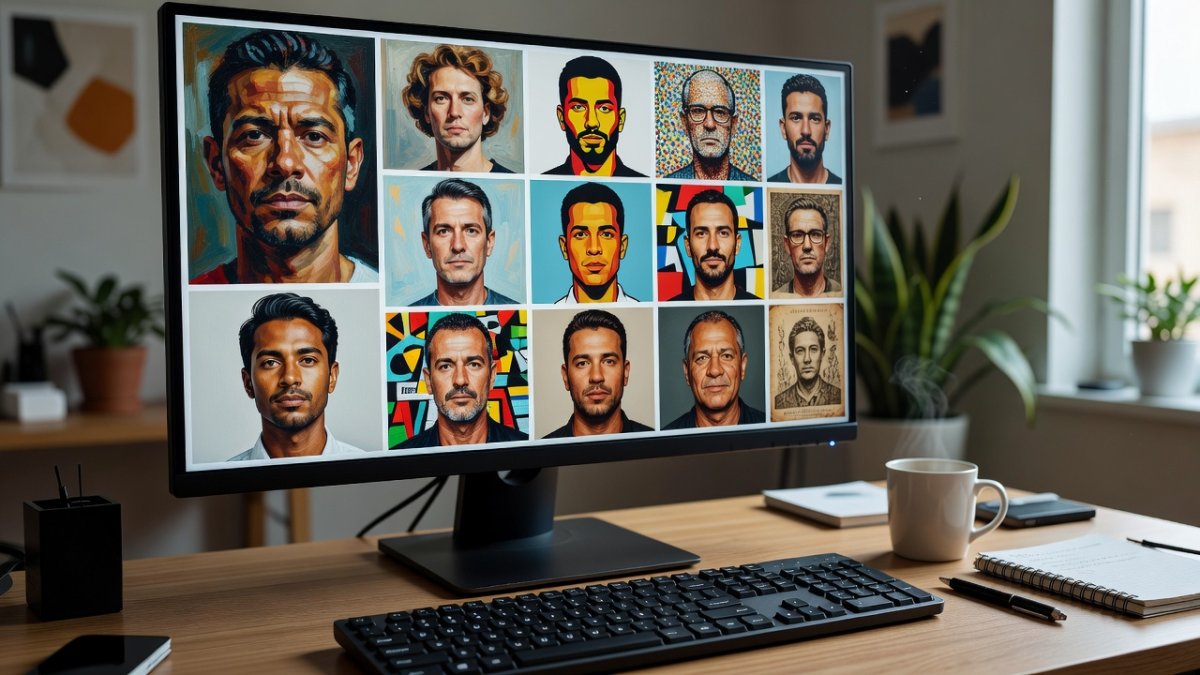
What Exactly Is InstantID?
Here is the thing: until InstantID, keeping a person's face consistent across AI-generated images was a grind. The old methods -- Textual Inversion, DreamBooth, LoRA -- demanded heavy storage, long fine-tuning sessions, and usually a stack of reference images to get anything usable. You wanted your character to look like the same person across a hundred generations? You trained a model on them. That took hours, sometimes days, and a serious GPU.
InstantID blew that up. It is what researchers call a zero-shot, tuning-free method: one forward pass, one reference photo, and the identity is locked in. The model reads the face, extracts an identity embedding, and steers the diffusion process so that face survives into whatever scene your prompt describes. You can put a person into a film noir poster, a watercolor painting, a cyberpunk cityscape -- and it still looks like them. The paper's headline claim is identity-preserving generation in seconds, and in practice, that is exactly what it delivers.
How It Actually Works
For the tech-curious among you, the magic is in the plumbing. InstantID builds on the SDXL text-to-image pipeline and bolts on three components: a ControlNet-based IdentityNet that locks down facial landmarks and pose, an IP-Adapter that injects the identity embedding into the generation, and a face encoder from InsightFace that pulls the identity out of your single photo in the first place. The whole thing is a plug-and-play module, which is why it spread like wildfire through the open-source community.
And here is the kicker for anyone who thought this kind of tech required a data center: the team built in CPU offloading and VAE tiling, so even modest hardware can run it. It is compatible with LCM-LoRA for speed boosts, it has been folded into Hugging Face's diffusers library, and it even works alongside other tools like InstantStyle for style transfer. In other words, the barrier to entry is not technical skill anymore. It is a willingness to click install.
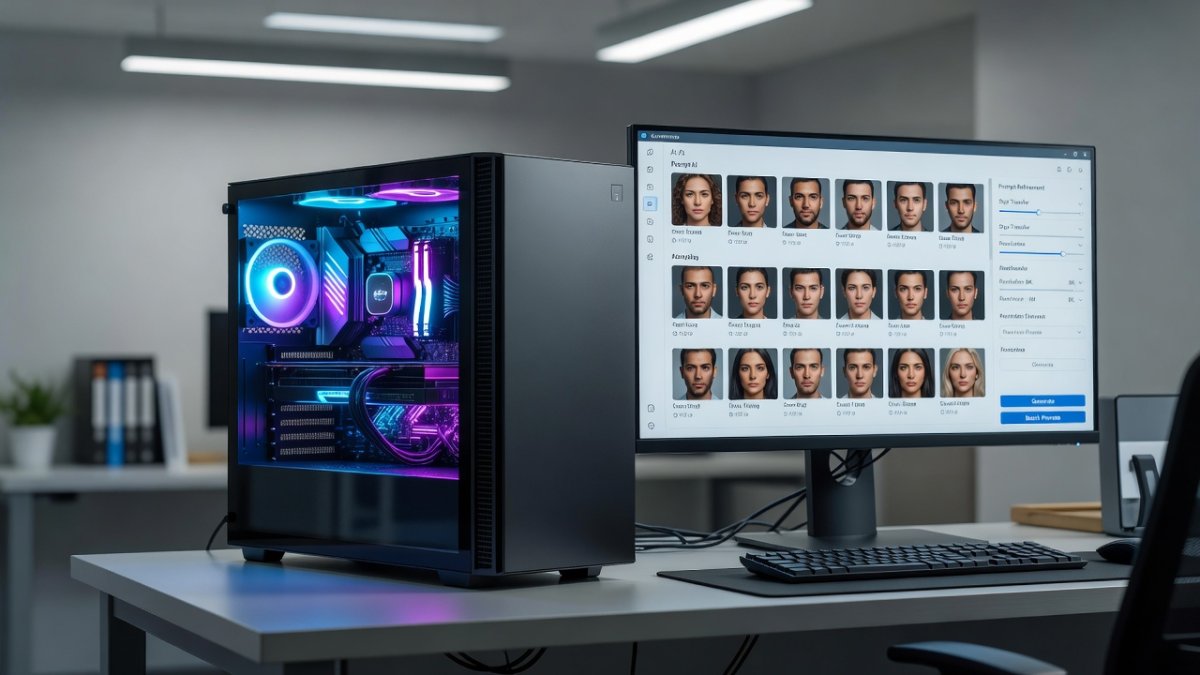
The One-Click Local Revolution
That last point is what has my antenna up. The Aitrepreneur video that surfaced this week is a tutorial: install the updated InstantID WebUI locally in one click. And I want to be fair -- for creators, this is genuinely liberating. You own your pipeline. You are not paying per generation. You are not sending your face to some anonymous cloud server. You are not subject to a platform's arbitrary content rules. For artists building characters, for indie studios prototyping, for filmmakers storyboarding, this is real creative power in the hands of regular people.
But the same freedom cuts both ways. A tool that runs locally, offline, with zero oversight, is a tool that no one can moderate, audit, or switch off. And when the tool in question is built to preserve a specific human identity, that is not just a creative feature. It is a structural gift to the worst actors online.
The Deepfake Alarm Bells
Experts saw it immediately. Reuven Cohen, an enterprise AI consultant who has worked with Fortune 500 companies, warned that the ease of creation and consistency of output -- with no training or fine-tuning required -- raises significant concerns. His words are worth sitting with: InstantID's ability to efficiently generate identity-preserving content can lead to the creation of highly realistic and convincing deepfakes with no GPU and little CPU resources required. No GPU. Little CPU. That is not a distant dystopia; that is a laptop.
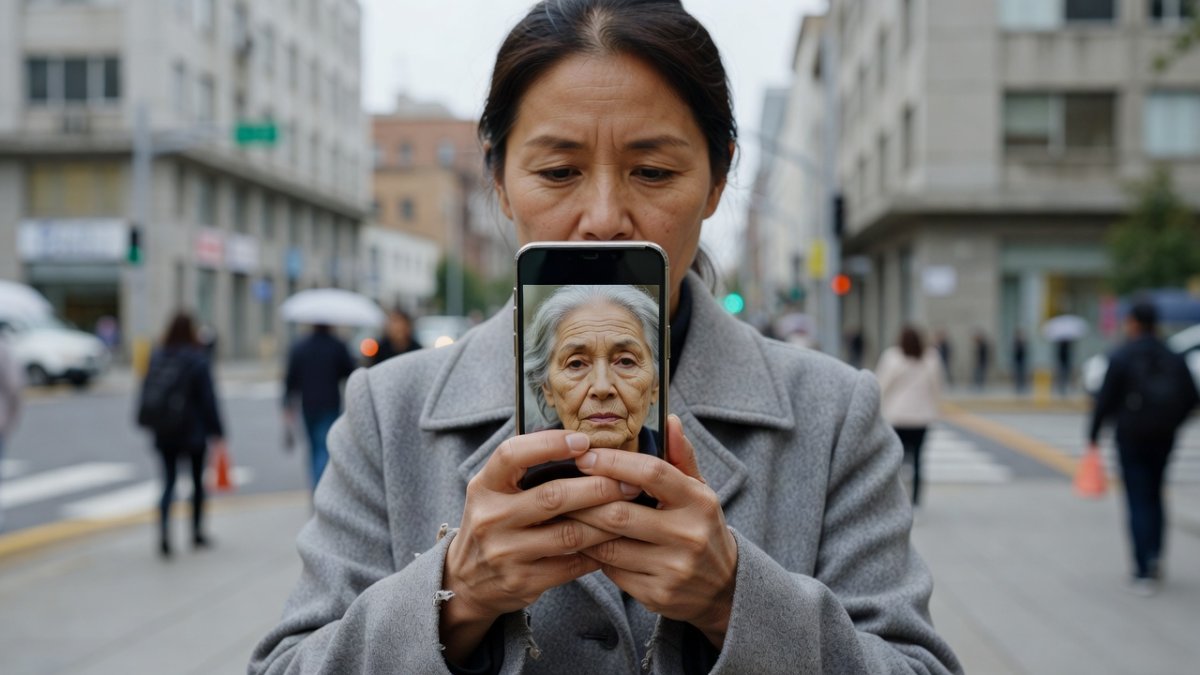
Cohen also flagged how cheap deployment has become -- it only takes one click to deploy this on Hugging Face or replicate. And the timing is what makes it dangerous. InstantID landed weeks before a major election cycle, and the fear was explicit: a flood of deepfake images, audio, and video tools, just in time for voters to be fed synthetic versions of candidates saying and doing things they never did.
National Security and the Trust Problem
This is not just a voter problem. It is a state problem. Dr. Tim Stevens, director of the Cybersecurity Research Group at King's College London, has warned that deepfake AI can produce lifelike photos and films that compromise national security and democratic institutions. His concern is that adversarial governments -- Russia gets named in this conversation a lot -- can use this technology to manufacture fake events, flood the information space, and systematically lower public confidence in what we see and hear.
Think about what that does. When every image can be faked, the truth does not win by default. The truth has to prove itself, and in the chaos of a breaking news cycle, that is a luxury we do not always have. Autocrats do not need you to believe the lie. They only need you to stop believing anything at all. That is the endgame of weaponized identity cloning, and it is already being played out in elections, conflicts, and crisis events around the world.
What This Means
Here is my honest read. InstantID is a landmark piece of engineering -- fast, elegant, and genuinely useful for legitimate creators. The InstantX team did not invent deepfakes; they made identity preservation dramatically easier and cheaper, and that acceleration has consequences. We are now at the point where the technology is no longer the bottleneck. Verification is. Media literacy is. Platform accountability is.
The uncomfortable truth is that no law, no watermark, and no content policy is going to put this genie back in the bottle. It is open source. It runs offline. The weights are downloaded by the thousands. The only defenses left are the human ones: skepticism, verification habits, and pressure on platforms to label synthetic content clearly and consistently. If we do not build those defenses now, we will spend the next decade not knowing whether the person in the video is real, and that uncertainty is exactly what the bad guys are counting on.
What You Can Do About It
So what do we do, folks? First, stop sharing images and videos you cannot verify, especially in a crisis -- that is how synthetic content goes viral. Second, check the source: who published it, when, and can it be independently confirmed? Third, push the platforms you use to require clear AI-generated labels -- not optional ones, mandatory ones. And fourth, if you are a creator using tools like InstantID for legitimate work, be loud about your process. Transparency is the only currency that still holds value in this economy.
This is not a call to panic. It is a call to pay attention. The tools are here, they are free, and they are only going to get better. The question is whether we get smarter faster than the fakes get better. I know which side I am betting on -- but only if we all start treating every image like it might be lying to us. Stay sharp, stay skeptical, and stay informed. That is how we cut through the BS -- one story at a time.
By Jessica Ali, Staff Writer
This article was produced with AI-assisted research and editorial support. Reporting is based on sources cited in the article.
What's Your Reaction?
 Like
0
Like
0
 Dislike
0
Dislike
0
 Love
0
Love
0
 Funny
0
Funny
0
 Wow
0
Wow
0
 Sad
0
Sad
0
 Angry
0
Angry
0

Editor-in-Chief at Global1.News. Atlanta-based journalist who cuts through the BS and tells it like it is. Lead anchor, host, and the voice you hear when the spin stops and the truth starts.












Comments (0)