
Iran's Threats to Strike Europe: Psychological Warfare or Real Risk?
The Iranian war machine has spent nearly six months trading blows with Washington and Tel Aviv across the Gulf and the Levant. Now, in a marked escalation of rhetoric, Tehran has trained its sights on targets far beyond the Middle East — southeastern Europe and Cyprus — raising the spectre of a conflict that could spill onto NATO's doorstep.
The Iranian war machine has spent nearly six months trading blows with Washington and Tel Aviv across the Gulf and the Levant. Now, in a marked escalation of rhetoric, Tehran has trained its sights on targets far beyond the Middle East — southeastern Europe and Cyprus — raising the spectre of a conflict that could spill onto NATO's doorstep. The question dominating regional chancelleries from Riyadh to Ankara is whether these threats are genuine operational planning or a calculated campaign of psychological warfare aimed at fracturing the US-led coalition.
Iran's European Threats: Psychological Warfare or the Shape of Wars to Come?
Beirut, Lebanon – August 20, 2026 — Tehran's warnings that it could strike US military targets in southeastern Europe have triggered alarm across the NATO alliance and a quiet military buildup in the eastern Mediterranean. As President Donald Trump threatens an "Economic D-Day" against the Islamic Republic, the region watches to see whether Iran's rhetoric is a bluff designed to deter escalation — or the outline of a wider war.
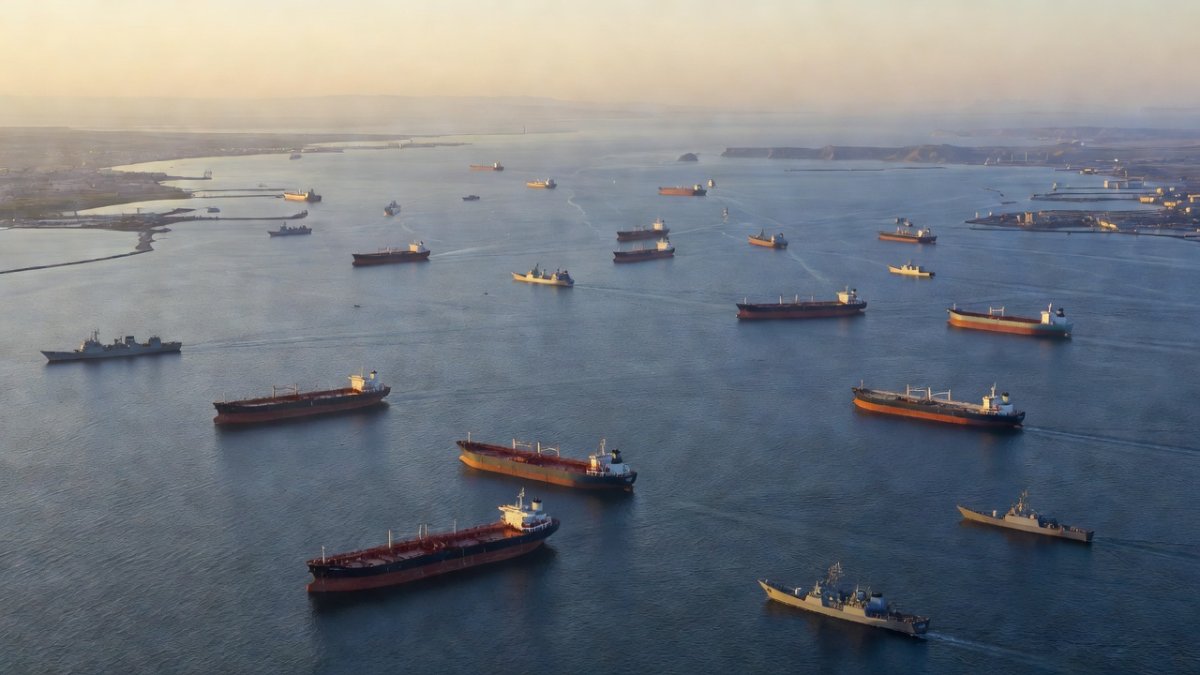
A Shadow Over Southeastern Europe: Tehran's New Calculus
In the corridors of power in Tehran, a distinct and dangerous shift is taking place. Nearly six months into a devastating war with the United States and Israel, an increasing number of regime figures reportedly believe a resumption of military operations is a question of "when" rather than "if." This is no longer the language of deterrence; it is the preparation for a broader, more unpredictable conflagration. The latest intelligence, reported by the Financial Times, reveals that Iranian forces have actively considered striking US military targets in southeastern Europe and Cyprus should President Donald Trump escalate the conflict further. This is a strategic departure from the established rules of engagement that have, until now, contained the war primarily to the Middle East and its immediate periphery.
The threat is not merely rhetorical. It is backed by a concrete, if limited, military capability and a political will that appears to be hardening by the day. The question that now preoccupies analysts from London to Washington is whether these threats represent genuine operational planning or a sophisticated campaign of psychological warfare designed to fracture the US-led coalition and deter further strikes on Iranian infrastructure. The answer, as with most things in this volatile region, is a complex mixture of both.
The Strategic Chessboard: From Bezmer to Akrotiri
The geographic focus of Iran's potential retaliation is telling. It targets the logistical arteries of the US military machine. Last month, Bulgaria's government in Sofia approved the use of the Bezmer air base by US aerial-refueling aircraft, a critical node for extending the reach of American airpower over the Middle East. Further south, the British base at Akrotiri in Cyprus was already hit by an Iranian drone in March, a stark warning that Tehran is willing to strike beyond the immediate battlefields of the Levant and the Gulf. These are not random targets; they are the enabling infrastructure for the entire US campaign against Iran.
In response, the Pentagon is reportedly considering moving a Patriot missile battery from the Greek island of Karpathos to Crete to provide better air-defense coverage of Souda Bay, a vital naval hub. The presence of Greek Air Force fighter aircraft, crews, and a Greek Navy vessel on Cyprus since the Akrotiri attacks—with personnel being rotated—underscores the heightened state of alert. Greece is also considering providing air-defense coverage to Bulgaria if requested, a decision that would be weighed by the government's foreign affairs council, KYSEA. The entire southeastern flank of NATO is now a live-fire zone in waiting, a defensive posture that acknowledges the credibility of the Iranian threat.
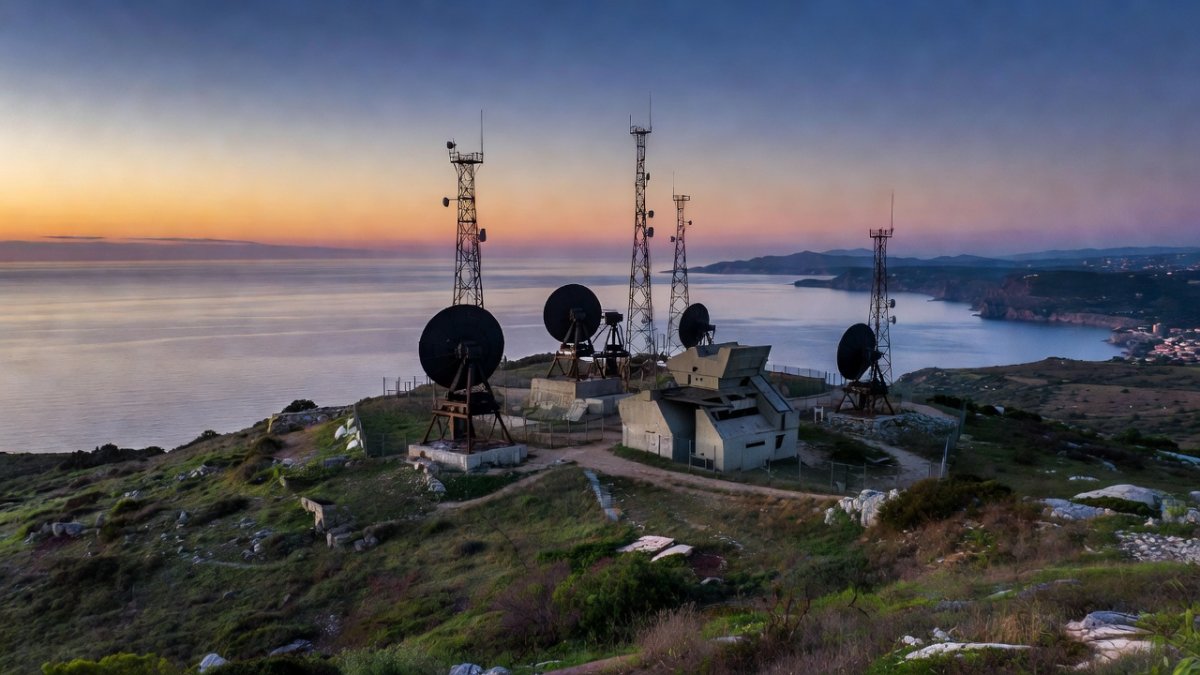
Assessing the Missile Threat: Real but Limited
How real is the physical threat to European soil? According to Sidharth Kaushal, a researcher at the Royal United Services Institute (RUSI) in London, the Iranian missile threat to Europe is "real, but limited." Iran possesses medium-range ballistic missiles, such as the Shahab series, which could theoretically reach US facilities in southern and southeastern Europe. However, Kaushal notes that these systems would have significant difficulty causing substantial damage at greater distances. The accuracy and payload diminish with range, making a mass-casualty or high-value destruction scenario less likely than a symbolic, yet highly provocative, strike.
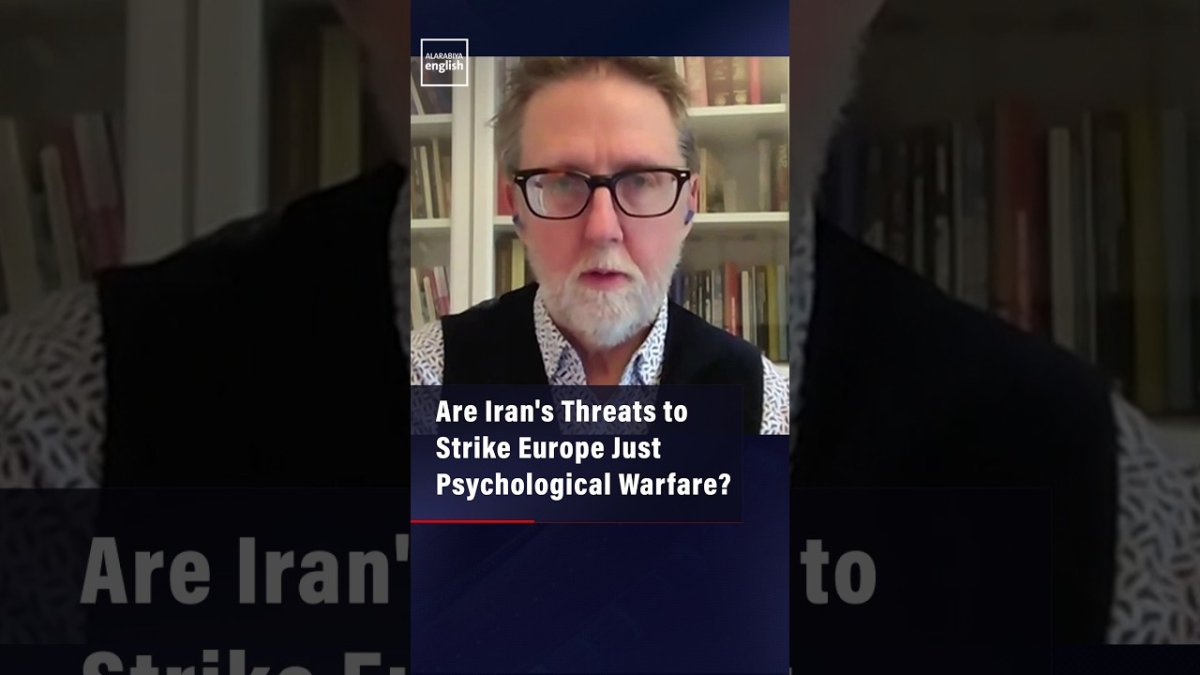
This technical reality is central to understanding Tehran's strategy. Professor Scott Lucas of University College Dublin (UCD), speaking to Al Arabiya English, framed these threats as primarily psychological warfare and deterrence. The goal is not necessarily to level a base in Bulgaria but to raise the political cost for European nations hosting US assets. By threatening to bring the war to Europe's doorstep, Iran aims to sow discord within the NATO alliance, encouraging member states to pressure Washington into de-escalation. It is a classic asymmetric strategy: using the threat of limited damage to achieve outsized political leverage.
The Hardliners Ascendant: Khamenei's New Appointments
The political atmosphere in Tehran is increasingly dominated by the voices of escalation. Last week, Iran's Supreme Leader, Ayatollah Mojtaba Khamenei, appointed hard-line figures to senior positions in the security apparatus and armed forces. This consolidation of power around the most uncompromising elements of the regime signals a definitive end to any internal debate about the merits of restraint. The IRGC commanders have been explicit: in the event of another full-scale conflict, Iran would abandon its previous strategy of targeting US military facilities and energy infrastructure in the Middle East and extend its strikes far beyond the region.
This is a direct warning to Washington and its allies. The IRGC has already warned Britain over the use of its military bases by the US, stating that "any base used to launch an attack against Iranian territory will be considered a legitimate target." The message is clear: there are no safe havens. The war, which began on 28 February 2026, following US-Israeli airstrikes that killed several Iranian officials including former Supreme Leader Ali Khamenei, has already shattered the old rules. The regime in Tehran is now signaling that it is prepared to shatter the remaining ones.
The "No Limits" Doctrine and the Undersea Threat
The rhetoric from Tehran is matched by a stated willingness to escalate without restraint. One source close to the regime indicated that Tehran is preparing a plan to further expand the conflict if Trump carries out his previous threats to attack Iranian infrastructure. Last month, Trump stated that Washington would destroy an Iranian bridge or power plant each time Iran attacked a vessel in the Strait of Hormuz. The Iranian response, according to a second source, is that Tehran would impose "no limits" on its response. "If the US goes too far, Iran will defend itself at any cost, move beyond the region and strike Europe as well," the source said.
Beyond the missile threat, Iran's armed forces have also considered attacking undersea fiber-optic cables in the Strait of Hormuz. This is a sophisticated and potentially devastating move. While blocking the strait—which Iran has already done, claiming sovereignty over it in late March—disrupts the flow of oil, severing the digital cables would disrupt global communications and financial data transfer. It is a threat designed to demonstrate that Iran can inflict pain on the global economy in ways that extend far beyond the energy markets, targeting the very infrastructure of the digital age.
Economic D-Day and the $100 Barrel Scenario
The economic dimension of this conflict is reaching a critical inflection point. On August 20, 2026, President Trump threatened Iran with the toughest sanctions operation yet, dubbing it "Economic D-Day." The markets have taken notice. Brent oil hit a four-week high just below $92 a barrel, and scenarios of $100 a barrel have returned to the trading floors. The war has already caused the largest-ever supply disruption of the global oil market, and the Gulf states—the UAE, Saudi Arabia, and Kuwait—which were struck by Iran and subsequently attacked it, are now fully embroiled in a conflict that threatens their own diversification strategies.
The cost of the war is staggering. As of June 2026, the cost to the US was estimated at $113.3 billion, and the Trump administration has asked for $1.5 trillion for the Pentagon over the next fiscal year. This is a war of attrition that is testing the economic resilience of both superpowers. For Tehran, the calculus is one of survival; for Washington, it is about credibility and the preservation of a global order that is being challenged on multiple fronts. The stalled negotiations over reopening the Strait of Hormuz and Trump's statement on Tuesday that there are "no talks or contacts taking place or scheduled" with Tehran suggest that the diplomatic off-ramp is firmly closed.
Regional Dynamics: The Gulf's Precarious Position
The war has fundamentally altered the strategic landscape of the Gulf. The initial assumption that the conflict could be contained to a US-Iran confrontation was shattered when the UAE, Saudi Arabia, and Kuwait launched attacks on Iran following strikes on their territory. This marks a significant escalation, transforming a bilateral conflict into a regional war. For the Gulf monarchies, the war has forced a painful reckoning. Their decades-long strategy of diversifying energy ties and defense partnerships has been tested to its limits. They are now active belligerents, not just hosts for US bases.
The Iranian threat to strike Europe is, in part, a message to these Gulf states. It demonstrates that Tehran is willing to globalize the conflict, raising the stakes for everyone involved. It also serves to remind the Gulf states that their security is inextricably linked to the outcome of this war. There is no neutral ground. The failure of the Islamabad Talks on 12-13 April and the subsequent US naval blockade have only deepened the sense of a region spiraling toward a wider catastrophe. The two-week ceasefire that began on 8 April is a distant memory, a brief pause in a conflict that seems destined to expand.
Conclusion: A Dangerous Game of Brinkmanship
The Iranian threats to strike Europe are a high-stakes gamble. On one hand, they are a form of psychological warfare, designed to exploit the political fault lines within NATO and to deter the US from escalating its attacks on Iranian infrastructure. On the other, they are a genuine contingency plan, a reflection of a regime that feels cornered and is preparing for the worst-case scenario. The appointment of hard-liners, the explicit warnings to Britain, and the consideration of attacks on undersea cables all point to a leadership that is serious about expanding the conflict if pushed.
The technical limitations of Iran's missile arsenal, as highlighted by RUSI's Kaushal, provide a sliver of reassurance. But in the fog of war, miscalculation is the greatest enemy. A single drone strike on a US base in Bulgaria or a missile hitting a populated area in Cyprus could trigger a response that neither side truly wants. The war has already cost the US over $113 billion and caused unprecedented disruption to global energy markets. The question is no longer whether Iran can strike Europe, but whether the political will in Tehran to do so will override the military reality of limited effectiveness. As the regime in Tehran increasingly views a resumption of operations as a matter of "when," the world watches with bated breath, hoping that the psychological warfare does not become a self-fulfilling prophecy.
By Malik Hassan, Staff Writer
This article was produced with AI-assisted research and editorial support. Reporting is based on sources cited in the article.
What's Your Reaction?
 Like
0
Like
0
 Dislike
0
Dislike
0
 Love
0
Love
0
 Funny
0
Funny
0
 Wow
0
Wow
0
 Sad
0
Sad
0
 Angry
0
Angry
0

Middle East Correspondent at Global1.News. Based in Beirut, covering politics, conflict, energy, and society across the Middle East. Brings context and depth to a region often reduced to headlines.












Comments (0)