
Iran's Dual Gambit: Gas Bonanza and MoU Defense Mask a Precarious Strategic Endgame
Iran’s Dual Gambit: Gas Bonanza and MoU Defense Mask a Precarious Strategic Endgame In the span of a single Sunday, the Islamic Republic of Iran projected two sharply contrasting images to the world.
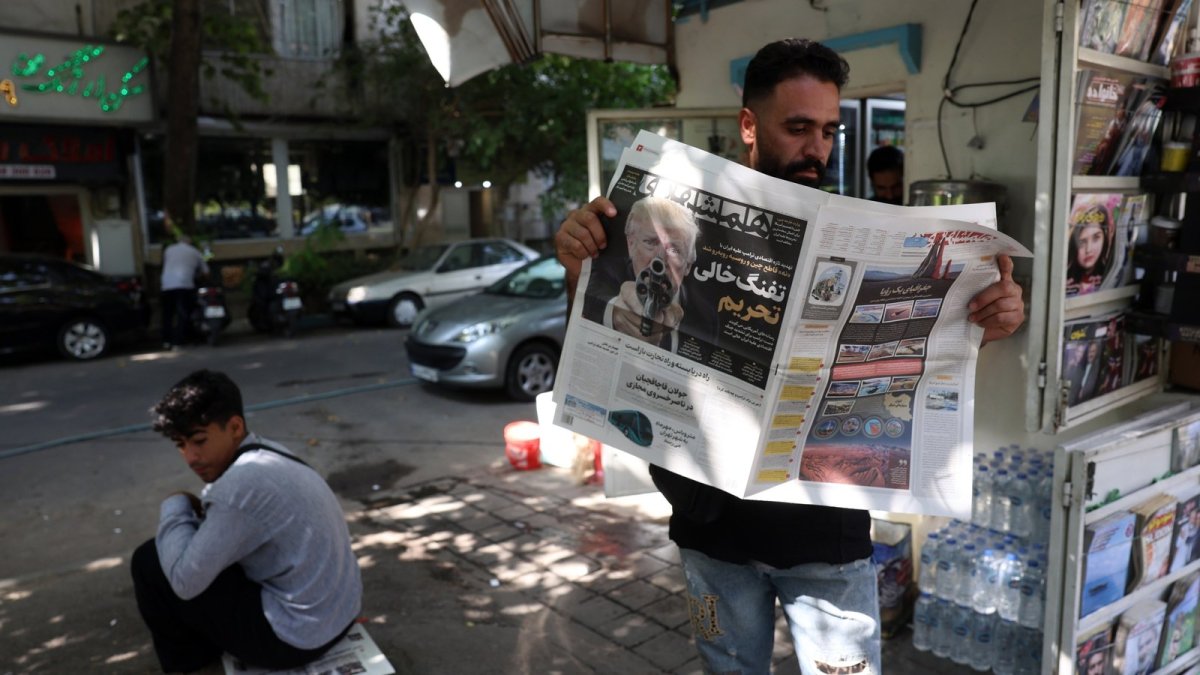
Iran’s Dual Gambit: Gas Bonanza and MoU Defense Mask a Precarious Strategic Endgame
In the span of a single Sunday, the Islamic Republic of Iran projected two sharply contrasting images to the world. From the energy ministry came news of a significant natural gas discovery in Fars Province—a rare piece of positive economic news nearly six months into a devastating war with the United States and Israel. From the presidency came a forceful defense of the June Memorandum of Understanding (MoU) with Washington, framed by President Masoud Pezeshkian as the only viable path out of a ruinous "neither war nor peace" limbo.
Taken together, the twin announcements reveal a Tehran that is simultaneously looking inward to shore up its battered economic foundations and outward to navigate a diplomatic tightrope, all while hard-line factions within the Supreme National Security Council (SNSC) threaten a "seismic" response to any further American pressure. The juxtaposition is not coincidental; it is the essence of Iran’s current strategic calculus.
A Wounded Energy Sector Grasps for Lifelines
The announcement by Oil Minister Mohsen Paknejad of a discovery exceeding 7.5 trillion cubic feet (212.4 billion cubic meters) in southern Fars Province is, on its face, a welcome development for a country whose energy infrastructure has been systematically degraded. Paknejad’s assertion that roughly 5,700 billion cubic feet could be extracted, and his emphasis that the gas is "sweet"—meaning lower development and operating costs—speaks to a desperate need for efficient, low-cost recovery.
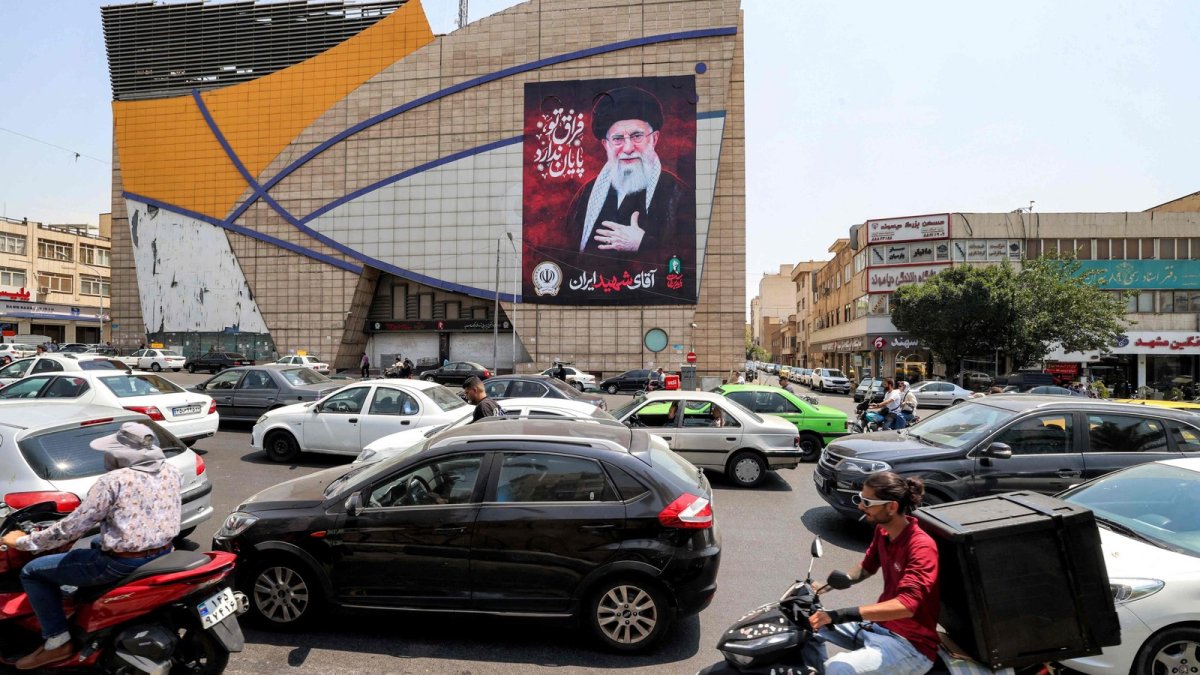
The numbers underscore the scale of the crisis. Iran’s prewar production of approximately 650 million cubic meters (mcm) per day, translating to about 8.4 trillion cubic feet annually, has been slashed by an estimated 230 mcm per day since the war began in late February. A senior government official said in July that Tehran hoped to restore about 100 mcm per day of capacity "within the coming months." The new discovery, while strategically significant for the long term, does little to address the immediate shortfall. It is a signal of resilience, but also a tacit admission of the profound damage inflicted by Israeli and American strikes.
The timing is also critical. With the 60-day deadline of the MoU having expired in mid-August with no breakthrough, Tehran faces the prospect of a new wave of U.S. sanctions—what President Donald Trump has vowed will be an "unprecedented" level of economic warfare. The gas discovery offers a sliver of hope for domestic consumption and potential future exports, but it cannot offset the crushing weight of a naval blockade and the flight of foreign capital. As Pezeshkian himself noted, "Capital and money are extremely sensitive to risk. We have to remove this risk from the country." A gas field, however rich, does not remove that risk.
Pezeshkian’s Political Tightrope
Pezeshkian’s Sunday speech, published by state-run IRNA, was a masterclass in political survival. By asserting that the MoU contains "not a single provision... that amounts to capitulation," he is attempting to preempt hard-line criticism while simultaneously legitimizing a deal that has yet to deliver any tangible relief. His reference to the SNSC’s belief that the memorandum represents the best possible agreement based on "dignity, wisdom and the national interest" is a direct appeal to the institution that holds ultimate sway over Iran’s foreign policy.
The president’s framing is delicate. He is careful to defer to the supreme leader, stating, "The supreme leader sets the policies, and we will follow that path." This is not mere rhetoric; it is a recognition that his political survival depends on not being seen as outmaneuvering the clerical establishment. By linking the MoU to Iran’s economic prospects, Pezeshkian is making a pragmatic argument: without a deal, there is no investment, and without investment, there is no recovery. This is a starkly different message from that of the newly empowered hard-liners.
The Hard-Line Counterweight: Rezaei’s Warning
The counterpoint to Pezeshkian’s conciliatory tone came from Mohsen Rezaei, the newly appointed head of the SNSC. In his most extensive public statement since his appointment this month—a move widely seen as hardening Tehran’s stance—Rezaei issued a chilling warning to Iran’s neighbors. "If (Trump) wants to do something, we will retaliate in a seismic manner," he said, specifically threatening to target oil-shipping routes out of the Persian Gulf and any alternatives to the Strait of Hormuz if regional states join the American economic war.
Rezaei’s rhetoric is a reminder that the MoU is not a unified national project but a contested political battlefield. His appointment signals that the supreme leader is hedging his bets, allowing Pezeshkian to pursue diplomacy while empowering a hard-liner to threaten escalation. This dual-track approach is classic Iranian strategy: keep the diplomatic door ajar while brandishing the threat of chaos. The reference to "alternatives to the Strait of Hormuz" is particularly pointed, as it suggests Iran is prepared to target the very infrastructure—such as pipelines and ports in the UAE or Saudi Arabia—that could circumvent the strait.
The Strait of Hormuz: The Unresolvable Core
The central impasse remains the Strait of Hormuz. The MoU’s ambitious 60-day timeline, signed in June, was always a stretch, but the complete lack of compromise on the strait’s reopening has brought the process to a standstill. For Washington, the strait’s closure is an unacceptable act of economic warfare against the global economy. For Tehran, it is its single most potent piece of leverage—a weapon that can inflict pain on the entire world, not just its adversaries.
This is the crux of the strategic deadlock. The United States cannot accept a deal that leaves Iran with the ability to threaten the world’s most critical energy chokepoint. Iran cannot accept a deal that strips it of its primary deterrent. The MoU, as drafted, appears to have glossed over this fundamental contradiction, and its expiration has left both sides in a dangerous limbo. Pezeshkian’s "neither war nor peace" description is apt; it is a state of sustained, low-grade conflict with the constant risk of a catastrophic flare-up.
Regional Mediation: Pakistan’s Quiet Diplomacy
Into this void steps Pakistan. The announcement that Field Marshal Asim Munir will lead an official delegation to Tehran on Monday, following a phone call with Foreign Minister Abbas Araghchi, signals a renewed push for de-escalation. Two regional officials, speaking on condition of anonymity, confirmed that the visit is part of Islamabad’s ongoing efforts to urge both the United States and Iran to return to the negotiating table.
Pakistan’s role is a fascinating subplot. As a nuclear-armed state with deep ties to both the Gulf monarchies and China, Islamabad has a vested interest in regional stability. Munir’s repeated visits to Tehran since Prime Minister Shehbaz Sharif assigned him the mediation file suggest a sustained, high-level commitment. However, Pakistan’s leverage is limited. It cannot compel either Washington or Tehran to compromise on the strait, and its own economic fragility makes it a less-than-ideal guarantor of any potential deal. Still, its presence offers a potential off-ramp, a channel of communication that could prove vital if the situation deteriorates further.
Strategic Calculus and Second-Order Effects
For Iran, the gas discovery and the MoU defense are two sides of the same coin: the struggle for economic survival. The discovery is a long-term asset, but it does nothing to alleviate the immediate pain of sanctions and blockade. The MoU is a potential short-term solution, but its implementation is blocked by the Hormuz impasse and internal political divisions.
The second-order effects for the region are profound. A failure to resolve the standoff could lead to a renewed spike in global energy prices, as the threat to Hormuz remains ever-present. It could also embolden hard-liners in Tehran who argue that diplomacy is futile and that only resistance will force the United States to back down. Conversely, a breakthrough—however unlikely—could unlock a wave of investment in Iran’s energy sector, reshaping the regional balance of power.
The Gulf states, particularly Saudi Arabia and the UAE, are watching with a mixture of fear and opportunism. They fear the disruption of oil shipping routes but also see an opportunity to expand their own market share if Iran remains crippled. Turkey, with its own energy ambitions and complex relationship with Tehran, is also a key player, as is Russia, which has its own reasons to see the U.S.-Iran standoff continue.
Conclusion: A Precarious Path Forward
Iran is at a crossroads. The gas discovery in Fars Province is a reminder of its vast natural wealth, but it is a wealth that cannot be realized without peace. Pezeshkian’s defense of the MoU is a recognition that the status quo is unsustainable, but he faces powerful forces within his own government that see escalation as the only viable path.
The expiration of the MoU’s deadline has not ended the diplomatic process, but it has entered a more dangerous phase. With Rezaei threatening "seismic" retaliation and Trump vowing unprecedented economic warfare, the margin for error is shrinking. Pakistan’s mediation efforts offer a glimmer of hope, but they are a fragile thread in a tapestry of mutual distrust.
The coming weeks will be critical. Will the United States and Iran find a way to bridge the Hormuz gap, or will they slide into a deeper conflict? The answer will determine not only the fate of the Iranian economy but the stability of the entire Middle East and the global energy markets that depend on it. For now, Tehran is projecting strength—a new gas field, a defiant president—but the underlying reality is one of profound vulnerability.
This article was produced with AI-assisted research and editorial support. Sources: Daily Sabah Middle East (Aug. 23, 2026).
By Malik Hassan, Staff Writer
What's Your Reaction?
 Like
0
Like
0
 Dislike
0
Dislike
0
 Love
0
Love
0
 Funny
0
Funny
0
 Wow
0
Wow
0
 Sad
0
Sad
0
 Angry
0
Angry
0

Middle East Correspondent at Global1.News. Based in Beirut, covering politics, conflict, energy, and society across the Middle East. Brings context and depth to a region often reduced to headlines.









Comments (0)