
Former Israeli premier accuses Netanyahu of preparing ground for war that could delay elections
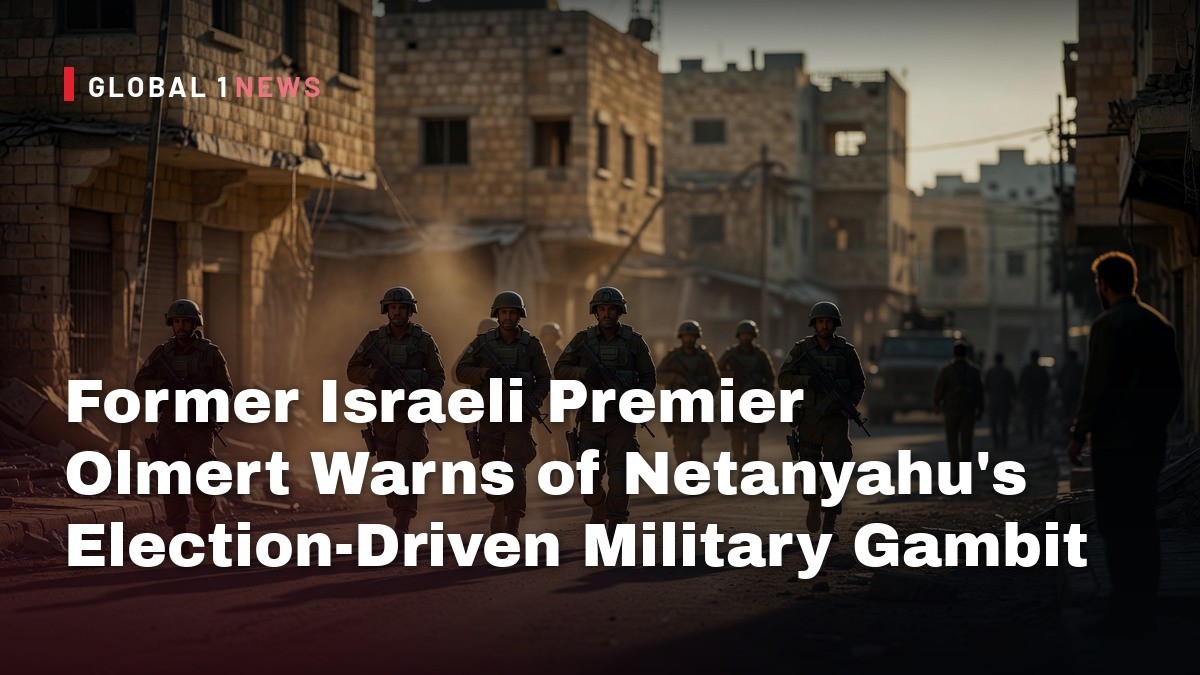
Former Israeli Prime Minister Ehud Barak has launched a stark warning against Prime Minister Benjamin Netanyahu, accusing him of “laying the groundwork” for a war that could postpone the nation’s upcoming general elections on 27 October 2026.
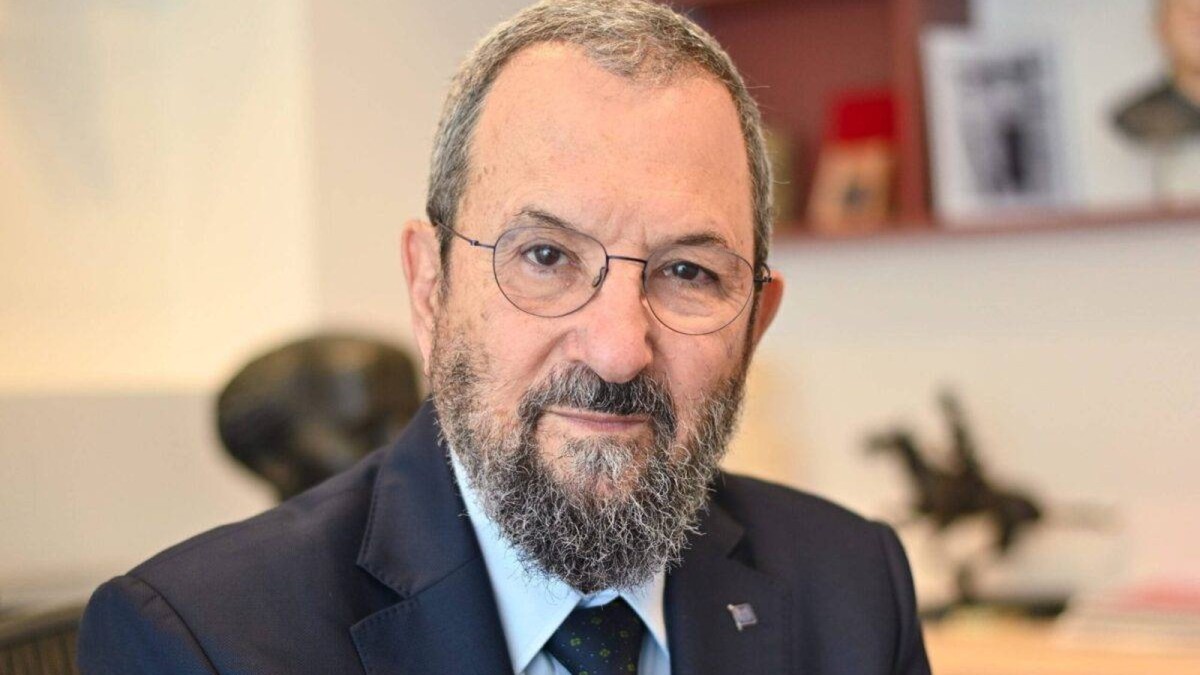
Former Israeli Prime Minister Ehud Barak has launched a stark warning against Prime Minister Benjamin Netanyahu, accusing him of “laying the groundwork” for a war that could postpone the nation’s upcoming general elections on 27 October 2026. Speaking to Channel 12, Barak said the current government is preparing “the infrastructure to go to war in a way that would postpone the elections,” a claim that has intensified an already heated domestic debate over the use of security concerns as political leverage. While the political drama unfolds, ordinary Israelis and Palestinians alike bear the brunt of an escalating security environment that threatens to deepen human suffering across the region.
Barak’s Accusations and the Election Context
Barak’s remarks came at a moment when the Israeli public is grappling with the lingering trauma of the Oct. 7, 2023 attacks and the subsequent military campaigns in Gaza, Lebanon and Syria. He urged voters to “do everything to remove him from power on Oct. 27, once and for all,” framing the election as a decisive juncture for Israel’s democratic future. The former premier’s language was vivid, describing Netanyahu’s habit of deception as “lies as he breathes, as he eats French fries, and as he leaves a restaurant without paying.” Such colourful condemnation underscores the intensity of the political rivalry and the perception that security narratives are being weaponised for electoral gain.
Netanyahu, for his part, has warned that Israel could face attacks ahead of the election and has convened senior security officials to discuss developments on “several fronts.” He has also threatened severe retaliation for the recent Flydubai incident, saying that whoever orchestrated the attack on flight FZ1073 from Dubai to Tel Aviv on 30 September would “pay a very heavy price.” The incident has become a flashpoint in the campaign, with opponents accusing the prime minister of exploiting security crises to shore up his political standing.
The Flydubai Incident and Its Political Reverberations
The Flydubai episode, in which a flight was allegedly targeted, has amplified fears of a broader escalation. Netanyahu announced an investigation to determine whether the perpetrator acted on instructions from another party, signalling a willingness to pursue punitive measures against external actors. This stance has been seized upon by political rivals, who argue that the prime minister is using the incident to justify a hard‑line security posture that could justify further military action.
Barak’s criticism highlights a broader concern: that security incidents are being linked to electoral calculations. In August, he accused Netanyahu of seeking to “reach Election Day amid heightened security tension and public fear,” suggesting that the timing of any escalation may be deliberately aligned with the campaign calendar. For ordinary citizens, the intertwining of security and politics deepens anxiety, as the prospect of war becomes a looming backdrop to daily life.
Military Operations on Multiple Fronts
Beyond the political theatre, Israeli forces continue operations across several theatres. The article notes ongoing military activity in the Gaza Strip, Lebanon and Syria. While specific details of these operations are not provided, the mention of “several fronts” indicates a sustained level of engagement that strains both military resources and civilian resilience. In Gaza, the humanitarian situation remains dire, with limited access to essential services and a population living under constant threat of bombardment.
In Lebanon and Syria, the dynamics are equally complex, involving cross‑border tensions and the presence of armed groups that Israel perceives as threats. The continuation of these operations, especially in the lead‑up to an election, raises questions under international humanitarian law about proportionality and the protection of civilians. The human cost—displacement, loss of life, and psychological trauma—remains largely invisible in political rhetoric, yet it is the lived reality for countless families.
Domestic Political Landscape and Opposition Coordination
Barak’s statements reflect a broader coalition of opposition parties that have intensified coordination in an effort to replace Netanyahu’s government through the ballot box. The upcoming election will be Israel’s first general vote since the Oct. 7, 2023 attacks, marking a critical moment for democratic renewal. Opposition leaders argue that the current administration’s reliance on security narratives undermines democratic debate and marginalises alternative voices.
The opposition’s push to unseat Netanyahu is framed not only as a political contest but also as a moral imperative to prevent the further militarisation of Israeli politics. By linking the prospect of war to electoral outcomes, they aim to expose what they see as a dangerous conflation of national security with partisan advantage. This strategy seeks to mobilise voters who are weary of conflict and desire a return to civilian governance focused on peace and reconstruction.
Human Rights Implications of a Potential War
If the warnings of Barak prove accurate and Israel moves toward a broader conflict, the human rights implications would be severe. International law obliges parties to distinguish between combatants and civilians, to take all feasible precautions to minimise civilian harm, and to ensure that any use of force is proportionate to the military advantage sought. The continuation of operations in densely populated areas such as Gaza raises serious concerns about compliance with these principles.
For Palestinians living under occupation, the prospect of an expanded war threatens to exacerbate already dire conditions—restricted movement, limited access to medical care, and the constant spectre of displacement. Israeli civilians, too, face the trauma of rocket fire and the psychological toll of living under the threat of attacks. The intertwining of political ambition with military escalation risks turning ordinary people into pawns in a high‑stakes contest for power.
International Reactions and the Risk of Regional Spill‑over
The regional context cannot be ignored. Israel’s military actions in Lebanon and Syria have historically drawn the attention of neighbouring states and non‑state actors, raising the spectre of a wider conflagration. While the source material does not detail international responses, the mention of “several fronts” suggests a volatile security environment that could draw in external powers, further complicating diplomatic efforts to de‑escalate.
International human‑rights organisations and foreign governments have repeatedly called for restraint and for the protection of civilian populations. As the election approaches, any perceived escalation may attract heightened scrutiny, potentially influencing diplomatic relations and aid flows. The stakes are high not only for the immediate combatants but also for the broader regional stability that underpins the lives of millions.
Looking Ahead: The Election as a Pivot Point
With the election scheduled for 27 October 2026, the coming weeks will be pivotal. Barak’s call to “remove him from power…once and for all” underscores the urgency felt by opposition figures who view the ballot as the last viable avenue to alter the country’s trajectory. Whether the election will be postponed, as Barak warns, depends on the unfolding security situation and the government’s willingness to pursue a path that could sideline democratic processes.
For the people of Israel and Palestine, the outcome of this political contest will shape the daily realities of security, freedom of movement, and the possibility of a future where conflict is no longer the default. As the nation stands at the crossroads of war and democracy, the human cost of each decision becomes ever more stark, reminding us that behind every headline lies a community yearning for peace, justice, and the right to live without fear.
This article was produced with AI-assisted research and editorial support. Reporting is based on the source material cited below. Sources: Middle East Monitor; middleeastmonitor.com; Global1.News (03 October 2026).
By Fatima Al-Rashid, Staff Writer
What's Your Reaction?
 Like
0
Like
0
 Dislike
0
Dislike
0
 Love
0
Love
0
 Funny
0
Funny
0
 Wow
0
Wow
0
 Sad
0
Sad
0
 Angry
0
Angry
0
Gulf/MENA Correspondent at Global1.News. Based in Doha, covering Gulf politics, energy markets, diplomacy, and development across the Middle East and North Africa. Tracks the economic transformation of the Gulf states.










Comments (0)