
MBS in Paris: Saudi Soft Power, Esports & France's Gulf Pivot
The image of Crown Prince Mohammed bin Salman seated beside President Emmanuel Macron at a Parisian esports arena is not merely a ceremonial nod to youth culture; it is a geopolitical transaction unfolding in real-time.
The image of Crown Prince Mohammed bin Salman seated beside President Emmanuel Macron at a Parisian esports arena is not merely a ceremonial nod to youth culture; it is a geopolitical transaction unfolding in real-time. As the Counter-Strike 2 Grand Final concluded the Esports World Cup (EWC) on Sunday evening, the subtext was clear: Riyadh is exporting its soft power and sovereign capital into the heart of Europe, while Paris is actively courting Gulf leverage as the transatlantic security umbrella shows visible wear. This two-day state visit, marking the centenary of Franco-Saudi diplomatic relations, is a strategic recalibration for both nations, set against the grinding backdrop of the Gaza war and a volatile energy market.
Paris and Riyadh: A Strategic Pivot Beyond the Photo-Op
Paris, France – August 24, 2026 — The visit, which began on Sunday, August 23, is a carefully choreographed display of mutual necessity. For Saudi Arabia, it is an opportunity to cement European investment allies for Vision 2030 and secure diplomatic cover on the Palestinian file. For France, it is a bid to attract Gulf capital, secure energy supply chains, and reassert its relevance as a Middle East power broker. The €250 million (US$277 million) Saudi investment to organize EWC Paris 2026, confirmed by the French government, is the tangible anchor of this relationship, projecting a €600 million economic impact for France. But the real prize lies in the bilateral agreements on health, transport, and energy slated for Monday, which a French presidency official says underscore the "strength of the Paris-Riyadh relationship."
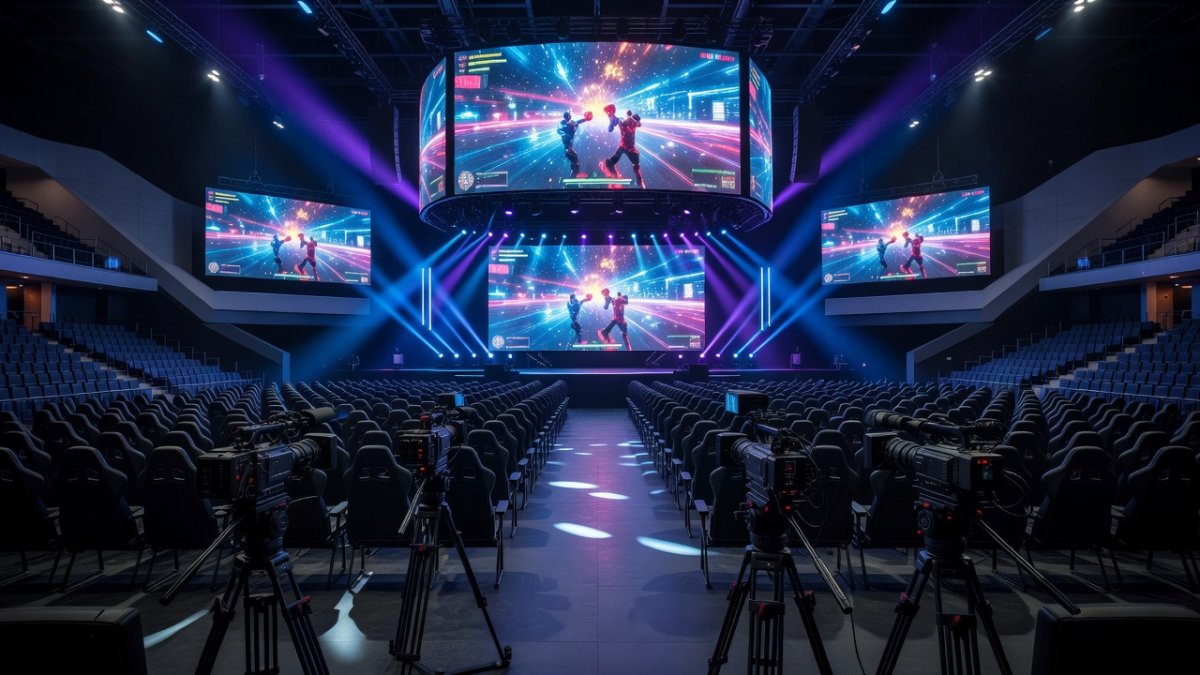
The Esports World Cup: A Trojan Horse for Soft Power
The decision to hold the EWC outside Saudi Arabia for the first time is a masterstroke in soft power projection. Riyadh officially remains the competition's "permanent home," with the Esports Nations Cup still scheduled in the Kingdom later in 2026. However, by allowing Paris to host the 2026 finale—featuring a record US$75 million prize pool across 25 tournaments—MBS is signaling that Saudi Arabia is not a pariah state to be isolated, but a global hub capable of franchising its cultural influence. This is a deliberate strategy to normalize Saudi leadership in a domain dominated by Western youth culture. The presence of Falcons Esports, who clinched the Club Championship on August 22, serves as a reminder that Saudi entities are not just financiers but competitors on the global stage.
This move aligns perfectly with the Public Investment Fund's (PIF) aggressive diversification strategy. With net profit more than doubling to US$17 billion in 2025 on revenue of US$120 billion, the PIF is deploying capital with geopolitical intent. The esports investment is not merely an economic venture; it is a diplomatic tool designed to engage European youth and policymakers alike, bypassing traditional media narratives about the Kingdom's human rights record. By hosting the event in Paris, MBS is effectively buying a seat at the table of European cultural diplomacy, leveraging the universal language of gaming to build bridges that political discourse cannot.
France's Calculus: Gulf Capital and Energy Security
President Macron's willingness to roll out the red carpet for MBS is a calculated response to a shifting global order. With Washington's posture in the Middle East increasingly unpredictable and the war in Gaza entering a dangerous new phase, Paris sees Riyadh as an indispensable partner. France's energy security, historically reliant on nuclear power, still requires stable hydrocarbon imports and investment in future technologies. The agreements on energy and transport expected on Monday are likely to cover everything from hydrogen development to arms sales, a sector where France has long been a key supplier to the Kingdom. The French presidency is clearly prioritizing economic pragmatism over ideological discomfort, a stance that has drawn criticism from human rights groups but is viewed as essential for national interest.
Furthermore, Paris is seeking to leverage its relationship with Riyadh to bolster its own diplomatic initiatives. The Franco-Saudi initiative launched last year to revive the two-state solution, which won broad support at the UN and prompted France and Britain to recognize the Palestinian state, is a cornerstone of this strategy. By hosting MBS, Macron is signaling to the Arab world that France remains a viable alternative to the United States as a mediator. The visit provides a platform to push for a ceasefire in Gaza and to coordinate a post-war reconstruction plan, a role that would significantly enhance French prestige and influence in the region.
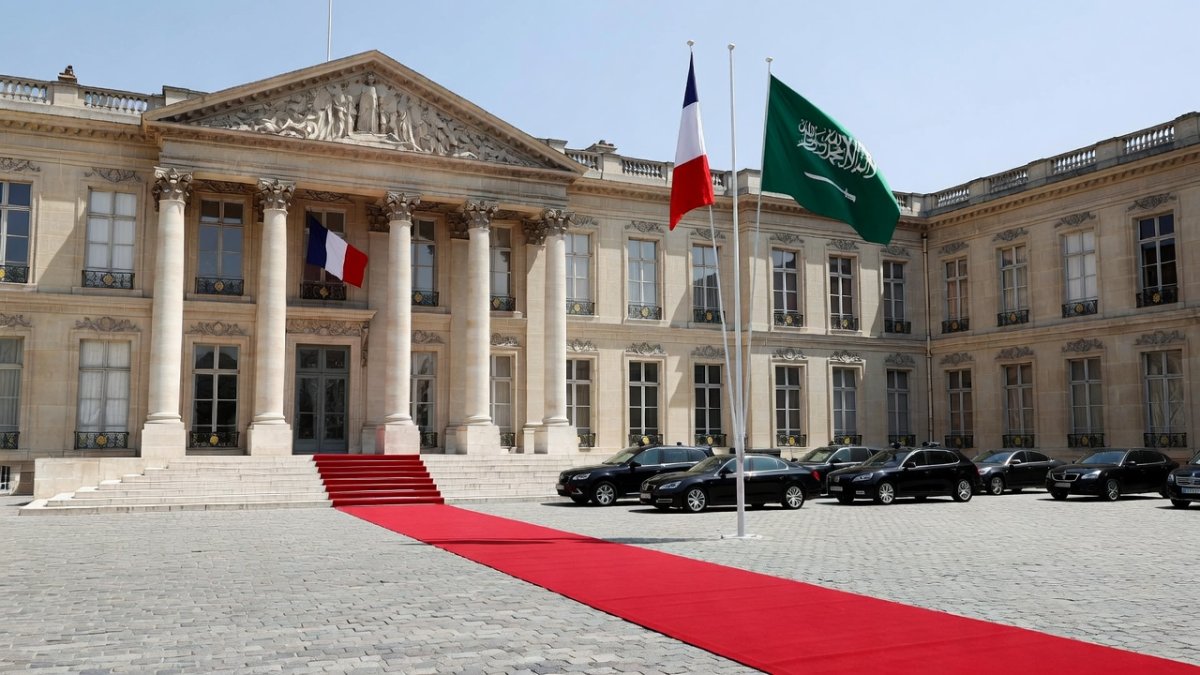
The Centenary Context: From 1926 Recognition to a Modern Axis
The historical resonance of this visit cannot be overstated. In 1926, France formally recognized King Abdulaziz's sovereignty over Hejaz and Najd, laying the foundation for a century of complex relations. This centenary is being used by both sides to frame their current partnership as a natural evolution of a deep-rooted alliance. The relationship has weathered colonial-era tensions, the oil embargo of 1973, and the complexities of the post-9/11 world. Today, it spans AlUla heritage development, where France has invested heavily in archaeological and tourism projects, to defense contracts and cutting-edge energy research. The symbolic weight of the centenary provides a narrative of continuity and trust, allowing both leaders to present their current cooperation as historically inevitable.
This historical depth is crucial for MBS, who is keen to position Saudi Arabia as a nation with deep global ties, not just an oil-rich upstart. The French connection offers a counterbalance to the Kingdom's heavy reliance on the United States and China. By celebrating a century of relations with a major European power, Riyadh is diversifying its diplomatic portfolio, ensuring that it has multiple partners to navigate the complexities of a multipolar world. For Macron, the centenary is an opportunity to showcase France's enduring global reach, a key pillar of his foreign policy doctrine of "strategic autonomy" from Washington.
Regional Dynamics: Gaza, Iran, and the Gulf's Diplomatic Offensive
The visit occurs against a volatile regional backdrop. The war in Gaza continues to destabilize the Middle East, with no clear end in sight. Saudi Arabia, alongside France, has been at the forefront of diplomatic efforts to revive the two-state solution, a direct counter to the Israeli government's opposition to Palestinian statehood. This initiative is a significant shift in Saudi policy, moving from the Abraham Accords framework—which Riyadh has not joined—to a more assertive role in shaping the post-war order. By aligning with France on this issue, MBS is signaling that Saudi Arabia will not normalize relations with Israel without a credible pathway to Palestinian statehood, a stance that resonates with Arab public opinion and strengthens his position as a leader of the Islamic world.
Simultaneously, the visit sends a message to Tehran. With heightened Iran tensions and the ongoing nuclear standoff, France and Saudi Arabia are coordinating on a unified front. Paris has been a key player in the nuclear negotiations, and Riyadh views French involvement as a more palatable alternative to a unilateral US approach. The energy agreements signed during this visit are likely to include provisions for strategic reserves and supply chain security, a direct hedge against potential disruptions in the Strait of Hormuz. This Franco-Saudi axis on Iran is a critical component of the broader realignment of Middle East alliances, moving away from the binary US-Iran confrontation toward a more nuanced, multi-lateral diplomatic landscape.
Great Power Competition: The European Counterweight
MBS's visit to Paris must be viewed through the lens of great power competition. While the United States remains Saudi Arabia's primary security guarantor, Riyadh is actively cultivating relationships with other major powers to maximize its strategic autonomy. The deepening ties with France, and by extension the European Union, provide a counterweight to both Washington's conditional support and Beijing's growing economic influence. The PIF's investments in European technology, sports, and infrastructure are part of a deliberate strategy to bind European interests to Saudi success. This is not a zero-sum game for the US, but it does signal that Riyadh is no longer a passive actor in the international system.
For France, this relationship is a key component of its "strategic autonomy" agenda, aimed at reducing Europe's dependence on the US for security and on China for economic growth. By positioning itself as the primary European partner for Saudi Arabia, France is enhancing its own geopolitical weight within the EU and on the global stage. The EWC investment is a perfect example of this: it brings French economic benefits, engages French youth, and cements a cultural bond that transcends traditional diplomacy. This is a long-term play for influence, one that both leaders are betting will pay dividends in the decades to come.
Economic Implications: Vision 2030 and the Global Investment Surge
The economic dimensions of this visit are staggering. The PIF's financial firepower, with US$120 billion in revenue, is being deployed to accelerate Vision 2030, the ambitious plan to diversify the Saudi economy away from oil. France is a key target for this investment, with the EWC deal being just the tip of the iceberg. The agreements on health and transport are likely to involve significant Saudi investment in French infrastructure and medical technology, providing a much-needed boost to the French economy. This is a symbiotic relationship: Saudi Arabia needs European expertise and technology to modernize its economy, while France needs Gulf capital to fund its own development and maintain its social model.
The projected €600 million economic impact of the EWC is a clear demonstration of this symbiosis. For Riyadh, it validates the esports strategy as a viable economic engine, not just a diplomatic tool. For Paris, it provides a tangible return on investment for hosting the event. This economic interdependence is the glue that holds the political relationship together, ensuring that both nations have a vested interest in the other's success. As the global economy faces headwinds from inflation and geopolitical instability, this Franco-Saudi economic axis offers a model for resilient, mutually beneficial partnership.
Conclusion: A New Chapter in Gulf-European Relations
The MBS visit to Paris is far more than a diplomatic formality; it is a strategic signal that the Gulf-European relationship is entering a new, more mature phase. Saudi Arabia is no longer content to be a passive recipient of Western security guarantees; it is an active investor and diplomatic player shaping the regional order. France, for its part, is seizing the opportunity to reassert its influence in the Middle East, leveraging its historical ties and economic appeal to become an indispensable partner for the Gulf states. The convergence of interests on Gaza, Iran, and energy security creates a powerful foundation for a long-term alliance.
As the war in Gaza grinds on and the global order remains in flux, the Paris-Riyadh axis will become increasingly important. It offers a potential pathway for resolving the Israeli-Palestinian conflict through the two-state solution, a framework for containing Iranian ambitions, and a model for economic cooperation that benefits both sides. The esports arena may have been the stage, but the real game is being played in the corridors of power, where the future of the Middle East and Europe's role in it are being negotiated. This visit has set the stage for a deeper, more strategic partnership that will shape the region for years to come.
By Malik Hassan, Staff Writer
This article was produced with AI-assisted research and editorial support. Reporting is based on sources cited in the article.
What's Your Reaction?
 Like
0
Like
0
 Dislike
0
Dislike
0
 Love
0
Love
0
 Funny
0
Funny
0
 Wow
0
Wow
0
 Sad
0
Sad
0
 Angry
0
Angry
0
Middle East Correspondent at Global1.News. Based in Beirut, covering politics, conflict, energy, and society across the Middle East. Brings context and depth to a region often reduced to headlines.









Comments (0)