
Thailand's Landmark Amnesty Law Takes Effect Monday - But Article 112 Prisoners Left Behind
Folks, if you have been watching Thailand from afar and wondering if the country was ever going to put the last two decades of chaos behind it, grab a seat. Because Sunday, August 23, 2026, just changed the game. The Royal Gazette published the Peaceful Society Promotion Act 2026 today, and by tomorrow morning, Monday, August 24, this thing is the law of the land. This is not a small tweak. This is not a symbolic gesture.
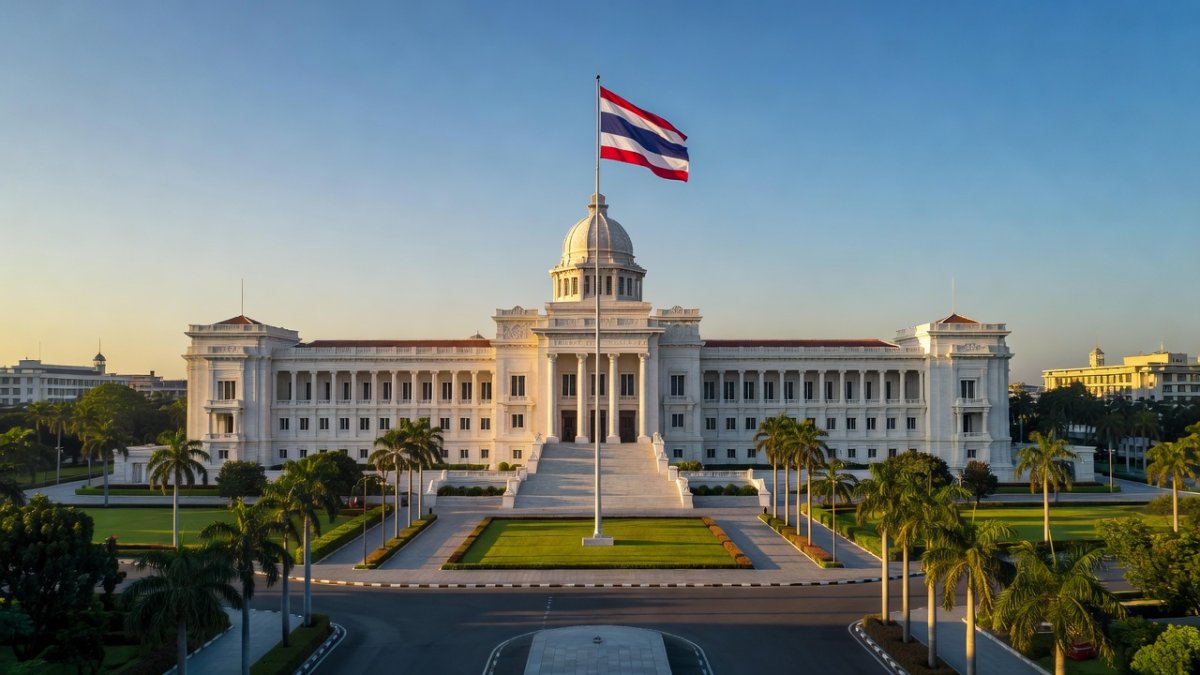
Folks, if you have been watching Thailand from afar and wondering if the country was ever going to put the last two decades of chaos behind it, grab a seat. Because Sunday, August 23, 2026, just changed the game. The Royal Gazette published the Peaceful Society Promotion Act 2026 today, and by tomorrow morning, Monday, August 24, this thing is the law of the land. This is not a small tweak. This is not a symbolic gesture. This is the largest amnesty in Thai history, covering a twenty-year window of political offenses. We are talking about hundreds of activists and protesters who were caught in the meat grinder of Thai politics finally getting a way out. But—and you knew there was a but coming—this sweeping act of mercy has a massive blind spot. It leaves out the two most explosive categories in the entire Thai legal system: lese-majeste, the infamous Article 112, and corruption. So, is this a historic step toward reconciliation, or is it a half-measure designed to protect the powerful while leaving the young and the vocal out in the cold? Let’s break it down, folks, because this story has more layers than a Bangkok traffic jam.
The Big Reveal: What Exactly Happened Today?
Let’s get the facts straight, because in the world of breaking news, precision is everything. The Peaceful Society Promotion Act 2026, officially titled the Act on Promoting a Peaceful Society, was endorsed by His Majesty the King and published in the Royal Gazette on Sunday, August 23, 2026. That is today, folks. And the effective date is not some distant future—it is tomorrow, Monday, August 24, 2026. This law grants amnesty for political offenses committed between January 1, 2005, and July 16, 2025. Do the math with me: that is a twenty-year window. Twenty years of protests, coups, counter-coups, court rulings that threw out prime ministers, and mass street movements. This is not a pardon for a handful of people. This is a blanket amnesty covering hundreds of activists and protesters who were found guilty of participating in political demonstrations over the past two decades. The House of Representatives approved the amended bill back on July 8, 2026, and now it is officially on the books. But here is the kicker, folks: this law does not just wipe the slate clean for those convicted. It also halts pending criminal proceedings that fall under its scope. And for those who were stripped of their political rights, this law gives them back the ability to run for public office again. That is a massive deal. We are talking about people who were effectively banished from the political arena now being allowed back into the game.
Who Gets to Walk Free? The 20-Year Window Explained
Let’s talk about who actually benefits from this. The law covers offenses committed between January 1, 2005, and July 16, 2025. That is a specific and deliberate timeframe. Think about what happened in that period. You had the 2006 coup that ousted Thaksin Shinawatra. You had the yellow shirt and red shirt protests that paralyzed Bangkok. You had the 2014 coup that brought the military to power. And then you had the 2020-2021 youth-led protests, the Ratsadon movement, which saw thousands of young people take to the streets demanding reform of the monarchy and the military. Those young protesters were hit with a wave of mass arrests. Many of them are still in prison or facing trial. This amnesty is designed to sweep up those cases. The Thai Lawyers for Human Rights, or TLHR, estimated as of July 3, 2026, that there were about 55 political prisoners in the country. Of those, around ten were expected to benefit from this amnesty bill. Ten. Let that sink in. Out of 55 political prisoners, only about ten are going to get relief from this law. That is a fraction. And the reason is simple: many of those prisoners are not just charged with protest-related offenses. They are charged under Article 112, the lese-majeste law, and that is explicitly excluded from this amnesty. So, while the law is being sold as a grand reconciliation, the numbers tell a different story. It is a partial victory, at best.
The Elephant in the Room: Article 112 and the Corruption Exclusion
Now, folks, we have to talk about the exclusions, because this is where the controversy explodes. The Peaceful Society Promotion Act 2026 explicitly excludes two categories of offenders: those sentenced for corruption and those convicted under lese-majeste, which is Article 112 of the Criminal Code. Article 112 is the law that shields the King and the Royal Family from criticism. It is one of the most stringent laws of its kind in the world, and human rights organizations like Amnesty International and the Thai Lawyers for Human Rights have long documented how it has been used to suppress dissent. Youth protest leaders from the 2020-2021 movement were among those jailed under this law. And now, this amnesty—which is supposed to be about healing the nation—leaves them out. The critics are furious. They are saying, how can you call this a "Peaceful Society Promotion Act" when the very people who were jailed for speaking out are still behind bars? But the supporters of the law have a different take. They say this is a historic step toward reconciliation after two decades of division. They argue that you cannot do everything at once, and that this is a first step. But let me tell you, folks, when you leave out the most politically sensitive cases, it is hard to call this a clean break. It looks more like a calculated move to protect the institution of the monarchy while offering a bone to the broader protest movement.
The Political Chess Game: Pheu Thai, Thaksin, and the Charges That Loom
You cannot understand this law without understanding the political chess game behind it. The ruling party is Pheu Thai, and its de facto leader is Thaksin Shinawatra. Now, here is where it gets spicy, folks. Thaksin himself is facing lese-majeste and computer-crime charges. That is right—the man who is the puppet master of the ruling party is personally entangled in the very law that this amnesty excludes. So, when Pheu Thai backs this law but keeps Article 112 off the table, you have to ask: are they protecting the monarchy, or are they protecting themselves? The answer is probably both. Thaksin has been a polarizing figure in Thai politics for two decades. He was ousted in a coup in 2006, and his return to Thailand has been a saga of legal battles and political maneuvering. By excluding Article 112 from the amnesty, Pheu Thai is signaling to the conservative establishment and the military that they are not going to touch the monarchy. But at the same time, they are trying to appeal to their base by offering amnesty to the broader protest movement. It is a tightrope walk, and the rights groups are not buying it. They see this as a self-serving move that leaves the most vulnerable political prisoners—the young activists who dared to criticize the monarchy—out in the cold.
The 2020-2021 Youth Protests: The Ghosts at the Table
Let’s take a step back and remember what sparked all of this. The 2020-2021 youth-led protests, known as the Ratsadon movement, were a watershed moment in Thai history. Thousands of students and young people took to the streets, not just demanding democratic reforms, but openly calling for reform of the monarchy. That was unprecedented. For decades, the monarchy was considered untouchable in public discourse. But these young protesters broke that taboo. They paid a heavy price. Mass arrests followed, and many of them were charged under Article 112. The Thai Lawyers for Human Rights has been tracking these cases, and the numbers are stark. As of July 3, 2026, there were about 55 political prisoners, and many of them are Article 112 cases. The amnesty law, as written, does not help them. So, when we talk about reconciliation, we have to ask: reconciliation for whom? The law covers those who participated in political demonstrations, but it leaves out the very people who pushed the boundaries of free speech the furthest. That is a bitter pill for the activists to swallow. They are watching from prison cells as the government pats itself on the back for passing a "historic" amnesty that does not include them.
What the Law Actually Does: Restoring Rights and Halting Proceedings
Let’s get into the mechanics of the law, because there is real substance here. The Peaceful Society Promotion Act 2026 does two major things. First, it restores political rights. That means eligible individuals can seek public office again. For people who were convicted of political offenses and banned from politics, this is a huge deal. It opens the door for a new generation of politicians who were previously sidelined. Second, it halts pending criminal proceedings that are covered by the law. So, if you were in the middle of a trial for a protest-related offense that falls within the 2005-2025 window, those proceedings stop. That is a significant legal mechanism. It is not just a pardon for those already convicted; it is a stop sign for ongoing cases. And there is also Article 11 of the law, which is a fascinating provision. It says that offenders who were under 18 at the time of the offense and are not covered by the main amnesty can request consideration by the Committee for the Promotion of a Peaceful Society. So, there is a carve-out for minors. That is an acknowledgment that some of the young protesters were children when they got caught up in the system. But again, this is a discretionary committee, not an automatic amnesty. It is a path, but it is not a guarantee.
The Fragile Test: Can Thailand Actually Reconcile?
Folks, this law is being seen as a test of Thailand’s fragile political reconciliation. After the 2023 election and the subsequent coalition politics, the country has been trying to move past the cycle of coups and protests. But the wounds are deep. We are talking about two decades of division: protests, coups, court rulings that removed prime ministers, and a generation of young people who feel alienated from the political system. The amnesty is a step, but it is a cautious step. By excluding Article 112 and corruption, the government is trying to avoid a backlash from the conservative establishment. But by including the broader protest movement, they are trying to appease the reformist camp. The problem is, neither side is fully satisfied. The rights groups are saying the law is incomplete. The conservatives are saying it is too lenient. And in the middle, you have hundreds of activists who are getting their lives back, and dozens who are not. The Thai Lawyers for Human Rights has been clear: many Article 112 prisoners are not covered by this law. So, the question is, what happens next? Does this amnesty open the door for a broader conversation about reforming Article 112 itself? Or does it close the door, by showing that the political establishment is willing to compromise on everything except the monarchy?
The Bottom Line: A Historic Step, But Not the Finish Line
Let me be direct with you, folks. This is a big deal. The Peaceful Society Promotion Act 2026 is the largest amnesty in Thai history, and it will change the lives of hundreds of people. That is not nothing. It restores political rights, it halts proceedings, and it sends a signal that the government is willing to move on from the past. But it is not the finish line. It is a half-step. By excluding Article 112 and corruption, the law leaves the most contentious issues unresolved. The young activists who were jailed for speaking out against the monarchy are still in prison. The corruption cases are still on the books. And the political context—with Thaksin Shinawatra facing his own lese-majeste charges—hangs over everything like a dark cloud. So, what does this mean for Thailand? It means the reconciliation process is fragile. It means the country is testing the waters, but it has not fully committed to the deep reforms that many activists are demanding. It means the fight is not over.
What You Can Do: Stay Informed, Stay Engaged, Stay Loud
So, what do we do with this information, folks? First, do not let the headlines fool you. This is not a clean victory for human rights. It is a partial amnesty, and the exclusions matter. Second, pay attention to the numbers. The Thai Lawyers for Human Rights estimated about 55 political prisoners, and only around ten are expected to benefit. That means there are still dozens of people behind bars for political offenses, many of them under Article 112. Third, keep the pressure on. Human rights organizations like Amnesty International and TLHR have been documenting these cases for years. They need public support to keep pushing for reform. And fourth, understand the political context. This law is a product of a fragile coalition government, and it is a test of whether Thailand can move past its cycle of division. It is not a guarantee of peace; it is an experiment. So, stay informed. Read the sources. Follow the Thai news outlets like Bangkok Post and Thai Newsroom. And do not let the conversation die. Because the people who are still in prison for exercising their free speech deserve more than a partial amnesty. They deserve justice. And that, folks, is a story we are going to keep following.
By Jessica Ali, Staff Writer
This article was produced with AI-assisted research and editorial support. Sources: Bangkok Post, Thai Newsroom, Thailand Edition, Thai Lawyers for Human Rights.
What's Your Reaction?
 Like
0
Like
0
 Dislike
0
Dislike
0
 Love
0
Love
0
 Funny
0
Funny
0
 Wow
0
Wow
0
 Sad
0
Sad
0
 Angry
0
Angry
0

Editor-in-Chief at Global1.News. Atlanta-based journalist who cuts through the BS and tells it like it is. Lead anchor, host, and the voice you hear when the spin stops and the truth starts.











Comments (0)