
Turkish defense chief attends major joint military drills in Azerbaijan
The exercise, which brought together more than 3,500 personnel from Turkey, Azerbaijan and Uzbekistan, reflects a broader pattern of regional powers seeking to bolster collective defence capabilities amid an increasingly volatile security environment.
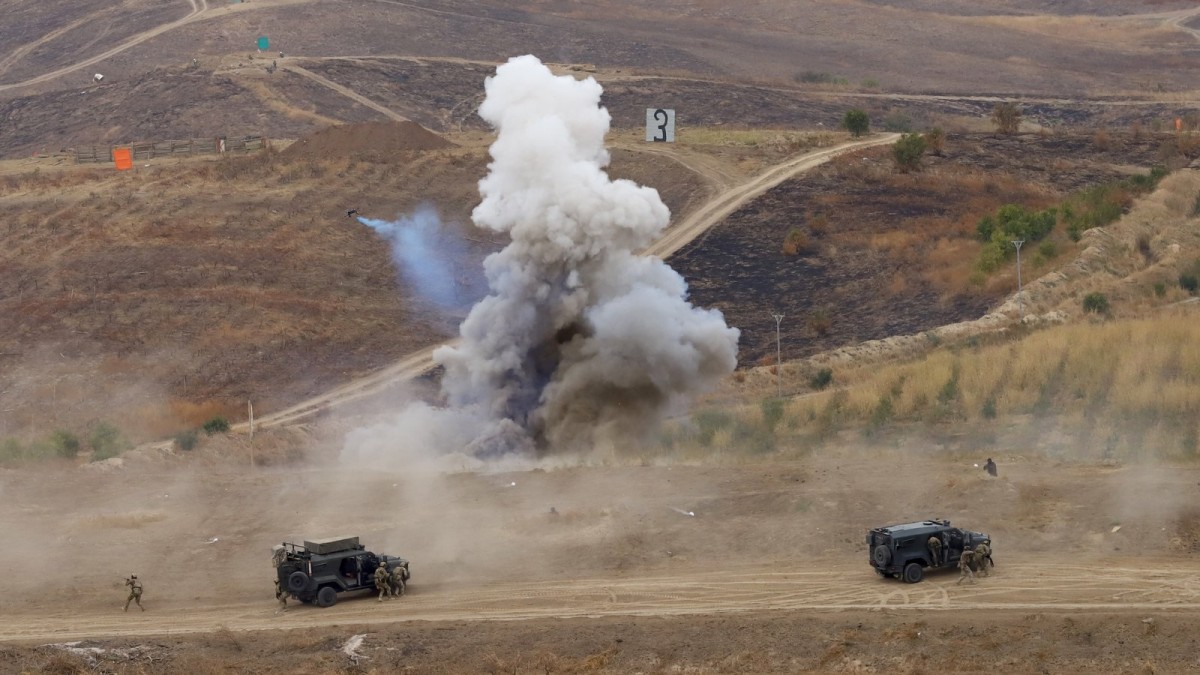
In a region where Sunni‑Shia competition, great‑power rivalry and energy security intertwine, Turkey’s recent participation in the Unity of Strength‑2026 drills in Azerbaijan underscores a deepening of Ankara’s strategic partnership with Baku and a widening of its security outreach toward Central Asia. The exercise, which brought together more than 3,500 personnel from Turkey, Azerbaijan and Uzbekistan, reflects a broader pattern of regional powers seeking to bolster collective defence capabilities amid an increasingly volatile security environment.
Contextualising the Unity of Strength‑2026 exercise
The Unity of Strength‑2026 drill, staged in the contested city of Shusha, marks the first large‑scale manoeuvre to incorporate territories recently reclaimed by Azerbaijan after the 2020 conflict. By situating the exercise in an area that symbolizes Azerbaijan’s post‑war consolidation, the host signalled both confidence in its restored territorial integrity and a desire to showcase its military modernization to neighbouring allies.
From a strategic perspective, the inclusion of Uzbekistan—a Central Asian state with historic Turkic ties—extends the exercise’s geographic reach beyond the South Caucasus. This trilateral engagement aligns with Turkey’s “Eurasian pivot,” a policy strand that seeks to deepen defence cooperation with Turkic‑speaking partners while offering a counterbalance to Russian and Iranian influence in the region.
Turkey’s high‑level representation and operational focus
Defense Minister Yaşar Güler’s presence on the Distinguished Observer Day highlighted the political weight Ankara attaches to the drills. Accompanying him were senior commanders: Chief of General Staff Gen. Selçuk Bayraktaroğlu, Navy Commander Adm. Ercüment Tatlıoğlu, Land Forces Commander Gen. Metin Tokel and Air Force Commander Gen. Rafet Dalkıran. Their joint inspection of weapons, ammunition and military technologies underscored a comprehensive approach to interoperability, spanning land, air, sea and electronic domains.
The Turkish delegation’s interaction with Azerbaijani Defence Minister Zakir Hasanov further cemented the bilateral rapport. By jointly observing the exercise’s hardware and tactics, both ministries signalled a shared commitment to synchronising command structures and operational doctrines, a prerequisite for any future joint deployment.
Scale and composition of the forces involved
According to the Azerbaijani Defence Ministry, the exercise engaged more than 3,500 military personnel drawn from the three participating states. The sheer size of the force reflects a concerted effort to simulate large‑scale, multi‑theatre operations that test command and control across a broad spectrum of capabilities.
Equipment deployed included over 130 unmanned aerial vehicles, 70 armoured vehicles, 90 artillery systems and 20 aircraft. The presence of more than 30 electronic‑warfare, reconnaissance and surveillance platforms, alongside upwards of 15 air‑defence systems, illustrates a focus on integrated, network‑centred warfare. Additionally, eight engineering equipment sets and more than 20 naval vessels were incorporated, indicating an emphasis on combined‑arms manoeuvres that span both land and maritime environments.
Operational highlights: air strikes and urban warfare
The Turkish and Azerbaijani air forces reportedly struck simulated ground targets on their first attempts, a detail that underscores the drills’ emphasis on rapid, precision strike capability. Such exercises are designed to hone coordination between air and ground units, reducing response times and enhancing the effectiveness of joint targeting cycles.
Urban warfare training formed another core component of the manoeuvre. By rehearsing combat in built‑up areas, the participating forces addressed a critical gap in contemporary conflict scenarios, where densely populated environments often dominate the battlefield. The inclusion of urban operations suggests that the trilateral partners are preparing for contingencies that may involve asymmetrical threats or internal security challenges.
Strategic implications for Turkey‑Azerbaijan ties
Turkey’s involvement in Unity of Strength‑2026 reinforces a long‑standing partnership that has deepened since the 2020 Nagorno‑Karabakh war. The joint drills serve not only as a platform for tactical learning but also as a diplomatic signal to regional actors, including Iran and Russia, that Ankara and Baku can coordinate military actions beyond bilateral confines.
By sharing operational experiences and standardising procedures, Turkey and Azerbaijan are laying the groundwork for more integrated defence postures, potentially paving the way for future joint deployments or coordinated responses to security threats along their shared borders and maritime approaches.
Uzbekistan’s role and the broader Turkic security network
Uzbekistan’s participation reflects Ankara’s broader strategy of cultivating a Turkic security nexus that stretches from the Caucasus to Central Asia. While the source material does not detail Uzbekistan’s specific contributions, its inclusion signals an intent to align its armed forces with Turkish and Azerbaijani standards, fostering a shared doctrinal baseline among Turkic‑speaking militaries.
This trilateral framework could evolve into a more formalised security architecture, offering a platform for joint exercises, intelligence sharing and coordinated diplomatic initiatives. Such a network would serve as a counterweight to Russian and Chinese influence in Central Asia, while also providing a conduit for Turkish defence exports and training programs.
Future trajectories and regional security calculus
Unity of Strength‑2026, by virtue of its scale and composition, demonstrates a clear trajectory toward deeper military integration among Turkey, Azerbaijan and Uzbekistan. The exercise’s emphasis on rapid coordination, combined‑arms operations and electronic warfare reflects an awareness of the evolving nature of regional threats, from conventional state confrontations to hybrid and cyber‑enabled challenges.
Looking ahead, the success of this drill may encourage the three nations to expand the scope of their cooperation, potentially incorporating additional partners or extending the exercise’s duration and complexity. For Turkey, such developments align with its broader ambition to position itself as a central security hub in the Middle East and its peripheries, leveraging historical ties and contemporary strategic imperatives to shape the regional security architecture.
This article was produced with AI-assisted research and editorial support. Reporting is based on the source material cited below. Sources: Daily Sabah Middle East; dailysabah.com; Global1.News (02 October 2026).
By Malik Hassan, Staff Writer
What's Your Reaction?
 Like
0
Like
0
 Dislike
0
Dislike
0
 Love
0
Love
0
 Funny
0
Funny
0
 Wow
0
Wow
0
 Sad
0
Sad
0
 Angry
0
Angry
0

Middle East Correspondent at Global1.News. Based in Beirut, covering politics, conflict, energy, and society across the Middle East. Brings context and depth to a region often reduced to headlines.












Comments (0)