
Brazil Votes in Nine Days: A Race on a Knife Edge
Nine days before Brazil's first-round vote, Datafolha puts Lula at 40 per cent and Flavio Bolsonaro at 36, while the opposition leads in Sao Paulo and Rio and the president closes the licensed betting market by decree.
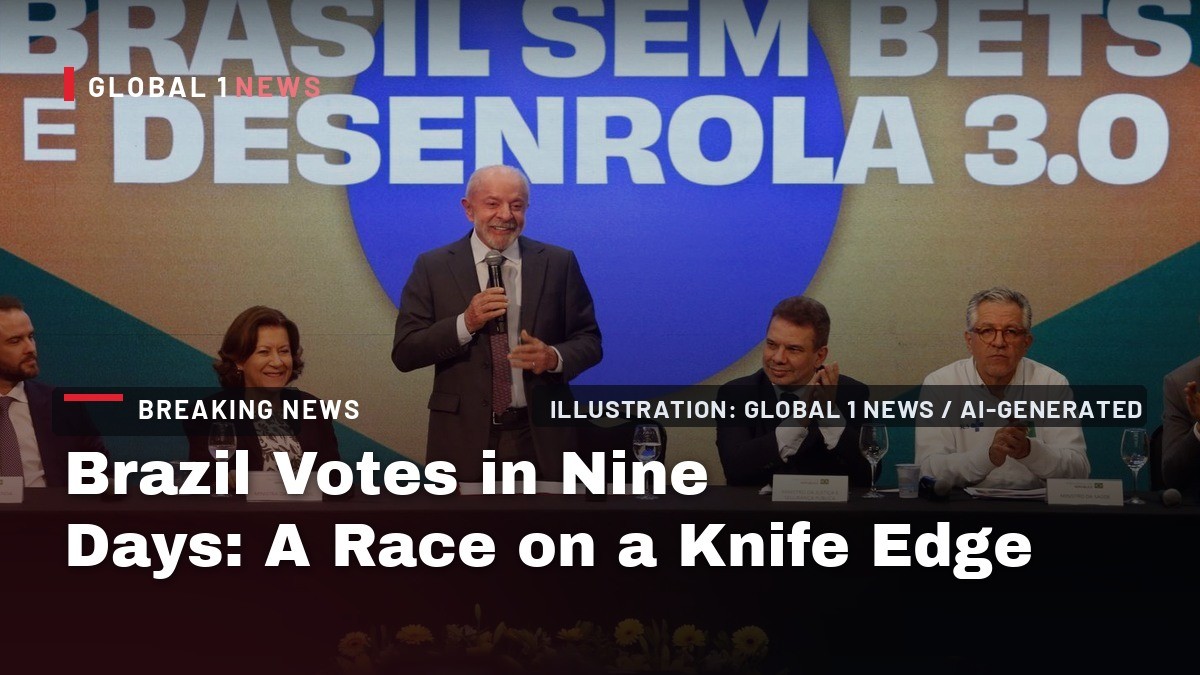
Nine days before Brazilians vote, the presidential race has tightened into something the country has not seen in years. Two candidates, two very different campaigns, and a margin that moves with every poll.
The first round is Sunday, 4 October. A runoff, if it is needed, lands on 25 October. Nobody is calling it.
Brazil Votes in Nine Days: A Race on a Knife Edge
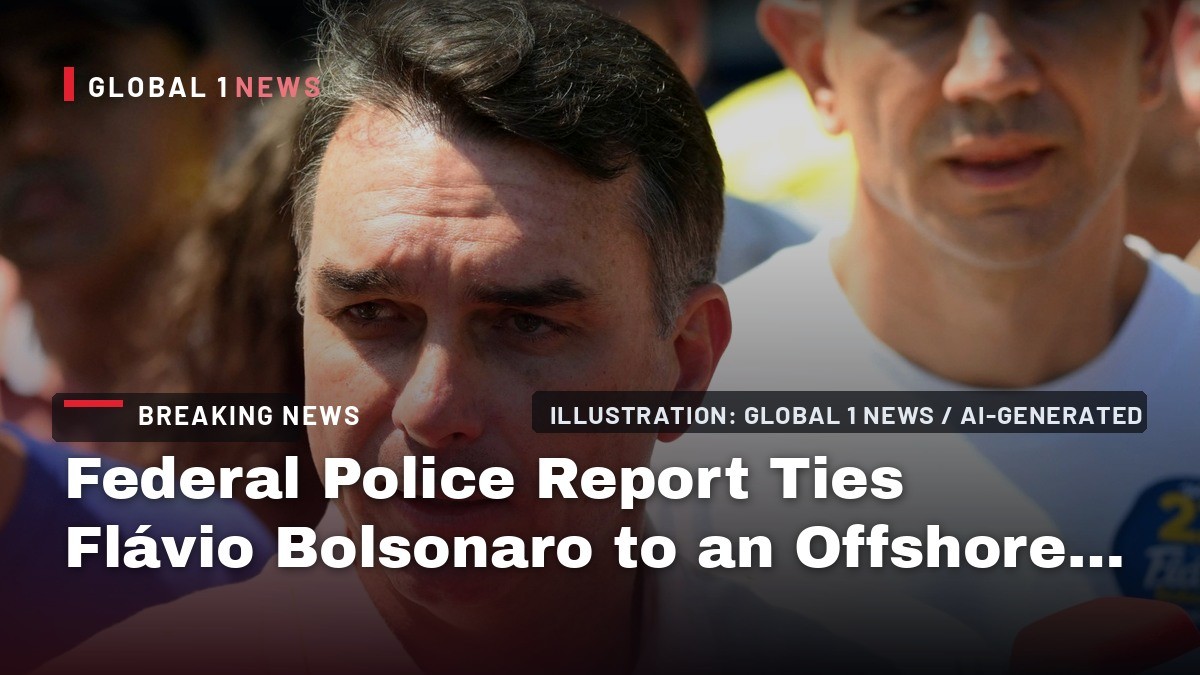
Sao Paulo, Brazil - President Luiz Inacio Lula da Silva, 80, is chasing a fourth non-consecutive term. Senator Flavio Bolsonaro of the Liberal Party, son of former president Jair Bolsonaro, is chasing him down. Jair Bolsonaro was sentenced to 27 years in prison for an attempted coup and is serving that sentence in home detention. That is the frame. Everything else is arithmetic, and the arithmetic is tight.
Nine Days Out, and Nobody Can Put It Away
Datafolha's national poll, fieldwork on 22 and 23 September with 2,002 voters in 125 municipalities and a margin of error of two percentage points, put Lula at 40 per cent and Flavio Bolsonaro at 36 per cent in the first round. In a runoff, the same poll had Lula at 47 and Flavio Bolsonaro at 45. That is a two-point race inside a two-point margin. The result interrupted four months in which the opposition had closed the gap from a ten-point Lula lead to three points. The gap widened back to four. Datafolha's previous week had it 39-36 in the first round and 46-44 in the runoff. Eighty per cent of those surveyed say their choice is settled. That leaves one in five still movable, and nine days to move them.
The Three Colleges That Decide Brazil
Sao Paulo, Minas Gerais and Rio de Janeiro together hold about 40 per cent of Brazil's eligible voters. Datafolha's state series, part of a 30,000-voter project released on Friday 25 September, shows why they matter. In Sao Paulo, the biggest electoral college, 1,610 people were interviewed from 22 to 24 September with a two-point margin of error. First round: Flavio Bolsonaro 38, Lula 33. Runoff: Flavio Bolsonaro 49, Lula 41, up from 47-42. In Rio de Janeiro, the third biggest, 1,204 people were interviewed with a three-point margin. First round: Flavio Bolsonaro 44, Lula 38, the biggest gap of any state. Runoff: Flavio Bolsonaro 51, Lula 42, up from 49-41. In Minas Gerais, the second biggest, 1,204 people were interviewed with a three-point margin. First round: Lula 39, Flavio Bolsonaro 37, a technical tie. Runoff: Flavio Bolsonaro 46, Lula 44. The same Datafolha round covered the Sao Paulo governor's race, where Tarcisio de Freitas leads with 31 per cent against 23 per cent for Haddad, with the incumbent's advantage shrinking and Haddad within reach of forcing a runoff.
The Northeast Is Still Lula's Wall
The Northeast is about 28 per cent of voters, and it is the president's fortress. Datafolha has Lula leading there 55-25. In Pernambuco, 1,204 people were interviewed with a three-point margin of error, and Lula led 60-24, the widest gap for the president anywhere in the series. In the runoff, the figures point to Lula 59-29. Nationally, Lula leads among the poorest 50 per cent of the sample 46-32 and among the least educated 49-29. Flavio Bolsonaro leads among evangelicals 47-27, among people earning two to five minimum wages 40-34, and in the South 47-27. In the Southeast, which is 42 per cent of the sample, Flavio Bolsonaro has a numerical advantage that remains inside the statistical tie at 37-35. A 15 per cent increase in the Bolsa Familia cash transfer moved recipients from 52 to 53 per cent for Lula and from 28 to 27 per cent for Flavio Bolsonaro.
The Institutes Cannot Agree on the Runoff
Quaest, fieldwork 17-20 September, released 21 September, with 2,004 voters and a two-point margin, put Flavio Bolsonaro at 42 and Lula at 41 in the runoff. First round: Lula 37, Flavio Bolsonaro 33. BTG Pactual/Nexus, fieldwork 18-20 September, released 21 September, with 2,006 voters and a two-point margin, put Lula at 46 and Flavio Bolsonaro at 45 in the runoff. First round: Lula 40, Flavio Bolsonaro 37. Verita, fieldwork 1-4 September, released 20 September, with 3,804 voters, put Flavio Bolsonaro at 38.9 and Lula at 38.4 in the first round, and 48.5 to 43.1 in the runoff. AtlasIntel, PoderData, Gerp, Verita and Quaest put the challenger numerically ahead. Datafolha, BTG Pactual/Nexus and CNT/MDA put the president ahead. Verita's own consolidation of 40,500 interviews from 10 to 19 September put Flavio Bolsonaro at 45.53 per cent of valid votes against Lula's 41.76 per cent, with the challenger ahead in 17 of the 27 states. No single number settles it.
The Sash, the Sentence and the Son
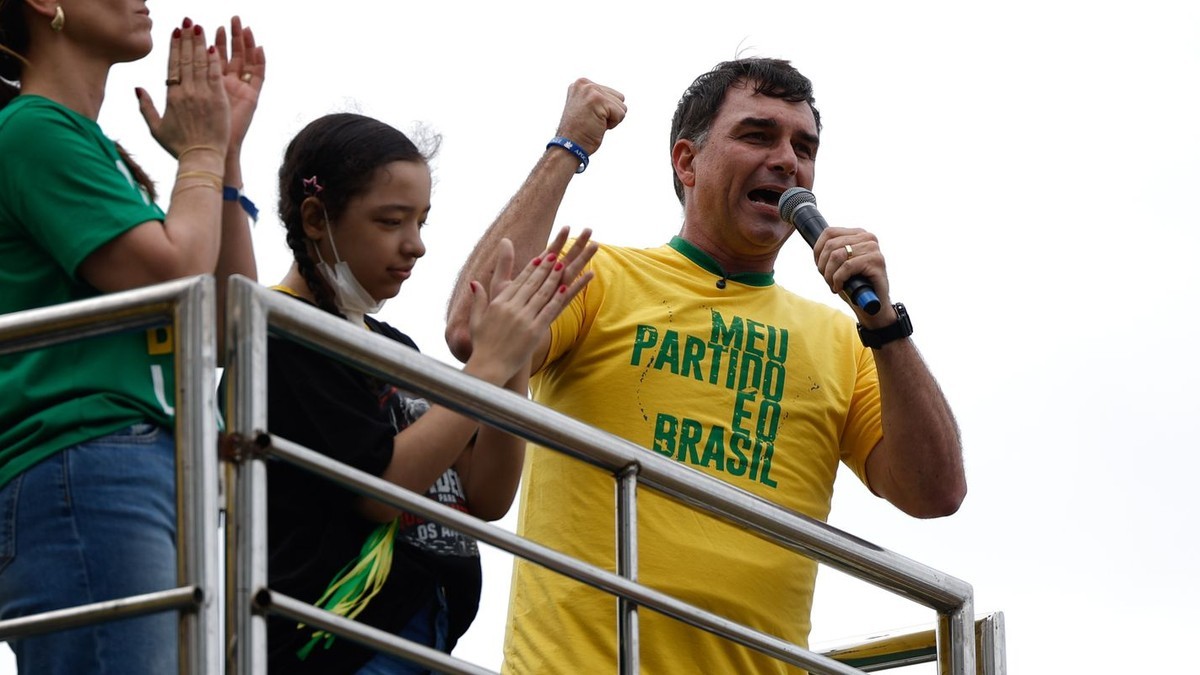
On 24 September, Flavio Bolsonaro told a rally that the electoral court had restricted the use of images of his father in campaign material. He said: "They thought they would silence Bolsonaro. They arrested an honest, serious man... And I want to give a sad message to this rotten system." Then he made a promise: "Bolsonaro will be in the presidency, yes! And they will see the scene of Jair Messias Bolsonaro putting the presidential sash on his son in January of next year." Jair Bolsonaro is serving 27 years in home detention for an attempted coup. Folha de S.Paulo reported that Aecio Neves is expected to join Flavio Bolsonaro's campaign. On 22 September, Lula told the UN General Assembly that Brazil would not accept foreign interference in its election: "Brazilian democracy belongs to Brazilians."
One Signature Ends Brazil's Betting Market
On Friday 25 September, Lula signed Provisional Measure 1.394, published the same day in an extra edition of the Diario Oficial da Uniao. It was signed by Lula, Finance Minister Dario Durigan and Justice and Public Security Minister Wellington Cesar Lima e Silva. The measure prohibits the exploration, offer, intermediation and advertising of fixed-odds betting in Brazil, physical or virtual, even by operators based abroad serving people in the country. It covers sports betting and online casino games, including virtual online games and random number generator events. Other lottery games are not affected. It ends Brazil's licensed betting market less than two years after it opened, extinguishes every licence within 30 days and rules out refunding the 30 million reais each operator paid. Eighty-five licences had been granted. The market it closes was legalised in 2018 under Michel Temer, went unregulated through Jair Bolsonaro's administration, and Lula signed the 2023 legislation that set the rules and authorised online casino games; licensed operators have been live nationwide since January 2025. Its footprint is hard to miss: thirteen of Brazil's twenty first-division football clubs have an online betting site as their main shirt sponsor. The measure is provisional. It takes effect immediately but must be approved by Congress within up to 120 days or it lapses.
Flavio Bolsonaro Calls It Electioneering
Flavio Bolsonaro called the measure populist, hypocritical and election-driven, and said: "President Lula is desperate." He noted that the sector was regulated under Lula's own government, and his campaign has highlighted a remark by the president: "You knew Lula legalized the bets?" He said he would not allow online casinos or the "Tigrinho" games if elected, but did not detail measures for traditional sports betting. Lula, at a rally in Maceio on Thursday night, said: "I discovered that betting is a disease... I am going to end these bets before they end Brazil." In Sao Paulo on Friday he said: "I made the decision to take a hard, drastic and necessary measure. It's like cancer, you take out the tumor, or the tumor will kill us." The scale is the argument. The Ministry of Justice says more than 1.3 million Brazilians have asked to be excluded from betting platforms, and 51 per cent of them cited health problems. The government says more than 60 billion reais flowed from Brazilian families to legal betting companies, and the annual social cost of online betting has been estimated at 38.8 billion reais. Reuters reports that roughly three-quarters of Brazilians support a complete ban, while lawmakers, including many from Flavio Bolsonaro's Liberal Party, struck down a Lula order imposing tax rises on the sector in October last year. Experts warn the abrupt shutdown could push bettors into the clandestine market, leave them without consumer protection and open a hole in public revenue. Flamengo called the ban a heavy blow to Brazilian sports.
Desenrola 3.0: Money Now, Payments After the Vote
Also announced on Friday 25 September: a programme to buy back family debts at discounts of up to 90 per cent, targeting about 150 billion reais of eligible credit-card and personal debt, roughly half the eligible stock. The estimated cost to the Union is about 15 billion reais. Eligibility covers credit-card revolving and instalment balances and personal loans without payroll deduction, with an original value of up to 10,000 reais, overdue between 720 and 1,645 days counted on 25 September 2026. A provisional measure is due in September. Creditors submit proposals in an auction open in November. The case is homologated in January 2027. The first settlements and instalment plans are offered from February 2027. Flavio Bolsonaro's rival plan, presented on 23 September, is an "SOS Brasil" fund of 3 trillion reais to reduce the federal public debt, plus debt discounts of up to 90 per cent through the state lender Caixa.
The Poll That Matters Next
The next Datafolha national poll runs from 29 September to 1 October and is released on 1 October. It will use 2,506 voters at a cost of 384,500 reais, with a margin of error of two percentage points. It is the first poll after the betting ban and the Bolsa Familia increase. A candidates' debate on Globo follows. The betting timeline runs alongside it: deposits stopped on 25 September. Users may withdraw voluntarily until 23:59 on 5 October. Sites and applications go offline from 6 October. On 7-8 October the operators inform banks of users' remaining balances by CPF number. Banks return the balances between 9 and 14 October. From 14 October anything the banks cannot return goes to Caixa Economica Federal.
What Is Decided on October 4
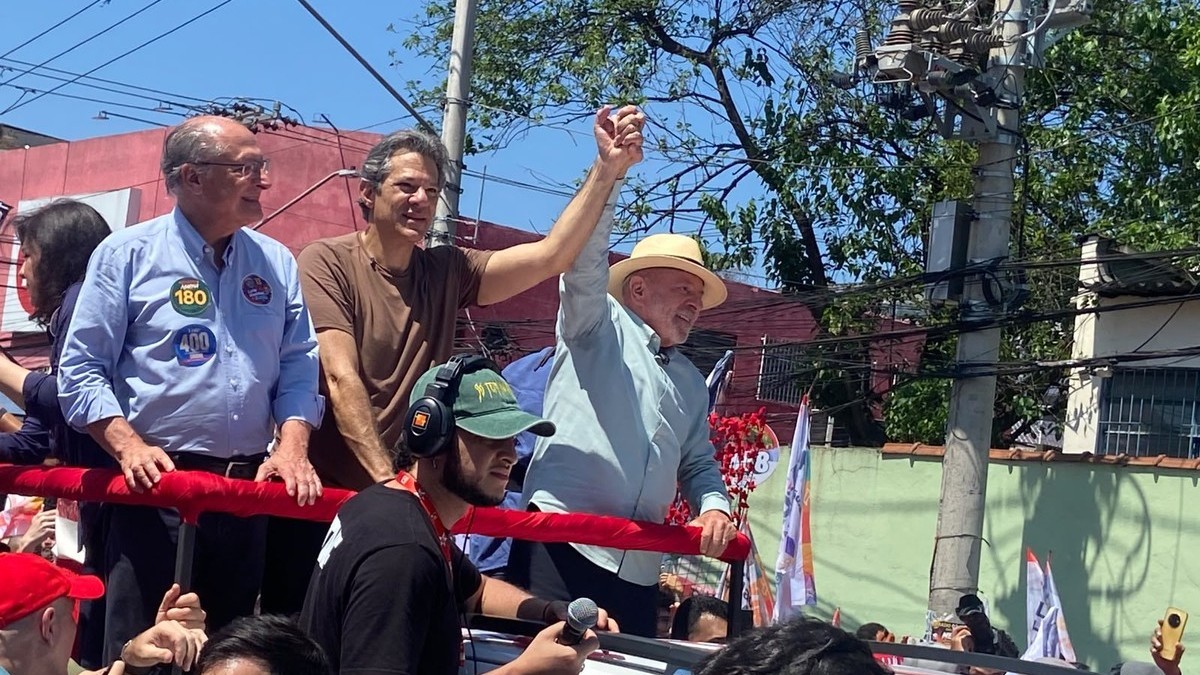
On Saturday 26 September, Lula took part in a campaign walk in Sao Miguel Paulista, in Sao Paulo's east zone, speaking from on top of a car and calling for an end to the 6x1 working week, six days on and one off, and for an end to betting. He was accompanied by vice-president Geraldo Alckmin, Sao Paulo gubernatorial candidate Fernando Haddad, Senate candidates Marcio Franca and Simone Tebet, environment minister Marina Silva and first lady Janja Lula da Silva. Those two promises, the shorter working week and the closed betting market, are what the president is asking voters to weigh in the final week. Flavio Bolsonaro is asking them to weigh the price of both: a Congress that still has to vote on the betting measure inside 120 days, and a debt programme whose first settlements do not arrive until February 2027. On 4 October, Brazilians decide the first round. On 25 October, if it is needed, they decide the rest.
By Jessica Ali, Staff Writer
This article was produced with AI-assisted research and editorial support. Sources: Datafolha, Folha de S.Paulo, Valor Economico, Reuters, Associated Press, AFP, Agencia Brasil, MercoPress, Rio Times.
What's Your Reaction?
 Like
0
Like
0
 Dislike
0
Dislike
0
 Love
0
Love
0
 Funny
0
Funny
0
 Wow
0
Wow
0
 Sad
0
Sad
0
 Angry
0
Angry
0

Editor-in-Chief at Global1.News. Atlanta-based journalist who cuts through the BS and tells it like it is. Lead anchor, host, and the voice you hear when the spin stops and the truth starts.











Comments (0)