
100 grants: Caribbean Culture Fund hits grantmaking milestone
The Caribbean Culture Fund (CCF) has just marked a significant milestone: a hundred grants have been awarded across the region. Haiti follows with ten, Jamaica with nine, and the Dominican Republic with eight.
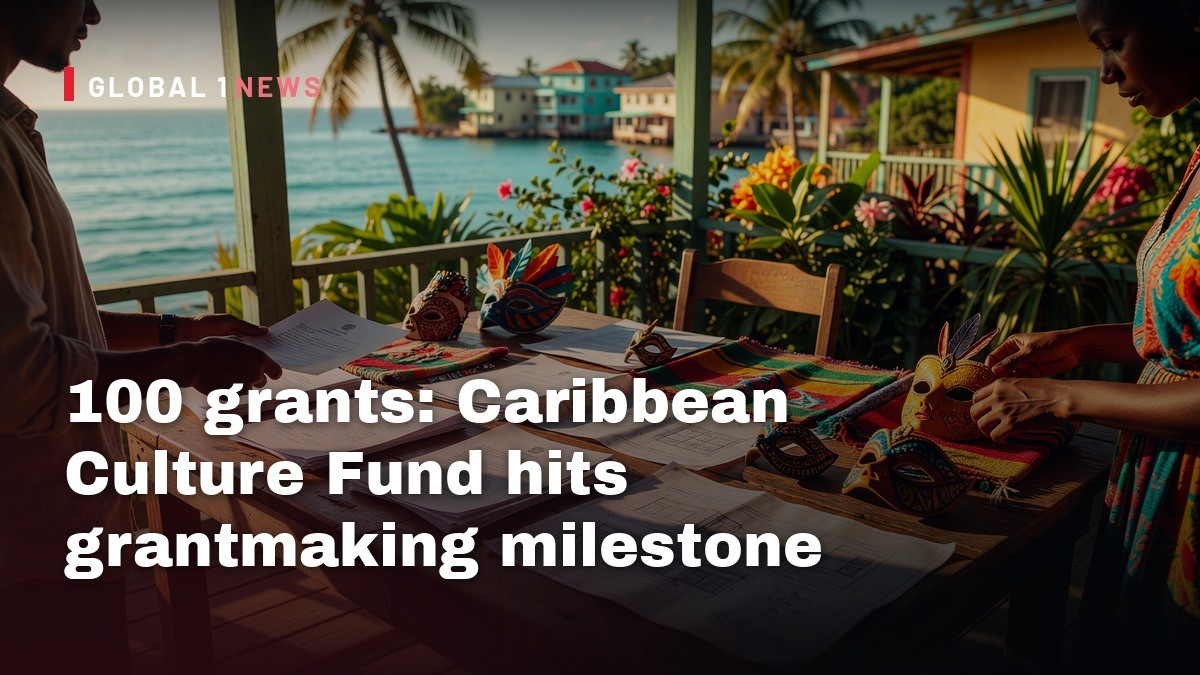
The Caribbean Culture Fund (CCF) has just marked a significant milestone: a hundred grants have been awarded across the region. For many of us watching from Trinidad and Tobago, the news is a reminder of the vibrant creative pulse that runs through our islands, even as we grapple with rising living costs and the everyday challenges of life in the Caribbean. The grant programme, which drew from calls on Art for Change, Caribbean Collaboration, Migration, Archiving and Memory, and Residencies and Fellowships, has seeded projects that touch on social justice, environmental resilience and the very act of preserving our cultural memory.
What the milestone tells us about the region’s creative landscape
According to Katharina Ehrmann, the CCF Grants Manager, reaching one hundred grants means “100 ideas that might otherwise have struggled to get off the ground have been implemented.” The breadth of the projects reflects a region keen to use art as a catalyst for change. From tackling human‑rights concerns to bolstering youth engagement, the funded initiatives span a wide array of themes that resonate deeply with Caribbean realities, such as the ongoing need for environmental resilience in the face of climate‑related disasters.
The fund’s own analysis shows that the projects have already reached or involved thirty‑two countries and territories, indicating a ripple effect that goes beyond the immediate grantees. This kind of cross‑border cultural exchange is precisely the kind of Caribbean collaboration that can help us collectively navigate the pressures of globalisation while keeping our unique identities intact.
Geographic spread and linguistic diversity of the grants
The hundred grants are distributed across twenty‑eight Caribbean countries and territories, with Puerto Rico receiving the largest share at fourteen grantees. Haiti follows with ten, Jamaica with nine, and the Dominican Republic with eight. St Lucia and Trinidad and Tobago each contributed five projects, underscoring the growing creative ecosystems in these islands.
Language plays a notable role in the grant landscape: seventy of the projects were English‑speaking, eighteen French‑speaking and twelve Spanish‑speaking. This linguistic mix mirrors the broader cultural tapestry of the Caribbean, where colonial legacies have left a multilingual imprint that continues to shape artistic expression and audience reach.
Gender representation and the rise of women creators
One of the most striking statistics from the CCF’s report is the gender balance of the grantees. Women made up the majority, with sixty female creators, compared to thirty‑five men and five non‑binary individuals. This gender tilt suggests that women are increasingly at the forefront of cultural production in the Caribbean, a trend that aligns with broader regional movements advocating for gender equity in the arts and beyond.
Dr John Hunte, a juror and Executive Director of the Barbados Dance Project, highlighted the impact of the fund on visibility: “The CCF effectively allows us to be seen, heard, and felt. It is a portal to being part of the global conversation.” For many women artists, this portal is a vital conduit to international platforms that have historically been dominated by male voices.
Artistic disciplines that received the most support
Performing arts emerged as the largest category, with eighteen grants awarded to projects in dance, theatre and live performance. Multimedia followed closely with sixteen, while film secured fourteen grants. This distribution underscores a regional appetite for storytelling that blends traditional forms with new technologies, reflecting a generation of creators who are comfortable navigating both stage and screen.
Beyond the headline categories, the CCF also funded residencies, music initiatives, library and archive projects, literature and publishing, visual arts, photography, design, sculpture, architecture and even video games. Such a wide‑ranging portfolio demonstrates the fund’s commitment to nurturing all facets of cultural production, from the tactile craft of sculpture to the digital realms of interactive media.
How the grants align with Caribbean social priorities
Many of the funded projects centre on themes that are especially pertinent to Caribbean societies today. Social justice and human‑rights concerns feature prominently, echoing ongoing debates about governance, inequality and the legacy of colonialism. Environmental resilience, another key focus, ties directly into the region’s experience of hurricanes, rising sea levels and the need for sustainable development.
Younger creators also found a voice through the CCF’s youth‑engagement component. By supporting initiatives that involve young people, the fund helps to cultivate the next generation of cultural leaders, a crucial investment at a time when many Caribbean families are feeling the pinch of cost‑of‑living pressures.
The process behind the selections
Each call for proposals was evaluated by juries composed of creatives and arts advocates. Raymona Henry‑Wynne, Executive Director of the Cultural Development Foundation in St Lucia, described the review process as “an eye‑opening glimpse into the vast creative potential of the region.” The juries’ deliberations ensured that the projects chosen not only demonstrated artistic merit but also aligned with the fund’s broader objectives of social impact and regional collaboration.
For CCF Executive Director Kellie Magnus, the milestone also highlights work yet to be done. She noted that behind every unfunded application are creatives “seeking someone to take their ideas seriously.” This acknowledgment points to a persistent demand for financial and network support that outstrips the current capacity of the fund, suggesting that future rounds may need to expand both scope and resources.
Looking ahead: what the next phase could mean for Caribbean creators
With the data from the first hundred grants now under analysis, the CCF aims to better understand where demand for cultural funding is strongest. This insight will inform future calls, potentially leading to more targeted support for under‑represented regions or disciplines. For Trinidad and Tobago, the continued presence of five grantees signals a steady, if modest, contribution to the regional cultural dialogue.
As the Caribbean continues to navigate economic challenges, climate threats and shifting political landscapes within CARICOM, the arts remain a vital conduit for resilience and identity. The CCF’s milestone is not just a numbers game; it is a testament to the power of creative ideas to spark change, foster community and project a Caribbean narrative onto the global stage. The hope is that, with sustained investment and broader networks, the next hundred grants will reach even deeper into the islands, amplifying voices that might otherwise remain unheard.
This article was produced with AI-assisted research and editorial support. Reporting is based on the source material cited below. Sources: Now Grenada; nowgrenada.com; Global1.News (05 November 2026).
By Sharon Sahatoo, Staff Writer
What's Your Reaction?
 Like
0
 Dislike
0
 Love
0
 Funny
0
 Wow
0
 Sad
0
 Angry
0

Caribbean Correspondent at Global1.News. Based in Port of Spain, Trinidad, covering Caribbean politics, economy, energy, climate, and culture. Amplifying the voices and stories of the Caribbean region.












Comments (0)