
Delhi air quality worsens ahead of Diwali as firework restrictions enter force
Delhi’s air quality has deteriorated sharply as winter settles in, with the Air Quality Index (AQI) soaring to 377 on Wednesday morning – a reading that places the capital in the “very poor” category.
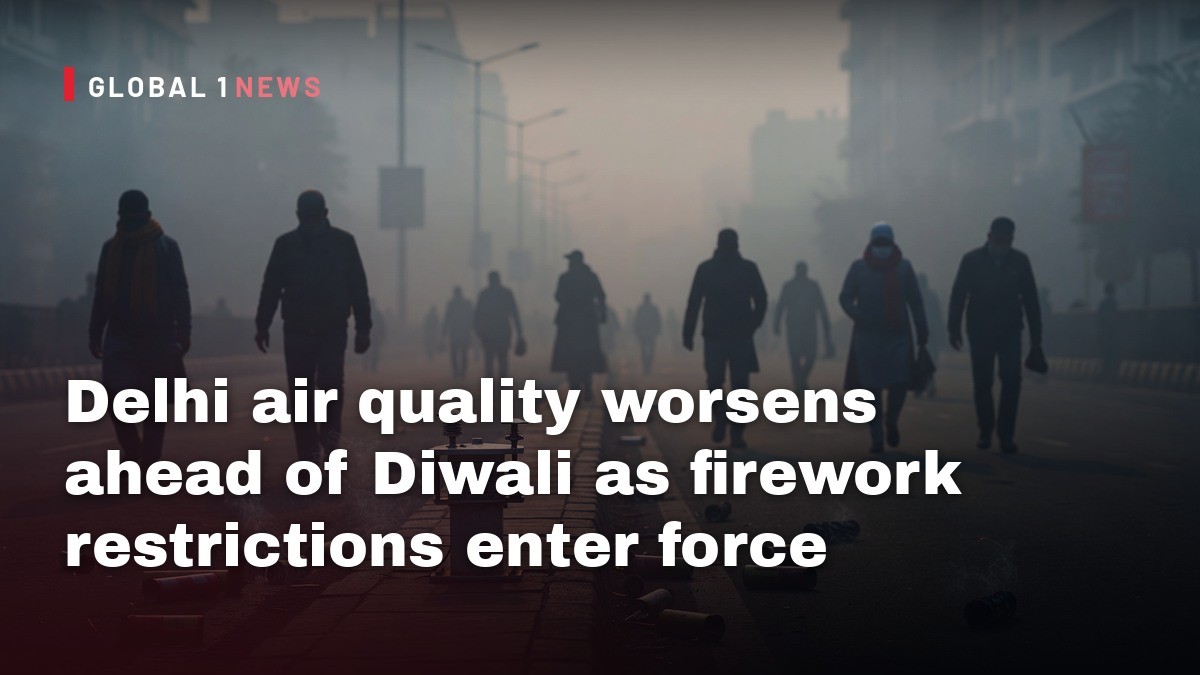
Delhi’s air quality has deteriorated sharply as winter settles in, with the Air Quality Index (AQI) soaring to 377 on Wednesday morning – a reading that places the capital in the “very poor” category. The spike follows an unusually clean October, during which the city recorded its lowest average AQI in eight years, but the recent reversal is driven by falling temperatures, sluggish winds and a resurgence of crop‑stubble burning in the neighboring states of Punjab and Haryana.
Graded Response Action Plan: Stage II Measures
In response to the worsening conditions, Delhi authorities have activated Stage II of the Graded Response Action Plan (GRAP). This tier of the plan mandates intensified road cleaning, higher parking fees to deter private vehicle use, and an expansion of public transport services. The Delhi Metro, for example, has added twenty weekday train trips to accommodate commuters and reduce road congestion.
Additional directives include staggered office timings for government agencies, a measure intended to smooth traffic flow during peak hours. These actions are part of a broader strategy to limit dust, curb vehicle emissions, and address other pollution sources as forecasts predict that the “very poor” AQI level will persist for several days.
Health Risks Amid a “Very Poor” AQI
The AQI reading of 377 reflects concentrations of PM2.5 – fine particulate matter roughly thirty times thinner than a human hair – that can penetrate deep into the lungs. Prolonged exposure to such polluted air raises the risk of respiratory ailments, aggravates existing conditions, and poses heightened danger to children and the elderly.
Health officials warn that the current levels could lead to an increase in hospital admissions for asthma, bronchitis and other lung-related illnesses. The situation is compounded by the imminent Diwali celebrations, which traditionally add a fresh wave of fine particles and harmful gases to the already strained atmosphere.
Diwali Fireworks: A Seasonal Threat
Diwali, one of India’s biggest festivals, is approaching within days. The celebration’s customary fireworks release large quantities of fine particles and toxic gases, further degrading air quality. Last year, Delhi awoke to a toxic haze the morning after the festival despite a court directive to limit firecracker emissions.
In an effort to mitigate this seasonal surge, India’s Supreme Court has permitted the limited use of “green” firecrackers – devices that employ modified chemical formulations to emit fewer pollutants. These can be set off only during two narrow windows: 06:00‑07:00 and 20:00‑22:00 on 7 and 8 November, and must be kept at least 300 metres away from hospitals, schools, care homes and other designated silence zones.
Enforcement Challenges for Green Firecrackers
While the Supreme Court’s order introduces a framework for cleaner fireworks, enforcement remains problematic. Certified green firecrackers carry QR codes that allow verification of their manufacturer and certification status. Nevertheless, authorities acknowledge that conventional firecrackers continue to be sold as green alternatives, undermining the intended environmental benefits.
The court has directed police to conduct random QR‑code checks, patrol designated sales areas, and seize illegal firecrackers. Despite these measures, the persistence of unregulated sales highlights the difficulty of ensuring compliance in a market where demand for traditional fireworks remains strong.
Regional Pollution Patterns: Mumbai’s Contrast
Delhi’s struggle is not isolated. Mumbai, India’s financial hub, also recorded a “very poor” AQI of 322 on 24 October, driven by low wind speeds, construction dust, garbage burning, firecracker emissions and transboundary pollutants. However, the city’s coastal location has recently helped improve conditions, with the AQI falling to a “satisfactory” 89 on Wednesday.
Neighbouring Navi Mumbai reported a “moderate” AQI of 118, indicating that while the region has experienced a two‑week smog episode, recent weather patterns have begun to disperse pollutants. The contrast underscores how local geography and wind patterns can influence air quality, even as broader regional factors such as crop‑stubble burning affect multiple metropolitan areas.
Socio‑Economic Implications of Persistent Smog
The continuation of very poor air quality carries significant socio‑economic costs. Higher parking charges and staggered office hours, while aimed at reducing emissions, also affect daily commuters and businesses that rely on road transport. The added train services by Delhi Metro represent a substantial operational expense, reflecting the city’s need to invest in public transport as a pollution mitigation tool.
Moreover, the health impact on vulnerable populations can translate into increased medical expenditures and reduced labor productivity. The recurring nature of winter‑time smog, compounded by Diwali festivities, suggests that short‑term measures alone may be insufficient without a coordinated, long‑term strategy addressing vehicle emissions, industrial output, and agricultural burning practices.
Looking Ahead: Policy Outlook and Public Response
Officials anticipate that the AQI will remain in the “very poor” range for the coming days, prompting continued enforcement of GRAP Stage II measures. The Supreme Court’s limited green‑firecracker window reflects an attempt to balance cultural traditions with public health concerns, yet the effectiveness of this compromise will depend on rigorous policing and public cooperation.
Public sentiment, as reflected in social‑media posts sharing images of the haze, indicates growing awareness of the health risks associated with winter smog. This heightened visibility may pressure policymakers to pursue more aggressive, sustainable solutions, such as stricter vehicle emission standards, incentives for cleaner industrial technologies, and collaborative regional efforts to curb crop‑stubble burning.
This article was produced with AI-assisted research and editorial support. Reporting is based on the source material cited below. Sources: BBC News Asia; bbc.co.uk; Global1.News (04 November 2026).
By Kenji Tanaka, Staff Writer
What's Your Reaction?
 Like
0
 Dislike
0
 Love
0
 Funny
0
 Wow
0
 Sad
0
 Angry
0

Japan Correspondent at Global1.News. Tokyo-based voice covering Japanese politics, technology, economy, and culture. Tracks the intersection of tradition and innovation in one of the world's most dynamic societies.















Comments (0)