
Toronto’s first electric ferry will soon begin journey to Canada
Toronto is preparing for the arrival of its first electric ferry, a milestone that promises to modernise a fleet that has long relied on vessels now approaching a century in age.
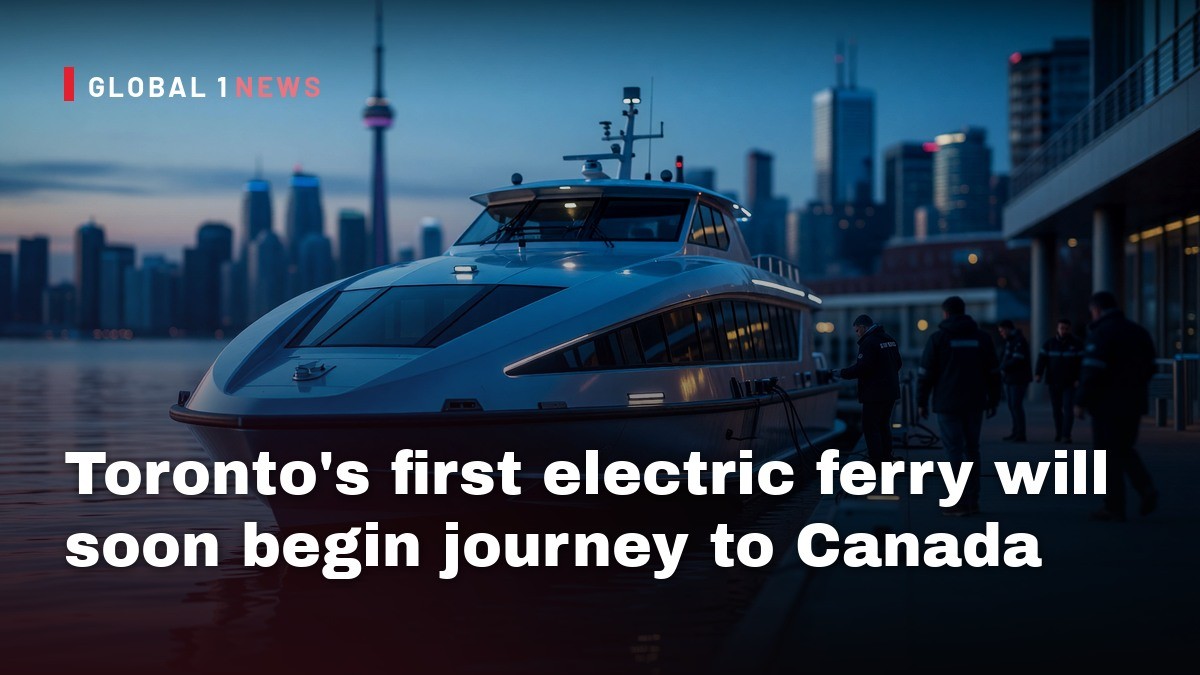
Toronto is preparing for the arrival of its first electric ferry, a milestone that promises to modernise a fleet that has long relied on vessels now approaching a century in age. The City of Toronto’s fleet, which moves roughly 1.4 million passengers across the inner harbour each year, currently operates four ferries built between 61 and 90 years ago. The new electric ferry, named Lady of Quays, will join a second vessel, Toronto Islander, slated for early‑2027 delivery, marking a shift toward cleaner, quieter propulsion after a decade‑long procurement process.
From Romanian shipyard to Atlantic crossing
The Lady of Quays was constructed at a Romanian shipyard before being towed by tug to Istanbul, where it will be loaded onto a cargo ship for its trans‑Atlantic voyage. General Manager of Fleet Services Abi Thomas confirmed via email that the ferry will be transported across the ocean and that residents will be able to track the journey online once it departs. A video posted by the city in late May showed the launch, but subsequent updates on sea trials have been scarce.
Toronto’s strategic communications division has declined interview requests for further details, leaving the public with limited insight into the exact timeline of the crossing. Nonetheless, the expected arrival in December provides a clear target for city officials planning the next phase of testing and crew preparation.
Design evolution and council decisions
The path to an electric ferry has been anything but straightforward. Procurement began more than ten years ago, but council repeatedly altered the design specifications. In 2018, councillors approved a hybrid diesel‑electric system, only to reverse course in 2022 and commit to fully electric models. This shift reflected growing municipal ambition to reduce emissions and align with broader climate goals.
These changes contributed to delays, as the city had to renegotiate contracts and adjust technical requirements. The decision to move to a fully electric propulsion system also meant revisiting infrastructure needs, a factor that later surfaced as a critical oversight.
Infrastructure gaps and organisational reshuffle
More than a year after signing a contract with Dutch shipbuilder Damen, city staff discovered that charging infrastructure at the Jack Layton Ferry Terminal had not been accounted for. This omission highlighted a disconnect between the procurement team and the operational units responsible for ferry services. In response, oversight of the ferry programme shifted from Parks and Recreation to the Fleet Management division, consolidating responsibility for both vessels and the supporting infrastructure.
The discovery underscored the complexity of integrating new technology into an existing transit network. While the city now has a clearer picture of the charging requirements, the delay in addressing the gap has added pressure to the already tight schedule for the Lady of Quays’ arrival and subsequent testing.
Safety concerns that prompted change
Recent incidents involving older ferries have amplified the urgency of fleet renewal. In 2023, the William Inglis lost propulsion and struck a wharf, injuring a crew member. The following year, the Sam McBride suffered a crash that injured several passengers, prompting the Transportation Safety Board to criticize the city’s safety protocols at the time.
These accidents have reinforced the need for modern vessels equipped with more reliable propulsion and safety systems. The electric ferries, with fewer moving parts and advanced control technologies, are expected to reduce the likelihood of similar failures, though they will still undergo rigorous lake trials and crew training before carrying passengers.
What the new ferries will bring
Lady of Quays can accommodate up to 650 passengers and 14 vehicles, a capacity that aligns with the city’s current demand while offering a cleaner alternative to diesel‑powered vessels. The second ferry, Toronto Islander, is designed to complement the first, though specific capacity details have not been disclosed.
Beyond capacity, the electric ferries promise quieter operation, lower emissions, and reduced maintenance costs associated with diesel engines. For residents of waterfront neighbourhoods and island commuters, the quieter rides could improve quality of life, while the environmental benefits support Toronto’s broader climate commitments.
Testing, training and the road ahead
Upon arrival, each ferry will undergo lake trials on the Great Lakes to verify performance under local conditions. These trials will be followed by crew training programmes to ensure operators are familiar with the new propulsion system and safety protocols. The exact duration of this testing phase remains uncertain, as officials have not provided a timeline.
Once testing and training are complete, the ferries will replace two of the ageing vessels in the current fleet. This transition will mark a significant step toward modernising Toronto’s maritime transit, though the city will still need to address the charging infrastructure at terminals to fully realise the benefits of electric operation.
Implications for Toronto and beyond
The introduction of electric ferries reflects a growing trend among Canadian municipalities to adopt greener transport solutions. While Toronto’s fleet renewal has been marked by delays and design changes, the eventual deployment of Lady of Quays and Toronto Islander could serve as a benchmark for other ports seeking to modernise ageing vessels.
For residents, the promise of quieter, more reliable service is balanced against the reality of a testing period that may temporarily limit ferry availability. Nonetheless, the city’s commitment to replacing vessels that have been in service for decades demonstrates a willingness to invest in long‑term sustainability and safety, aligning with national discussions on clean transportation and climate resilience.
This article was produced with AI-assisted research and editorial support. Reporting is based on the source material cited below. Sources: Global News Canada; globalnews.ca; Global1.News (05 November 2026).
By Alex Thompson, Staff Writer
What's Your Reaction?
 Like
0
 Dislike
0
 Love
0
 Funny
0
 Wow
0
 Sad
0
 Angry
0

Canada Correspondent at Global1.News. Based in Toronto, covering Canadian politics, energy, trade, and US-Canada relations. Provides the Canadian perspective on North American and global affairs.















Comments (0)