
'People use AI to avoid paying for school photos, but they don't realise the consequences'
Parents across the UK are increasingly turning to artificial‑intelligence tools to strip watermarks from school photographs, a practice that photographers say is eroding their livelihoods and exposing children to privacy risks.
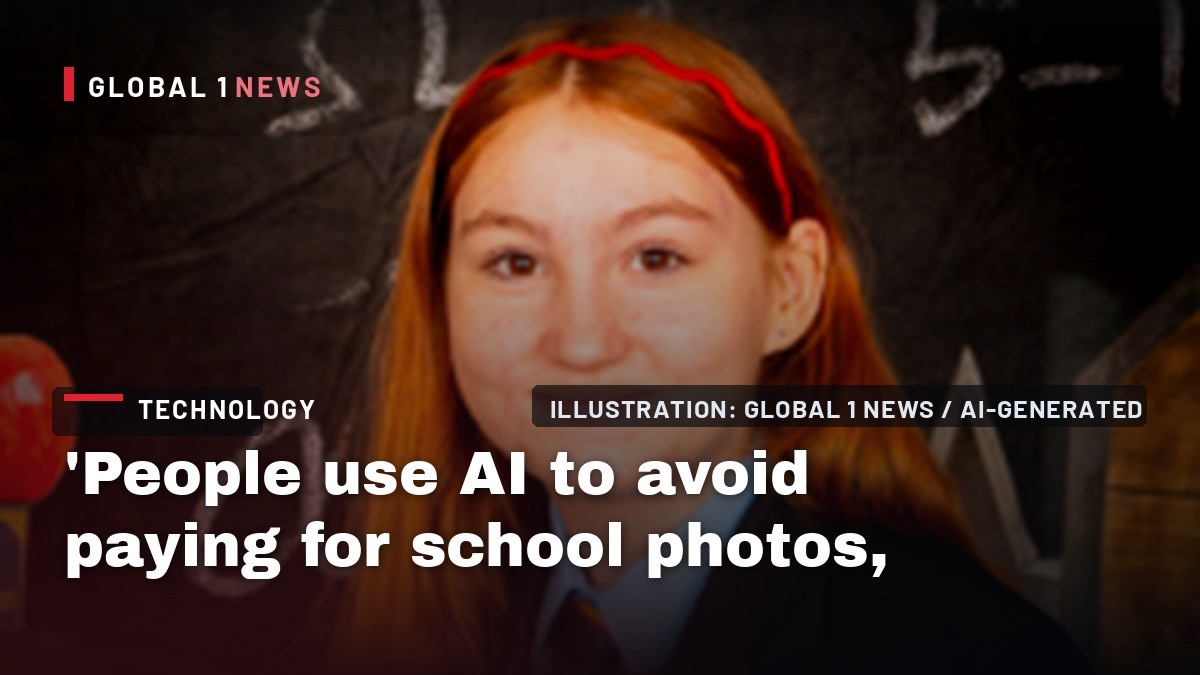
Parents across the UK are increasingly turning to artificial‑intelligence tools to strip watermarks from school photographs, a practice that photographers say is eroding their livelihoods and exposing children to privacy risks. Ian Gilbert, founder of Emotion Picture Photography in Pontypool, Torfaen, says he hears parents boasting at school gates about using cheap AI services to avoid paying for images that normally cost from £9. The trend, he warns, is not merely a matter of petty theft – it could have far‑reaching consequences for data security, safeguarding and the very viability of local photography businesses.
The lure of free images
Annual school photographs have long been a rite of passage, with many families budgeting for a modest fee to obtain a professional portrait of their child. Yet the rise of AI tools that can remove watermarks from preview images in seconds has created a shortcut that some parents find irresistible. Gilbert recounts hearing a parent at a school gate say, “I’m just going to get AI to remove the watermark off and it only costs me a pound.” For a service that typically charges from £9, the perceived saving is tempting, especially in lower‑income areas where a single professional image may be the only high‑quality photograph a family can afford.
Victoria Welton, a photographer based in Crewkerne who works across 15 schools and nurseries, echoes this sentiment, noting that many parents are using AI to access pictures for free. “To put your child’s photograph through AI makes my blood boil,” she says, adding that the technology is a “system we know nothing about” and that the destination of the uploaded image is unclear.
The scale of the problem
Gilbert estimates that about a quarter of the images his company sends out are being screenshotted and fed into AI tools. “That’s a quarter of parents not paying. A quarter of profit lost for us,” he tells BBC Radio Wales Breakfast. The loss is not confined to photographers; schools also receive a cut of the revenue, meaning the financial hit reverberates throughout the education community.
Other photographers confirm the trend. Tessa Chapman, working in south Somerset, describes the practice as “illegal” and a direct threat to her livelihood. She points out that school photography is a historic service that, for many families, represents the only professional image of a child they can afford. “I have to have faith in people’s honesty,” she says, underscoring how the practice undermines a long‑standing trust relationship.
Privacy and safeguarding concerns
Beyond the financial impact, AI safety experts warn that uploading identifiable photographs of children carries significant privacy risks. Dr Simon Thorne, a senior computer science lecturer at Cardiff School of Technologies, urges a blanket rule: “Never upload any personally identifiable photos.” He explains that once an image is fed into an AI model, it may be retained indefinitely, used to train future iterations of the system, or even sold on the black market.
Thorne highlights a particularly unsettling scenario: a child who missed a school photograph due to illness was later added back into the group shot using AI. While he understands the parental impulse to create a complete family portrait, he stresses that “uploading and manipulating images of children in this way can carry real privacy and safeguarding risks.” The potential for a single photograph to become part of a massive, unregulated dataset is a concern that extends far beyond the immediate school environment.
Quality degradation and brand damage
Photographers also complain that AI‑generated copies are of markedly lower quality. Gilbert notes that the images produced after watermark removal are “a lower‑quality product” that reflects poorly on the original photographer’s reputation. “Our work is not just a quick shot – we have beautiful set‑ups and spend a lot of time and money creating images,” he says. The proliferation of sub‑par copies could erode public appreciation for professional photography standards.
Dylan Evans, a 21‑year‑old sports photographer from Caersw, Powys, describes a similar experience. After spending long evenings editing his shots, he discovered a player’s Instagram account displaying his watermarked image with the mark stripped away. “I wasn’t paid and they were just posting them,” he says, adding that the poor‑quality versions undermine his brand and the effort he puts into each shoot.
Legal and regulatory responses
The Guild of Photographers is reportedly exploring legal avenues to curb the practice, including potential prosecutions for those who use AI tools to evade payment. Gilbert describes the situation as “theft, it is shoplifting,” drawing a parallel between physically removing a price tag in a shop and digitally stripping a watermark online. He laments the difficulty of holding large AI service providers accountable, likening the battle to “a David and Goliath situation.”
While current UK law treats the unauthorised removal of watermarks as a breach of copyright, enforcement is challenging when the infringement occurs in the digital realm. Photographers argue that clearer guidance and stronger penalties are needed to deter the growing number of parents who view AI tools as a harmless shortcut.
Industry attempts to counter AI misuse
In response to the threat, some photography businesses are experimenting with technical safeguards. Gilbert mentions that his company is developing “high‑tech methods to beat AI,” such as overlaying moving images on photographs to make them difficult to copy. These measures aim to render static screenshots ineffective for AI training, though their long‑term efficacy remains to be seen.
Other photographers are considering alternative pricing models to make legitimate purchases more appealing. Gilbert argues that “for the sake of a couple of pounds with AI you’re getting such a lower‑quality product and ultimately it just makes us have to put prices up again, which is unfair for everyone.” The tension between affordability and sustainability is at the heart of the debate.
What parents need to consider
For parents, the temptation to save a few pounds must be weighed against the potential risks to their children’s privacy and the broader impact on local businesses. Dr Thorne advises that once an image is uploaded, “you have no idea how long that image is retained, how it is processed or whether it is reused.” The lack of transparency in AI services means that a seemingly innocuous action could inadvertently contribute to a data set used for commercial purposes far beyond the original intent.
Ultimately, the issue raises a fundamental question about digital ethics in everyday life. As AI tools become more accessible, the line between convenience and infringement blurs. Photographers like Gilbert, Welton and Chapman urge families to think twice before using AI to bypass payment, reminding us that the cost of a professional school photograph is not just a price tag – it is an investment in privacy, quality and the sustainability of a community service.
This article was produced with AI-assisted research and editorial support. Reporting is based on the source material cited below. Sources: BBC News UK; bbc.co.uk; Global1.News (09 October 2026).
By Erica Thornton, Staff Writer
What's Your Reaction?
 Like
0
Like
0
 Dislike
0
Dislike
0
 Love
0
Love
0
 Funny
0
Funny
0
 Wow
0
Wow
0
 Sad
0
Sad
0
 Angry
0
Angry
0

US Politics and Policy Correspondent at Global1.News. Based in Washington DC, covering American politics, policy, elections, and the courts. Knows how the system works and tells you what it actually means.














Comments (0)