
Mixed price adjustment for gas, diesel next week
Domestic gasoline prices are set to climb next week, a development that will be felt in barangays across the archipelago as commuters and sari‑sari store owners brace for higher fuel costs.
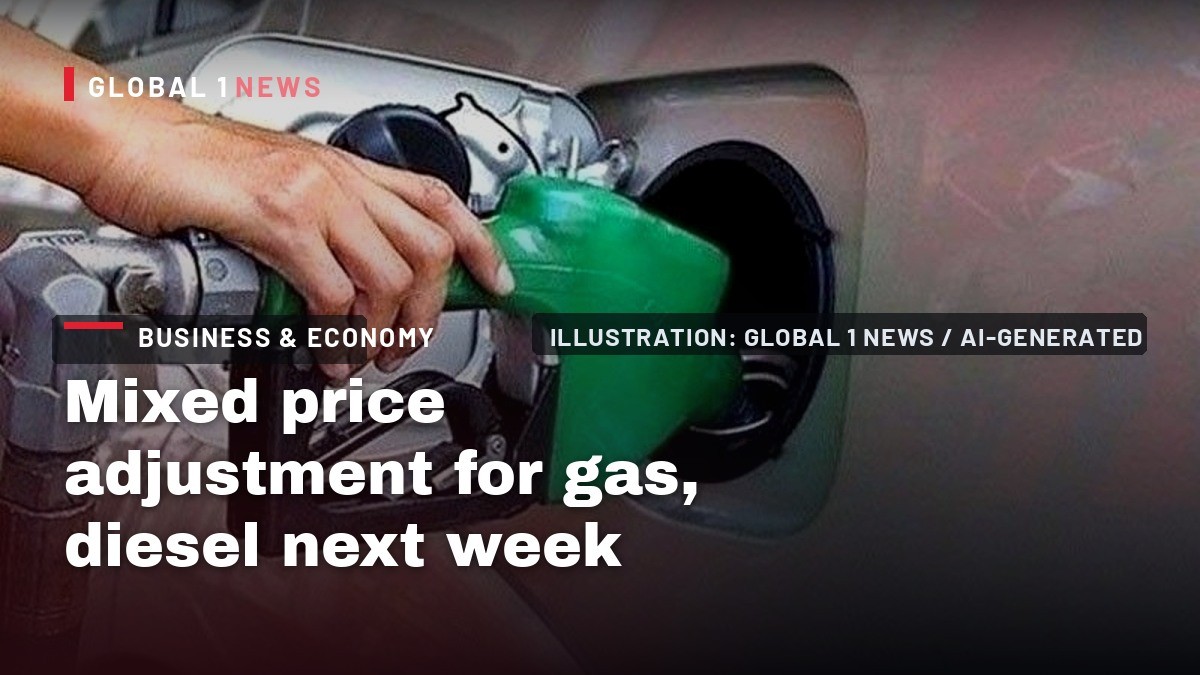
Domestic gasoline prices are set to climb next week, a development that will be felt in barangays across the archipelago as commuters and sari‑sari store owners brace for higher fuel costs. The rise, projected at between P2 and P2.20 per liter starting October 13, follows China’s brief suspension of refined fuel exports, a move that has tightened regional supply and kept markets under pressure. At the same time, diesel is expected to ease by roughly P1.80 to P2 per liter, a modest relief that reflects a separate set of global dynamics.
Why gasoline is going up
The anticipated gasoline hike stems from a four‑day trading window on the regional benchmark known as the Mean of Platts Singapore. With China temporarily halting refined fuel shipments, the supply strain has rippled through the market, prompting traders to lift prices. Jetti Petroleum president Leo Bellas warned that “markets remain under pressure” as the export suspension persists, underscoring how external shocks can quickly translate into higher costs at the pump for ordinary Filipinos.
For many families, a P2 increase may seem modest, but when multiplied across daily commutes and the operation of tricycles, jeepneys, and delivery vans, the cumulative impact can strain household budgets. Small business owners who rely on gasoline‑powered transport to move goods from the market to their sari‑sari stores may see profit margins thin, prompting a scramble for cost‑saving measures.
Diesel’s modest reprieve
Diesel, by contrast, is slated to drop by about P1.80 to P2 per liter. This rollback is linked to a decision by the G7 nations to release 100 million barrels of crude oil and diesel from emergency reserves, a move intended to stabilize global markets. Rino Abad, director of the Department of Energy’s Oil Industry Management Bureau, highlighted this connection, noting that the release helps lower diesel prices for the Philippines.
While the dip offers temporary relief for freight operators and public utility vehicles that run on diesel, the benefit may be short‑lived if global supply constraints re‑emerge. Nevertheless, for now, transport operators can pass on some savings to commuters, easing the cost of moving goods and people across provinces.
Fuel transition goals amid price volatility
Beyond the immediate price shifts, the Department of Energy is steering the country toward a longer‑term vision under the Fuel Transition Plan. The plan seeks to cut oil dependence by 30 percent by 2030, 50 percent by 2040, and push the reduction even further by 2050. Such targets aim to insulate Filipino families from the whims of foreign fuel markets that have just caused the recent gasoline hike.
Energy Secretary Sharon Garin has emphasized an aggressive push for electric vehicles (EVs) as a cornerstone of this strategy. By encouraging EV adoption, the government hopes to reduce the share of imported oil in the national energy mix, thereby shielding the public from future price spikes that stem from geopolitical tensions or export bans like China’s recent pause.
Electric vehicle surge and its social impact
EV registrations have surged dramatically, climbing 130 percent year‑on‑year from January to August, according to Patrick Aquino of the DOE’s Energy Utilization Management Bureau. The surge, partly driven by the Middle East war’s impact on oil prices, reflects a growing public appetite for alternatives to gasoline‑powered cars. For commuters in Metro Manila and provincial towns alike, EVs promise lower operating costs and less reliance on volatile fuel prices.
However, the transition is not without challenges. While the Fuel Transition Plan envisions EVs comprising 80 percent of automobile production between 2040 and 2050, President Ferdinand Marcos Jr. projects that electric‑powered vehicles will make up only half of the cars on the road by that time. This gap suggests that policy, market forces, and consumer preferences will need to align for the ambitious targets to materialize.
Renewable energy as the broader solution
Stakeholders argue that the focus should extend beyond automotive fuels. Bellas, speaking on One News’ “Money Talks,” urged the government to push renewable electricity sources that do not rely on fossil fuels. Such a shift would enable a realistic pathway to the plan’s goal of raising the share of renewables in the energy mix to 50 percent by 2040, a target also championed by President Marcos.
Increasing renewable capacity—through solar farms in Mindanao, wind projects in Ilocos, and hydroelectric plants in the Visayas—could lower electricity costs for households and businesses, further buffering the public from the price swings of imported oil. Moreover, a greener grid would make EVs truly clean, as they would draw power from sustainable sources rather than fossil‑fuel‑based plants.
High‑blend biofuels and other alternatives
The Fuel Transition Plan also highlights high‑blend biofuels, sustainable aviation fuels, and alternative maritime fuels as key pillars. By encouraging the use of locally produced biofuels, the Philippines can create new market opportunities for farmers cultivating oil‑rich crops, while simultaneously reducing dependence on imported gasoline and diesel.
These alternatives could become especially important for the maritime sector, where diesel remains a dominant fuel. If high‑blend biofuels gain traction, coastal barangays that depend on fishing and inter‑island transport could see lower fuel costs, fostering more resilient local economies.
What the price changes mean for everyday Filipinos
In the short term, the gasoline rise will likely tighten household budgets, especially for those who travel daily to work or school. Public transport operators may pass on higher costs to passengers, while small business owners may face higher logistics expenses. Conversely, the diesel drop offers a brief cushion for freight and public utility vehicles, but the relief may be fleeting if global supply constraints persist.
Looking ahead, the government's Fuel Transition Plan offers a roadmap to lessen these vulnerabilities. By expanding EV adoption, boosting renewable energy, and developing biofuel alternatives, the Philippines can reduce its exposure to external shocks like China’s export suspension. For now, communities across the nation will watch the pumps closely, hoping that the modest diesel reprieve can offset the gasoline hike while the longer‑term energy transition gathers momentum.
This article was produced with AI-assisted research and editorial support. Reporting is based on the source material cited below. Sources: Philstar.com; Global1.News (10 October 2026).
By Bella Reyes, Staff Writer
What's Your Reaction?
 Like
0
Like
0
 Dislike
0
Dislike
0
 Love
0
Love
0
 Funny
0
Funny
0
 Wow
0
Wow
0
 Sad
0
Sad
0
 Angry
0
Angry
0

Philippines/Southeast Asia Correspondent at Global1.News. Manila-based journalist covering Philippine politics, environment, maritime security, and social issues. Passionate about marine conservation and the communities protecting the Philippines' natural heritage.













Comments (0)