
Syria's al-Sharaa Names SDF's Abdi Presidential Adviser After Dissolution
Syrian President Ahmed al-Sharaa has appointed former SDF commander Mazloum Abdi as presidential adviser, days after the group's dissolution and integration into state institutions. Washington welcomed the move, but questions over military integration, Turkey's concerns, and Kurdish rights remain.
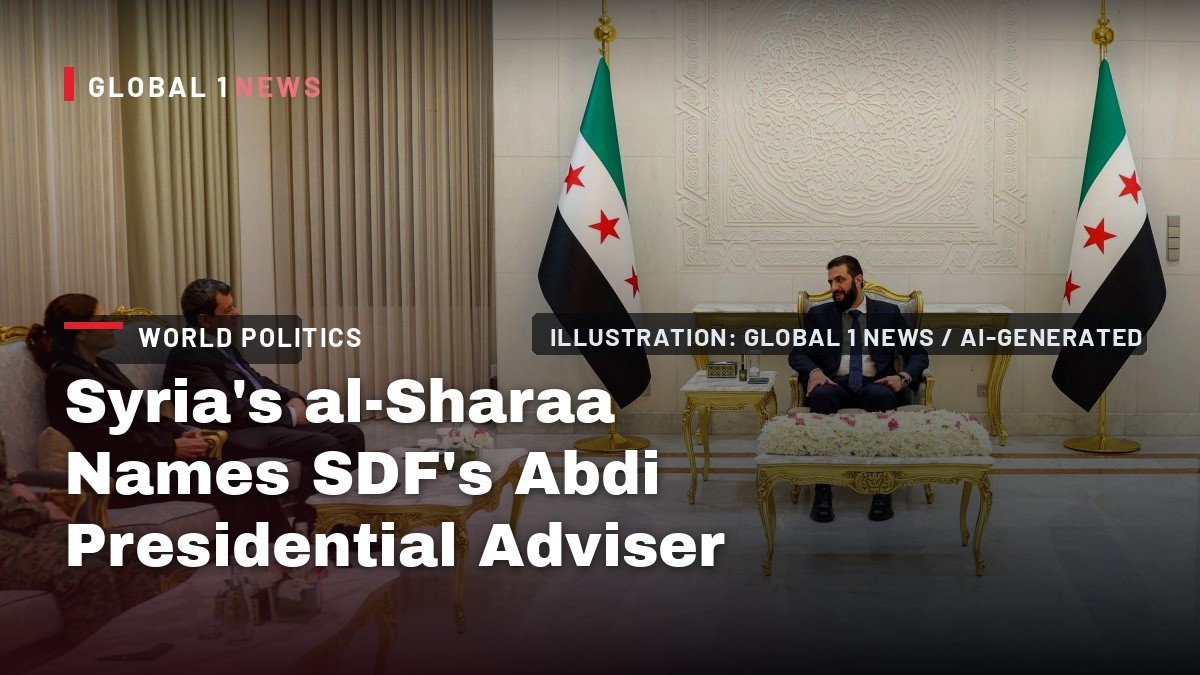
Damascus Cements Kurdish Integration with Top Advisory Post for Former SDF Commander
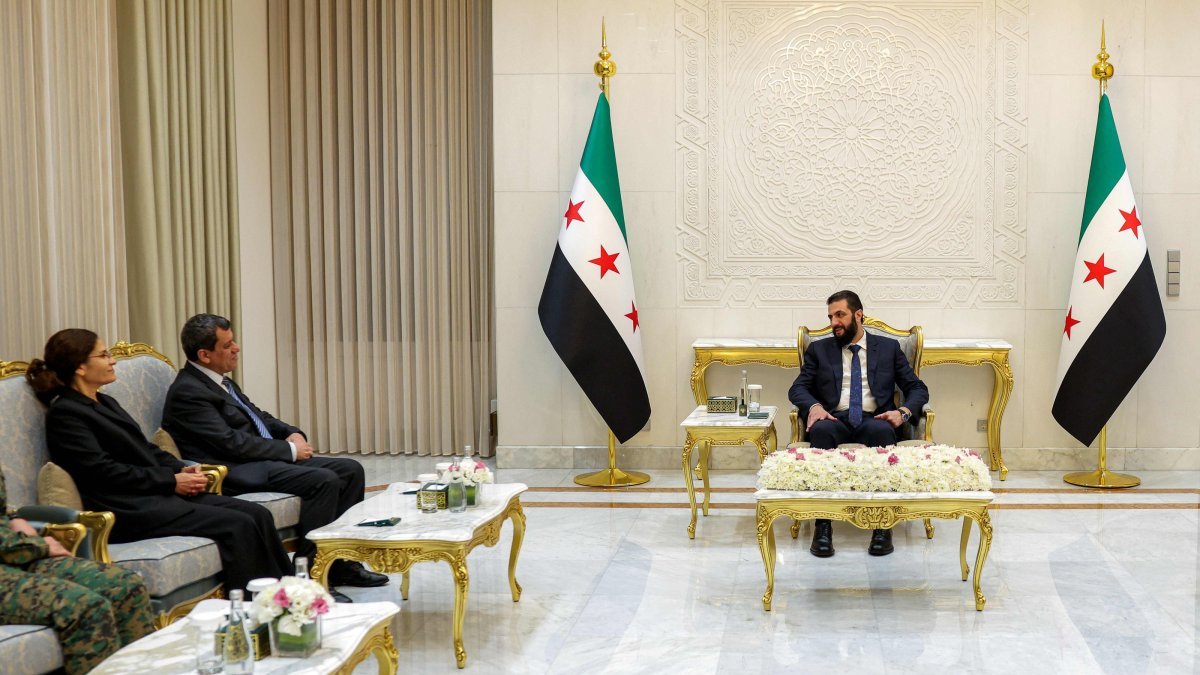
Damascus, Syria — In a decisive move that formalizes the end of a decade-long insurgency and the beginning of a new chapter in Syrian statehood, President Ahmed al-Sharaa has appointed Ferhat Abdi Şahin, widely known as Mazloum Abdi, as a presidential adviser. The decree, signed Friday and carried by state news agency SANA, comes just days after Abdi announced the dissolution of the Syrian Democratic Forces (SDF) and its integration into the Syrian army, marking one of the most significant political shifts since the fall of Bashar Assad in 2024.
The appointment transforms a former battlefield commander into a senior figure within the very state apparatus his forces once fought against. It is a calculated move by Damascus to consolidate control over the northeast while offering a tangible political prize to the Kurdish leadership, a gesture that U.S. officials have explicitly endorsed as a model for post-conflict reconciliation.
A Decree That Reshapes the Political Map
The presidential decree, which was carried by the official Syrian Arab News Agency (SANA), stated simply: “Mustafa Khalil Abdi is appointed as adviser to the presidency of the republic.” The use of the name "Mustafa Khalil Abdi" is notable, as it is one of several aliases used by the former SDF commander over the years, reflecting the complex and often clandestine nature of his past role.
The appointment is the logical culmination of a process that began in January 2026, when Damascus and the SDF reached a landmark agreement to integrate the group's armed units and its civilian administration into Syrian state institutions. Abdi announced the formal dissolution of the SDF on Tuesday, August 25, 2026, describing the move as "mission complete" during a public appearance in Damascus. He stated that the decision followed “the completion of the process of integrating our forces into the brigades of the Syrian army.”
For President al-Sharaa, who has led Syria’s new authorities since the ouster of Assad, this appointment serves a dual purpose. It rewards a key partner in the integration deal, ensuring the process remains on track, while simultaneously projecting an image of a unified state that has absorbed its former rivals rather than being fractured by them.
The Strategic Calculus Behind the Appointment
This is not merely a ceremonial gesture; it is a strategic necessity. The integration of the SDF, which was dominated by the terrorist PKK/YPG-led forces, was not achieved through diplomacy alone. Government forces captured significant territory from the SDF during clashes earlier this year, shifting the balance of power decisively in favor of Damascus. The appointment of Abdi is a recognition of that new reality, but it is also a pragmatic effort to stabilize the northeast without a prolonged military occupation.
By bringing Abdi into the presidential palace, al-Sharaa is effectively neutralizing a potential figurehead for future Kurdish dissent. Abdi now has a vested interest in the success of the Syrian state, rather than in the resurrection of an autonomous Kurdish administration. This is a classic co-optation strategy, but one that carries significant risks if the promised rights and protections for the Kurdish population are not delivered.
The timing is also critical. With the United States strengthening its relations with the new Syrian leadership, Damascus is keen to demonstrate that it can manage its internal affairs in a manner that aligns with Washington’s interests. The appointment of Abdi, a figure long tolerated by the U.S. military in northeast Syria, sends a clear signal to Washington that the new Syria is willing to accommodate its former partners.
Washington’s Endorsement and the Barrack Factor
The United States has been a silent but crucial partner in this transition. U.S. Special Envoy for Syria Tom Barrack welcomed the SDF dissolution agreement on Tuesday, framing it as an example of former rivals reaching a diplomatic settlement aimed at strengthening Syrian sovereignty. Barrack’s statement was notable for its explicit call to action: he argued that securing meaningful government roles for Kurdish figures, including Abdi, would recognize their leadership and contributions to regional stability.
Friday’s decree appears to be a direct response to that call. By appointing Abdi, al-Sharaa has not only satisfied a key U.S. demand but has also removed a potential point of friction in the growing Damascus-Washington relationship. For the United States, which has long sought to extricate itself from the Syrian quagmire, the integration of the SDF into the Syrian army allows for a face-saving exit strategy. The U.S. can now argue that its Kurdish partners have been absorbed into a legitimate state structure, rather than abandoned to the mercy of a hostile government.
However, the U.S. calculus is not without its own contradictions. The SDF was a critical ally in the fight against ISIS, and the U.S. has invested significant political capital in the group. By endorsing the dissolution, Washington is effectively admitting that the Kurdish experiment in self-governance in northeast Syria has run its course, a bitter pill for those who hoped for a federal solution.
Kurdish Rights and the Education Breakthrough
While the Abdi appointment is the headline, a more profound shift occurred on Thursday when Syria’s Education Ministry authorized Kurdish-language instruction in public and private schools in areas where Kurdish citizens constitute a significant share of the population. The decision allows Kurdish to be taught alongside Arabic and English, a major policy shift in a country where Kurds have long complained of systematic discrimination.
This move follows an earlier decree by al-Sharaa recognizing Kurdish as a national language and affirming the national rights of Syria’s Kurdish population. For a community that was denied basic cultural rights under the Assad regime, including the use of its own language in public life, these measures represent a historic reversal.
Abdi, speaking last week, said that the integration of the Kurdish administration into the Syrian state had been completed but pledged to continue efforts to secure Kurdish rights in the country’s new constitution. His new role as presidential adviser gives him a platform to pursue that goal from within the corridors of power, though it remains to be seen how much influence he will wield over the constitutional drafting process.
The Unresolved Questions of Integration
Despite the celebratory tone in Damascus, significant questions remain unresolved. Al Jazeera’s analysis of the integration agreement notes that there are still open issues regarding the command structure and deployment of the integrated fighters. While the SDF has nominally dissolved, the practical reality of merging thousands of fighters into the Syrian army’s brigades is a logistical and political minefield.
Who will command these units? Will they be deployed to the front lines against remaining ISIS cells, or will they be stationed in their home regions? What happens to the Autonomous Administration’s civilian institutions, which have provided governance in the northeast for years? These are not trivial details; they are the substance of whether the integration is a genuine merger or a temporary truce.
There is also the question of Turkey. Ankara has long viewed the SDF as an extension of the PKK, a designated terrorist organization, and has repeatedly threatened military action against Kurdish forces along its southern border. The dissolution of the SDF and the appointment of Abdi to a state role may ease Turkish concerns in the short term, but it also places Damascus in a delicate position. If Turkey perceives that the PKK/YPG has simply traded its uniform for a Syrian army uniform, it could trigger a new round of cross-border operations.
A Fragile Peace and the Road Ahead
Syria’s Kurdish population is estimated at around 2 million out of roughly 20 million people, with communities concentrated mainly in the northeast as well as in Damascus and Aleppo. For these communities, the past week has brought a mixture of hope and anxiety. The recognition of their language and the appointment of Abdi are tangible gains, but they are also reversible. The new Syrian leadership, which took power after the ouster of Assad, has promised a break from the past, but the legacy of decades of discrimination is not easily erased.
The integration of the SDF is a test case for the broader project of Syrian reconstruction. If Damascus can successfully absorb the northeast and guarantee the rights of its Kurdish citizens, it will have achieved what many thought impossible: a unified Syria emerging from the ashes of civil war. If it fails, the country risks sliding back into fragmentation, with the Kurdish question once again becoming a flashpoint for regional conflict.
For now, the appointment of Mazloum Abdi as presidential adviser is a bold bet by al-Sharaa. It is a bet that co-optation will work better than confrontation, that political inclusion will prove more durable than military suppression, and that the United States will remain engaged as a guarantor of the process. The coming months will reveal whether that bet pays off, or whether the integration of the SDF was merely the closing of one chapter in Syria’s long and bloody history, only to open another.
By Malik Hassan, Staff Writer
This article was produced with AI-assisted research and editorial support. Sources: Daily Sabah, Reuters, Al Jazeera, France 24.
What's Your Reaction?
 Like
0
Like
0
 Dislike
0
Dislike
0
 Love
0
Love
0
 Funny
0
Funny
0
 Wow
0
Wow
0
 Sad
0
Sad
0
 Angry
0
Angry
0

Middle East Correspondent at Global1.News. Based in Beirut, covering politics, conflict, energy, and society across the Middle East. Brings context and depth to a region often reduced to headlines.












Comments (0)