
Indonesia Earthquake: Rescuers Race to Find Survivors After Quake Kills 51
Rescue teams in eastern Indonesia are searching for survivors after a magnitude 7.7 earthquake struck off the coast of Flores, killing at least 51 people, injuring more than 100 and displacing thousands.
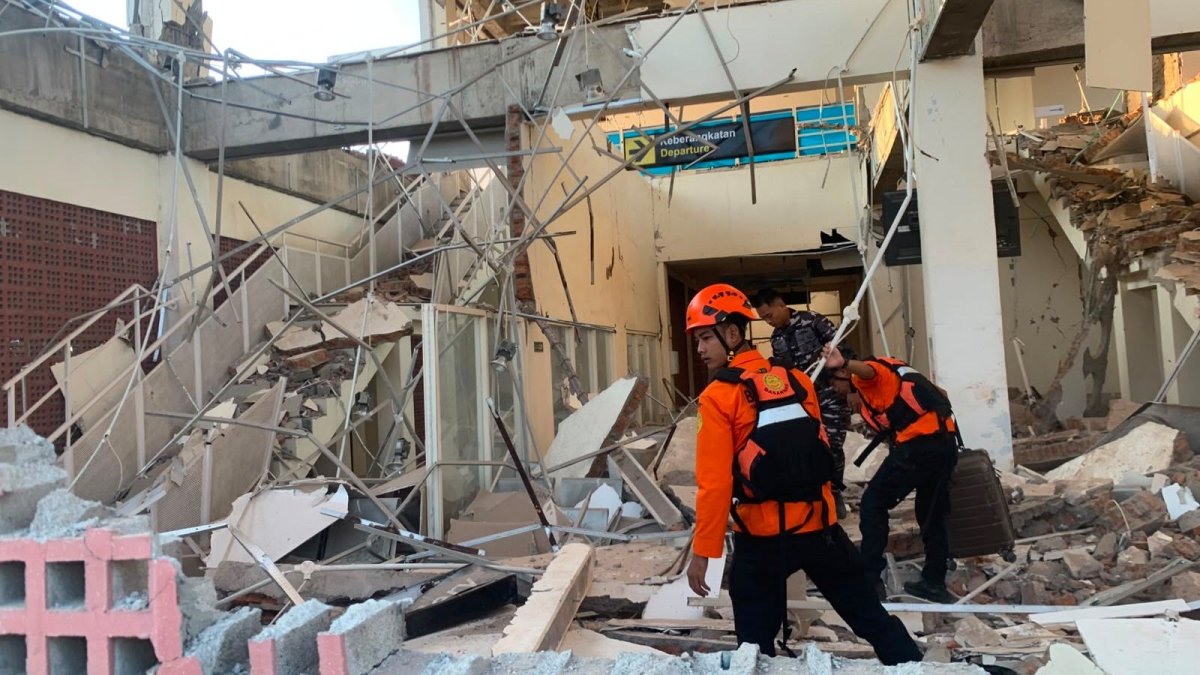
Rescuers Race Against Time After Deadly Flores Earthquake
Rescue teams in eastern Indonesia are engaged in a desperate search for survivors this morning, sifting through the wreckage of flattened buildings and treacherous landslide debris on the island of Flores. The operation comes a day after a powerful magnitude 7.7 earthquake struck off the coast, claiming at least 51 lives, injuring more than 100 people, and displacing thousands from their homes.
The National Disaster Management Agency (BNPB) has confirmed a grim regional toll, with at least 24 deaths recorded in Manggarai regency and a further 17 in neighbouring East Manggarai. Additional fatalities have been reported in the regencies of Sikka, Ngada, and Ende, painting a picture of widespread devastation across this predominantly Catholic island in the world's largest Muslim-majority nation.
The quake, which originated at a shallow depth of roughly 10km and struck nearly 68km north-northwest of the town of Ende in East Nusa Tenggara province, sent panicked residents fleeing into the open as the ground lurched violently beneath them. The tremor's reach extended beyond Flores, with shaking also felt in neighbouring West Nusa Tenggara and parts of southern Sulawesi, underscoring the sheer force of the seismic event.
Scale of Destruction and Displacement
Officials from the disaster agency have provided a stark assessment of the damage, reporting that the earthquake destroyed upwards of 900 homes and damaged a further 450. This has forced an estimated 5,000 people into emergency shelters, with thousands more spending a terrifying night outdoors, fearful that severe aftershocks would bring down their damaged properties.
The destruction extends beyond residential areas. A total of 167 public facilities, including schools, healthcare centres, and churches, have been damaged, hampering the delivery of essential services to affected communities. The damage to schools is particularly concerning for families with children, as it disrupts education at a critical time in the academic calendar, while the loss of healthcare centres places additional strain on medical teams already struggling to treat more than 100 injured residents, many of whom require urgent surgery or ongoing care for crush injuries and fractures sustained during the collapse of buildings.
The human cost is evident in the testimony of survivors like Anastasia Imad, a farmer from Labuan Bajo, who spoke from a makeshift green tent beside her damaged home.
"The shaking was terrifying, so intense that my house nearly collapsed," Ms Imad said. "We feared the aftershocks would bring it down on us while we slept." Her account reflects the palpable anxiety gripping the region as residents remain on high alert for further seismic activity.
Logistical Challenges Hamper Relief Efforts
Aid workers began distributing essential supplies, including rice, pre-cooked meals, fresh water, blankets, and medical provisions, on Saturday. Emergency shelters have been established for those made homeless, but the operation faces significant logistical hurdles. Re-establishing electricity and communications, alongside supplying remote communities cut off by landslides, remain the primary obstacles, authorities have noted.
The tremor has also had a significant impact on Labuan Bajo, the main entry point to the Komodo National Park, a prominent tourist destination famed for its ancient dragons. Landslides have obstructed parts of the Trans-Flores Highway, a vital 700km road that connects settlements across the mountainous island, severing supply lines and delaying rescue teams. The rugged, mountainous terrain of Flores makes ground access inherently difficult, with steep slopes and narrow winding roads compounding the challenges faced by relief convoys carrying heavy equipment and supplies to isolated inland villages.
Emergency workers restarted search operations on Sunday in districts that have been cut off since the disaster, notably in Manggarai, East Manggarai, and Nagekeo regencies. Fathur Rahman, head of the Search and Rescue Office in Maumere, the capital of Sikka regency, provided an update on the ground. "We have cleared most landslides and reopened roads to previously isolated villages, although communication disruptions and power outages continue to hamper search efforts," he said. The reopening of these roads marks a significant turning point in the relief operation, allowing aid convoys to reach communities that have been without food, water, or medical assistance since the quake struck, and enabling heavier machinery to be deployed for more effective search and rescue work.
Mr Rahman explained that crews are prioritising searches through fallen homes and structural ruins for potential survivors, a painstaking process that requires both heavy machinery and careful manual digging to avoid further casualties.
A Nation Accustomed to Seismic Catastrophe
Indonesia, an archipelagic nation of almost 17,000 islands, is highly susceptible to earthquakes and volcanic activity owing to its location along the Pacific "Ring of Fire", an arc of seismic faultlines and volcanoes that encircles the Pacific Ocean. This latest disaster is a stark reminder of the country's vulnerability to geological forces.
Flores itself has endured several of the nation's most catastrophic events. In 1992, a severe earthquake and subsequent tsunami claimed around 2,500 lives on the island, a tragedy that remains seared into the collective memory of its inhabitants. The broader Indonesian archipelago has witnessed even greater devastation in recent decades.
In 2018, a magnitude 7.5 earthquake triggered a tsunami on Sulawesi that killed over 4,400 people. More devastating still, a magnitude 9.1 tremor off the coast of Sumatra in 2004 generated a massive tsunami that killed 230,000 people across 12 countries, a disaster that reshaped global understanding of tsunami risks and early warning systems. In the aftermath of that catastrophe, a regional tsunami warning system was established across the Indian Ocean, with Indonesia developing its own network of buoys and seismic sensors designed to provide earlier alerts to coastal communities. However, shallow quakes near the coast remain especially perilous because they generate tsunamis with very little warning time, leaving residents with only minutes to reach higher ground, and the proximity of the epicentre to populated shorelines means the waves can strike before official alerts are even issued.
Implications for British Travellers and UK Interests
The earthquake's impact on Labuan Bajo and the Komodo National Park carries particular significance for British travellers. Indonesia, and Bali in particular, remains a top holiday destination for UK tourists, with hundreds of thousands of Britons visiting the archipelago annually. The Foreign, Commonwealth and Development Office (FCDO) is expected to update its travel advice for Indonesia in the coming days, with particular attention to the East Nusa Tenggara region.
While the main tourist hubs of Bali and Lombok are located some distance from the epicentre, the disruption to the Trans-Flores Highway and the damage to infrastructure in Flores could affect travellers planning to visit the Komodo National Park, a UNESCO World Heritage site that has seen a surge in popularity among British tourists seeking adventure travel. The FCDO typically advises travellers to monitor local media, follow the instructions of local authorities, and register with their embassy or consulate in the event of a natural disaster. British travellers heading to the region are also urged to check the latest FCDO travel advice before departure, ensure they have comprehensive travel insurance that covers natural disasters and trip cancellations, and remain alert for potential disruption to flights and ferry services. Most UK tourists reach Flores via connecting flights from Bali or Jakarta, typically through the airport at Labuan Bajo or Maumere, meaning any prolonged closure of these facilities could have knock-on effects for those with onward travel plans.
UK-based aid agencies, many of which are members of the Disasters Emergency Committee (DEC), are likely to be assessing the situation on the ground. The DEC, which coordinates the collective response of 15 leading UK charities, has a well-established track record of launching appeals for major international disasters. Given the scale of displacement and the challenges of reaching remote communities, an appeal for Indonesia may be forthcoming if the situation deteriorates further.
For British nationals currently in Indonesia or planning travel there, the immediate advice is to exercise caution, avoid affected areas, and stay informed through official channels. The earthquake serves as a sobering reminder of the region's volatility, and travellers are urged to familiarise themselves with local emergency procedures and tsunami warning systems.
As rescue operations continue into a second day, the focus remains on finding survivors and providing relief to the thousands displaced. The international community, including the UK, will be watching closely, ready to offer assistance should the Indonesian government request it. For now, the people of Flores face an uncertain recovery, their resilience tested once again by the unforgiving forces of nature.
This article was produced with AI-assisted research and editorial support. Sources: The Independent, National Disaster Management Agency (BNPB), Search and Rescue Office Maumere, AP.
By Erica Thornton, Staff Writer
What's Your Reaction?
 Like
0
Like
0
 Dislike
0
Dislike
0
 Love
0
Love
0
 Funny
0
Funny
0
 Wow
0
Wow
0
 Sad
0
Sad
0
 Angry
0
Angry
0

US Politics and Policy Correspondent at Global1.News. Based in Washington DC, covering American politics, policy, elections, and the courts. Knows how the system works and tells you what it actually means.















Comments (0)