
Record crowd greets Checo Pérez at Mexico City Grand Prix
When the roar of engines echoed through the Autódromo Hermanos Rodríguez this past weekend, the city’s streets swelled with a fervor that reminded many of a tianguis on a bustling Saturday morning.
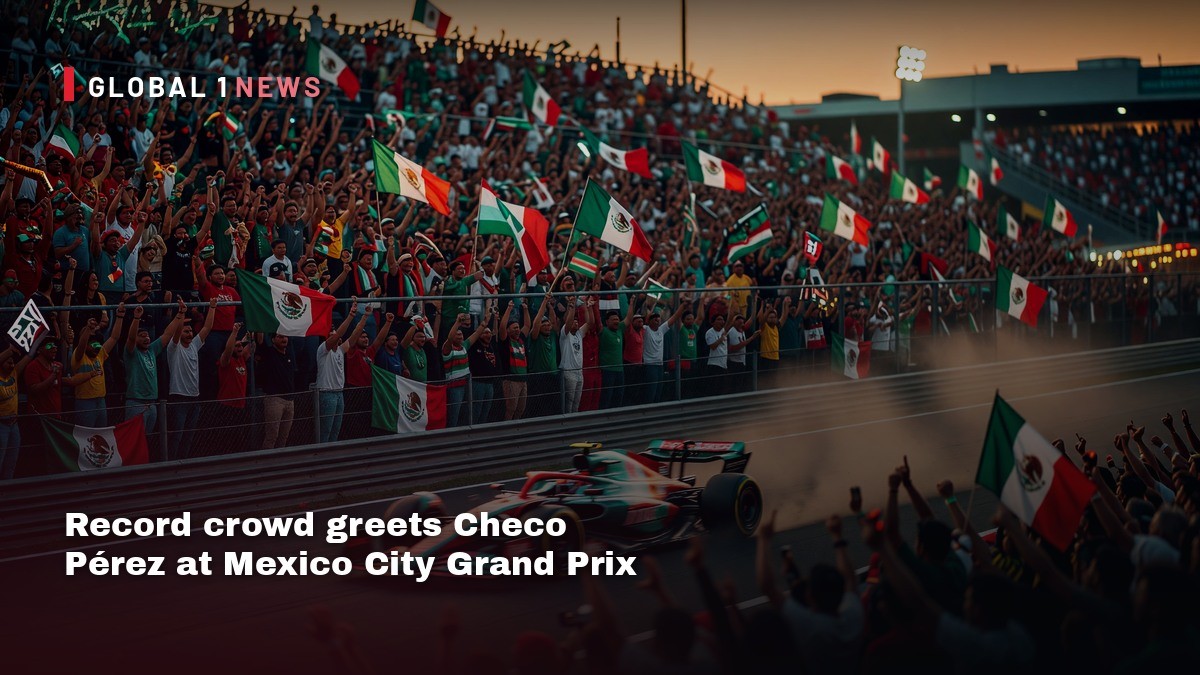
When the roar of engines echoed through the Autódromo Hermanos Rodríguez this past weekend, the city’s streets swelled with a fervor that reminded many of a tianguis on a bustling Saturday morning. The return of Sergio “Checo” Pérez to Formula 1, now piloting a Cadillac, turned the three‑day Mexico City Grand Prix into a national gathering, drawing a record‑breaking 405,363 fans to the circuit. For families from the colonia of Iztapalapa to workers commuting from the outskirts of the State of Mexico, the event was more than a sport—it was a moment of collective pride, a reminder that Mexican talent can shine on the world stage.
Historic Attendance Numbers
Official reports confirm that the 2026 Grand Prix eclipsed the previous attendance record set in 2024, which stood at 404,958 spectators. The new total of 405,363 represents an increase of 405 admissions, a modest but symbolically powerful rise that underscores the magnetic pull of a home‑grown driver. The surge also surpassed the 401,326 fans who attended the 2025 race, a year when Pérez was absent after leaving Red Bull. The data suggests that his return alone added a tangible boost to the event’s draw.
Breaking down the three‑day schedule, Friday’s practice sessions attracted 102,122 fans, Saturday’s qualifying saw 147,889, and the race day itself brought 155,352 spectators. Each day’s numbers climbed, reflecting a growing excitement that built momentum as the weekend progressed. The pattern mirrors the way a Mexican family gathers more members around the table as a feast unfolds, each addition amplifying the communal spirit.
The Show Run on Reforma Avenue
Before the engines even roared on the track, Checo’s Show Run along Reforma Avenue on October 28 turned the city’s main boulevard into a living, breathing celebration. Over 100,000 people lined the avenue, waving flags and chanting his name as the driver’s Cadillac glided past historic monuments. The turnout, reported by Mexico News Daily, demonstrated that the enthusiasm for Pérez extends beyond the confines of the racetrack, spilling into the everyday streets where ordinary Mexicans live and work.
This pre‑race spectacle set the tone for the weekend, turning the Grand Prix into a cultural event that resonated with the same intensity as a local fiesta. For many, seeing a Mexican driver in a sleek, electric‑powered Cadillac was a visual affirmation of progress and national pride, especially as the country continues to invest in greener technologies and sports infrastructure.
Checo’s Performance on the Track
Pérez entered the race from the 20th spot on the grid, a position that would normally demand a disciplined, patient approach. Yet the opening laps saw him surge forward, gaining six places to reach 13th. This early progress illustrated both his skill and the advantage of a home crowd cheering him on. However, the race narrative shifted when a pit‑stop issue at lap 32 slowed his momentum. A malfunctioning right‑side wheel gun cost him an estimated four to five seconds, according to Pérez’s post‑race comments, effectively erasing the positions he had earned.
Compounding the setback was a five‑second pit‑lane speeding penalty, which dropped him further to 19th. Even after a red‑flag incident involving Valtteri Bottas that briefly shuffled the order and allowed Pérez to climb to 14th, he ultimately crossed the finish line in 17th. A later penalty to Pierre Gasly promoted him to 16th, but the result kept him outside the points‑scoring positions. The performance, while not podium‑bound, highlighted the thin line between triumph and disappointment in a sport where seconds matter as much as a family’s livelihood.
Technical Hurdles and Team Challenges
Checo’s own words after the race painted a clear picture of the challenges faced by the Cadillac team. “We had a very good initial start, but then we had a very bad pit stop — the right‑side wheel gun broke down and we lost 4 or 5 seconds — which meant we effectively lost the positions we had gained over the other drivers at the start,” he explained. The statement underscores how technical reliability, especially in high‑pressure moments, can dictate outcomes as much as driver skill.
For a team transitioning to electrified power units, such hiccups are part of a learning curve. The incident serves as a reminder that the path to competitive parity involves not only speed on the track but also flawless execution in the pits. In the broader context of Mexican motorsport, the episode may inspire local engineering schools and workshops to focus on high‑performance automotive technology, fostering a new generation of technicians capable of supporting world‑class teams.
Impact on Mexican Motorsport Culture
The record attendance and the palpable energy surrounding Pérez’s return reverberate beyond the confines of the Autódromo. In neighborhoods across the capital, children mimicked the sound of revving engines with makeshift toys, while vendors at local tianguis sold Pérez‑branded merchandise alongside traditional snacks. The event reinforced the idea that a Mexican driver can compete at the highest level, inspiring aspiring racers from the ejidos of Jalisco to the barrios of Monterrey.
Moreover, the race’s electric component aligns with Mexico’s growing emphasis on sustainable energy. As the country invests in renewable projects and cleaner transportation, the visibility of an electrified Formula 1 car on Mexican soil may encourage public discourse about the future of green technology, linking the thrill of sport to broader societal goals.
Comparative Performance of the Field
While Pérez fought to climb the order, the race’s ultimate winner was his former Red Bull teammate Max Verstappen, who secured first place. The podium was completed by 20‑year‑old Mercedes driver Kimi Antonelli, who finished third and became the youngest champion of the season. Their performances illustrate the competitive landscape Pérez re‑entered, where seasoned champions and rising stars alike vie for supremacy.
Antonelli’s achievement, in particular, signals a generational shift, as younger drivers begin to dominate the sport’s narrative. For Mexican fans, watching a compatriot contend with such talent adds a layer of admiration and anticipation for future seasons, where Checo may yet translate his early race gains into a stronger finish.
Looking Ahead: What the Future Holds for Checo and Mexican Fans
Despite the setbacks, Pérez described his return to Mexico City as “a very special moment.” The emotional resonance of racing on home soil, coupled with the record‑breaking crowd, suggests that his partnership with Cadillac will continue to draw significant public interest. As the team refines its pit‑stop procedures and addresses technical glitches, the potential for better results in upcoming races grows.
For the Mexican public, the Grand Prix has reaffirmed the power of sport to unite communities, celebrate national talent, and spark conversations about technology and progress. The weekend’s events will likely be recounted in family gatherings, at the local tortillería, and across social media, reinforcing a shared narrative of pride. As the next season approaches, fans will watch closely, hopeful that Checo’s next lap will bring him closer to the podium and further cement his place in the annals of Mexican motorsport history.
This article was produced with AI-assisted research and editorial support. Reporting is based on the source material cited below. Sources: Mexico News Daily; mexiconewsdaily.com; Global1.News (03 November 2026).
By Rosa Martinez, Staff Writer
What's Your Reaction?
 Like
0
 Dislike
0
 Love
0
 Funny
0
 Wow
0
 Sad
0
 Angry
0

Latin America/Andes Correspondent at Global1.News. Based in Bogota, covering politics, environment, energy, and social movements across the Andean region. Passionate about environmental journalism and communities protecting their land.











Comments (0)