
Yuan's African Push Widens as Libya, Zambia Deepen Ties
Libya's banks are preparing to join China's CIPS payment network and Zambia now accepts yuan mining taxes, deepening the renminbi's African footprint in a shift with major implications for dollar dominance, China-Africa trade and Japan's currency diplomacy.
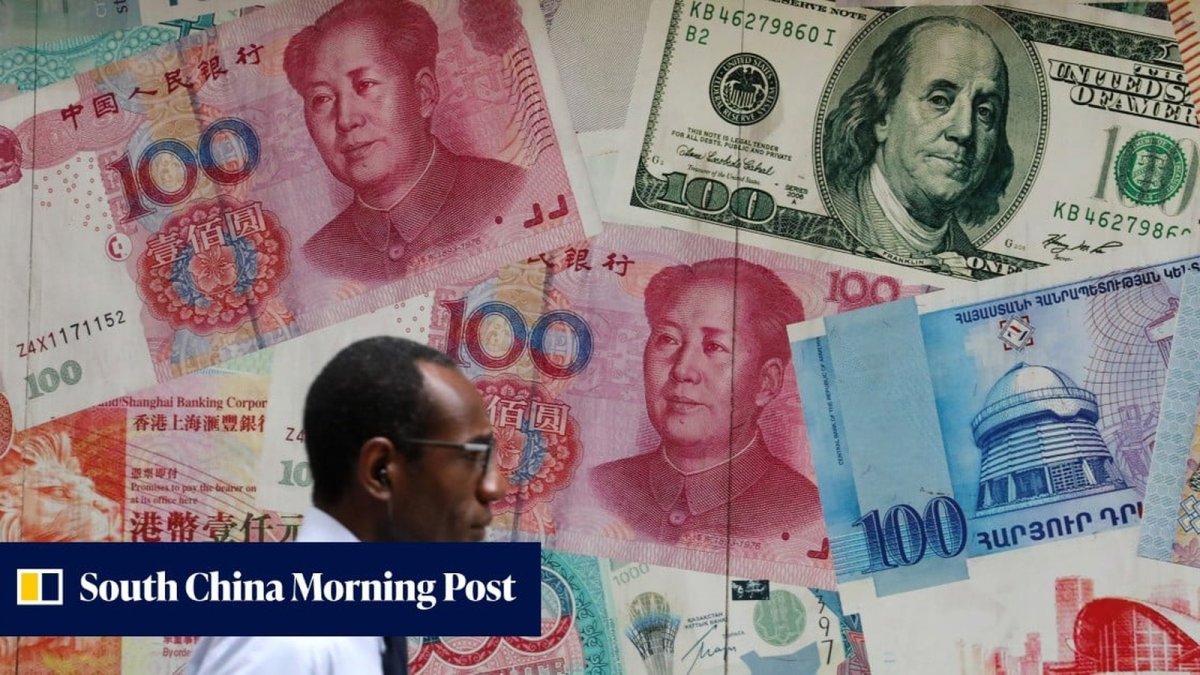
Renminbi Gains Ground Across Africa as Beijing Extends Payment Networks
The Chinese yuan is tightening its grip on African trade finance as Libya's banks prepare to join Beijing's Cross-Border Interbank Payment System, known as CIPS, and Zambia becomes the first African nation to accept mining taxes in the Chinese currency. The developments, reported Sunday by the South China Morning Post, mark the latest milestones in China's decade-long campaign to build an alternative to the dollar-dominated global payment system.
Tags: yuan, renminbi, CIPS, China-Africa trade, Libya, Zambia, Standard Bank, panda bonds, de-dollarization, currency diplomacy
Libya's Banks Line Up for CIPS Membership
Following talks in Beijing between Central Bank of Libya Governor Naji Issa and People's Bank of China Governor Pan Gongsheng last month, Libyan banks are set to join CIPS, the cross-border settlement network that competes with the Society for Worldwide Interbank Financial Telecommunication, or Swift. According to the state-run Libyan News Agency, the move will streamline commercial transactions, accelerate cross-border transfers and boost trade flows between the two countries.
Libya also plans to tap China's capital market by issuing panda bonds — yuan-denominated debt sold by foreign entities in mainland China — which could help fund the country's reconstruction following years of conflict. The agreement was first reported in mid-July by Libyan state media and confirmed by multiple regional outlets, with the Libyan central bank describing the arrangement as a formal step toward deeper financial cooperation.
Zambia, Angola and Kenya Expand the Yuan's Fiscal Footprint
Libya is not alone. Zambia began collecting taxes and royalties from Chinese mining firms in yuan in January, channelling the currency back to Beijing to fund imports and service loans — the first arrangement of its kind on the continent, confirmed by the Bank of Zambia. Angola's second-largest commercial lender, Banco de Fomento Angola, is preparing to become the country's first bank to join CIPS as it seeks to meet rising local demand for direct yuan settlements, following the Angolan central bank's decision to allow commercial banks to use the yuan to meet foreign-currency requirements.
China has also signed currency swap agreements with several African nations, including Nigeria and South Africa. Kenya converted its railway debt to yuan last year, with Ethiopia and Mozambique now negotiating similar restructurings, according to the SCMP report.
Standard Bank's Clearing Milestone Signals Rising Demand
Africa's largest bank by assets, Standard Bank — 20 per cent owned by China's Industrial and Commercial Bank of China — is leading the yuan's expansion on the continent. Authorised by the People's Bank of China to clear yuan across 19 African nations, it announced on July 27 that it had processed 8 billion yuan (about US$1.2 billion) via CIPS since late last year. Its Kenyan arm, Stanbic Bank, recently partnered with ICBC to launch direct yuan clearing in the country, enabling local traders to settle cross-border deals without using the dollar.
The clearing volumes underscore the scale of the shift. China is Africa's largest trading partner and the primary financier of the continent's megaprojects, with bilateral trade reaching a record US$203.5 billion in the first half of the year, according to the SCMP report. Zero-tariff access for African exports, alongside rising Chinese shipments of machinery and industrial equipment, has fuelled demand for direct yuan clearing across African supply chains.
Why African Economies See the Yuan as a Sanctions Buffer
Beyond lower transaction costs, expanding CIPS access offers African countries a buffer against the direct and indirect effects of Western sanctions. Kai Xue, a Beijing-based corporate lawyer, told the SCMP that even when African countries are not themselves the target of sanctions, they can still be caught up in their wider effects. He pointed to 2022, when Nigeria was forced to buy emergency supplies of Canadian potash after being unable to import fertiliser from Russia due to Western sanctions, and to Mauritania, where US sanctions reportedly barred the country from purchasing boats from a Chinese company needed to protect its Grand Tortue Ahmeyim offshore gas field.
Xue stressed that while a yuan-based system would not soon replace the dollar, it offered African nations a viable alternative for trade with China and the Global South by reducing their exposure to disruptions in the dollar-dominated system. Charlie Robertson, an Africa-focused economist, said China's interest rates and currency moves would soon carry increasing weight across the continent. "As China is Africa's biggest trading partner, this would make the yuan more important than the US dollar," Robertson said.
The pattern extends beyond Africa. Beijing has been steadily widening CIPS membership across the Global South, from Gulf states to Latin America, as part of a broader effort to insulate trade from US financial statecraft. For African governments, the appeal is pragmatic as much as political: settling in yuan removes the need to hold large dollar buffers, cuts conversion costs on China-bound exports, and preserves access to Chinese credit lines that are often denominated in renminbi. Lauren Johnston, a China-Africa relations specialist at the AustChina Institute, told the SCMP that greater use of the yuan instead of third currencies such as the dollar or euro may facilitate even more trade "at least at the margins".
What the Yuan's Rise Means for Japan's Africa Diplomacy
For Tokyo, the yuan's advance in Africa carries strategic weight. Japan has long courted the continent through the Tokyo International Conference on African Development, or TICAD, a platform launched in 1993 that has channelled billions of dollars into African infrastructure and private-sector projects. Yet Japan's yen has not translated that diplomatic presence into payment-network influence: Japanese banks remain anchored to dollar and yen clearing through correspondent banking, and Tokyo has no rival to CIPS in the region. Japanese trading houses such as Mitsui and Marubeni still handle a significant share of Africa's commodity flows, but those deals are settled overwhelmingly in dollars, leaving Japanese finance dependent on the very infrastructure Beijing is working around.
The contrast is sharpest in resource finance. Japanese trading houses and lenders still dominate certain African commodity corridors, but Chinese banks' willingness to settle in yuan — and African governments' growing acceptance of the currency for taxes, royalties and debt — gives Beijing a structural advantage that yen diplomacy has not matched. As African central banks diversify their reserves, the yuan's share is likely to grow at the yen's expense in regional trade settlement, a trend Japanese policymakers will be watching closely ahead of TICAD's next ministerial meetings.
What to Watch For
The yuan's African expansion is still in its early innings: CIPS processing volumes remain a fraction of Swift's, and the yuan accounted for a small share of global payments even after years of promotion. But the trajectory is unmistakable. Watch for three signals in coming months: the first Libyan bank's formal CIPS onboarding, whether Ethiopia and Mozambique finalise yuan-denominated debt restructurings, and whether more African central banks follow Zambia in accepting yuan for fiscal payments.
For Japan and the broader Asia-Pacific, the lesson is that currency influence follows trade infrastructure. As Beijing builds out CIPS access across the Global South, the yen — and the dollar — will be competing not just with a currency, but with a network. The next TICAD round will show whether Tokyo is ready to offer African partners a comparable alternative of its own.
By Kenji Tanaka, Staff Writer
This article was produced with AI-assisted research and editorial support. Sources: South China Morning Post (Jevans Nyabiage, Aug 16 2026), Libyan News Agency, Bank of Zambia, Standard Bank, Kenya Wallstreet, BusinessDay Nigeria.What's Your Reaction?
 Like
0
Like
0
 Dislike
0
Dislike
0
 Love
0
Love
0
 Funny
0
Funny
0
 Wow
0
Wow
0
 Sad
0
Sad
0
 Angry
0
Angry
0

Japan Correspondent at Global1.News. Tokyo-based voice covering Japanese politics, technology, economy, and culture. Tracks the intersection of tradition and innovation in one of the world's most dynamic societies.














Comments (0)