
UK 'a Tinderbox': 19 Homes Lost to West Midlands Wildfires
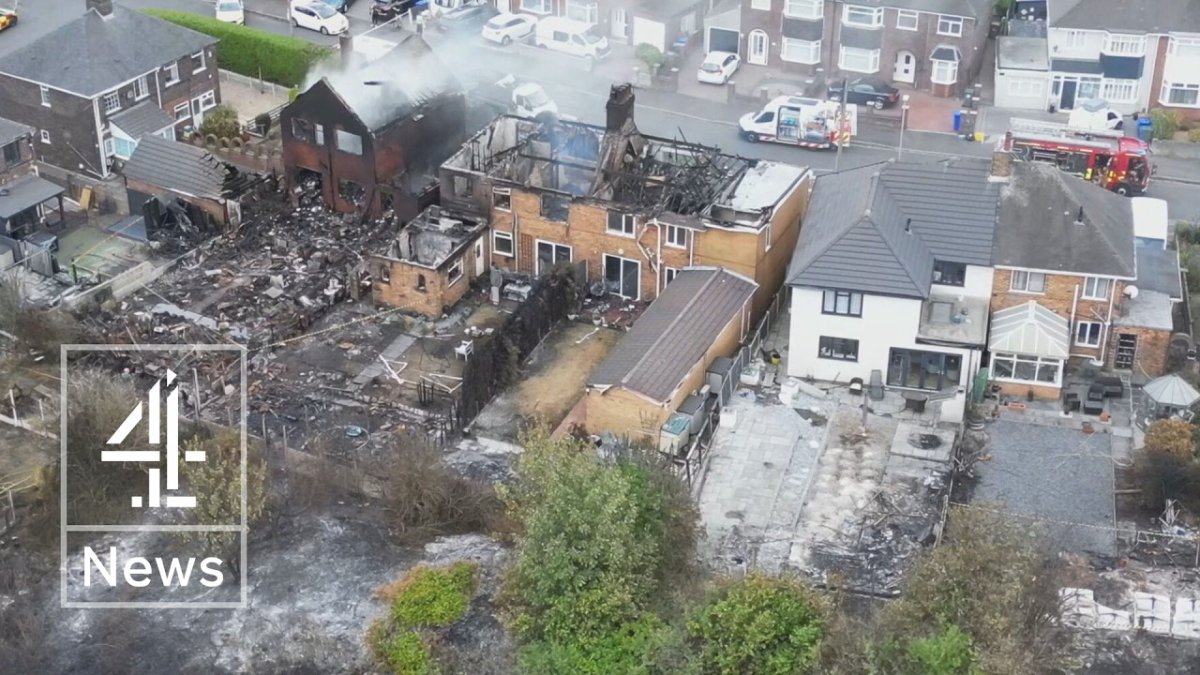
The United Kingdom has become "a tinderbox" — that was the stark warning from Prime Minister Andy Burnham on Friday as he stood amid the smouldering remains of what was once a residential street in Stourbridge. At least 19 homes have been completely destroyed and 54 people injured across a devastating cluster of wildfires that have stretched fire services to breaking point, forced military intervention, and prompted a nationwide emergency alert.
The United Kingdom has become "a tinderbox" — that was the stark warning from Prime Minister Andy Burnham on Friday as he stood amid the smouldering remains of what was once a residential street in Stourbridge. At least 19 homes have been completely destroyed and 54 people injured across a devastating cluster of wildfires that have stretched fire services to breaking point, forced military intervention, and prompted a nationwide emergency alert.
UK 'a Tinderbox': Wildfires Destroy Homes Across West Midlands as Record Heatwave Sparks National Emergency
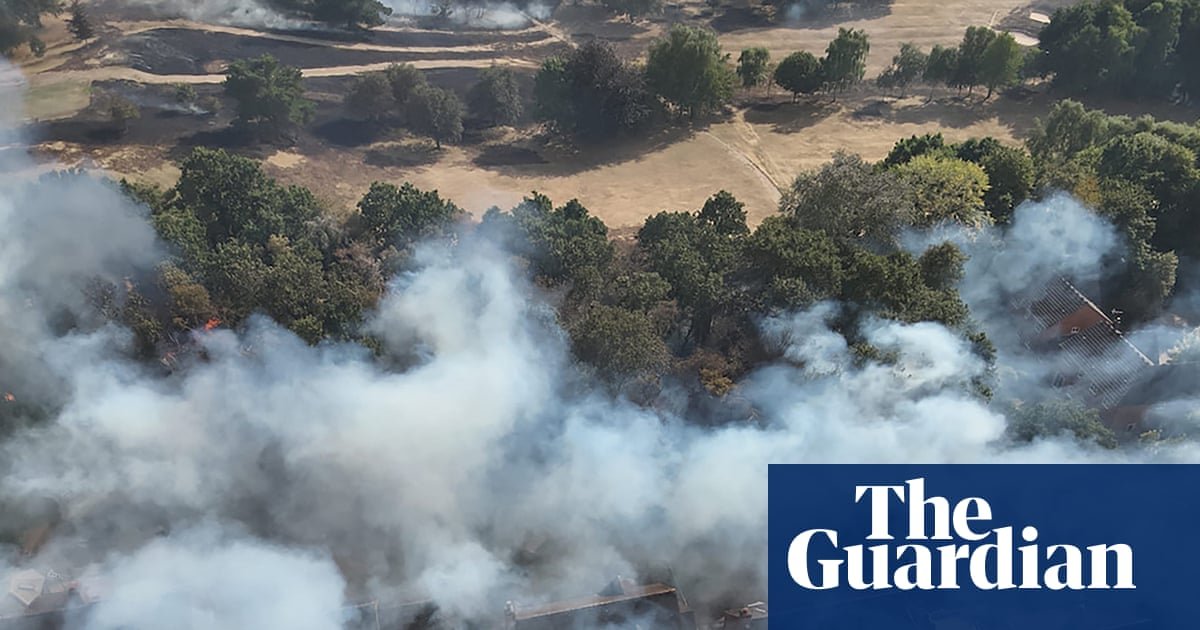
Stourbridge, UK – 14 August 2026 — The scale of the destruction is only now becoming clear. As dawn broke over the West Midlands on Friday, fire crews were still damping down hotspots in neighbourhoods that had been transformed into infernos just 24 hours earlier. The worst-hit area, Stourbridge in the Dudley borough, saw around 60 firefighters battle a blaze that began just before 1.30pm on Thursday and rapidly escalated into what West Midlands Fire Service described as "a wildfire with several points of origin, now involving multiple houses on fire."
Homes Destroyed and Lives Disrupted Across the Region
The human cost is substantial. Across multiple blazes in the West Midlands, at least 19 homes have been fully destroyed and a further 18 damaged. Six firefighters were taken to hospital suffering from smoke inhalation and heat exhaustion, while 54 people were injured on Thursday across eight separate fire sites — 19 of whom required hospital treatment. In Stourbridge alone, three firefighters and a child were hospitalised, with six more people treated for smoke inhalation.
The fires have torn through communities with terrifying speed. In Castle Vale, near Birmingham, a woman was seriously injured when flames ripped through homes. In Sandyford, Stoke-on-Trent, properties were lost to the advancing fire front. The M6 northbound near Birmingham was forced to close temporarily due to thick smoke, causing delays of over two hours for motorists. Rail services in the Stourbridge area were severely disrupted, with roads closed due to fire, smoke and fallen trees. Stourbridge town hall was opened to receive evacuees, and local councillor Andrew Southall confirmed that care home residents had also been evacuated as a precaution.
The disruption extended beyond the West Midlands. In Pershore, Worcestershire, 30 properties were evacuated and 200 residents left without power. Warwickshire Fire and Rescue declared a major incident over a "large fire" in Salford Priors, near Stratford-upon-Avon, which was eventually brought under control by Thursday evening.
Prime Minister Declares National Emergency Response
Prime Minister Andy Burnham visited the worst-hit area on Friday and delivered a sobering assessment. "The UK has become a tinderbox," he said, revealing that "37 fires are smouldering around the country." His response has been swift and decisive: the military has been deployed to assist fire services, and a nationwide ban on disposable barbecues has been imposed.
The Government also issued an unprecedented emergency alert to millions of mobile phones on Friday evening, beginning at 7pm. The message was unambiguous: "There is a very high risk of wildfires nationally. Residents, landowners and visitors should not undertake any activity that could start a fire, including disposable barbecues, firepits, garden incinerators or fireworks."
Burnham did not mince words about the strain on emergency services. He argued that fire services need more resources, pointing to the Stourbridge blaze as evidence that the current model is no longer fit for purpose in an era of extreme heat. His comments are likely to reignite a political row over fire service funding, which has seen real-terms cuts across many English brigades over the past decade.
Record-Breaking Heat Creates Unprecedented Conditions
The meteorological context is stark. Friday marked the 10th day of 2026 with temperatures of 35C or above — a record for any single year, according to the Met Office. Thursday was the hottest day of the year, with a provisional reading of 38.1C (100.6F) at Kew Gardens in west London. Some 40 locations across central and southern England recorded temperatures of 36C or above.
Dr Thomas Smith, associate professor of environmental geography at the London School of Economics, described the situation as "highly unusual" — noting that it is deeply concerning for a wildfire to destroy homes in the UK. "We are experiencing more extreme fire behaviour than we have historically," he said. "The combination of exceptional heat and prolonged dry conditions is creating fires that spread faster and burn more intensely than anything we have seen before in this country."
The statistics bear this out. More than 1,000 wildfires have been recorded in England and Wales this year, according to data shared by the National Fire Chiefs Council. That figure represents a dramatic escalation in fire activity, and experts warn that the trend is likely to continue as climate change makes extreme heat events more frequent and more severe.
London and Beyond: The National Picture
The crisis is not confined to the Midlands. In London, a wildfire tore through Hornchurch Country Park on Friday evening, requiring 14 fire engines and around 90 firefighters to bring under control. Mayor Sadiq Khan urged Londoners to take the extraordinary step of creating fire breaks in their gardens — clearing vegetation and combustible material to slow the spread of any potential blaze.
The fires have raised serious questions about preparedness across the UK. While the South East and Midlands have borne the brunt of this week's heat, the risk extends to Wales, Scotland and Northern Ireland, where prolonged dry spells have left vegetation tinder-dry. Fire services in rural areas, particularly those with large areas of heathland or forest, are bracing for further outbreaks as the heatwave shows no immediate sign of breaking.
The Political Fallout: Resources, Farming and Climate
Burnham's call for more fire service resources has opened a fresh front in the political debate. Fire brigades across England have faced significant budget pressures, and the National Fire Chiefs Council has repeatedly warned that the service is being asked to do more with less. The sight of homes burning in suburban Stourbridge — not a remote hillside, but a residential area — has sharpened the focus on whether the UK's fire and rescue infrastructure is equipped for a hotter, drier future.
There is also growing scrutiny of land management practices. Farmers and landowners have been urged to take precautions, but some rural groups have complained that cuts to agricultural budgets have reduced the capacity for controlled burning and vegetation management that can help prevent catastrophic wildfires. The Government's ban on disposable barbecues is a short-term measure; the longer-term question of how to manage the landscape in an era of extreme heat remains unresolved.
The Bottom Line — What Comes Next
The immediate priority is containment. Fire crews remain on the ground across the West Midlands, and the emergency alert sent to millions of phones on Friday evening is a clear signal that the Government expects the risk to persist. The military deployment will provide additional capacity, but it is a sticking plaster on a deeper problem.
For the families who have lost their homes in Stourbridge, Castle Vale, Sandyford and elsewhere, the recovery will be long and painful. For the firefighters who worked through Thursday's inferno in 38-degree heat, the physical and psychological toll will linger. And for the rest of the UK, the message from this week is unmistakable: the British summer is no longer what it was. The tinderbox is lit, and the question now is whether the country can adapt before the next spark flies.
By Erica Thornton, Staff Writer
This article was produced with AI-assisted research and editorial support. Reporting is based on sources cited in the article.
What's Your Reaction?
 Like
0
Like
0
 Dislike
0
Dislike
0
 Love
0
Love
0
 Funny
0
Funny
0
 Wow
0
Wow
0
 Sad
0
Sad
0
 Angry
0
Angry
0

US Politics and Policy Correspondent at Global1.News. Based in Washington DC, covering American politics, policy, elections, and the courts. Knows how the system works and tells you what it actually means.












Comments (0)