
The Next Phase of Japan-Vietnam Relations
The latest milestone, a May 2026 summit that identified “economic security” as a new priority, underscores a shift from merely broadening the agenda to testing whether the partnership can generate concrete economic and strategic outcomes.
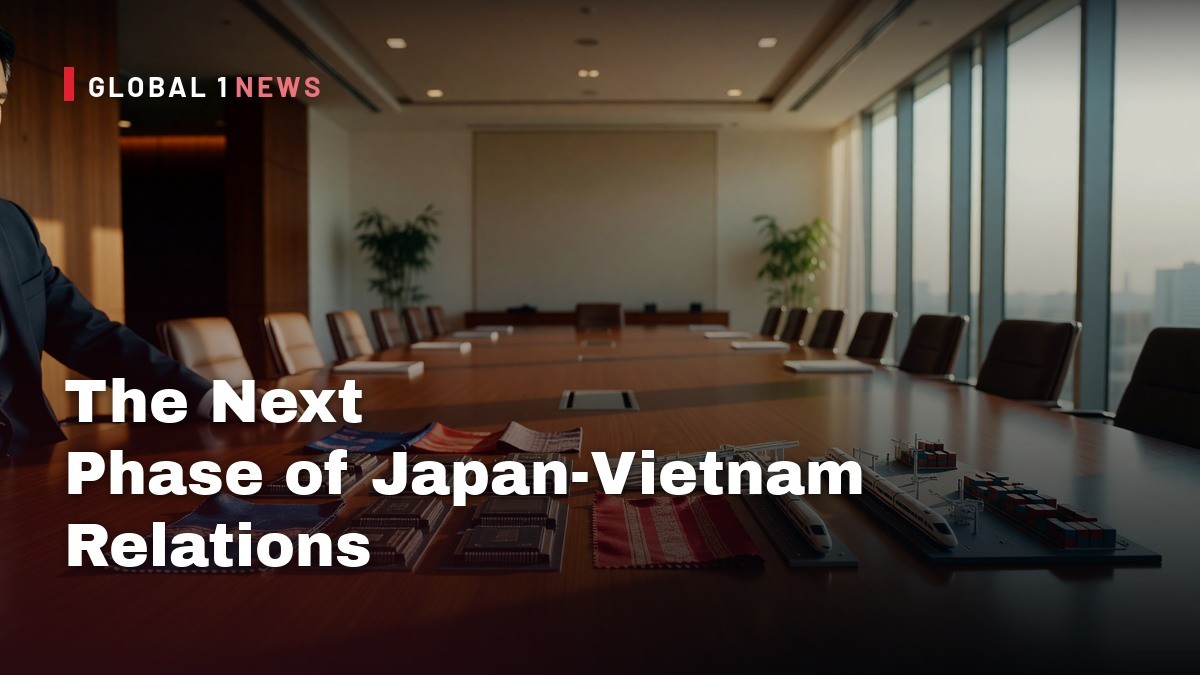
In November 2023, Japan and Vietnam elevated their bilateral framework to a “Comprehensive Strategic Partnership for Peace and Prosperity in Asia and the World.” Since that formal upgrade, the two governments have pursued an increasingly expansive agenda that spans economic security, the green transition, advanced technology, maritime cooperation, and development assistance. The latest milestone, a May 2026 summit that identified “economic security” as a new priority, underscores a shift from merely broadening the agenda to testing whether the partnership can generate concrete economic and strategic outcomes. This article examines the emerging contours of Japan‑Vietnam relations, focusing on the energy‑security test case, the cautious approach to critical‑mineral cooperation, and the broader institutional mechanisms that may shape the next phase of engagement.
From Comprehensive Partnership to Economic‑Security Focus
At the May 2026 summit, Japanese and Vietnamese officials agreed to foreground economic security, explicitly citing energy, critical minerals, artificial intelligence, semiconductors, and space as priority domains. This articulation reflects a dual calculation: Japan seeks to diversify its supply chains and bolster resilience, especially in energy and critical minerals, while Vietnam pursues greater independence, self‑reliance, and diversification in its external relations. The partnership’s design, therefore, aims to expand each side’s strategic options rather than bind them to an exclusive alignment.
Japan’s official export credit agency, NEXI, was tasked with supporting crude‑oil procurement for Vietnam’s Nghi Son refinery—a concrete step that illustrates how economic‑security cooperation can translate into tangible projects. The Nghi Son initiative is the inaugural undertaking under POWERR Asia, a broader bilateral mechanism intended to safeguard crude‑oil production and maintain key petroleum supply chains amid ongoing geopolitical uncertainty in the Middle East.
Energy Security as the Immediate Test Bed
Energy security offers the clearest near‑term metric for the partnership’s effectiveness. By channeling NEXI financing to the Nghi Son refinery, Japan provides Vietnam with a reliable source of refined petroleum while simultaneously securing a market for Japanese crude‑oil exports. This reciprocal arrangement aligns with Japan’s broader objective of mitigating supply‑chain disruptions and with Vietnam’s goal of diversifying its energy imports away from over‑reliance on any single source.
The POWERR Asia framework, launched alongside the May 2026 summit, signals a strategic intent to institutionalize energy‑security cooperation. By embedding the Nghi Son project within this mechanism, both governments signal a willingness to embed bilateral energy trade within a resilient, rule‑based architecture that can weather external shocks, such as volatility in Middle‑Eastern oil markets.
Critical Minerals: Cautious Collaboration
Japan’s interest in Vietnam’s critical‑mineral potential stems from a desire to reduce dependence on China, which dominates global rare‑earth production and high‑performance magnet manufacturing. However, the source material notes that Vietnam remains “closely tied to China,” lacking independent separation and refining capacity. While Vietnam’s expanding electronics and electric‑vehicle sectors could increase demand for rare earths, the country’s current industrial base does not yet support a full‑scale autonomous supply chain.
Consequently, the May 2026 summit treated critical‑mineral cooperation with restraint, emphasizing ongoing dialogue rather than announcing specific projects. This measured approach reflects an understanding that building domestic processing capability and downstream industries will require time, investment, and technology transfer—elements that cannot be rushed without risking unsustainable dependence on external actors.
Institutional Foundations: JCM, AZEC, and the Japan‑Vietnam Joint Initiative
Beyond sector‑specific projects, the partnership is underpinned by several institutional mechanisms. The Joint Crediting Mechanism (JCM) offers a bilateral framework for deploying decarbonization technologies and infrastructure, linking Japan’s low‑carbon expertise with Vietnam’s growing energy demand. Simultaneously, cooperation through the Asia Zero Emission Community (AZEC) facilitates joint efforts on green‑transition initiatives, reinforcing the energy‑security agenda with climate‑friendly objectives.
The Japan‑Vietnam Joint Initiative, established in 2003, continues to serve as a conduit for improving Vietnam’s investment climate and institutional framework. While the initiative’s original mandate focused on addressing practical impediments to bilateral trade, the evolving context—marked by Vietnam’s heightened capabilities and a broader set of partners—requires the initiative to adapt, emphasizing not only regulatory predictability but also the articulation of a compelling economic case for deeper engagement.
Human Capital and Technological Ecosystems
Both governments recognize that durable economic ties hinge on more than capital and raw materials; they depend on a “durable ecosystem connecting skills, research and development, manufacturing, supply chains, and ultimately markets.” Japan can contribute capital, mature industrial know‑how, and institutional expertise, while Vietnam offers an expanding production base and a growing pool of human resources. Joint efforts in semiconductor research and development, AI training, satellite data utilization, and digital transformation are already underway, suggesting a multi‑layered approach to building a shared technological ecosystem.
The emphasis on education and human‑resource development aligns with Vietnam’s broader foreign‑policy goal of self‑reliance. By fostering AI and semiconductor talent, Japan not only supplies technical expertise but also helps Vietnam cultivate the domestic capacity needed to manage and eventually own more of its supply chains. This synergy underscores the partnership’s long‑term orientation: rather than a short‑term procurement arrangement, the collaboration aspires to embed Vietnam within a broader industrial upgrading trajectory.
Risk Management and the Business Climate
Japanese business sentiment, as reflected in the source material, remains cautious. Persistent concerns about regulatory predictability, administrative efficiency, financing access, and risk‑sharing have been highlighted as essential conditions for deepening economic cooperation. The May 2026 summit’s focus on improving the investment and economic‑cooperation environment directly addresses these concerns, signaling Japan’s intent to create a more conducive climate for private‑sector engagement.
Moreover, the source stresses that government support should target risks that the market cannot efficiently bear, rather than providing indefinite subsidies. This disciplined risk‑allocation approach aims to ensure that projects are economically viable and sustainable without perpetual state backing, thereby fostering a healthier, market‑driven bilateral relationship.
Future Trajectories: From Ambition to Realization
The next phase of Japan‑Vietnam relations will be judged by the ability to convert ambition into concrete outcomes. Energy security, exemplified by the Nghi Son refinery and POWERR Asia, offers the most immediate avenue for measurable progress. Critical‑mineral cooperation, while strategically important, will likely evolve more gradually as Vietnam builds domestic processing capacity.
Long‑term prospects hinge on the development of a comprehensive industrial ecosystem that integrates human capital, R&D, manufacturing, and market access. By leveraging institutional platforms such as the JCM, AZEC, and the Japan‑Vietnam Joint Initiative, both sides can align their complementary strengths. Success will require Japan to demonstrate tangible value—capital, technology, and know‑how—while Vietnam continues to enhance its investment climate and expand its production capabilities. If these dynamics converge, the partnership could mature into a robust engine of regional economic resilience and strategic balance, reinforcing both nations’ aspirations for peace and prosperity across Asia and the world.
This article was produced with AI-assisted research and editorial support. Reporting is based on the source material cited below. Sources: The Diplomat; thediplomat.com; Global1.News (05 November 2026).
By Prof. David Park, Staff Writer
What's Your Reaction?
 Like
0
 Dislike
0
 Love
0
 Funny
0
 Wow
0
 Sad
0
 Angry
0

East Asia/Technology Correspondent at Global1.News. Seoul-based voice covering Korean politics, technology, business, and culture. Analyzes how technology and geopolitics intersect across East Asia.














Comments (0)