
Stranded cruise ship Odyssey leaves Cambodia with no passengers
When the MV Odyssey pulled away from the quiet harbor of Sihanoukville on Tuesday night, it did so with a stark emptiness that echoed through the bustling port town.
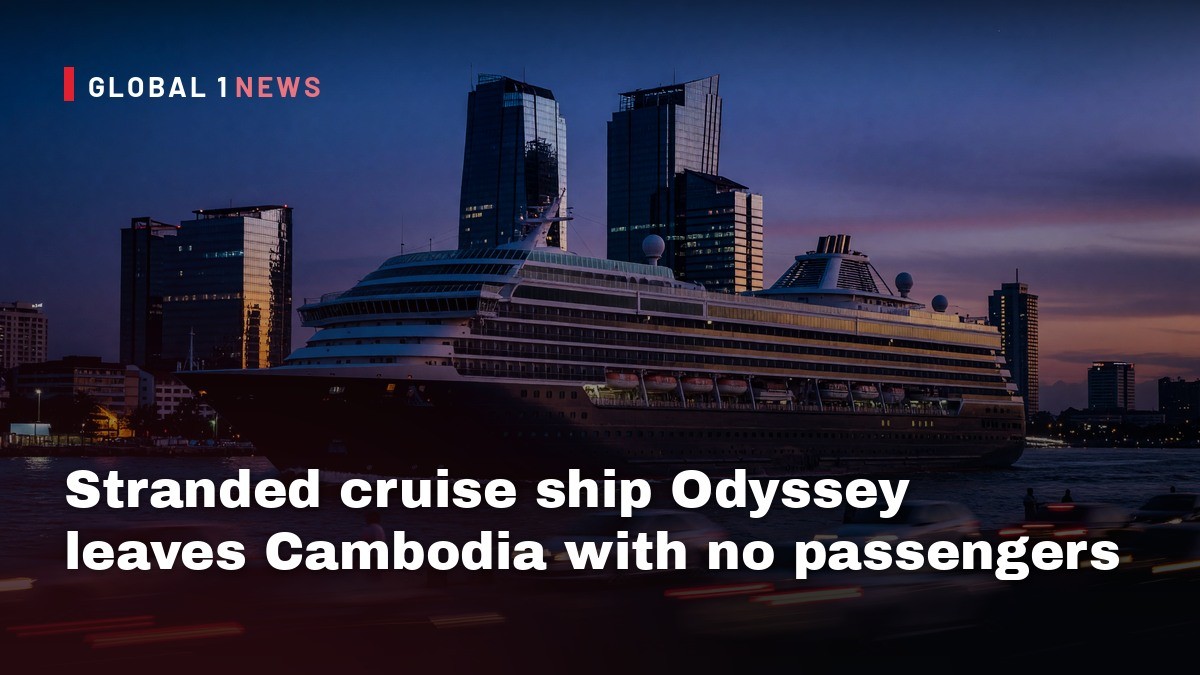
When the MV Odyssey pulled away from the quiet harbor of Sihanoukville on Tuesday night, it did so with a stark emptiness that echoed through the bustling port town. The vessel, owned by Florida‑based Villa Vie Residences, had been marketed as a floating home, a promise of long‑term living at sea combined with global travel. Yet, after a sudden announcement on 28 October that all 203 passengers must disembark within hours, the ship left Cambodia with only crew members on board. The scene was a vivid reminder of how global events can ripple through even the most idyllic of travel dreams, touching the lives of travelers and the communities that host them.
From a Dream Voyage to an Abrupt Halt
The Odyssey’s journey began in October 2024 when it set sail from Belfast after a major refit. Built in 1993 and having served under several names before the COVID‑19 pandemic, the ship was bought by Villa Vie Residences in 2023 with the vision of offering a three‑year around‑the‑world cruise. The concept appealed to a niche market of travelers seeking a permanent residence at sea, and many participants invested heavily, with several reporting payments exceeding $300,000 for a lifetime suite.
However, the venture ran into an unexpected obstacle: a sharp rise in fuel costs. Villa Vie Residences disclosed that monthly fuel expenses per cabin, which historically averaged around $1,800, had surged to an estimated $6,000‑$8,000 in parts of Asia. The spike was linked to the war in Iran, which has constrained traffic through the Strait of Hormuz, a key artery for petroleum supplies to Southeast Asia. Despite attempts to slow the itinerary and linger longer in ports, the company could not offset the soaring expenses, leading to the decision to suspend the voyage.
The Human Cost for Passengers
For the 203 passengers aboard at the time of the stop in Sihanoukville, the news was abrupt and unsettling. Most were Americans, and they were given only a few hours to gather their belongings before being asked to leave the ship. Nearly 100 chose to remain in the coastal town, while others dispersed across Cambodia or continued on to other destinations. The sudden disembarkation sparked a lively debate on social media, with many questioning whether the floating‑home model was ever financially viable.
Passengers also reported that Villa Vie Residences had been requesting additional contributions for several months to keep the ship operational. This practice, combined with the rising fuel bills, created a sense of uncertainty among the community of travelers who had placed their trust—and a substantial sum of money—in the promise of a stable, sea‑borne lifestyle.
Impact on the Local Community
Sihanoukville, a port city on the Gulf of Thailand, has become a frequent stop for cruise ships and a gateway for tourists exploring Cambodia’s southern coast. The sudden arrival and departure of the Odyssey brought a brief surge of activity: local vendors supplied fresh produce, taxi drivers ferried passengers to nearby attractions, and small businesses benefited from the influx of foreign visitors.
When the ship left, the local economy felt a sudden dip. Tang Sochetkresna, director of the Tourism Department of Preah Sihanouk province, noted that the ship’s departure was unexpected and that he did not know its next destination. The episode highlights how the fortunes of coastal communities can be tied to the itineraries of large vessels, and how quickly those ties can be broken when external pressures, such as fuel price shocks, intervene.
Geopolitical Undercurrents: Fuel, War, and Maritime Routes
The Odyssey’s plight illustrates a broader geopolitical reality. The war in Iran has led to reduced traffic through the Strait of Hormuz, a chokepoint that supplies a significant portion of the world’s petroleum. With fewer tankers passing through, fuel supplies in Southeast Asia have tightened, driving up prices for all users, from local fishermen to luxury cruise operators.
These dynamics underscore how regional conflicts can have far‑reaching economic consequences. For a cruise line that depends on predictable fuel costs to maintain its pricing model, the sudden escalation to $6,000‑$8,000 per cabin per month proved unsustainable. It also raises questions about the resilience of tourism‑dependent economies in the face of such external shocks.
Financial Viability of the Floating‑Home Model
The concept of a cruise ship as a permanent residence is alluring, especially for those seeking an alternative to traditional land‑based living. Yet the Odyssey’s experience reveals the fragility of this model when confronted with volatile operating costs. Passengers had paid large sums for long‑term accommodation, yet the company’s reliance on continual contributions to cover rising expenses suggests a precarious financial structure.
Media reports indicate that a creditor may have taken over management of the vessel, potentially steering it toward Singapore, a major maritime hub. This move could be an attempt to restructure the debt or find a new operational strategy, but it also signals that the original vision of a seamless, three‑year global cruise may be untenable under current market conditions.
Future Prospects for the Odyssey and Villa Vie Residences
At present, there is no official announcement regarding the Odyssey’s next steps. The uncertainty leaves both passengers and the broader cruise community watching closely. If the ship does head to Singapore, it may undergo further negotiations with creditors or be repurposed for a different itinerary.
Villa Vie Residences had already planned a second cruise and the acquisition of a second vessel to operate in a similar capacity. The current setback could force the company to reassess its expansion plans, potentially scaling back ambitions or seeking alternative financing to weather the fuel price volatility.
Lessons for Southeast Asian Tourism and Maritime Policy
The Odyssey episode offers a cautionary tale for policymakers in Thailand, Cambodia, and neighboring countries. As the region seeks to attract high‑value tourism, reliance on niche offerings such as floating homes must be balanced with realistic assessments of external risks, including fuel price volatility and geopolitical tensions.
Strengthening regional cooperation on maritime logistics, diversifying energy sources for ships, and establishing clearer consumer protection guidelines for unconventional travel products could help mitigate similar disruptions in the future. For the communities that welcome these vessels, building resilience through diversified tourism offerings can reduce the shock of sudden departures.
This article was produced with AI-assisted research and editorial support. Reporting is based on the source material cited below. Sources: Khaosod English; khaosodenglish.com; Global1.News (05 November 2026).
By Ann Srisawat, Staff Writer
What's Your Reaction?
 Like
0
 Dislike
0
 Love
0
 Funny
0
 Wow
0
 Sad
0
 Angry
0

Southeast Asia Correspondent at Global1.News. Based in Bangkok, covering Thai and Southeast Asian politics, economy, technology, and culture. Deep regional perspective on one of the world's most dynamic regions.











Comments (0)