
After Texas' blue wave, what happens to Elon Musk and SpaceX?
Elon Musk’s Texas love‑affair has always been a business decision wrapped in a political love‑letter. The 2026 midterm “blue wave” that swept the state, however, threatens to upend that balance.
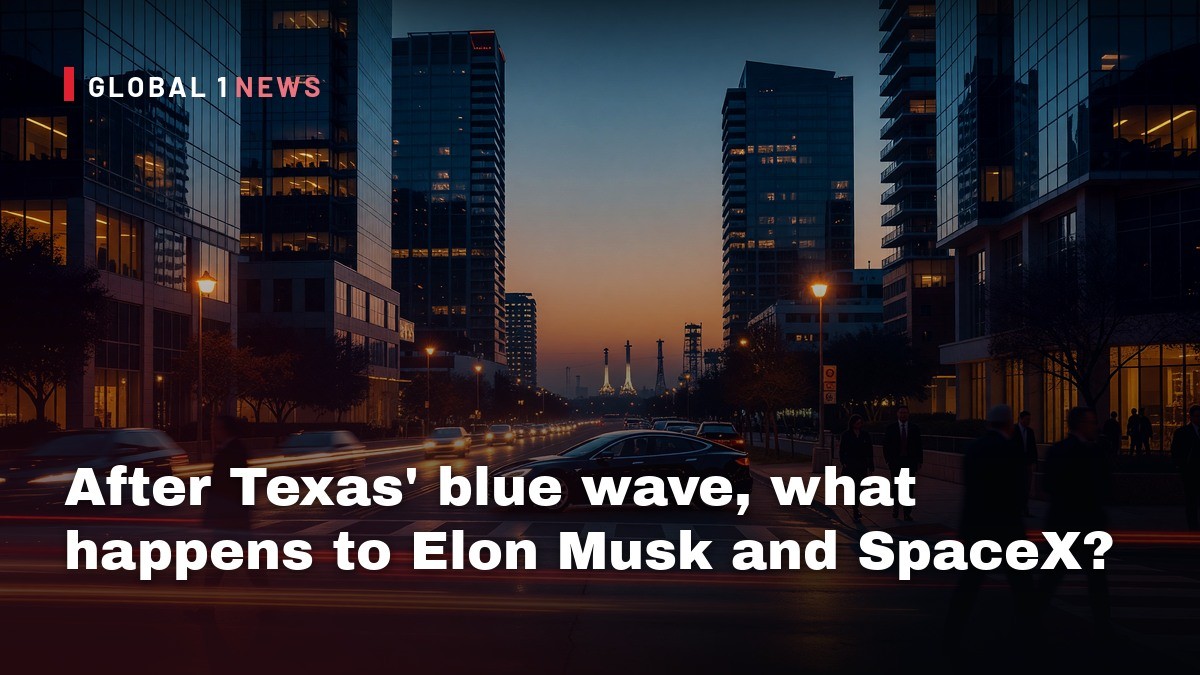
Elon Musk’s Texas love‑affair has always been a business decision wrapped in a political love‑letter. He fled California during the pandemic, set up shop outside Austin in 2020, and over the next six years turned the Lone Star State into the beating heart of SpaceX’s most ambitious projects. From the Starbase launch complex to a massive Starlink terminal factory east of Austin, and now a proposed 100‑million‑square‑foot “Terafab” chip plant in Grimes County, Musk has built an empire that leans heavily on Texas’ regulatory friendliness and political goodwill. The 2026 midterm “blue wave” that swept the state, however, threatens to upend that balance. As a founder who’s spent a decade wrestling with hyperscalers and VC‑fueled hype, I see a clear risk‑to‑reward shift for independent hosting providers watching Musk’s next move.
From California Conflict to Texas Consolidation
The catalyst was simple: Musk clashed with California authorities during the COVID‑19 pandemic and physically relocated to Texas in 2020. Within a year he began re‑branding the Rio Grande launch site as “Starbase” and urged staff to move south to work on Starship. By 2023 he added a massive factory for Starlink terminals east of Austin, cementing a multi‑facility footprint that spanned production, launch, and satellite services.
In July 2024 Musk announced the corporate headquarters would follow suit, moving from Hawthorne, California, to Starbase. He cited California’s “regulatory and political environment” as the reason—a line that resonated with anyone who’s watched hyperscalers bleed cash on compliance. The move wasn’t just a vanity play; it was a strategic consolidation that gave SpaceX direct control over its manufacturing pipeline and reduced exposure to California’s costly permitting regime.
The “Terafab” Ambition and Its Scale
SpaceX’s latest proclamation is a 100‑million‑square‑foot chip fab—dubbed the “most epic‑chip building effort in the world.” The company likens the space to 1,700 football fields, 15 Pentagon‑sized blocks, or three Central Parks. Whether the figure is literal or marketing hyperbole, the implication is clear: Musk wants a vertically integrated factory that can churn out the silicon needed for AI, robotics, and Starlink’s next‑gen terminals.
For us in the hosting world, that signals a potential shift in the supply chain. If SpaceX can produce chips at scale, the market for third‑party silicon suppliers could shrink, driving up prices for anyone still dependent on external fabs. Independent providers should watch for price spikes or supply constraints, and consider diversifying into alternative architectures—FPGA‑based acceleration, ARM‑centric designs, or even emerging RISC‑V solutions that may sidestep the chip crunch.
Political Patronage and Its Fragility
Musk’s Texas strategy has always been intertwined with politics. He praised the state’s Republican climate, and Governor Greg Abbott publicly lauded Musk as “the leading visionary of our time.” In return, Musk poured nearly half a billion dollars into Republican campaigns through his America PAC, with roughly half of that cash aimed at Texas races. That patronage helped keep the regulatory environment friendly and ensured a pipeline of allies in state government.
But the 2026 midterms flipped the script. A historic “blue wave” turned Texas from deep‑red to a more contested landscape, ousting many of Musk’s political friends. The immediate fallout was Musk’s silence on X, broken only by a late‑night tweet about “data centers in space” and a quick pivot back to promoting SpaceX AI and Starlink. The quiet is telling: without a reliable Republican ally base, Musk may need to recalibrate his political calculus.
What the Shift Means for Hosting Providers
SpaceX’s core businesses—Starship, Starlink, and orbital data centers—are still anchored in Texas. No insider expects a headquarters relocation away from Starbase any time soon, because moving would disrupt the tightly coupled manufacturing and launch schedule. However, the political shift could introduce new regulatory scrutiny, especially around large‑scale projects like the Terafab or future orbital data centers.
For independent hosting firms, the risk is twofold. First, any new state‑level regulations on land use, environmental impact, or labor could delay expansions or increase compliance costs. Second, Musk’s focus on “data centers in space” hints at a future where orbital hosting becomes a mainstream offering. If SpaceX can deliver low‑latency, high‑bandwidth orbital compute, the cost‑per‑gigabyte of bandwidth could drop, undercutting terrestrial fiber‑based services that many of us rely on for back‑haul.
Strategic Responses: Diversify and Double‑Down on Edge
Given the uncertainty, the prudent play is diversification. Independent providers should not put all their eggs in the terrestrial basket, but they also shouldn’t gamble on SpaceX’s orbital ambitions alone. Investing in edge infrastructure—micro‑data centers at the fiber‑to‑the‑node level—offers resilience against both chip shortages and potential regulatory roadblocks in Texas.
Edge sites can also serve as a bridge to orbital services. If SpaceX eventually offers “space‑based data center” credits, having a robust edge network will let you off‑load latency‑sensitive workloads locally while still tapping into the massive compute pool orbiting Earth. In short, treat SpaceX’s orbital push as a complementary layer, not a replacement.
Watching the Political Landscape: Talarico and Beyond
The next political actor to watch is Texas Senator‑elect James Talarico, whom Musk previously demonized. Talarico’s post‑election rhetoric framed Musk as a “Goliath” and warned against being “conquered.” Yet he also pledged to “serve all of Texas” and build bridges. If Talarico can temper his anti‑Musk stance and find common ground—perhaps by championing job creation in Grimes County—SpaceX may retain a friendly operating environment despite the broader blue shift.
For us, the lesson is clear: political risk is not binary. Even in a state that swings blue, individual legislators can become allies if you align on economic development goals. Engaging local officials early, showcasing how your infrastructure projects create jobs, and framing your services as essential to the state’s digital future can help insulate your business from partisan swings.
Actionable Takeaways for Independent Hosting Founders
First, audit your supply chain for chip dependency. If you’re sourcing from the same fabs that SpaceX is targeting, develop contingency plans now. Second, map out regulatory exposure in Texas and other red‑state hubs where you have assets; consider diversifying into states with more stable policy environments.
Third, explore hybrid architectures that blend terrestrial edge with emerging orbital compute. Pilot a workload that can run on both a local edge node and a SpaceX‑offered space data center, measuring latency, cost, and reliability. Finally, stay politically savvy. Build relationships with local officials, keep an ear to the ground on election cycles, and be ready to pivot messaging when the political winds change.
Elon Musk’s Texas saga is a masterclass in leveraging political goodwill for massive infrastructure bets. The recent blue wave reminds us that such goodwill can evaporate overnight. As founders, we must treat political capital as a volatile asset, diversify our technical dependencies, and stay nimble enough to ride the next wave—whether it comes from a Texas senator, a hyperscaler, or a satellite hovering 550 km above.
— Allan Ali, Founder
This article was produced with AI-assisted research and editorial support. Reporting is based on the source material cited below. Sources: Ars Technica; arstechnica.com; Global1.News (05 November 2026).
By Allan Ali, Global1.News
What's Your Reaction?
 Like
0
 Dislike
0
 Love
0
 Funny
0
 Wow
0
 Sad
0
 Angry
0

Publisher of Global1.News. Automation architect, systems builder, and the guy making sure the truth gets published.













Comments (0)