
Electricite du Liban Is Cutting Power to the State That Owns It
Electricite du Liban began cutting power to public institutions that owe it money, with about 100 bodies on the arrears list and 248 million dollars dating back to the 1990s. Hospitals are exempt; water authorities are not.
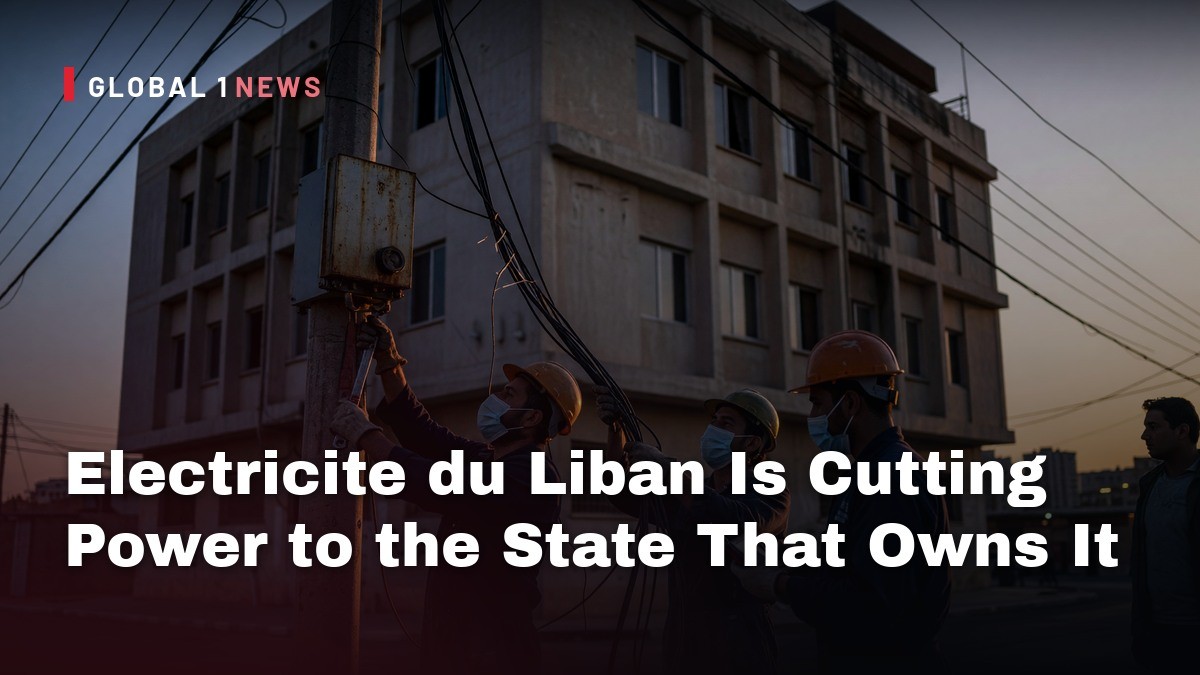
Electricite du Liban stopped issuing warnings on Monday. The state-owned utility began cutting power to public institutions that have not paid their bills, and it did it after a ten-day deadline that nobody in those buildings can say they did not see coming.
Electricite du Liban Is Cutting Power to the State That Owns It
Beirut, Lebanon — 3 November 2026 — The utility's board authorised the disconnections in October, after public administrations, institutions, independent agencies and municipalities ran up overdue bills despite repeated warnings. The cuts began to take effect on Monday, 2 November. An-Nahar reported about 100 public bodies were on the arrears list. EDL was still compiling the number of accounts actually disconnected, and the work was proceeding gradually.
The Deadline Was Not a Warning
The ten-day clock was the second ask, not the first. EDL made previous demands in August 2026, and the bills behind this round are not recent. State administrations owe money dating back to the 1990s, totalling 248 million dollars, according to Nidaa al-Watan, citing Patricia Jallad. That is the number sitting under every statement about arrears. EDL restored service to some agencies that paid part of what they owed and signed written plans to clear the balance in monthly instalments, and it said power could be cut again if an agency missed one. There is precedent: the utility restored power to public administrations and water services in 2023 after payment promises, while keeping the option of further cuts for nonpayment, EconoTimes reported. Its public line is defensive. The moves "are directed neither against the state nor against any of its institutions," EDL said, according to The National, but instead safeguard government funds. Read that again. The state utility is cutting the state to protect the state's money.
The List, and Who Is Not On It
Among those believed affected are the Ministry of Public Works and Transport, some municipalities and water companies, The National reported. Hospitals that have not paid their bills are exempt from the cuts. Water authorities are not exempt, and some villages in the Western Bekaa region were affected. Local MP Hassan Mourad criticised the move, saying "water is not a luxury." It names the thing people notice first. Power can be rationed in a household. Water cannot. The exemptions map the politics of the decision as clearly as the cuts do. Hospitals are protected. Water authorities are not. EDL has not published a count of disconnected accounts, and as of Monday it was still compiling that number. What is known is the shape of the list, not its size.
The Airport That Paid at the Last Minute
Beirut's Rafik Hariri International Airport, Lebanon's only international airport, was among the institutions at risk of having its power cut off late last week until it reached an agreement with EDL over a payment plan, The National reported. The airport owed roughly 22 million dollars. The agreement covered an immediate payment, rescheduling of the remaining arrears and a commitment to pay monthly bills regularly. Energy and Water Minister Joe Saddi announced the deal, according to Nidaa al-Watan. The airport did not lose power. It paid, and it signed. That distinction matters: the airport is the one institution where a disconnection would have been felt outside Lebanon within hours. The deal is also the template EDL says it wants everywhere: cash now, a schedule for the rest, current bills kept current. Whether other institutions take that template or test the utility's resolve is the open question.
The Second Phase Has Three Presidencies in It
EDL sources told Nidaa al-Watan the cuts would run in two phases. Phase one, from Monday, covers all public sectors, administrations, public institutions and ministries that did not pay, because the utility would not accept mere promises. Phase two was announced later and was not part of Monday's action. It names the three presidencies, the Republic, the Government and Parliament, the Justice Palace in Beirut, and the security agencies. That phase has not been carried out. The same sources said that not acting against those vital facilities today does not mean they will be exempted if they fail to meet their obligations. They will be warned to pay first. Put plainly, the utility has drawn a line around the buildings at the centre of the state and said the line is temporary. The three presidencies are not abstract. They are the offices where the decision to pay EDL would be signed.
The Minister Who Stopped Turning Up
Energy and Water Minister Joe Saddi, a member of the right-wing Lebanese Forces, suspended his participation in Cabinet meetings on 6 October. "I am suspending my participation in Cabinet sessions until the government assumes its responsibilities regarding the energy sector, seriously examines the proposals submitted, and responds to legitimate demands," he said at a press conference, describing the move as a way to make the voice of Lebanese citizens heard rather than an abandonment of his duties. The line that matters is the one he aimed at his own colleagues: "The government allocates the Health Ministry the necessary budgets to care for those affected by the war and the displaced, while the cost of the electricity provided to them is not covered." And the question underneath it: "How can citizens be asked to pay their bills in full when state institutions themselves do not pay the amounts they owe, which prevents us from buying fuel?"
Outside the Ministry, the Alarm Bell
The "National Front" held a sit-in outside the Ministry of Energy and Water building on 3 November, protesting the cut to electricity and water and the rise in fuel prices, and announcing a series of moves that would escalate, according to Lebanon's National News Agency, carried by Al-Manar at 14:43 Beirut time. Among those taking part were Dr Rabih Benat, who heads the Syrian Social Nationalist Party, Ali Hijazi of the "National Banner" party, Chaker al-Barjawi of the "Arab Current", Asaad Hammoud of the "Arab National Guard", Mehdi Mustafa, rapporteur of the parties' meeting, and a crowd of citizens. Barjawi, speaking for the protesters, said the symbolic sit-in was the start of escalating moves aimed at "ringing the alarm bell" before the government. He said it was not permissible to cut electricity and water or raise fuel prices randomly and without study, especially with winter approaching. He accused the government of sheltering behind "sectarian federalism" and evading its responsibilities, and said the coming stage would lead to "calculated escalation."
The Arithmetic That Cannot Be Hidden
EDL needs 50 million dollars a month until a variable tariff is approved, according to Nidaa al-Watan. The current tariff is about 27 cents per kilowatt-hour against an estimated production cost of about 35 to 37 cents, per An-Nahar. The utility sells below cost on every unit it delivers. The present fuel-ship cargo is worth about 66 million dollars and covers about three weeks at roughly four hours of power a day. EDL built its 2026 budget on an assumption of about 680 dollars per metric tonne of gasoil. In August it reported the world price had reached close to 1,500 dollars, roughly 88 to 91 per cent above its own working assumption. Network losses are close to 40 per cent, per Libnanews, and EDL supplied only 31 per cent of Lebanon's electricity at the start of 2026, according to figures published by The National. None of these numbers move. They sit there while the arguments happen above them.
Who Actually Pays for the Gap
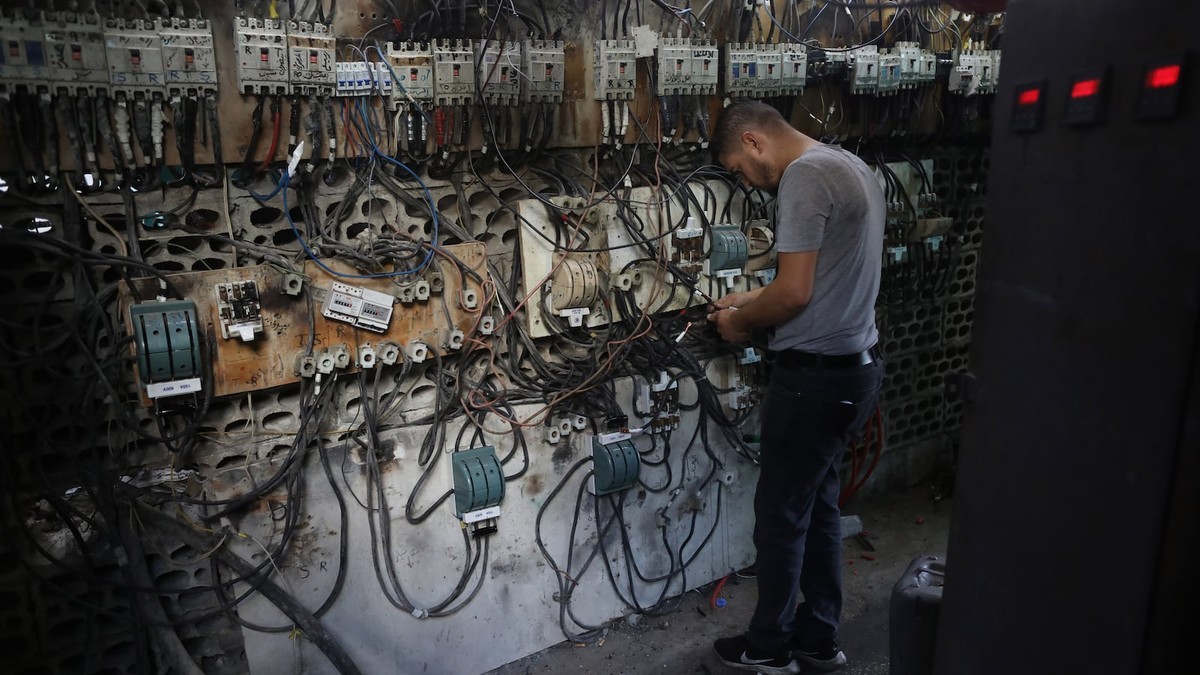
The household pays. The Ministry of Energy and Water's official indicative urban generator rate was 30,244 Lebanese pounds per kilowatt-hour in February 2026, and 48,241 by August, per Libnanews, nearly 60 per cent higher in six months. The scale carries a fixed fee too: 385,000 pounds for 5 amperes and 685,000 for 10. A household using 300 kilowatt-hours on the generator in August with a 10-ampere subscription paid roughly 15.16 million pounds, about 169 dollars at 89,700 to the dollar. At 500 kilowatt-hours the bill approaches 277 dollars; at 700 it exceeds 384. Those figures use the official tariff only. For a household on 1,500 dollars a month, a 277-dollar generator bill is more than 18 per cent of income before the EDL bill, water, telecommunications or housing. The World Bank projects year-on-year inflation of 17.5 per cent in Lebanon this year. Diesel has almost doubled since the end of February because of disruption in the Strait of Hormuz and threats over Bab al-Mandeb, L'Orient Today reported. Private generators are largely run by political parties or individuals with close ties to power, Al Jazeera reported.
The Budget Fight Behind the Switch
Saddi told Lebanese media he had been pressing Prime Minister Nawaf Salam's government to prioritise his ministry earlier in the year, but eased off when Israel's war on Lebanon intensified in early March. After the draft 2027 budget was announced in October, the Lebanese Forces and Saddi objected that electricity was getting too little attention. Al Jazeera reports Saddi was joined in boycotting a cabinet meeting by three ministerial colleagues from his party, which it dates to "last Thursday". L'Orient Today and EconoTimes date an earlier walkout by three Lebanese Forces ministers to 15 October, after no funding commitment was made. The two accounts may describe two separate sessions, and the reporting does not settle it. The party's proposals, from a statement issued after a meeting presided over by Samir Geagea, include a variable tariff to free the Lebanese from the cost of private generators, obliging state institutions to pay what they owe, eliminating the 300,000-pound tax on fuels, and having the state cover the cost of exemptions granted to certain regions.
Reform, or a Party Protecting Its Seat
Georges Adwan, a Lebanese Forces MP and the party's number two, told L'Orient-Le Jour the decision stems from a government "pushing him into debt, that is, tapping into depositors' money, as the Free Patriotic Movement did, which he will not do." The party's statement went further, saying the government "continues to make the Lebanese bear ever more costs in their lives caused by corruption and weapons." The dispute has heightened speculation about a cabinet reshuffle and Saddi's resignation. No resignation has been announced. Sami Zoughaib, an economist and research manager at The Policy Initiative, told Al Jazeera the boycott was a political move by Saddi and his party to avoid losing popular support: "If they fail in the eyes of people, it would be very difficult for them to have the ministry again." He also said the pre-2019 model of state-subsidised electricity ate a significant share of the annual budget, and that the state cannot reproduce it.
Qatar's Lifeline and the Grid Behind It
Qatar's Prime Minister Sheikh Mohammed bin Abdulrahman bin Jassim Al Thani visited Beirut last month and confirmed plans for an energy partnership including a solar project. Reuters reported that Doha offered to build two power plants over the next three years and to supply the country under a 20-year liquefied natural gas deal. Kuwait donated a fuel ship free of charge, and Lebanon was in talks with Qatar and other Arab states for more, per Nidaa al-Watan. Jessica Obeid, a Lebanese energy expert, said political stability is the first thing investors look for, and described Lebanon as "a bankrupt country that has been bankrupt for at least seven years". The grid itself is damaged and needs rehabilitation. The deeper problem, she said, is corruption "across the entire supply chain, and it's in the billions of dollars". Her verdict on the whole argument: "The problem I have in Lebanon is everything is presented as if we are inventing electricity. The year is 2026, almost 2027. Lebanon is a very small country. It just needs a vision and someone to take the bold decisions."
By Jessica Ali, Staff Writer
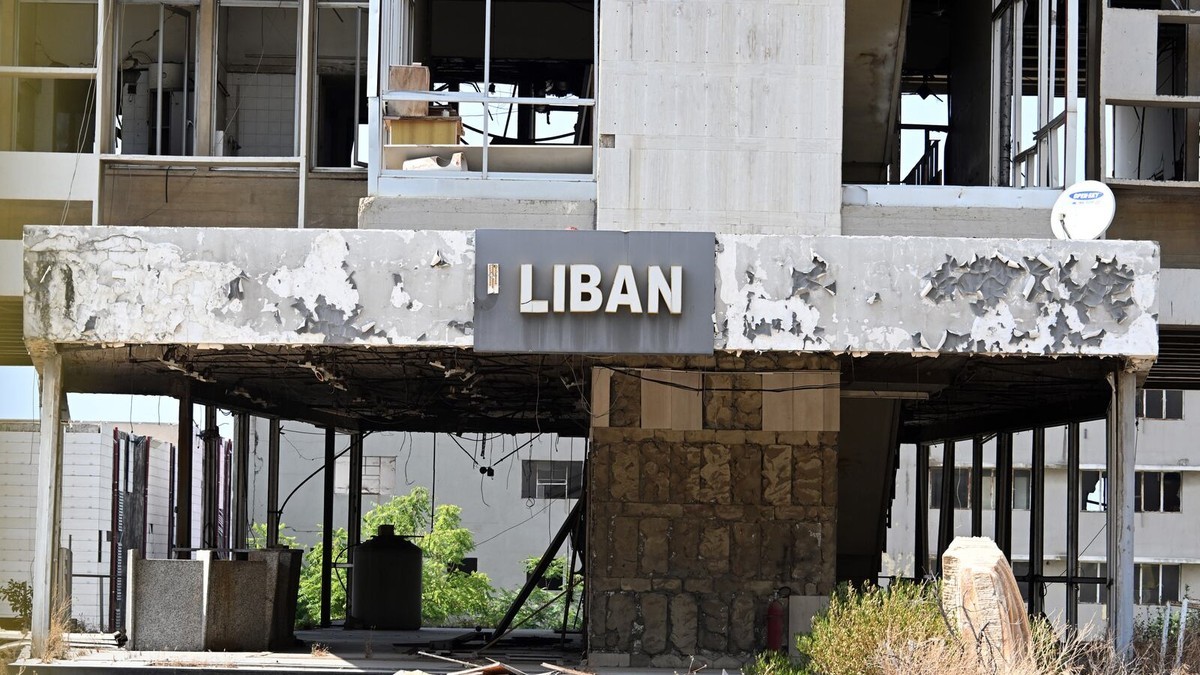
This article was produced with AI-assisted research and editorial support. Sources: Al Jazeera, The National, L'Orient Today, Nidaa al-Watan, An-Nahar, Libnanews and Lebanon's National News Agency. Photographs: Electricite du Liban headquarters, EPA via The National; generator distribution board, Getty Images via The National. Cover: Global 1 News editorial image.
What's Your Reaction?
 Like
0
 Dislike
0
 Love
0
 Funny
0
 Wow
0
 Sad
0
 Angry
0

Editor-in-Chief at Global1.News. Atlanta-based journalist who cuts through the BS and tells it like it is. Lead anchor, host, and the voice you hear when the spin stops and the truth starts.









Comments (0)