
Ryazan Is Burning Again, and Russia's Refining Recovery Is Running Out of Time
Russia's Ryazan oil refinery burned after a mass drone attack the regional governor confirmed, the fifth major refining target hit in a week. Ukraine has restarted its campaign against Russian refining as winter closes in.
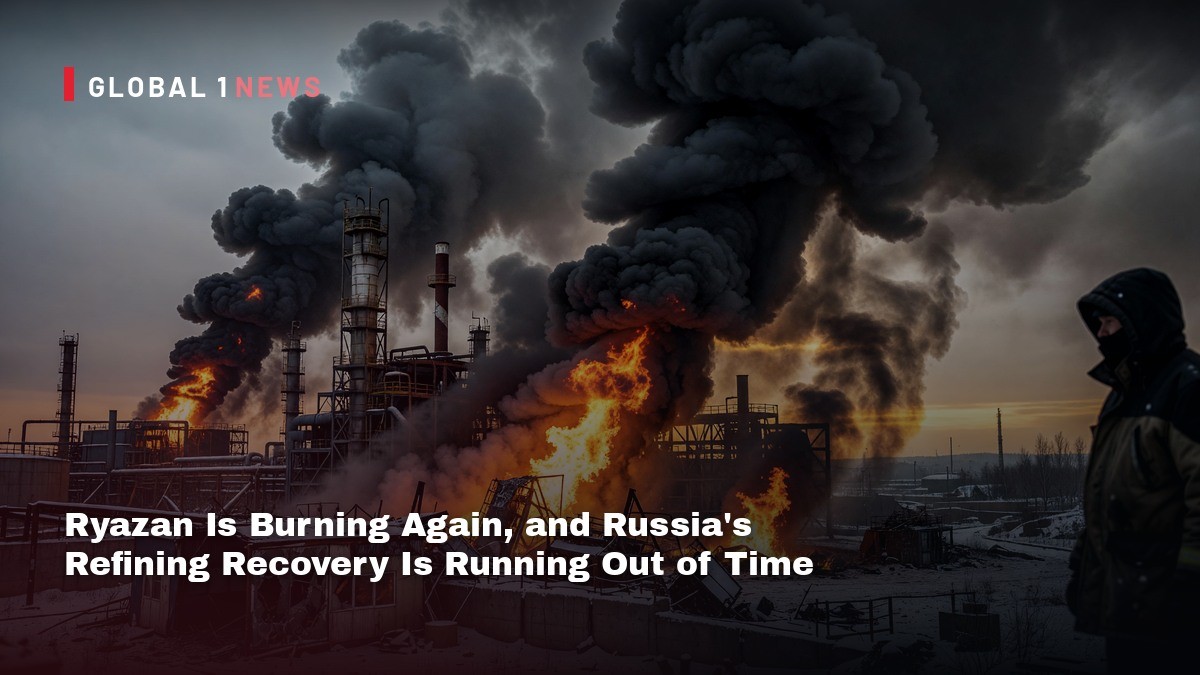
The sirens went off over Ryazan before first light, and by the time the all-clear sounded the sky over the city's southern industrial belt was carrying smoke from one of the largest oil processing complexes left in Russia. Regional governor Pavel Malkov did not name the target. He did not have to. Within hours, independent analysts had matched the video to Rosneft's Ryazan refinery, the plant that supplies petrol and diesel to Moscow and jet fuel to Russia's military aviation, and which has now been set alight three times in sixty days.
Ryazan Is Burning Again, and Russia's Refining Recovery Is Running Out of Time
Ryazan, Russia — What happened overnight is not complicated. What it means for Moscow's fuel supply this winter is.
A Fire the Governor Confirmed but Would Not Name
Malkov's statement, posted to the MAX platform in the early morning, was careful to the point of being evasive. "Tonight Ryazan Oblast was subjected to a massive UAV attack," he wrote. "There is damage from falling debris. Fires broke out on the territory of industrial facilities in Ryazan." He added that power transmission lines had been damaged, that windows were blown out in a school building, that several private houses were hit, and that one person was injured. "Operational services are working on site," he wrote. "We are assessing the damage and are already working on restoring the power supply."
Reuters reported the same essentials — debris-driven fires at industrial facilities, power disruptions across parts of the city, a single casualty — and noted, pointedly, that Ryazan region is home to a large oil refinery among other assets. Local outlet PNZ recorded the drone alert being declared around 01:29 Moscow time and the all-clear at roughly 05:55, and confirmed that the regional operational headquarters had acknowledged a fire at one enterprise without identifying it.

What the Analysts Found in the Video
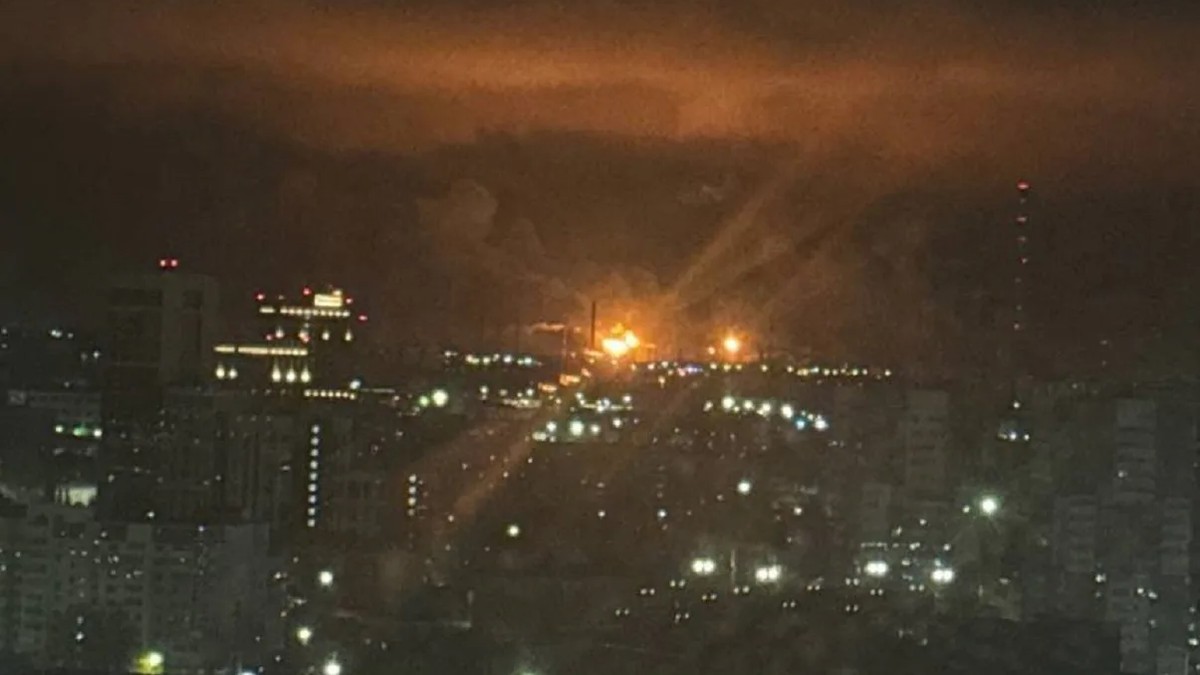
The identification came from the OSINT layer, not from the state. The independent Russian outlet ASTRA analysed eyewitness footage and concluded that the burning structure was the Ryazan Oil Refining Company, the Rosneft subsidiary known as RNPK, in the Southern Industrial Hub of the city. Ukrainian monitoring channel Exilenova+ reported that drones had reached the refinery's industrial area, and the Supernova+ channel published video of the blaze on the plant's territory.
Ukrainian outlet UNN, citing OSINT channels, counted at least six impacts on the facility. That number should be treated as an observation from open sources rather than a confirmed damage assessment. As of publication, no Ukrainian official body had claimed responsibility for this particular strike, and no independent party had established what was hit inside the plant — production units, storage, or peripheral infrastructure. Russian authorities have released no figures on the scale of the damage.
The Plant That Keeps Moscow Running
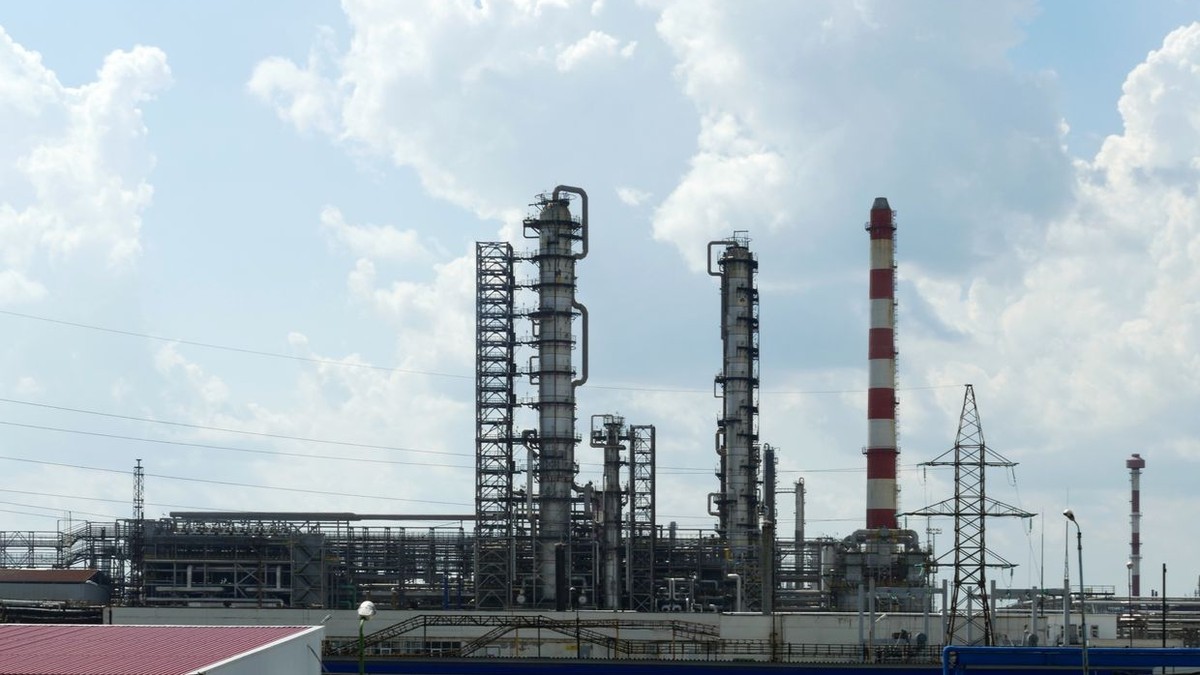
Ryazan is not an obscure facility, which is precisely why it keeps appearing in these reports. UNN describes it as Russia's third-largest refinery by capacity, behind only Omsk and Kirishi, able to process roughly 18 million tonnes of crude a year. The Kyiv Independent puts the figure at around 17 million tonnes, and ASTRA at between 17 and 18 million. All three descriptions converge on the same point: this is one of the four largest refining complexes in the country.
Its product slate explains its strategic weight. It turns out motor gasoline, diesel, jet kerosene, fuel oil and bitumen, supplies fuel to Moscow and the central regions, and produces the TS-1 aviation kerosene grade used by military aircraft. Reuters records that it processed 13.1 million tonnes of crude in 2024 — about 4.9 percent of Russia's total refining output. It sits roughly 500 kilometres from the Ukrainian border, well inside the reach of Ukraine's one-way attack drones.
Twice Burned This Autumn
The strike pattern matters more than any single fire. On 6 September, Ukrainian forces hit Ryazan with FP-1 drones in an attack the General Staff confirmed at the time. Reuters, citing two industry sources, reported that the plant halted operations: the main processing unit, capable of 8 million tonnes a year and roughly 160,000 barrels a day, was shut down along with a second primary distillation unit rated at 4 million tonnes. A third unit had already been in maintenance since mid-May. Repairs were expected to take several weeks.
Then came 15 October. Malkov reported a fire on the plant's territory after another mass drone attack, and Reuters reported the following day that the CDU-6 primary unit had stopped and several pipelines were damaged. Russia's defence ministry gave its own account of that night — four long-range Flamingo cruise missiles and 69 fixed-wing drones — and attributed the fires to falling debris.
The Week Russia's Refineries Kept Burning
Ryazan is the fifth major Russian refining target reported hit in the past week. The Novokuibyshevsk plant in Samara region was struck on 30 October, the first confirmed refinery attack in roughly two weeks after a lull that followed US pressure on Kyiv. Over the weekend drones struck Ufa, the Bashkortostan capital where Rosneft runs three refineries with combined capacity near 470,000 barrels a day, and an industrial site beside Lukoil's Norsi refinery in Nizhny Novgorod region, rated at about 340,000 barrels a day.
In the Kstovsky district of Nizhny Novgorod, governor Gleb Nikitin reported "significant damage" to an industrial enterprise on 1 November, saying more than a hundred drones had been destroyed over the region. Yaroslavl's Slavneft-YANOS plant, which handles around 15 million tonnes a year — roughly 5 percent of national capacity — burned on 3 November. OSINT analysts cited by RBC-Ukraine estimate that the three-day burst alone knocked out about 10 percent of Russia's refining capacity.
The Warehouse Beside the Refinery
Something else was reportedly hit in the same industrial park. ASTRA reported that the Wildberries distribution centre in Ryazan region may also have caught fire, identifying the site as the "Ryazan: Tyushevskaya" sorting complex, roughly 173,000 square metres in the Ryazansky industrial park near the village of Tyushevo. Local residents said the logistics hub was struck and burning. OSINT analysts had not confirmed that identification at the time of writing.
The warehouse network has been a target since mid-July. Reuters reported that strikes had damaged at least seven Wildberries facilities in a matter of days, destroying around 10 percent of the company's storage capacity. Ukraine's case against the retailer is that its logistics network moves military kit and sanctioned components — radios, body armour, drone parts — alongside ordinary consumer goods. Data Insight analyst Serhii Semko has estimated the damage to the operator at 147 to 280 billion roubles, with sellers' losses put at 445 to 507 billion.
Moscow's Own Tally Keeps Climbing
Russia's defence ministry publishes a nightly interception count, and the sequence tells its own story. It claimed 1,043 drones downed overnight on 30 October, 235 on 1 November, 212 on 2 November, 856 on 3 November and 709 on 4 November. Those are Russia's own figures, not independently verified totals, and they describe interceptions rather than impacts — but the volume indicates how much of the country's air defence is now committed to defending refineries and industrial parks.
The 4 November wave alone was reported across 14 regions plus Crimea and the Azov and Black Seas. Its most visible damage was in Adygeysk, in the Republic of Adygea, where a drone hit an Ozon marketplace warehouse and forced an evacuation. The night before that, Malkov had reported ten drones downed over Ryazan region, a private house damaged in the Klepikovsky district, a non-residential building set alight in the Rybnovsky district and one person injured in the city.
The Truce That Only Covered Refineries
None of this is happening in a vacuum. The Wall Street Journal reported that Ukraine had paused its refinery campaign after pressure from US President Donald Trump, who had argued before the midterm elections that the strikes were pushing up diesel prices. Energy analysts pushed back, identifying the US and Israeli war against Iran as the main driver of that increase. On 11 October, Trump announced an energy ceasefire that was subsequently reported to apply strictly to oil refineries.
That arrangement lasted nineteen days. Ukraine resumed on 30 October with the Samara strike, and by 2 November Bloomberg was reporting that Kyiv had restarted the campaign just as Russia's petrol shortages had eased — the queues at filling stations gone, imports up, domestic refining partly recovered. The sequencing is the story: the strikes resumed at the precise moment Moscow could argue it had absorbed the last round.
What the Export Numbers Say
The market has been pricing both halves of this. Bloomberg reported on 3 November that Russia shipped 3.65 million barrels a day of crude in the four weeks to 1 November, with refinery runs recovering during the pause in Ukrainian attacks. That recovery is the thing now under threat: runs remained substantially below seasonal norms even after the partial restart, leaving the domestic fuel market exposed.
There are knock-on effects beyond Russia's borders. Kazakhstan temporarily halted crude exports to Russia through the Atyrau-Samara pipeline after the Samara region strike. And the pattern of the past week — five refineries, one of them twice in three weeks — matters less for any single plant's output than for repair capacity. Each strike that hits a CDU unit forces the same specialist crews and the same imported components onto a longer queue.
What to Watch as Winter Closes In
Three things will decide how much this costs Moscow. First, what was actually hit inside Ryazan. A fire in a tank farm is a bad night; fresh damage to CDU-6 would be a serious problem, because that unit was already knocked out once this autumn, on 15 October, and the plant has lost primary units repeatedly through the year. Russia has not published an assessment, and it may not.
Second, the repair clock. Russia's refining system has spent 2026 absorbing repeated hits to the same facilities, and the cumulative effect is a shrinking margin of redundancy — one reason a single successful strike now moves prices more than it would have a year ago. Third, politics. Kyiv's willingness to keep striking depends on whether Washington's objection hardens into something with consequences, and that question just became harder to answer after Tuesday's vote.
By Jessica Ali, Staff Writer
This article was produced with AI-assisted research and editorial support. Sources: Reuters, The Kyiv Independent, UNN, RBC-Ukraine, ASTRA, Caliber.az, Glavred, Telegraf, PNZ, Lenta.ru, RIA Novosti, Izvestia, TASS, Interfax, NTV, Bloomberg, The Wall Street Journal, Ukrainska Pravda, NV, RFE/RL, Al Jazeera and the Russian Defence Ministry's published statements. Photographs: the fire over Ryazan on 5 November 2026 via UNN; a file photograph of the Ryazan refinery via The Kyiv Independent; a Russian Emergencies Ministry firefighter via RBC-Ukraine. Cover: Global 1 News editorial image.
What's Your Reaction?
 Like
0
 Dislike
0
 Love
0
 Funny
0
 Wow
0
 Sad
0
 Angry
0

Editor-in-Chief at Global1.News. Atlanta-based journalist who cuts through the BS and tells it like it is. Lead anchor, host, and the voice you hear when the spin stops and the truth starts.












Comments (0)