
Indonesia Earthquake: 68 Dead, 19,000 Displaced as Rescue Teams Battle Landslides and Cut-Off Islands
A magnitude 7.7 earthquake struck off Flores, Indonesia, killing at least 68, injuring 213, and displacing 19,000. Rescue teams face landslides and cut-off islands as 50,000 aid packages are rushed to the disaster zone.
A Shallow, Violent Rupture Off Flores
The ground beneath the Indonesian island of Flores buckled with a violence that residents are calling the worst of their lives. According to the United States Geological Survey (USGS), a magnitude 7.7 earthquake struck at a shallow depth of just 10 kilometers (6 miles), approximately 68 kilometers (42 miles) northwest of the town of Ende. The USGS attributes the event to shallow reverse faulting. The quake struck at about 6 a.m. local time on Saturday, August 15, 2026.
The tremor was felt with alarming intensity across the entire island of Flores, as well as in neighboring West Nusa Tenggara (NTB) and as far away as South Sulawesi. In the coastal city of Maumere, 52-year-old Theresia Uta described clinging to a tree for ten full minutes as the earth rolled beneath her. "Although I have experienced several earthquakes on Flores island before, this was by far the strongest and longest earthquake I have ever experienced," she told CNN. "The shaking was extremely powerful and violent."
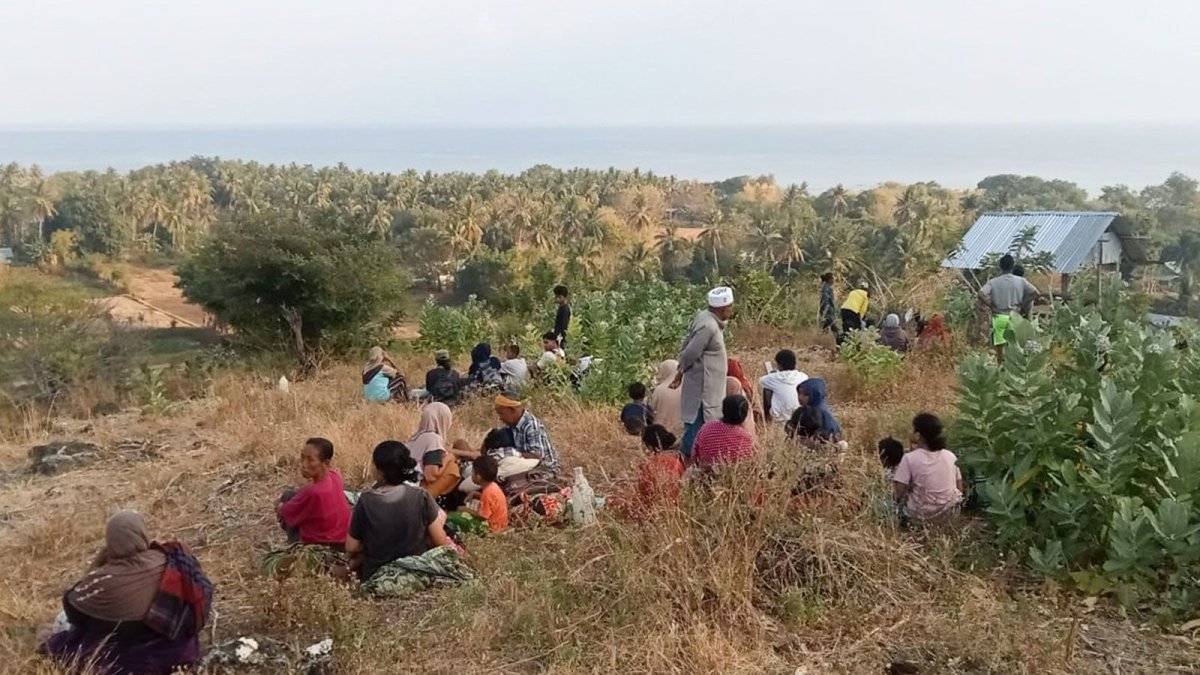
The initial tsunami warning sent residents scrambling for higher ground. The warning was later lifted, but not before authorities reported tsunami waves of up to 1.61 meters (5 feet 3 inches) along the coast. Abdul Mutas, a 63-year-old survivor, spent the night on a tarp with his family after fleeing the shoreline. "The tides were rising, so we ran," he said. "I only brought my body."
The official death toll, as of Monday, August 17, has climbed to at least 68 people, according to the latest figures from the Indonesian National Board for Disaster Management (BNPB) and the Associated Press (AP). The reality is that the toll is still being assessed as rescue teams reach areas that were completely inaccessible for the first 48 hours.
The Rising Toll: 213 Injured and a State of Emergency
The BNPB reports that at least 213 people have been injured. The damage to the built environment is staggering: more than 4,500 homes have been damaged or destroyed, according to the AP. Approximately 19,000 people have been forced into temporary shelters, though the AP also cites a figure of about 5,000 residents in formal shelter sites.
The BNPB's damage assessment lists 122 health facilities, 252 schools, and 84 places of worship as damaged. In the town of Ruteng, the worst-hit area, two emergency field hospitals have been set up to compensate for the loss of local medical capacity.
In response to the scale of the catastrophe, the governor of East Nusa Tenggara province declared a 14-day state of emergency on Sunday, August 16. Rasyid Jafar, a clothing trader in the hard-hit Reo area of Manggarai regency, put it bluntly: "My house is just rubble now. We need food, medicine and clean water urgently."
The BNPB is rushing nearly 5,400 food packages, two field hospital tents, medicines, and clothing to the island. A further 50,000 aid packages are en route, according to the agency.
Rescue Operations: 1,800 Personnel and a Race Against Time
More than 1,800 military and police personnel have been deployed to the disaster zone, according to the BNPB. They are supported by 10 aircraft and several naval vessels. The operation has already distributed more than 100 metric tons of emergency aid. The BNPB has also deployed a helicopter and an emergency response team to conduct aerial assessments.
Landslides have sheared away mountain roads, cutting off entire villages. Fathur Rahman, head of the search and rescue office in Maumere, reported progress on Sunday. "We have cleared most landslides and reopened roads to previously isolated villages," he said, "although communication disruptions and power outages continue to hamper search efforts."
Simon Subandi, the deputy regent of Sikka, described a population paralyzed by fear. "Almost all of Sikka's residents didn't dare stay indoors," he said. Authorities have recorded 1,576 aftershocks into Monday, August 17, though only 54 were strong enough to be felt by residents.
At the Roman Catholic St. Peter Major Seminary in Sikka, students were attending morning Mass when the roof of an assembly hall collapsed. Rev. Guidelbertus Tanga, the rector, described the scene: "Our students and nuns ran out in panic beneath a collapsing roof. At least one priest suffered a broken leg after jumping from the second floor of a building during the quake."
The Ordeal of Palue Island: A Near-Death Journey for Aid Workers
Aid workers did not reach Palue Island until late Sunday, a full two days after the quake, due to a treacherous combination of sea conditions and landslide-blocked terrain. Marselus Yugo Amboro, the deputy police chief of Sikka regency, described it as "a near-death journey." The roads, he said, "are steep and many were blocked by landslides."
The initial assessment from Palue is devastating. At least one villager has been confirmed dead, two are seriously injured, and nearly 150 homes have been destroyed. The survivors are in urgent need of food, water, and medical supplies.
In the Nagekeo regency, about 2,000 residents evacuated pre-emptively before the tsunami warning was lifted. The memory of the 1992 Flores earthquake and tsunami, which killed about 2,500 people, is still fresh in the collective consciousness of the island.
Aftershocks and a Second Quake: The Ring of Fire Roars
Hours after the initial 7.7 magnitude quake, a magnitude 6.9 earthquake rattled Northern Sumatra, according to the USGS. This was followed by a 5.7 magnitude quake roughly 600 miles north, off the Minahasa Peninsula. Indonesia sits on the Pacific Ring of Fire, a zone that produces about 90% of the world's earthquakes.
The aftershock sequence on Flores itself is ongoing and relentless, and every felt tremor sends a fresh wave of panic through the displaced population.
Monday, August 17, 2026, is Indonesia's 81st Independence Day. President Prabowo Subianto asked participants at the Jakarta ceremony to pray for the people affected by the disasters. He led a nationwide moment of silence honoring independence heroes.
The 2004 Sumatra earthquake, a magnitude 9.1 event, unleashed an Indian Ocean tsunami that killed about 230,000 people in a dozen countries, with nearly 170,000 deaths in Aceh province alone. The 2018 Sulawesi earthquake, a magnitude 7.5, triggered a tsunami that killed more than 4,400 people.
The Aid Pipeline: 50,000 Packages and a Race Against Disease
Deputy Health Minister Benjamin Paulus Octavianus, in a televised meeting, confirmed that scores were injured and thousands displaced. The BNPB's deputy chief, Abdul Muhari, provided a video statement detailing the aid deliveries.
The priority is clean water. With 122 health facilities damaged, the ability to treat waterborne diseases like cholera and dysentery is severely compromised. The 19,000 people in shelters are living in close quarters, a perfect breeding ground for disease.
The international community is also stepping up. While no specific foreign pledges have been confirmed yet, the United Nations, the Red Cross and national aid agencies are expected to mobilize assessment teams in the coming days.
Flores is the gateway to Komodo National Park. The damage to 252 schools and 84 places of worship will take months, if not years, to repair.
Voices from the Rubble: Survivors Demand Accountability
Theresia Uta's account of holding a tree for ten minutes is a testament to the duration of the shaking. Abdul Mutas's flight from the rising tides is a reminder of the tsunami threat. Rasyid Jafar's plea for "food, medicine and clean water urgently" is a demand for action.
There is also a growing demand for accountability. Why were buildings so vulnerable? Why did it take 48 hours to reach Palue Island? Indonesia has building codes, but enforcement is often lax in rural areas. The fact that 4,500 homes were damaged suggests that many structures were not built to withstand a 7.7 magnitude quake.
Rev. Guidelbertus Tanga's description of students and nuns running "in panic beneath a collapsing roof" is a haunting image. The 213 injured will carry physical scars, but the mental scars will last much longer.
As the rescue operation continues, the focus must remain on the living. The 19,000 displaced need shelter, food, and water. The 213 injured need medical care. The families of the 68 dead need closure.
A Nation's Resilience Tested on Independence Day
President Prabowo Subianto's request for prayers and his nationwide moment of silence were appropriate gestures, but they must be followed by sustained action. The 14-day state of emergency is a start, but the reconstruction will take years.
The historical context is sobering. The 1992 Flores earthquake and tsunami killed about 2,500 people. The fact that 4,500 homes were destroyed in a known seismic zone suggests that the lessons are not being fully applied.
Every aftershock is a psychological burden. The 1,800 personnel deployed are heroes, but they cannot be everywhere at once.
The death toll of 68 is likely to rise as more bodies are recovered from the rubble. The 19,000 displaced are in urgent need of assistance. The international community must respond with the same urgency that it would if this disaster had struck a wealthier nation. The lives of the people of Flores are worth no less.
By Jessica Ali, Staff Writer
This article was produced with AI-assisted research and editorial support. Reporting is based on sources cited in the article.
What's Your Reaction?
 Like
0
Like
0
 Dislike
0
Dislike
0
 Love
0
Love
0
 Funny
0
Funny
0
 Wow
0
Wow
0
 Sad
0
Sad
0
 Angry
0
Angry
0

Editor-in-Chief at Global1.News. Atlanta-based journalist who cuts through the BS and tells it like it is. Lead anchor, host, and the voice you hear when the spin stops and the truth starts.













Comments (0)