
Indian Tourist Arrivals to Thailand Fall 12% After Visa-Policy U-Turn
Indian tourist arrivals to Thailand fell 12% year-on-year between Aug 1-22 after a Cabinet visa proposal triggered mass cancellations. The reversal came too late for August travellers. Thailand's 2026 target of 2.7 million Indian visitors is now under substantial pressure.
Thailand's tourism recovery has hit an unexpected roadblock. Indian arrivals — the country's strongest-performing major market — fell by roughly 12% year-on-year between August 1 and 22, following a chaotic visa-policy reversal that spooked travellers and travel agents alike. The decline carries serious implications for Thailand's 2026 tourism target of 2.7 million Indian visitors and for an economy increasingly reliant on tourism as a rare bright spot.
The disruption was entirely self-inflicted. A Cabinet proposal in May to remove Indians from the visa-free scheme triggered immediate cancellations, and although the government reversed course in mid-July, the damage to August bookings was already done. For Thai tourism businesses from Bangkok to Phuket, the episode is a stark reminder of how quickly policy signals — even unenforced ones — can reshape traveller behaviour.
Indian Tourist Arrivals to Thailand Fall 12% After Visa-Policy U-Turn, Raising Fears for 2026 Target
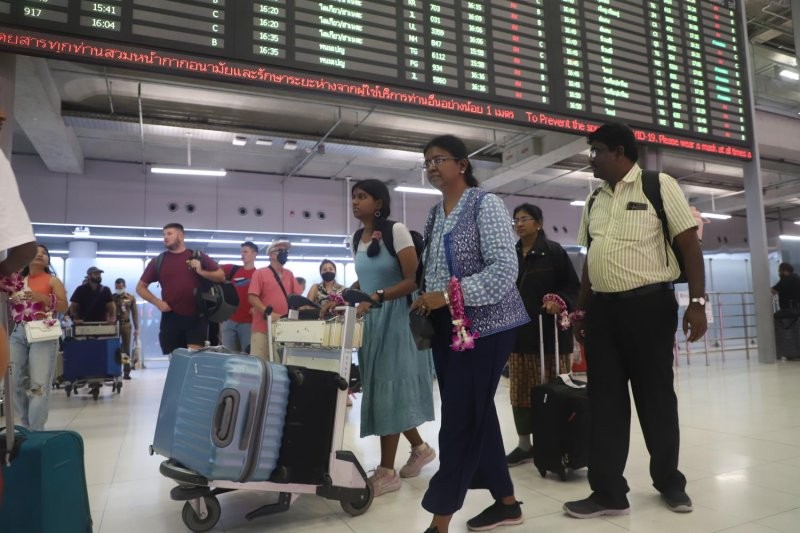
Bangkok, Thailand — Indian tourist arrivals to Thailand fell by more than 10% — approximately 12% year-on-year — between August 1 and 22, according to a fresh Bangkok Post report, making India the only one of Thailand's four primary international source markets to record a decline during that period. The drop follows a turbulent few months in which the Thai Cabinet first proposed removing Indians from the visa-free entry scheme, then reversed course — but not before thousands of August travellers had already cancelled, postponed, or transferred their bookings.
The news has landed like a cold shower on Thailand's tourism sector. India had been the country's strongest-performing large tourism market, delivering about 2.48 million visitors in 2025 — up 16.82% — and generating roughly 90.43 billion baht in revenue, or about 36,400 baht per person. Those numbers helped compensate for subdued Chinese arrivals, and the market's momentum had continued into this year: Indian arrivals rose 3.06% year-on-year in the first half of 2026, and by August 1, Thailand had welcomed 1,376,433 Indian visitors, making India the third-largest source market behind China and Malaysia.
The Visa-Policy U-Turn: A Timeline of Confusion
The trouble began in May, when Cabinet ministers proposed removing Indian nationals from Thailand's visa-free entry scheme. Under the proposal, Indians would instead receive a 15-day visa on arrival costing 2,000 baht — a significant step backward from the 30-day visa-free entry they had previously enjoyed. Travel agents reported cancellations and weaker advance bookings almost immediately, even though the restriction was never actually enforced.
The Cabinet reversed course in mid-July, announcing that Indians would instead receive 30-day visa-free entry. But the reversal came too late for many August travellers. Bookings had already been cancelled, postponed, or transferred to other destinations. Tourism and Sports Minister Surasak Phancharoenworakul previously linked the confusion to a booking decline approaching 20%, underscoring the severity of the market's reaction to the mere announcement of a policy change.
Reduced airline capacity also restricted arrivals during parts of August, compounding the damage. The combination of policy uncertainty and capacity constraints created a perfect storm for what should have been a peak travel period.
Why This Matters for Thai Tourism Businesses
The Indian market is not monolithic. It includes package holidaymakers heading to Phuket and Krabi, wedding parties celebrating in Chiang Mai and Bangkok, corporate groups attending conferences, nightlife visitors in Pattaya, and shopping tourists drawn to Bangkok's malls. Each segment spends differently, but together they deliver strong daily spending and volume that many Thai businesses have come to rely on.
Indian visitors typically take shorter regional trips and spend less per trip than long-haul travellers from Europe or North America. But their volume and frequency make them indispensable, particularly for mid-range hotels, tour operators, and restaurants in popular destinations. The 12% decline in August represents not just empty hotel rooms but also cancelled tour bookings, unfilled restaurant tables, and reduced spending at local shops and markets.
For the Thai economy, the stakes are higher still. Household consumption is restricted by high household debt, and private investment remains uneven. Tourism is one of Thailand's few major economic supports, and any sustained decline in a key source market ripples through the entire service sector.
India's Decline Stands Alone Among Major Markets
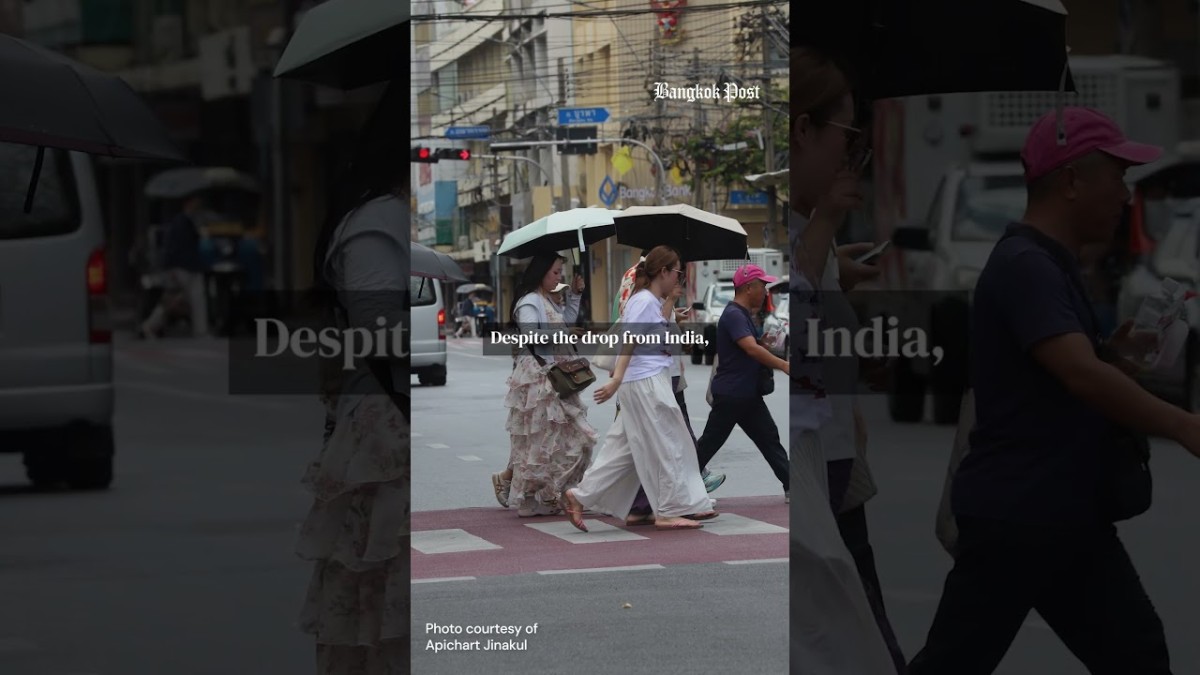
What makes the Indian decline particularly concerning is its isolation. Between August 1 and 22, India was the only one of Thailand's four primary international tourist markets to record a drop in arrivals. Other key foreign markets continued to improve, supported by the recovery in flight capacity that has been gradually restoring pre-pandemic connectivity.
The contrast with China is especially telling. Chinese arrivals have been subdued for years, and India had emerged as a partial compensation — a dynamic that made India's strong growth in 2025 and early 2026 all the more valuable. With Indian arrivals now faltering, Thailand faces the uncomfortable prospect of its two largest Asian source markets both underperforming simultaneously.
The timing could hardly be worse. Thailand's 2026 target of approximately 2.7 million Indian visitors is now under substantial pressure. To hit that number, the market would need to recover quickly and strongly in the remaining months of the year — a tall order given the booking cancellations already recorded and the lingering uncertainty among Indian travellers about Thailand's visa policies.
Bank of Thailand Monitoring Whether Shock Is Temporary or Lasting
The Bank of Thailand is closely watching the situation, according to the Bangkok Post report. The central bank has questioned whether August represents a temporary booking shock or lasting damage to a crucial source of tourism income. The distinction matters enormously for monetary policy and economic forecasting.
A temporary shock would mean that September and October arrivals recover as travellers who postponed their trips rebook. Lasting damage would suggest that Indian travellers have shifted their loyalty to competing destinations — Vietnam, Indonesia, Malaysia, and Sri Lanka all court Indian tourists aggressively — and that Thailand's market share may not return quickly.
Tourism and Sports Minister Surasak Phancharoenworakul has previously acknowledged the severity of the booking decline, linking the confusion to a drop approaching 20% at one point. The fact that the actual August decline came in at around 12% suggests some recovery from the worst of the panic, but the numbers remain firmly in negative territory.
What to Watch For: Recovery Signs and the 2.7 Million Target
The coming months will be decisive. September and October arrival figures will show whether Indian travellers who cancelled August bookings have rebooked for later in the year, or whether they have moved on to other destinations entirely. The upcoming winter travel season — traditionally strong for Indian tourists seeking to escape colder weather — will be the real test.
Thailand's tourism authorities must also rebuild trust with Indian travel agents and tour operators, who were caught in the middle of the policy confusion and had to manage angry clients and lost commissions. Reassurance will need to be concrete: clear communication about visa policies, marketing campaigns targeting Indian travellers, and possibly incentives for airlines to restore capacity on India-Thailand routes.
The 2.7 million visitor target for 2026 is not yet out of reach, but it requires a sharp reversal of the August trend. Every month of negative growth makes the target harder to achieve, and the window for recovery is narrowing.
For Thailand and its Southeast Asian neighbours, the episode carries a broader lesson. In the competitive race for Asian tourists, policy stability is itself a form of marketing. Destinations that signal welcome — and stick to it — will capture the travellers that others lose through confusion and mixed messages. Thailand's visa-policy U-turn may have been reversed, but the memory of it lingers in the minds of Indian travellers and the agents who advise them. Rebuilding that confidence will take more than a policy announcement — it will take consistent, reliable signals that Thailand remains open for business.
By Ann Srisawat, Staff Writer
This article was produced with AI-assisted research and editorial support. Reporting is based on sources cited in the article.
What's Your Reaction?
 Like
0
Like
0
 Dislike
0
Dislike
0
 Love
0
Love
0
 Funny
0
Funny
0
 Wow
0
Wow
0
 Sad
0
Sad
0
 Angry
0
Angry
0

Southeast Asia Correspondent at Global1.News. Based in Bangkok, covering Thai and Southeast Asian politics, economy, technology, and culture. Deep regional perspective on one of the world's most dynamic regions.















Comments (0)